
Loading, please wait...
LOT 0032
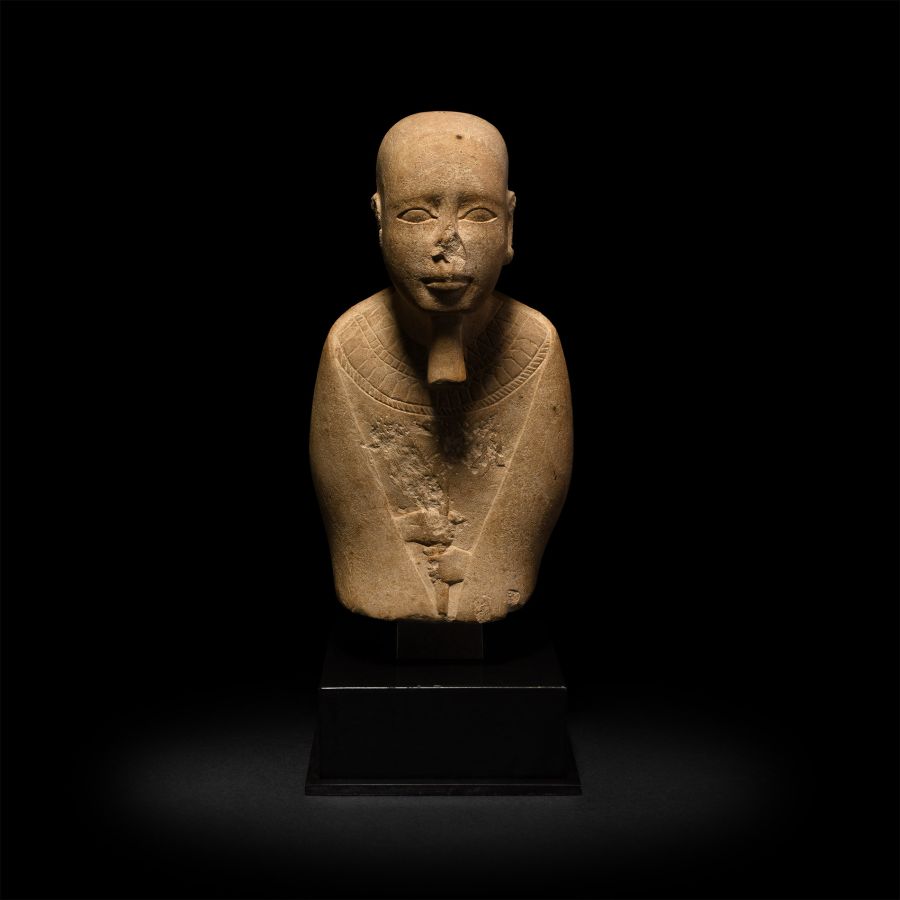
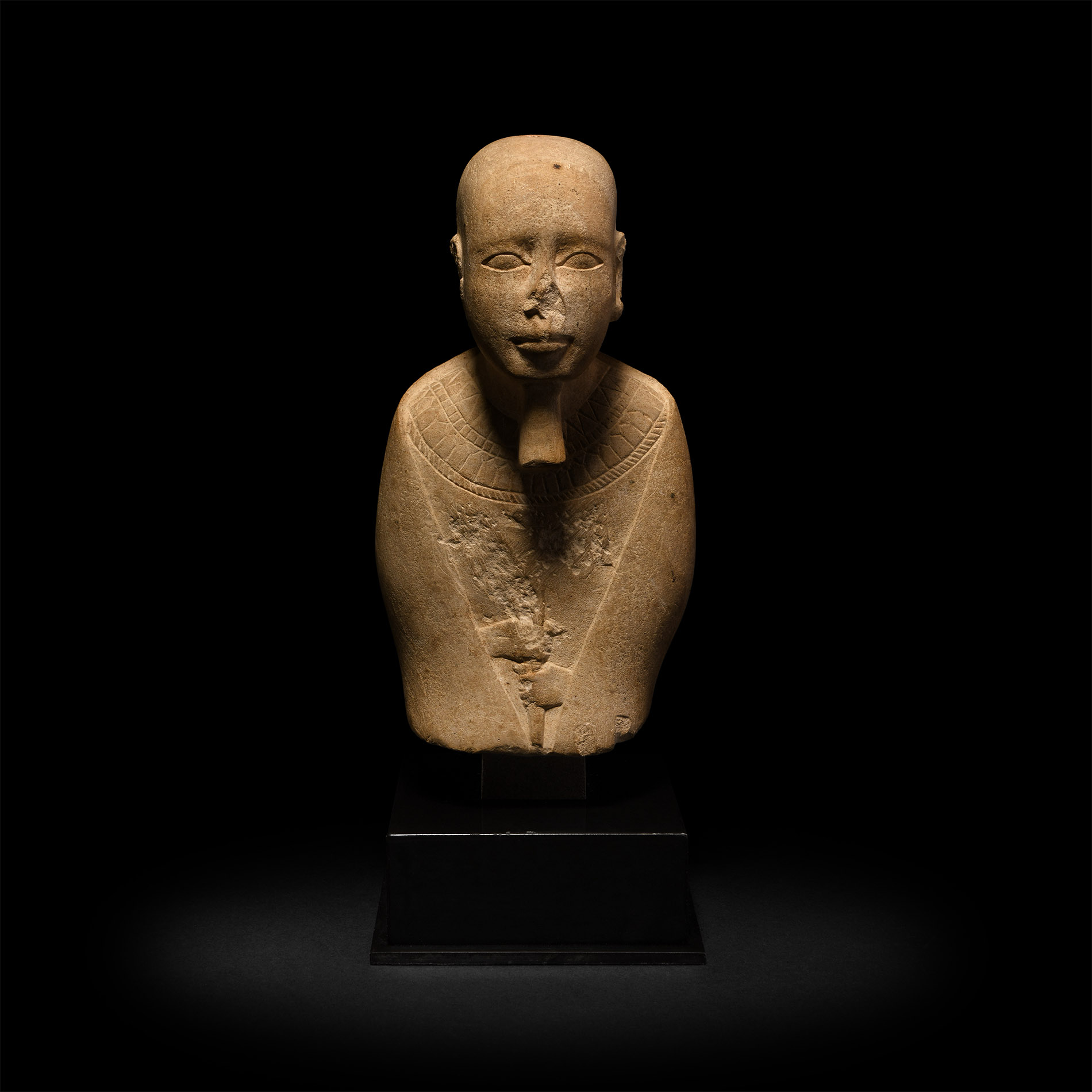
Egyptian Bust of Ptah
LATE PERIOD, 26TH-30TH DYNASTY, CIRCA 664-343 B.C.
8 3/4 in. (1.39 kg total, 22.3 cm high including stand).
A white limestone figure of the god Ptah with false beard, wearing an enveloping cloak and a broad wesekh-collar, holding the shaft of a was sceptre; serene, oval face with almond-shaped eyes and fleshy lips; remnants of dorsal pillar to reverse; mounted on a custom-made display stand.
ProvenanceEx private Belgium collection, 1960s.
with Vanderkindere Auctions, Brussels, Belgium, 26 February 2013, lot 261.
English private collection.
This lot has been checked against the Interpol Database of stolen works of art and is accompanied by search certificate no.11605-199743.
Accompanied by a scholarly note by Egyptologist Paul Whelan.
Cf. The Walters Museum, accession number 54.1017, for a similar figure in bronze created within this time period.
FootnotesPtah is attested from the beginning of ancient Egypt’s dynastic history and was a creator god, a god of craftsmen, and the patron deity of the Memphite region. The principal temple of the god was located in the city of Memphis.
The fragmentary back pillar on this statuette indicates that it was most probably a temple offering, originally inscribed with an invocation to Ptah together with the donor’s name. Such votive figurines with back pillars naming the god and the dedicator occur in various materials, including faience and stone.
TimeLine Auctions follows a vetting process to ensure the authenticity and legality of all items, reinforcing our commitment to integrity and responsible trading. Each antiquity, antique, and coin lot undergoes thorough examination by a vetting committee of at least ten external specialists, professional trade association members, scientists, and archaeologists: Our Vetting Process
AUCTIONS:
TimeLine is a leading auction house specialising in antiquities, ancient art, collectables, natural history, coins, medals, and books. Our auctions offer museums, collectors, historians, and enthusiasts the opportunity to acquire unique and historically significant pieces.
-
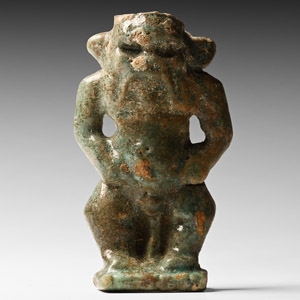
Egyptian Faience Figure of Bes
Ptolemaic Period, 332-30 B.C.Sold for (Inc. bp): £234
A green glazed composition figure of Bes standing on a base; plumed headdress and loop absent. 4.79 grams, 34 mm
Acquired early 1990s. Ex private American collection; thence by descent. Private Swiss collection since 1998. -
.jpg)
Egyptian Marble Eye Inlay
Late Period, 664-525 B.C.Sold for (Inc. bp): £52
A carved white marble eye inlay from a statue; unfinished. 24.4 grams, 58 mm
London, UK, art market, 1980s. From the collection of G.M.R.H., London, UK. -
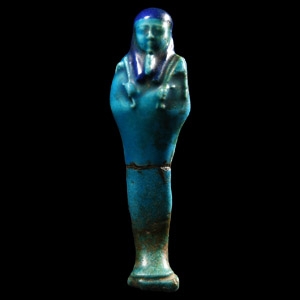
Egyptian Blue Faience Shabti
Early Ptolemaic Period, circa 3rd century B.C.Estimate: £1,000 - 1,400 (‡+bp*)
Opening Bid: £500
A mummiform shabti with a thick and lustrous turquoise glaze, sporting a tripartite wig highlighted in darker blue glaze, and a long beard; holding a pick, hoe and a cord for a seed bag hanging over the left shoulder; raised dorsal pillar and an integral plinth; repaired. 44 grams, 11.5 cm high
Ex collection of Jacques René Fiechter, Switzerland (1920-1950). with Auction Martin, Egyptian Collection André Bircher, 1949. Accompanied by an academic report by Egyptologist Paul Whelan.
The lack of inscription hinders positive identification, but the shabti’s proportions, elegant modelling, and lustrous glaze closely match others considered to have come from an area of the extensive necropolis at Abydos, labelled “Cemetery G” by its excavator Flinders Petrie, where hundreds of blue lustrous-glazed shabtis of varying qualities were recovered. This figure is closest in style to those belonging to Petosiris, son of Djed-hor. Both were buried with similarly blue lustrous-glazed shabtis that were mostly plain although a few were inscribed with an inscription.
