
Loading, please wait...
LOT 0589
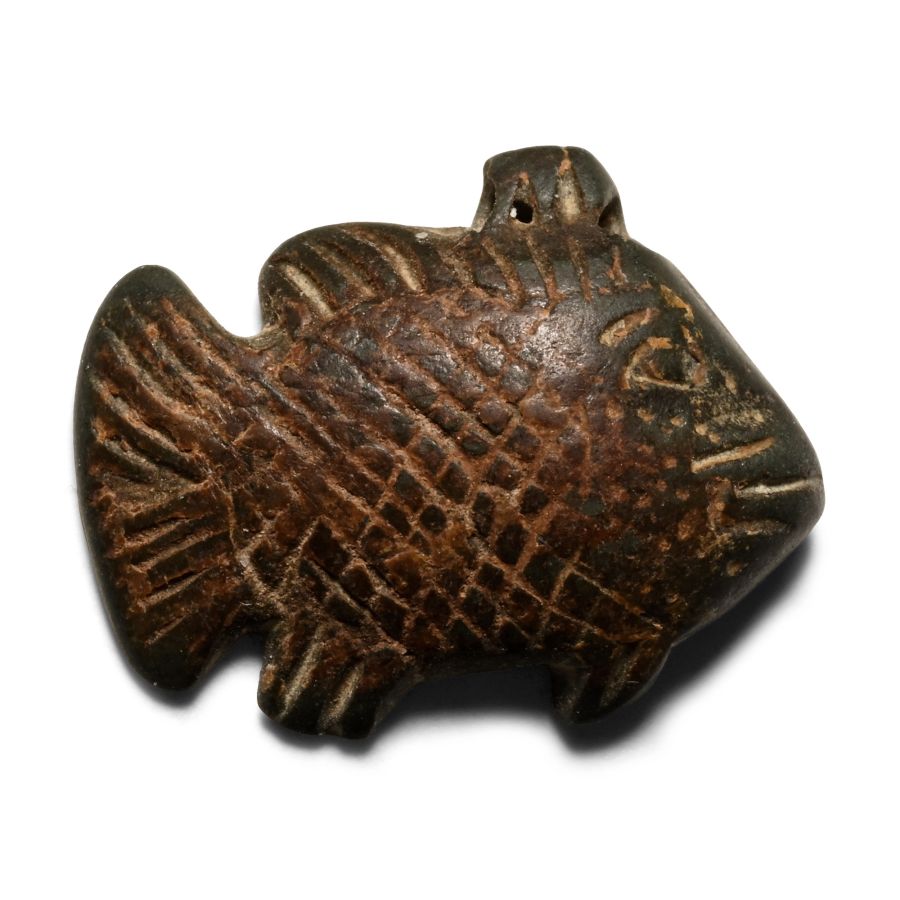
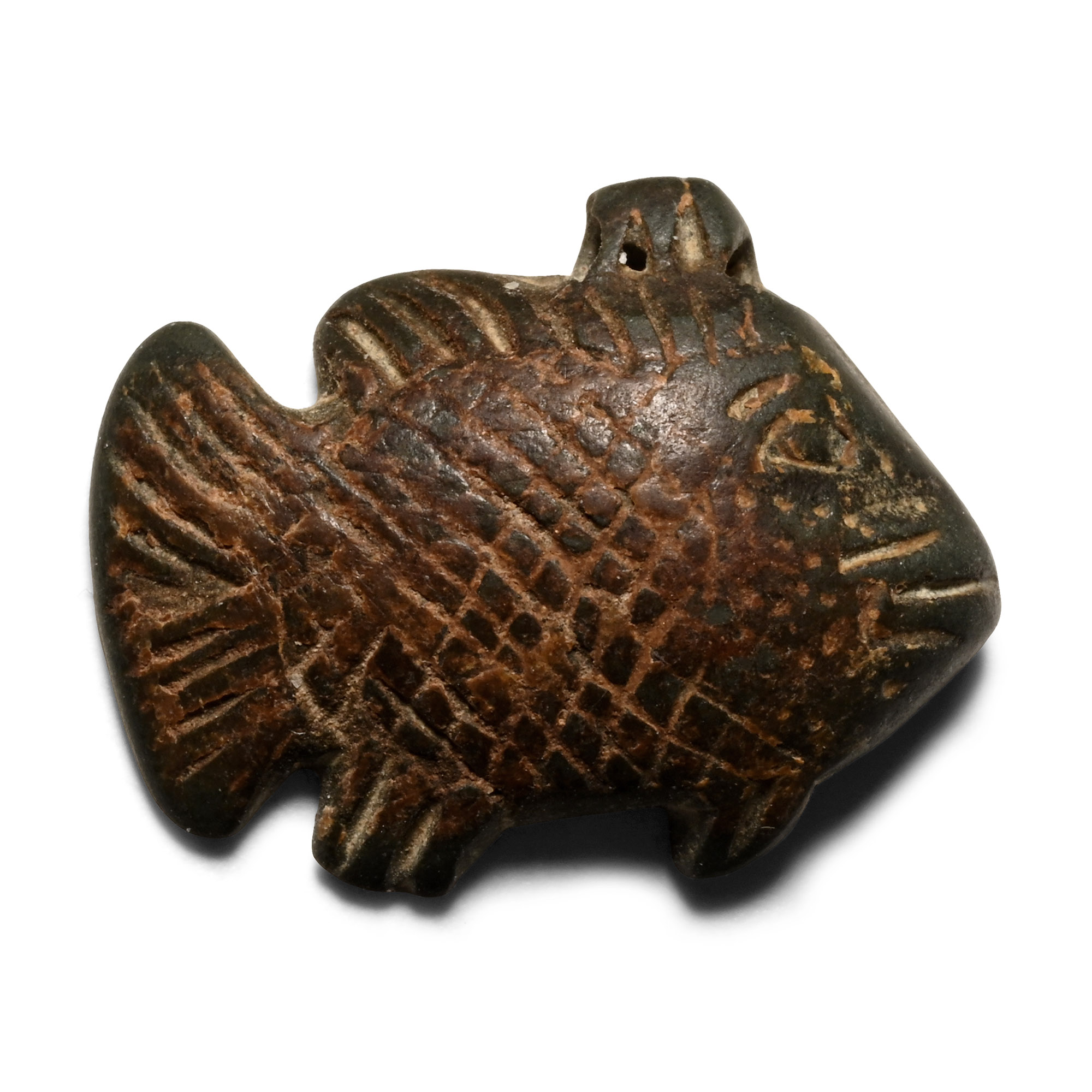
Egyptian Brown Stone Fish Amulet
PTOLEMAIC PERIOD, CIRCA 332-30 B.C.
3/4 in. (1.76 grams, 19 mm).
Plano-convex in section with eye, mouth and scale detailing. [No Reserve]
ProvenanceEx Chris Belton Artefacts, 1980s.
CONDITIONTimeLine Auctions follows a vetting process to ensure the authenticity and legality of all items, reinforcing our commitment to integrity and responsible trading. Each antiquity, antique, and coin lot undergoes thorough examination by a vetting committee of at least ten external specialists, professional trade association members, scientists, and archaeologists: Our Vetting Process
AUCTIONS:
TimeLine is a leading auction house specialising in antiquities, ancient art, collectables, natural history, coins, medals, and books. Our auctions offer museums, collectors, historians, and enthusiasts the opportunity to acquire unique and historically significant pieces.
LOT 0589
Egyptian Brown Stone Fish Amulet
Estimate £100 - 140€120 - 160 (for guidance only)$140 - 190 (for guidance only)
Opening Bid
£5 (EUR 6; USD 7) +BP*
-
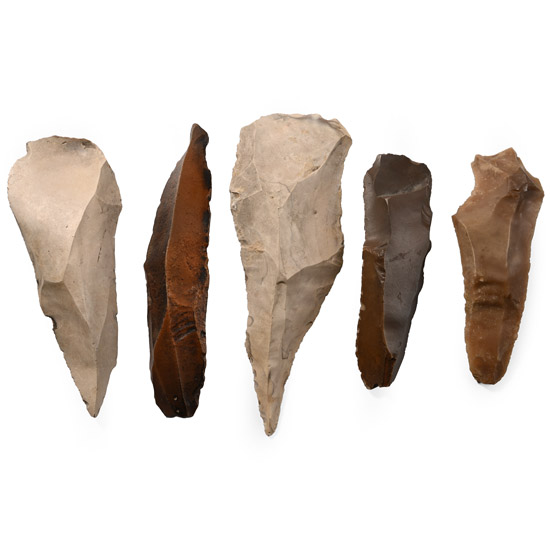
Egyptian Stone Age Knapped Knife Blades from Thebes
Neolithic Period, 11,000-5,200 B.P.Estimate: £300 - 400 (+bp*)
Opening Bid: £5
Each of curved profile with broad cutting edge; old inked findspots 'Desert W. of Thebes 1912' (2 examples), 'W. of Thebes 1912' (2 examples), 'W. Thebes 1912'. 279 grams total, 10.6-14.3 cm
Found in the desert west of Thebes, Egypt, 1912. From the private collection of Peter Clayton, FCILIP, Dip, Arch, FSA, FRNS, Hemel Hempstead, Hertfordshire, UK; formed since the late 1950s. -
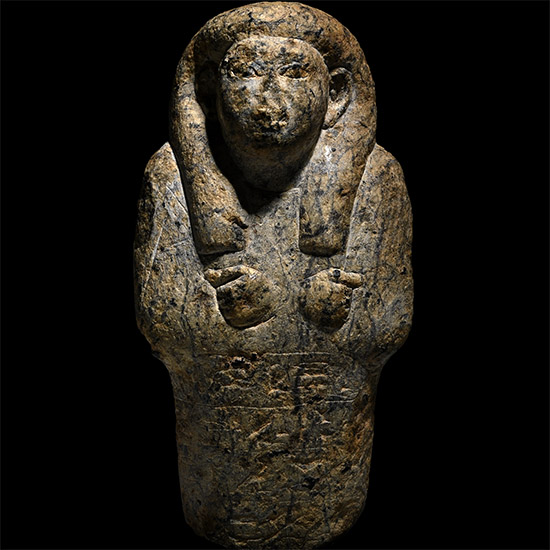
Egyptian Yellow and Black Serpentine Hieroglyphic Shabti
25th-26th Dynasty, circa 650-525 B.C.Estimate: £1,500 - 2,000 (+bp*)
Bids: 1 | Current Bid: £5
Fragment of a mummiform shabti wearing a heavy tripartite wig, with crossed hands on the chest holding faintly incised agricultural implements; four lightly incised horizontal lines of hieroglyphic text on the lower body; mounted on a custom-made stand. 455 grams total, 13.3 cm including stand
From the private collection of Peter Clayton, FCILIP, Dip, Arch, FSA, FRNS, Hemel Hempstead, Hertfordshire, UK; formed since the late 1950s.
Hardstone shabtis appear in the burials of certain high officials in the late 25th and early 26th Dynasties, after which faience became the predominant material for all shabti statuettes. -
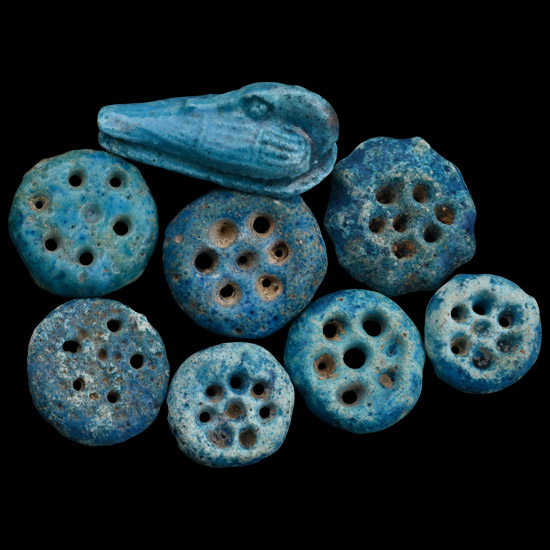
Egypto-Phoenician Faience Amulet Group
4th-2nd century B.C. and laterEstimate: £200 - 300 (+bp*)
Opening Bid: £100
Comprising flat discs with perforations and a modern trussed duck with its head laid along its spine. 18.74 grams total, 15-30 mm
From the collection of a gentleman, acquired on the London art market in the 1990s.
