
Loading, please wait...
_900x900.jpg "Egyptian Brown Quartzite Figure of the Baboon God Thoth")
_200x200.jpg "Egyptian Brown Quartzite Figure of the Baboon God Thoth")
_900x900.jpg "Egyptian Brown Quartzite Figure of the Baboon God Thoth")
_200x200.jpg "Egyptian Brown Quartzite Figure of the Baboon God Thoth")
.jpg "Egyptian Brown Quartzite Figure of the Baboon God Thoth")
.jpg "Egyptian Brown Quartzite Figure of the Baboon God Thoth")
LOT 0047
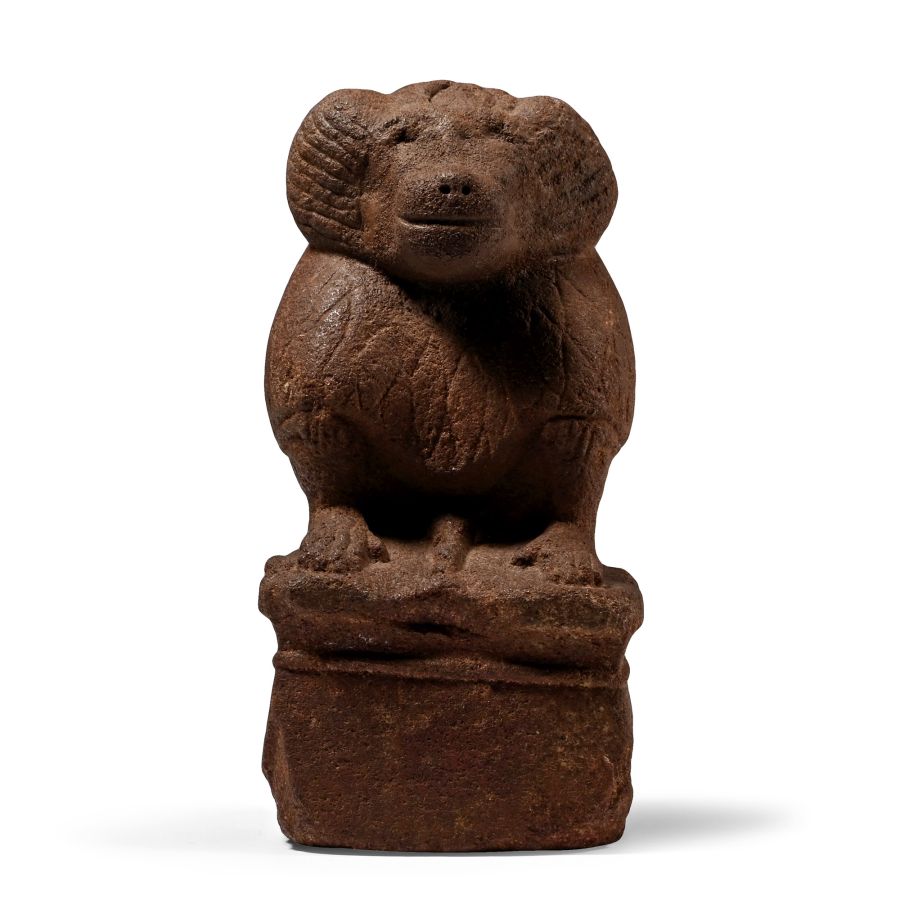
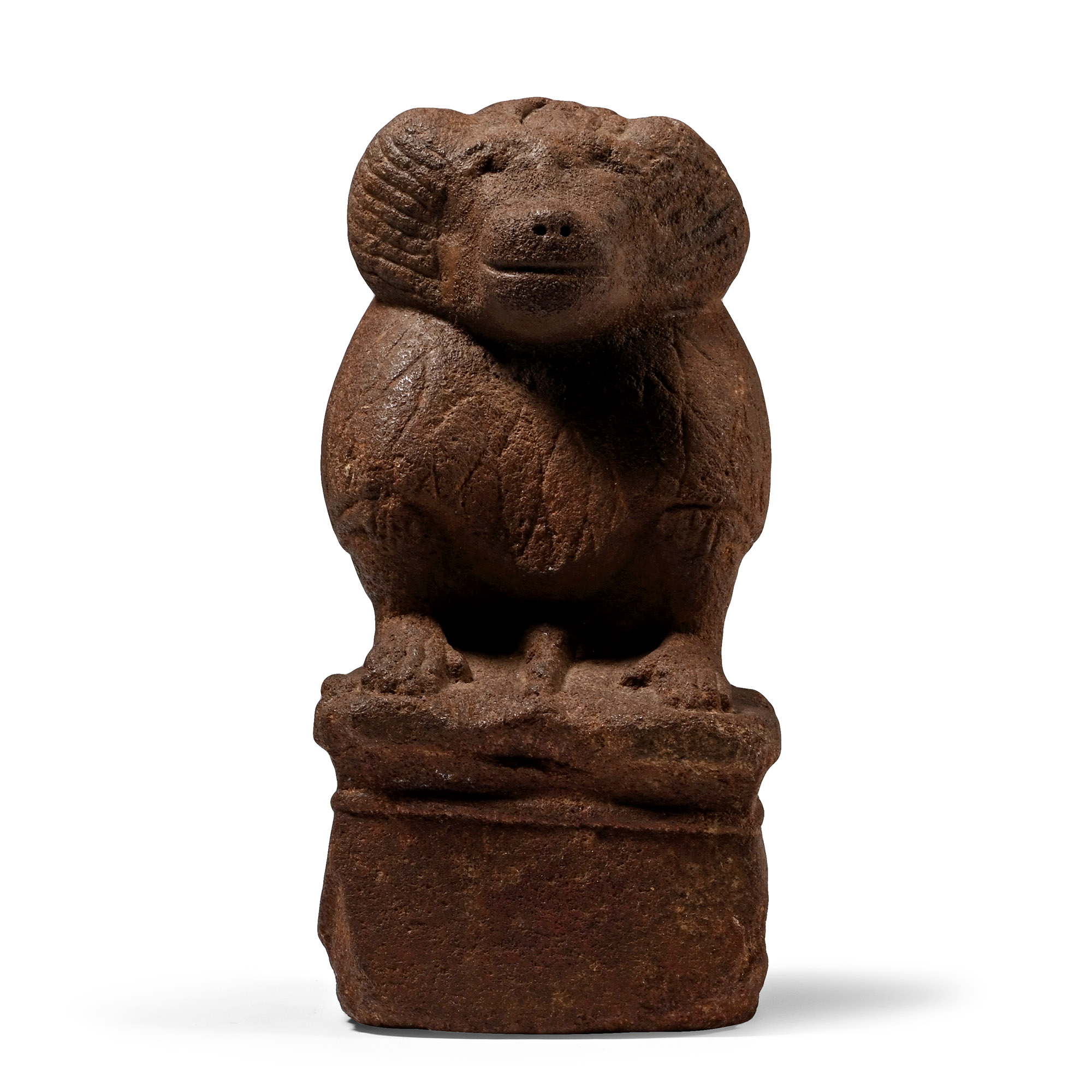
Egyptian Brown Quartzite Figure of the Baboon God Thoth
NEW KINGDOM, CIRCA 1550-1070 B.C.
5 7/8 in. (1.15 kg, 15 cm).
Carved in a typical pose, sitting on its haunches with its tail curving around the right side, its front paws resting on its knees and protruding beneath its thick furry pelt, with incised detailing, its feet either side of the phallus, the head with bulbous, striated hair on either side, chipped, snout restored; seated on a high shrine-shaped plinth with squared front and rounded back, featuring a cavetto cornice and roll detailing on the upper part.
ProvenanceFrom a deceased American estate, 1970-1989.
with Bonhams, London, 28 October 2009, no.35.
Accompanied by copies of the relevant Bonhams catalogue pages.
This lot has been checked against the Interpol Database of stolen works of art and is accompanied by a search certificate number no.12368-226706.
Cf. seated baboon of brown quartzite, Kozloff, A.P. & Bryan, B.M., Egypt's Dazzling Sun, Cleveland, 1992, fig 36, p.227.
FootnotesThe baboon was an animal manifestation of the god Thoth, the patron deity of Hermopolis Magna, who was revered for his association with knowledge, writing, and healing.
CONDITIONTimeLine Auctions follows a vetting process to ensure the authenticity and legality of all items, reinforcing our commitment to integrity and responsible trading. Each antiquity, antique, and coin lot undergoes thorough examination by a vetting committee of at least ten external specialists, professional trade association members, scientists, and archaeologists: Our Vetting Process
AUCTIONS:
TimeLine is a leading auction house specialising in antiquities, ancient art, collectables, natural history, coins, medals, and books. Our auctions offer museums, collectors, historians, and enthusiasts the opportunity to acquire unique and historically significant pieces.
LOT 0047
Egyptian Brown Quartzite Figure of the Baboon God Thoth
Estimate £5,000 - 7,000€5,800 - 8,120 (for guidance only)$6,750 - 9,450 (for guidance only)
-
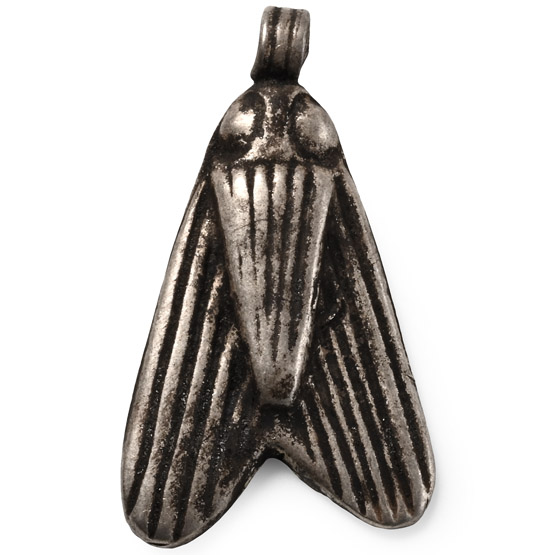
Egyptian Silver Fly Amulet
Late Period, 664-332 B.C.Sold for (Inc. bp): £260
With detailing to wings and eyes, loop for suspension above the head. 2.15 grams, 24 mm
From the collection of a London, UK, gentleman, 1990s.
Considering that Egyptian artists often depicted fly whisks in the hands of pharaohs and high officials, one might assume that flies were merely a nuisance. However, the Egyptians held flies in high regard for their speed, quick reactions, and persistence. Small fly amulets first appeared in burials during the Naqada II Period, around 3200 B.C. These amulets gained popularity and were crafted from various materials such as gold, silver, lapis lazuli, carnelian, amethyst, faience, and bone. These amulets were believed to protect against insect bites and to ward off troublesome flying creatures through apotropaic magic. Some believe they may have even symbolised the fly’s fecundity. Additionally, pharaohs would bestow gold fly-shaped pendants as military awards to honour the bravery and persistence of soldiers in battle. -
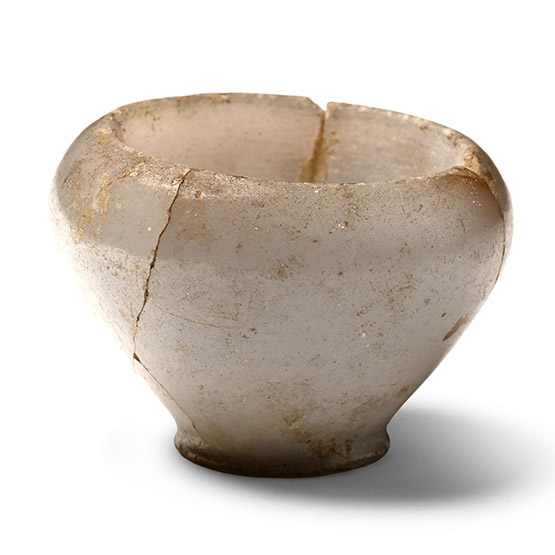
Egyptian Anhydrite Cosmetic Bowl
Middle Kingdom, circa 2040-1780 B.C.Sold for (Inc. bp): £156
Conical in profile with rounded rim, narrow disc base; repaired; a rare stone. 33.68 grams, 39 mm
Ex William Ohly, 1883-1955. Ex Abbey Museum, Barnet, by descent.
Anhydrite, incorrectly called "blue marble" by early excavators, was a stone favoured by the ancient Egyptians from the Middle Kingdom to the Second Intermediate Period. This particular example follows a Middle Kingdom-style cosmetic kohl jar that could be modelled with or without an integral rim. -
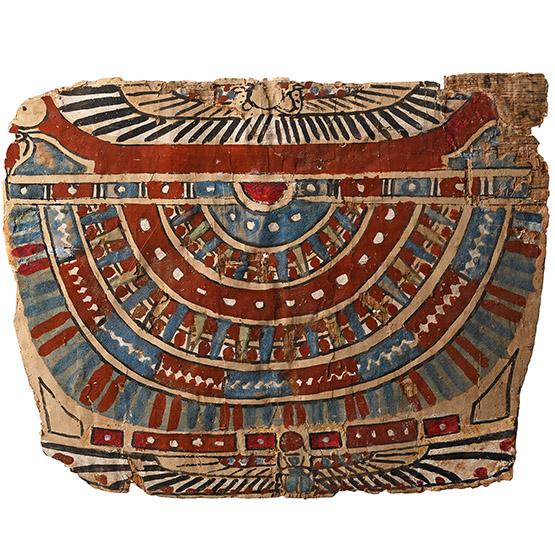
Egyptian Cartonnage Panel with Pectoral
Late Period-Ptolemaic Period, circa 664-30 B.C.Estimate: £1,800 - 2,400 (+bp*)
Opening Bid: £900
A rectangular cartonnage panel with bands of triangles, teardrops and other motifs in white, red, blue and pale green; winged scarab to the bottom, lower portion of a winged sun disc flanked by uraei to the top; mounted on a custom-made stand. 2.06 kg total, 31.4 cm wide including stand
Ex early 20th century collection, London, UK. This lot has been checked against the Interpol Database of stolen works of art and is accompanied by search certificate number no.13096-249409
This piece was probably part of a set of cartonnage trappings placed on the mummy.
