
Loading, please wait...
LOT 0037
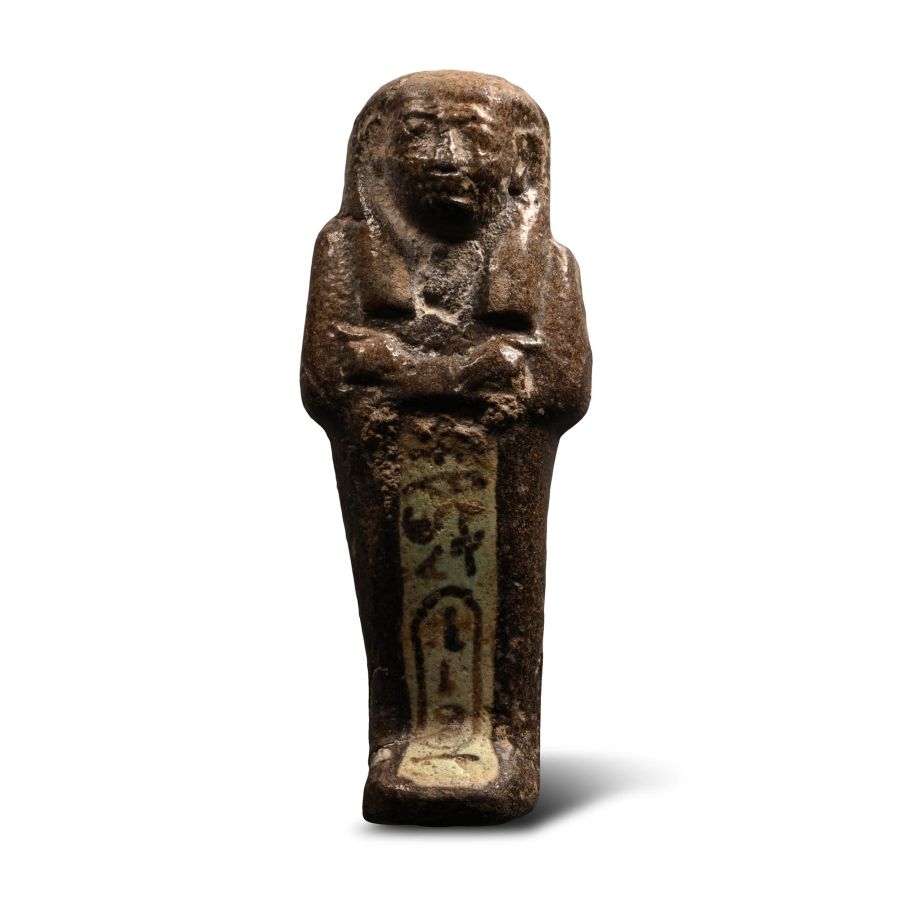
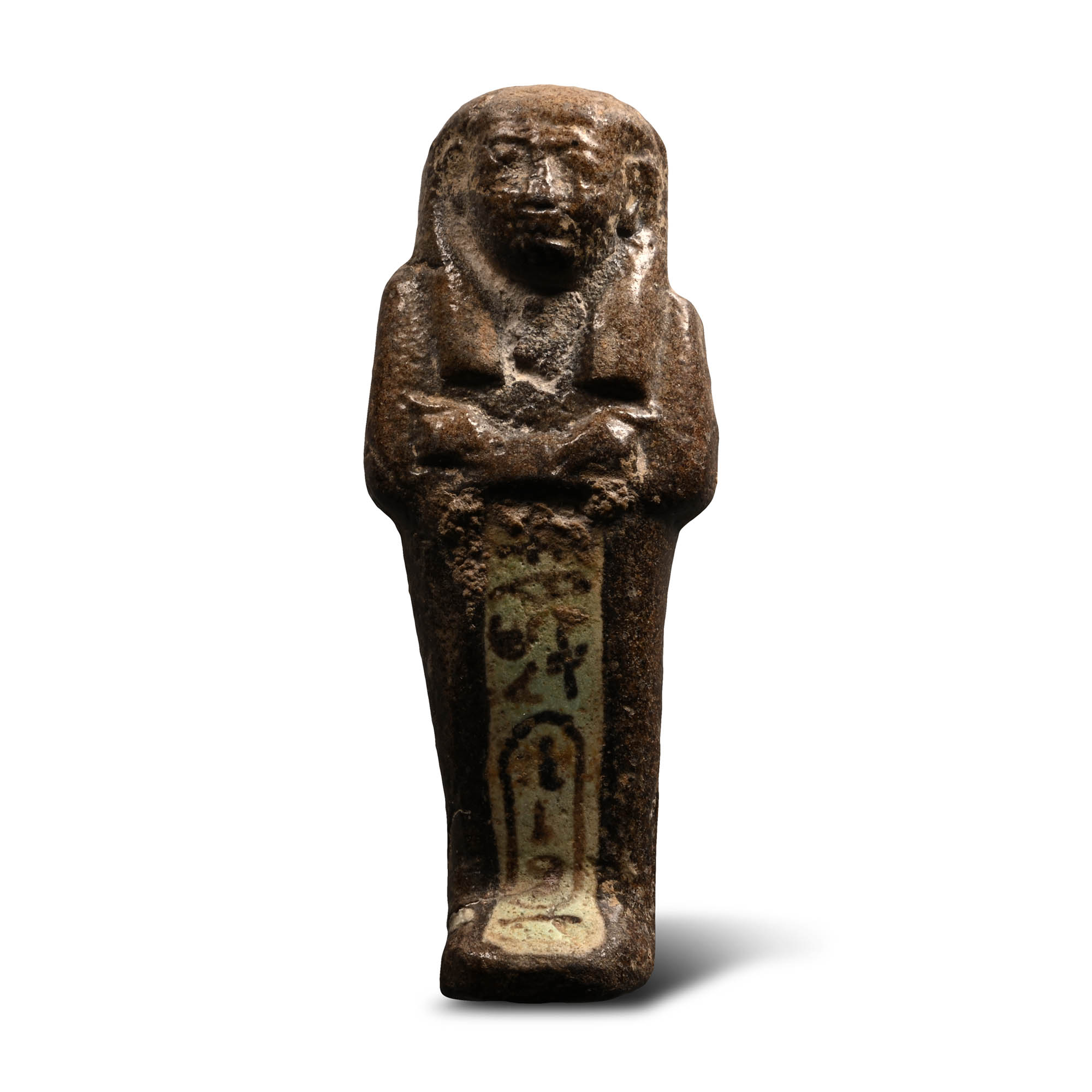
Egyptian Brown Glazed Shabti for Queen Isetnofret
NEW KINGDOM, 12TH CENTURY B.C.
4 1/4 in. (88 grams, 10.8 cm).
Of mummiform type, wearing a tripartite wig, stylised facial features with large ears, hands crossed at the chest; a contrasting green-glazed frontal column of hieroglyphic text with a cartouche which reads wsỉr nswt wrt Ꜣst-nfr.t, ‘The Osiris, the great king's wife Iset-nofret’.
ProvenanceAcquired on the German art market, 1989-1995.
with The Museum Gallery, 19 Bury Place, London, WC1, UK, 1998-2003.
Property of a London based academic, 2003-present.
This lot has been checked against the Interpol Database of stolen works of art and is accompanied by a search certificate number no.12373-226026.
Cf. Moje, J., Schabtis und verwandte Figurinen Mit den Beständen der Berliner Antikensammlung, des Museums für Vor- und Frühgeschichte und des Vorderasiatischen Museums, Band 2, Corpus Antiquitatum Aegyptiacarum, London, 2024, pp.28-30, for two shabtis of the queen in Berlin (inv. nos. ÄM333 and 334).
FootnotesSeveral late New Kingdom queens were named Iset-nofret, but this particular example is likely associated with one of the two wives of Ramesses II who had the same name. One of these queens gave birth to Prince Khaemwaset and is mentioned on monuments erected by him. While it is possible that the queen's shabtis were used for funerary purposes, Khaemwaset is known to have placed his own shabtis as votives in non-sepulchral locations in the Memphite necropolises, and it is possible that he also did the same with shabtis naming his mother.
For a discussion of the Ramesside queens with this name, see Tyldesley, J., Chronicle of the Queens of Egypt, London, 2006, p.154ff.
TimeLine Auctions follows a vetting process to ensure the authenticity and legality of all items, reinforcing our commitment to integrity and responsible trading. Each antiquity, antique, and coin lot undergoes thorough examination by a vetting committee of at least ten external specialists, professional trade association members, scientists, and archaeologists: Our Vetting Process
AUCTIONS:
TimeLine is a leading auction house specialising in antiquities, ancient art, collectables, natural history, coins, medals, and books. Our auctions offer museums, collectors, historians, and enthusiasts the opportunity to acquire unique and historically significant pieces.
LOT 0037
Egyptian Brown Glazed Shabti for Queen Isetnofret
Estimate £2,000 - 3,000€2,320 - 3,480 (for guidance only)$2,700 - 4,050 (for guidance only)
-
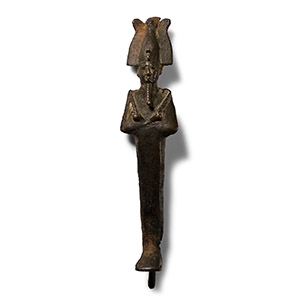
Egyptian Bronze Statuette of Osiris
Late Period, 664-332 B.C.Sold for (Inc. bp): £650
A slender standing figure of Osiris in iconic mummiform appearance, wearing the tall conical Atef crown with its flanking Ostrich plumes, and central uraeus, a long, internally-detailed divine beard, and holding the crook (heka) and flail (nekhakha) regalia; with tang under feet for attachment. 63 grams, 15 cm
Acquired on the German art market, 1989-1995. with The Museum Gallery, 19 Bury Place, London, WC1, UK, 1998-2003. Property of a London based academic, 2003-present.
Osiris is a deity who represents death and fertility and is commonly regarded as the quintessential god of rebirth. Though he was once a mortal ruler, as a deceased entity, his domain was the Underworld. Abydos was the primary centre of Osiris’ cult, where a renowned yearly celebration of the god was held. -
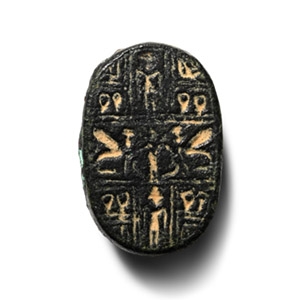
Phoenician Bronze Scarab
Late 1st millennium B.C.Estimate: £350 - 450 (+bp*)
Opening Bid: £180
Scaraboid with incised detailing to the underside, with a central column depicting standing figures top and bottom, each flanked by two ankh symbols, and a central motif of a standing figure grasping a sceptre and winged serpent in each hand. 6.54 grams, 17 mm
From an early 20th century Home Counties, UK, collection. -
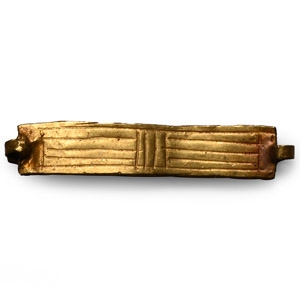
Egyptian Gold Panel
Late Period, 664-332 B.C.Sold for (Inc. bp): £85
Long rectangle with incised detailing, a suspension loop at either narrow end. 0.33 grams, 21 mm
From the private collection of the late Mrs Belinda Ellison, a long time member of the Egyptian Exploration Society, c.1940-2020.
