
Loading, please wait...
LOT 0472
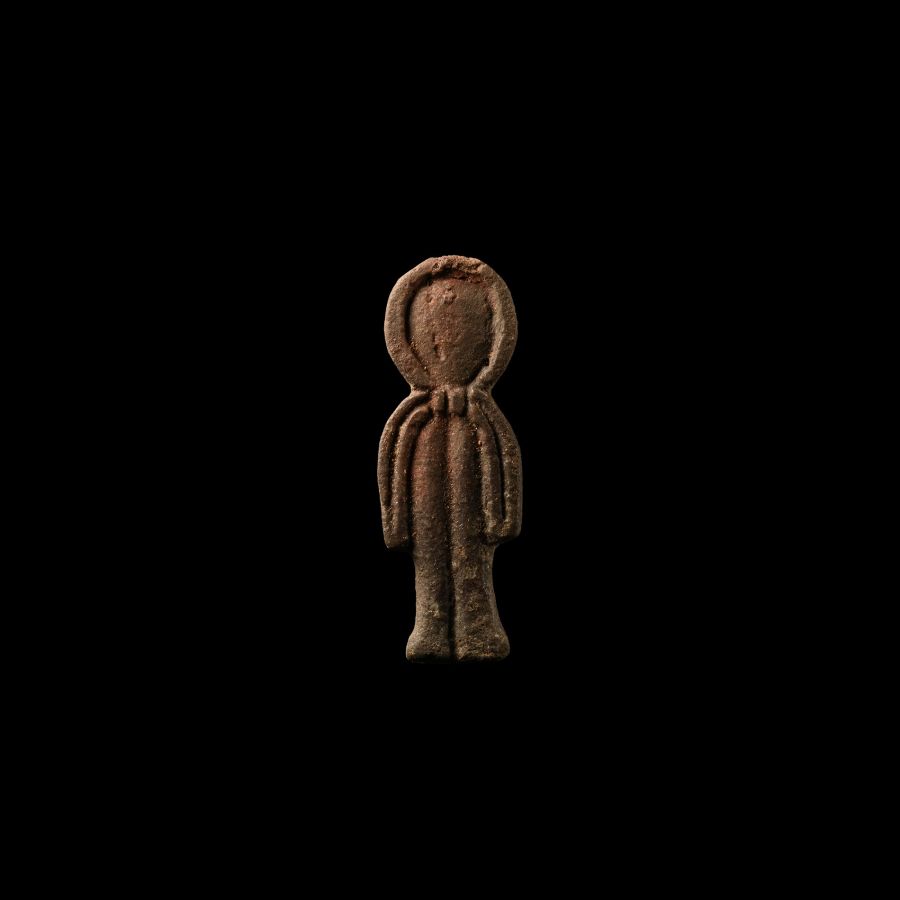
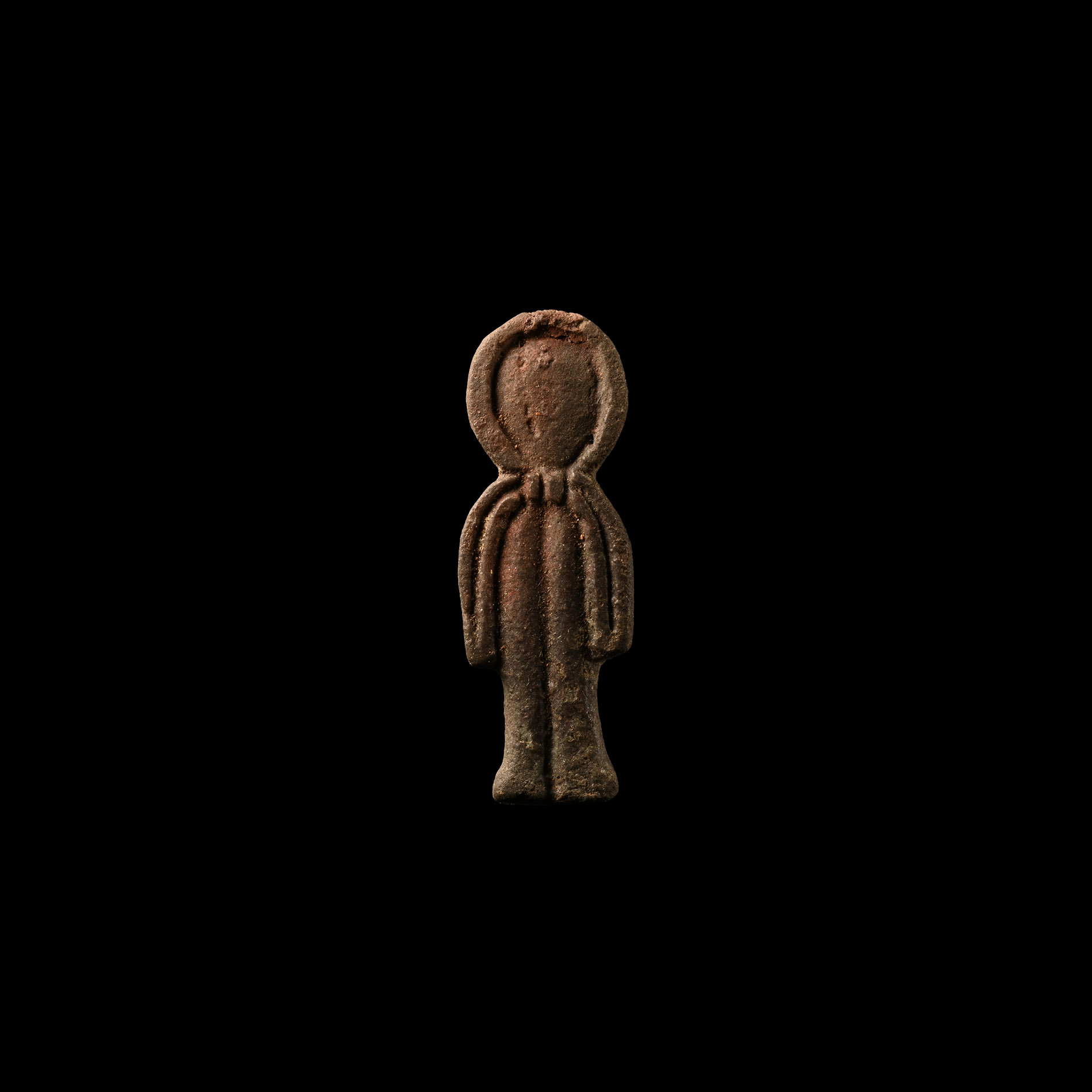
Egyptian Brown Faience Tyet Amulet
LATE PERIOD, 664-323 B.C.
1 1/2 in. (3.63 grams, 39 mm).
Also known as the tit, or knot of Isis; displaying simple detailing and a pierced pillar to the reverse. [No Reserve]
ProvenanceFrom an early 20th century collection, Caernarfon, North Wales, UK.
LiteratureCf. Petrie, W.M.F., Amulets. Illustrated by the Egyptian Collection in University College, London, London, 1914, Pl.VII 88c-e, for similar examples.
CONDITIONTimeLine Auctions follows a vetting process to ensure the authenticity and legality of all items, reinforcing our commitment to integrity and responsible trading. Each antiquity, antique, and coin lot undergoes thorough examination by a vetting committee of at least ten external specialists, professional trade association members, scientists, and archaeologists: Our Vetting Process
AUCTIONS:
TimeLine is a leading auction house specialising in antiquities, ancient art, collectables, natural history, coins, medals, and books. Our auctions offer museums, collectors, historians, and enthusiasts the opportunity to acquire unique and historically significant pieces.
-
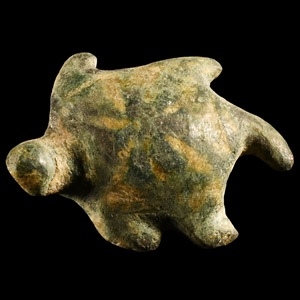
Romano-Egyptian Bronze Turtle Statuette
Roman Period, 30 B.C.-323 A.D.Sold for (Inc. bp): £98
Modelled in the round with naturalistic detailing. 8.03 grams, 24 mm
‘The Ancient Menagerie Collection’ formerly the property of a Cambridgeshire lady, collected since the 1990s and acquired from auctions and dealers throughout Europe and the USA, now ex London collection. -
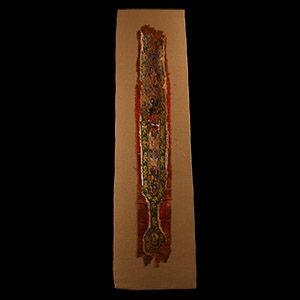
Egyptian Mounted Coptic Textile with Animals
Circa 6th-7th century A.D.Sold for (Inc. bp): £169
Comprising a clavus decorated with various bright colours (green, brown, pink, blue, yellow) with stiff animal figures (dragons and stylised eagles) and a cockerel(?) inside the orbiculus. 138 grams, 70 x 18.2 cm
Acquired 1970s-1996. Property of a North American collector. London collection, 2016.
Tabby technique on linen and wool. It is highly probable that this tapestry was part of a tunic decoration, the clavus with preserved orbiculus, running vertically on the breast and on the back of it. -
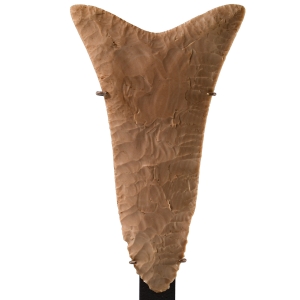
Egyptian Fishtail Flint Knife
Circa 3650-3300 B.C.Sold for (Inc. bp): £7,150
Knapped bifacial tan knife with fishtail butt to receive a hilt; the rounded tip tapering and flaring along the edges; with a custom-made display stand. 142 grams total, 12 cm including stand
Collection of Maurice Bouvier, Alexandria, Egypt, then in Switzerland from 1959; thence by descent. This lot has been checked against the Interpol Database of stolen works of art and is accompanied by search certificate number no.11834-207726.
Many of these superbly crafted knives are attributed to the Naqada II period (c.3500-c.3200 BC), in Upper Egypt. They were normally used in the Opening of the Mouth ceremony.
