
Loading, please wait...
LOT 0063
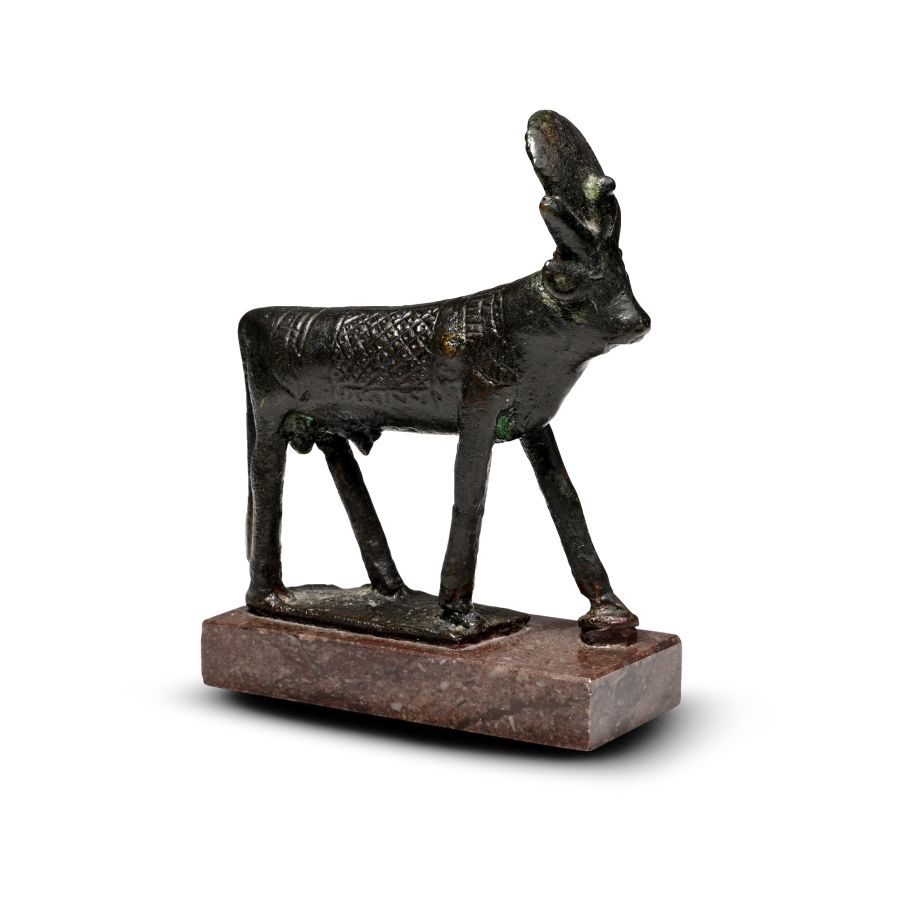
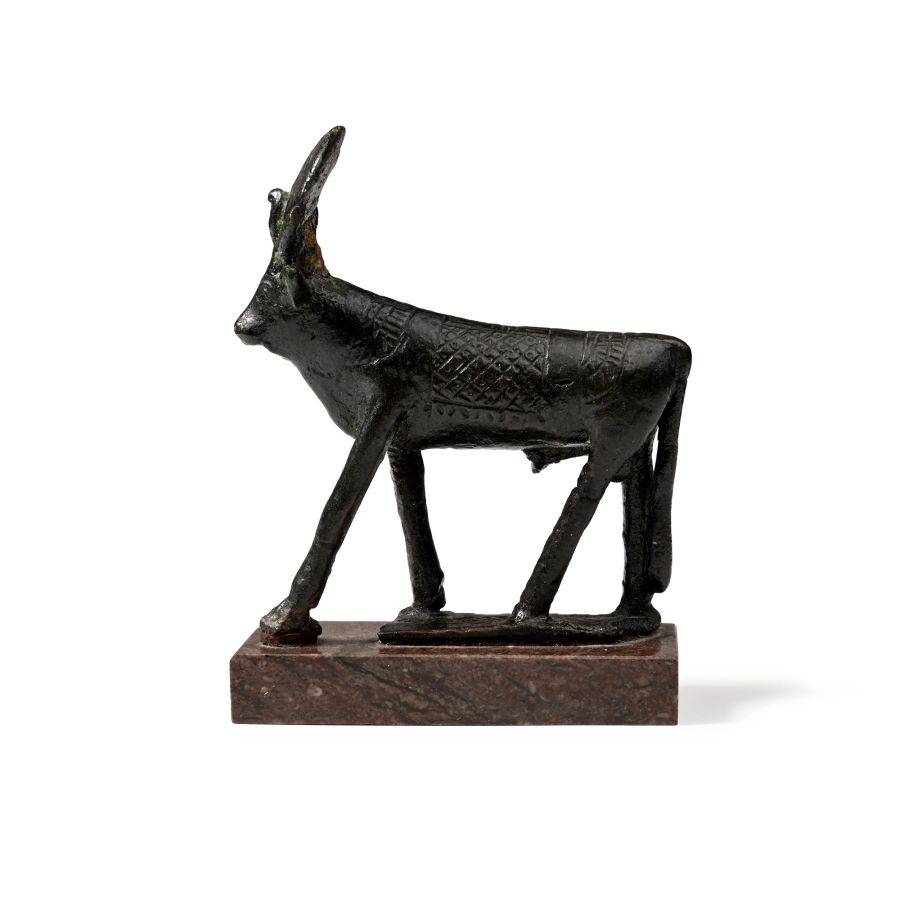
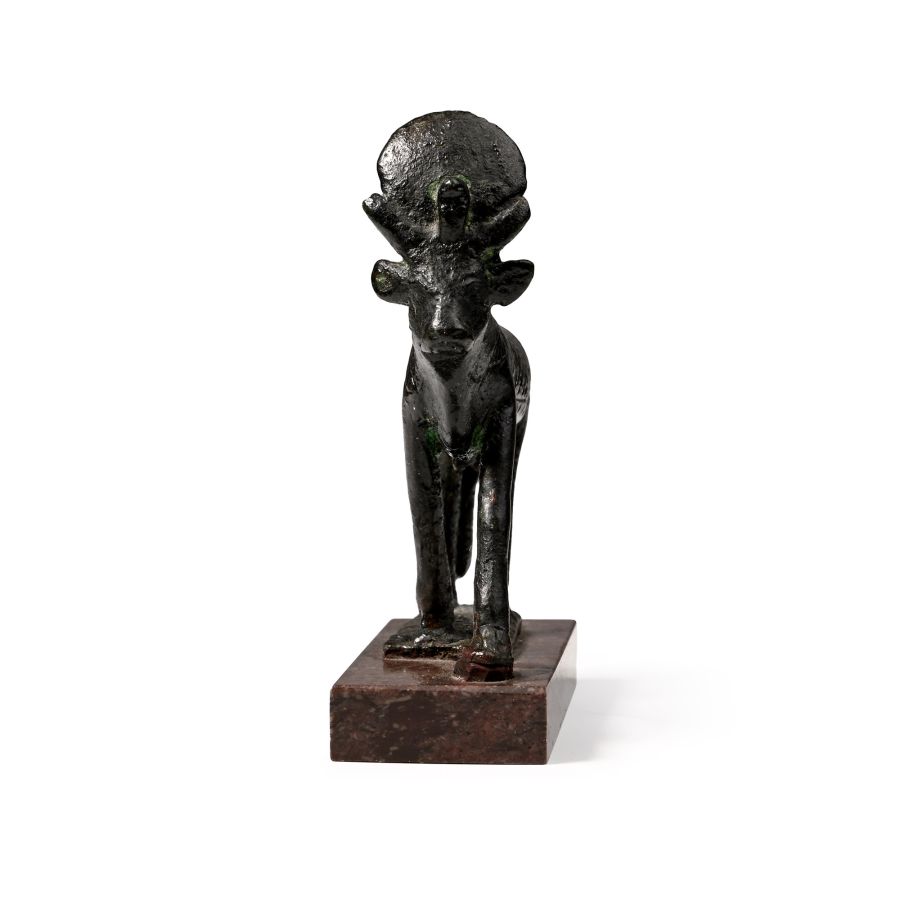
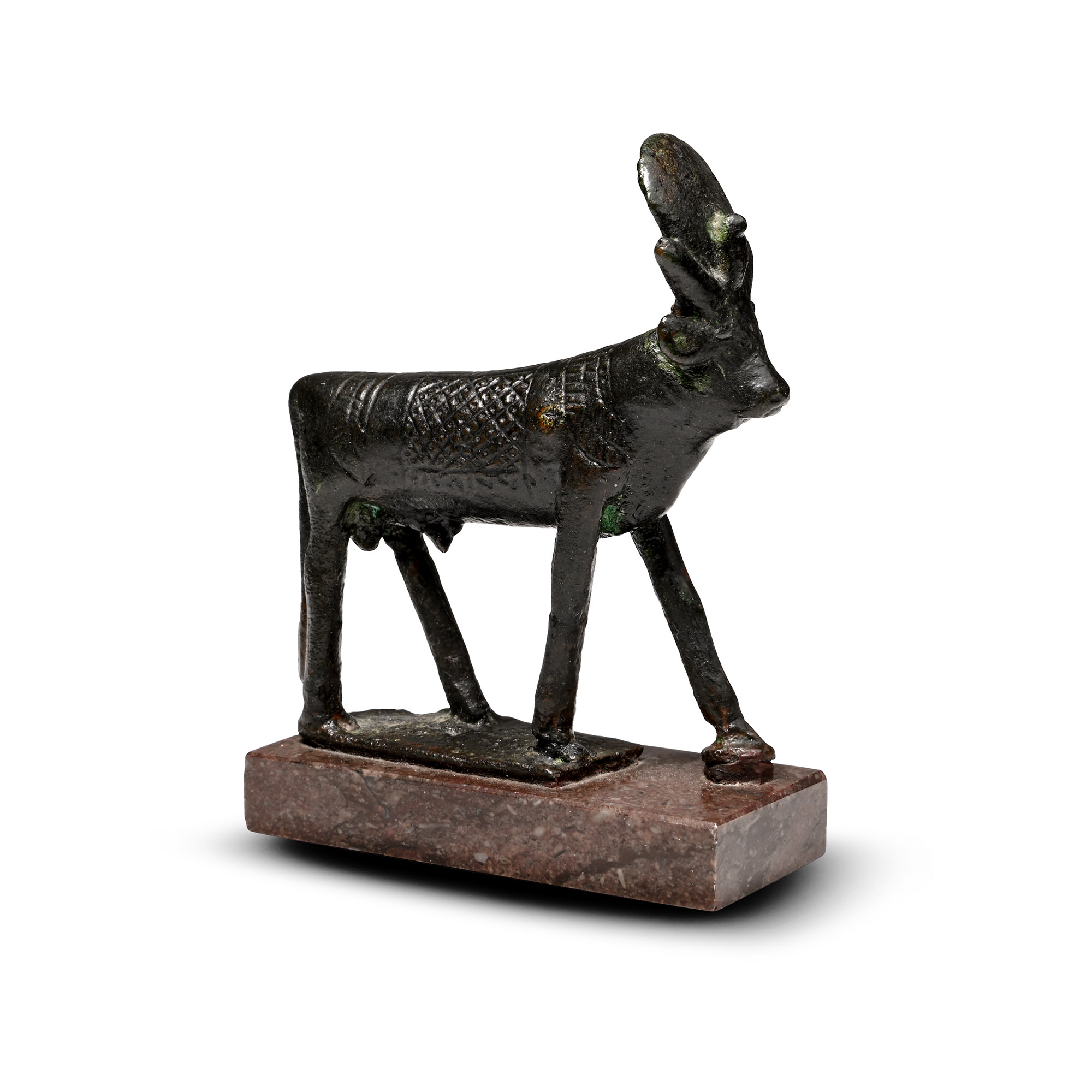
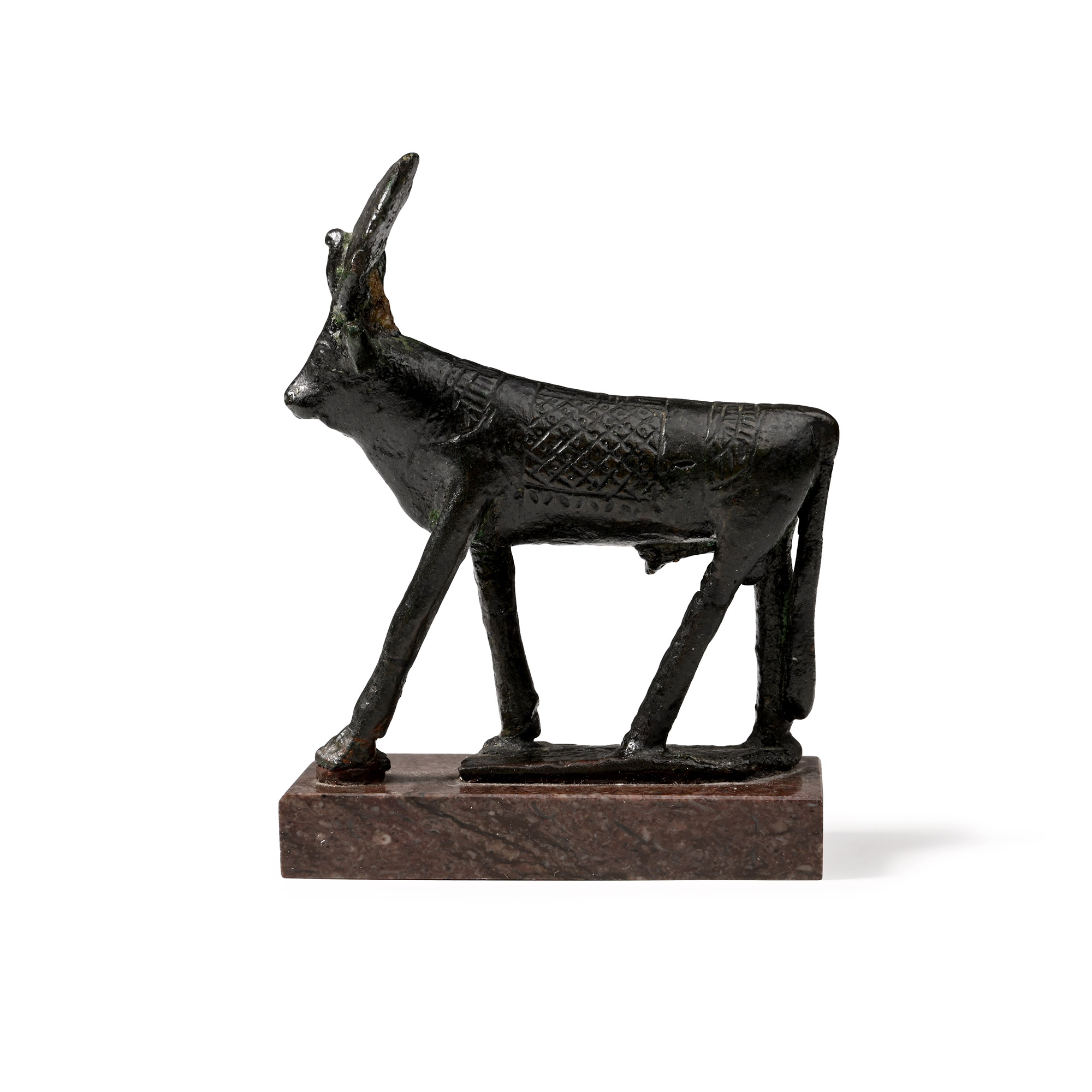
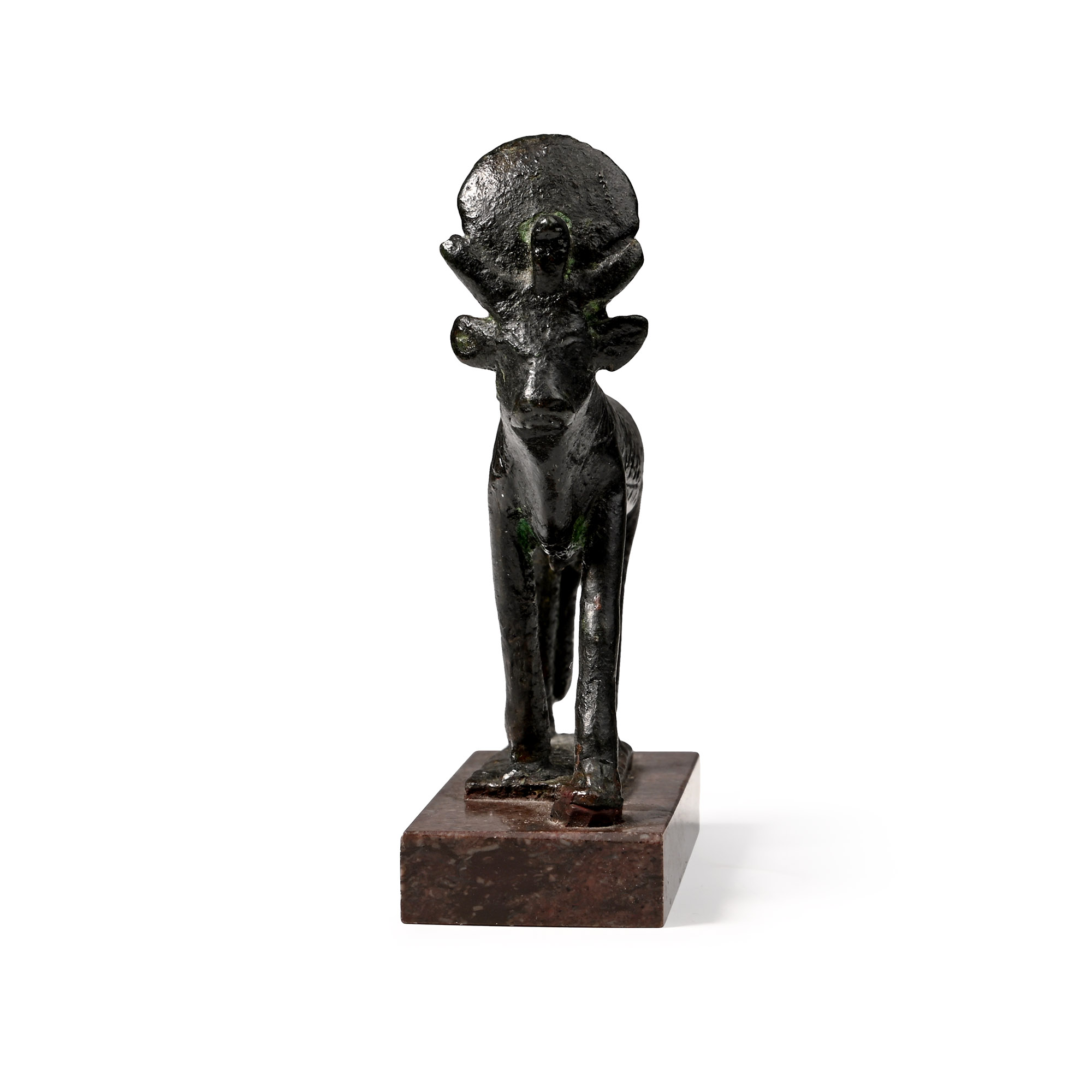
Egyptian Bronze Votive Apis Bull Statue
PTOLEMAIC PERIOD, 2ND-1ST CENTURY B.C.
2 7/8 in. (90 grams total, 72 mm high including stand).
Small votive statuette of a bull advancing with a sun disc and uraeus between the horns, on a rectangular plinth; incised caparison and two falcons with outstretched wings on its back; phallus and testicles present; mounted on a custom-made stand.
ProvenanceEx Zurich art market, 1980s.
Private collection Brigitte Leu, Zurich, between 1980 and 2003.
Cf. Roeder, G., Ägyptische Bronzefiguren II, Berlin, 1956, pl. 48b, for a similarly engraved bronze.
FootnotesIn Ancient Egypt, bull deities embodied aspects of fertility or the creative power of certain gods, such as Ra. Originally, the Apis bull was a fertility god in his own right, but he could also merge syncretically with other deities. For example, the creator god Ptah of Memphis found his "living repetition" in the Apis bull. When an Apis bull died, it was given a lavish funeral and interred in a magnificent hard-stone sarcophagus within the dedicated catacombs at Saqqara known as the Serapeum.
CONDITIONTimeLine Auctions follows a vetting process to ensure the authenticity and legality of all items, reinforcing our commitment to integrity and responsible trading. Each antiquity, antique, and coin lot undergoes thorough examination by a vetting committee of at least ten external specialists, professional trade association members, scientists, and archaeologists: Our Vetting Process
AUCTIONS:
TimeLine is a leading auction house specialising in antiquities, ancient art, collectables, natural history, coins, medals, and books. Our auctions offer museums, collectors, historians, and enthusiasts the opportunity to acquire unique and historically significant pieces.
LOT 0063
Egyptian Bronze Votive Apis Bull Statue
Estimate £1,200 - 1,700€1,390 - 1,970 (for guidance only)$1,620 - 2,300 (for guidance only)
Opening Bid
£650 (EUR 754; USD 878) ‡+BP*
-
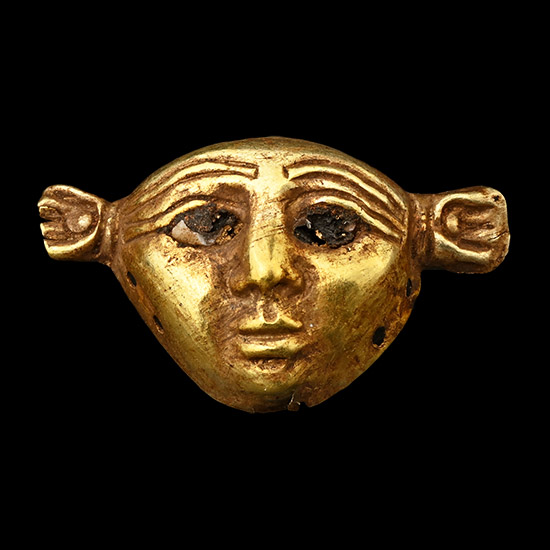
Egyptian Gold Hathor Face Mask
Late Period-Ptolemaic Period, circa 664-30 B.C.Estimate: £1,800 - 2,400 (+bp*)
Opening Bid: £900
Depicted as a woman's head with cow ears, her eyebrows and cosmetic lines carefully defined, with her eyes retaining traces of inlay. 0.96 grams, 28 mm
From the collection of a UK gentleman, London, UK, by descent from his family collection 1970s.
This particular appearance of Hathor, with a human head and cow ears, often appears on columns, particularly in temples associated with goddesses or mammisi-temples ("birth houses"), which were devoted to the birth of a goddess's divine son. The form also appears in the decoration of sistra used in Hathoric and birth-related rituals. Therefore, this diminutive gold image embodies Hathor's symbolic protective potency in all matters maternal. -
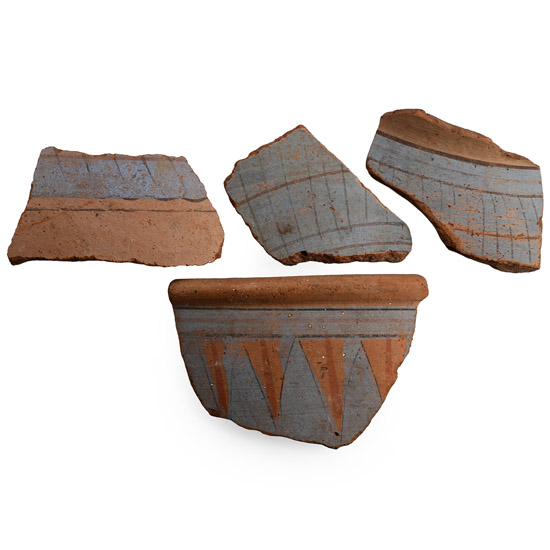
Large Egyptian Painted Bowl Fragments
New Kingdom, 18th Dynasty, Amarna Period, 1379-1362 B.C.Estimate: £80 - 100 (+bp*)
Opening Bid: £5
Four highly decorated fragments, including one rim sherd. 175 grams total, 8.2-10.6 cm
Acquired circa 1979. From the private collection of Peter Clayton, FCILIP, Dip, Arch, FSA, FRNS, Hemel Hempstead, Hertfordshire, UK; formed since the late 1950s.
A wide variety of vessel forms with blue-painted decoration were found at Amarna, most featuring floral and geometric designs, while a smaller number bore figurative elements (The City of Akhenaten. Part I. Excavations of 1921 and 1922 at el-'Amarneh, London, 1923, pls. XLIV-XLV, for examples of blue-painted vessels and decorations). -
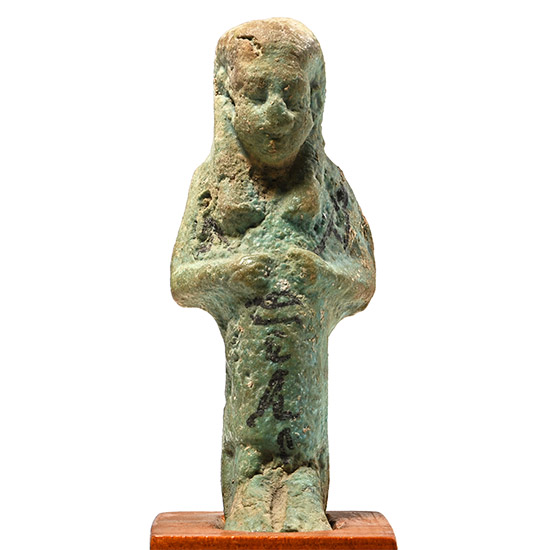
Egyptian Green Glazed Faience Shabti of the Osiris Hori
Third Intermediate Period, 1069-860 B.C.Estimate: £400 - 600 (+bp*)
Opening Bid: £5
Mummiform figure wearing a lappet wig, hands placed knuckle-to-knuckle at the chest, holding black-painted hoes and a rudimentary seed bag on the back; a column of hieroglyphic inscription on the lower body: 'The Osiris. Hori(?)'; feet modelled in detail; mounted on a custom-made stand. 102 grams total, 12 cm including stand
Acquired from the Egyptian Exploration Society, 30th June 1965, for 2 shillings and sixpence. From the private collection of Peter Clayton, FCILIP, Dip, Arch, FSA, FRNS, Hemel Hempstead, Hertfordshire, UK; formed since the late 1950s. Accompanied by an old handwritten information card by Peter Clayton, collection no.117.
