
Loading, please wait...
LOT 0010
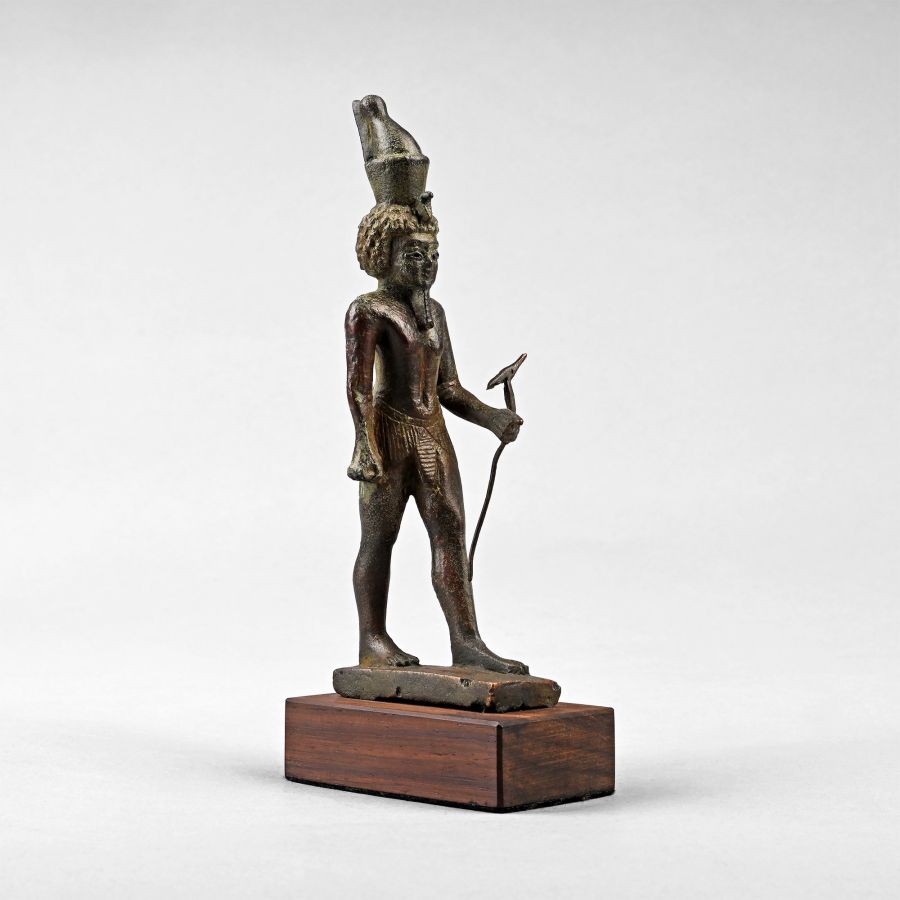
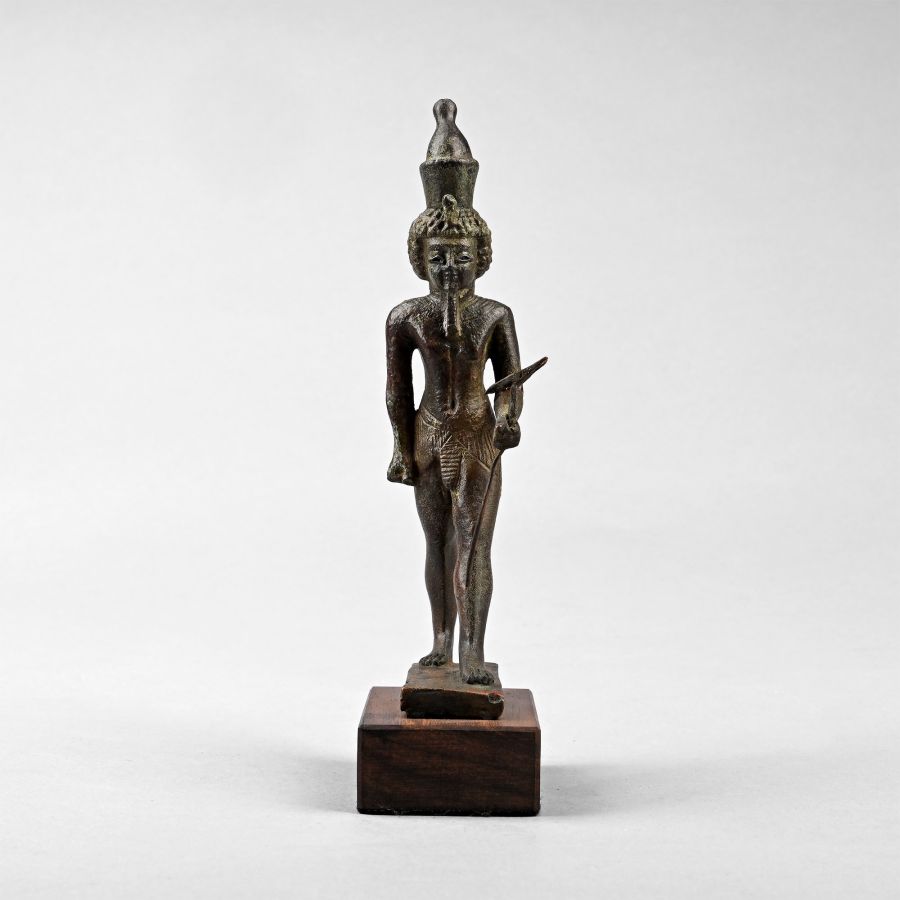
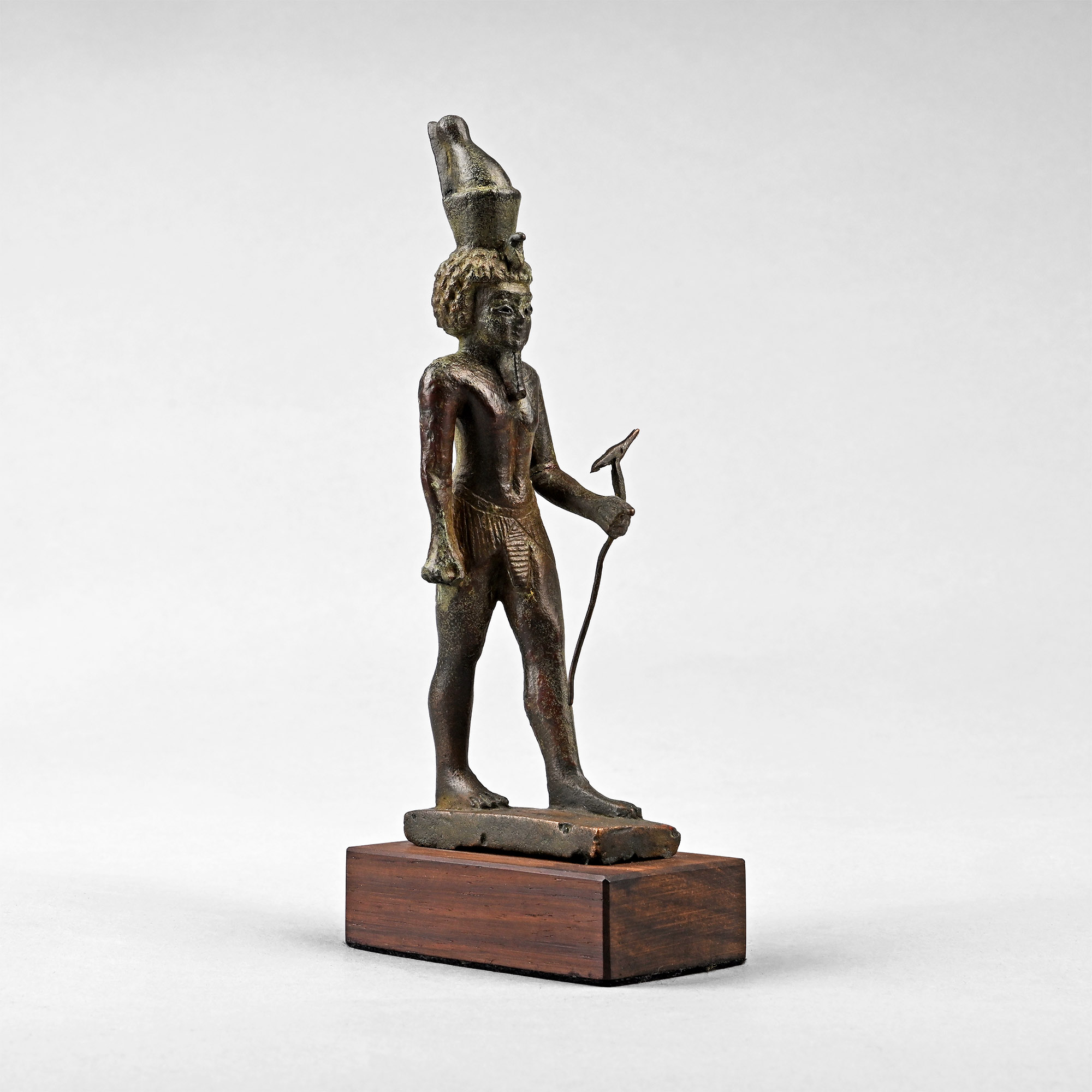
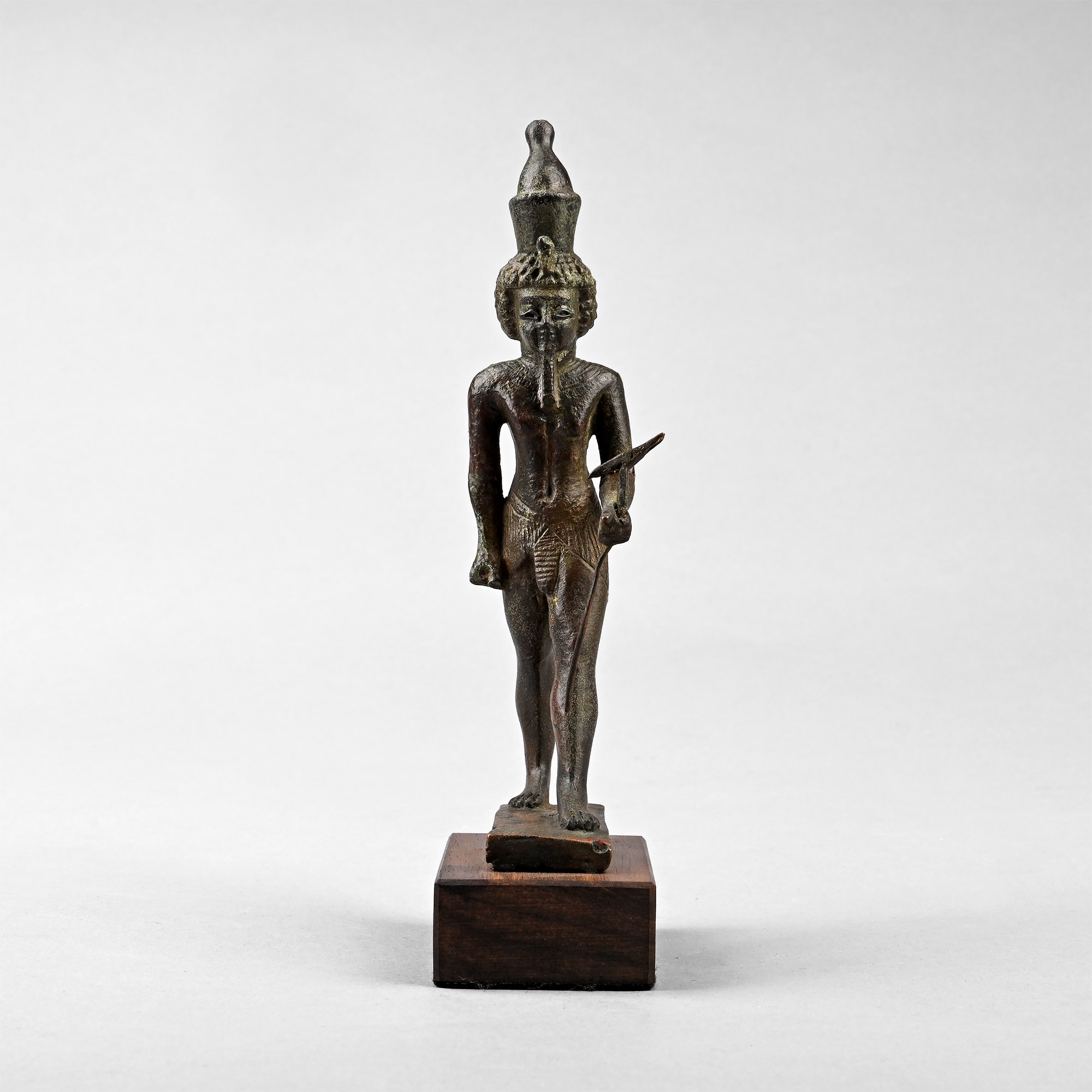
Egyptian Bronze Statuette of the God Neferhotep
PTOLEMAIC PERIOD, 332-30 B.C.
6 3/4 in. (345 grams total, 17.3 cm high including stand).
Neferhotep depicted advancing on a rectangular base, holding in the left hand the was sceptre, topped with the stylised head of an animal linked to the god Seth, with the right arm held rigid by the side with a clenched fist; wearing a Pschent crown with uraeus above the brow, a short, pleated shendyt kilt, and a broad multi-strand collar; the head features a tightly curled wig, false beard, and lentoid wire rims around the eyes; mounted on a custom-made stand.
ProvenancePrivate collection of Mrs Bogaert, formed in 1949, Ghent, near Brussels, Belgium.
Ex private collection, London, UK.
This lot has been checked against the Interpol Database of stolen works of art and is accompanied by search certificate number no.13310-258230.
Cf. Daressy, G., Catalogue général des antiquités égyptiennes du Musée du Caire N° 38001-39384 Statues de divinités, Cairo, 1906, pl. VI, no. 38071, for a similar example from the Serapeum at Saqqara.
FootnotesNeferhotep was explicitly recognised as a deity with a cult only from the Late Period, although it may have been understood earlier and later as the incarnation of the youthful divine king, since pharaohs from the 18th Dynasty to the Ptolemaic Period are sometimes depicted wearing the same wig. Neferhotep, whose name translates as 'the perfect one is at peace,' was considered to be the son of Hathor and was venerated at Hu (Diospolis Parva), as well as at Karnak, Dendera, and Behbeit el-Hagar. Provenanced statues of the god originate from the Memphite region.
CONDITIONTimeLine Auctions follows a vetting process to ensure the authenticity and legality of all items, reinforcing our commitment to integrity and responsible trading. Each antiquity, antique, and coin lot undergoes thorough examination by a vetting committee of at least ten external specialists, professional trade association members, scientists, and archaeologists: Our Vetting Process
AUCTIONS:
TimeLine is a leading auction house specialising in antiquities, ancient art, collectables, natural history, coins, medals, and books. Our auctions offer museums, collectors, historians, and enthusiasts the opportunity to acquire unique and historically significant pieces.
LOT 0010
Egyptian Bronze Statuette of the God Neferhotep
Estimate £8,000 - 10,000€9,280 - 11,600 (for guidance only)$10,800 - 13,500 (for guidance only)
-
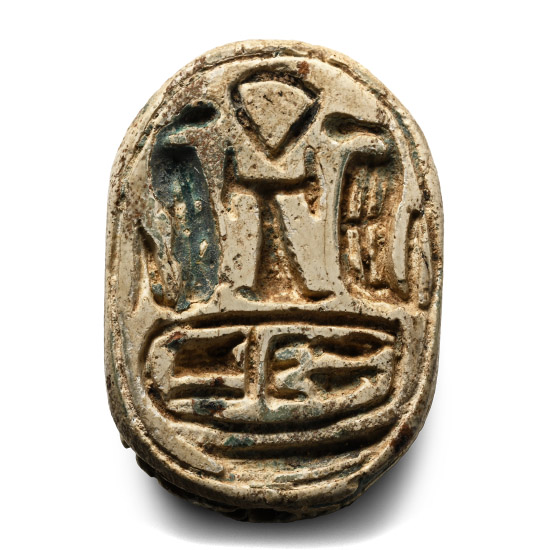
Egyptian Steatite Scarab with Cartouche
Late Period, 664-332 B.C.Sold for (Inc. bp): £117
With detailing to the carapace, mouth and legs, underside with cartouche, ankh and other symbols. 2.98 grams, 18 mm
From the private collection of a European gentleman (1942-2024), formed since the 1970s. -
.jpg)
Egyptian Bronze Seated Cat Statuette
Late Period, 664-332 B.C.Estimate: £600 - 800 (+bp*)
Opening Bid: £333
Bastet in crouching pose with her tail wrapped close to right side of her body, seated on a tongue-shaped base, with a suspension loop on the creature’s back. 90 grams, 55 mm
Acquired on the UK art market, 1990s. Private collection, New York, USA. -
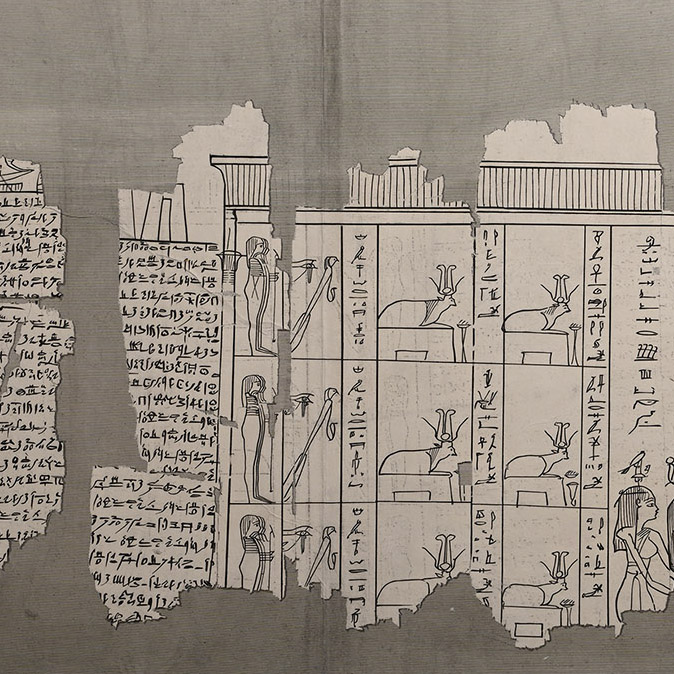
Very Large Egyptian Expedition Lithograph of the Hypogees Papyrus Manuscript from Thebes
Early 19th century A.D.Estimate: £80 - 100 (+bp*)
Opening Bid: £40
Proof etching on laid paper of plate 65 from Vol.II of Description de l'Égypte : ou, Recueil des observations et des recherches qui ont été faites en Égypte pendant l'expédition de l'armée française. entitled Thèbes. Hypogées. Manuscrit sur papyrus. 5eme partie. 244 grams, 103.5 x 69.5 cm
From the collection of a North American priest. Acquired between 1981-1996. Property of a North American collector.
Produced between February 1802 and 1830 on the orders of Napoleon Bonaparte; published between 1809 and 1828. Just 1,000 copies were distributed to various institutions, printed on laid paper with an 'Égypte ancienne et moderne' watermark. The book is subtitled Recueil des observations et des recherches qui ont été faites en Égypte pendant l’expédition de l’Armée française, publié par les ordres de Sa Majesté l’Empereur Napoléon le Grand (Gathering of observations and discoveries which were made in Egypt during the expedition of the French army, published on the orders of His Majesty the Emperor Napoleon the Great). It was the world's first encyclopedia devoted exclusively to the remains of ancient Egypt. The plates of this book are the first to present the archaeological sites of Thebes (Luxor). The papyrus manuscript was recovered from an underground tomb chamber (hypogeum).
