
Loading, please wait...


LOT 0062
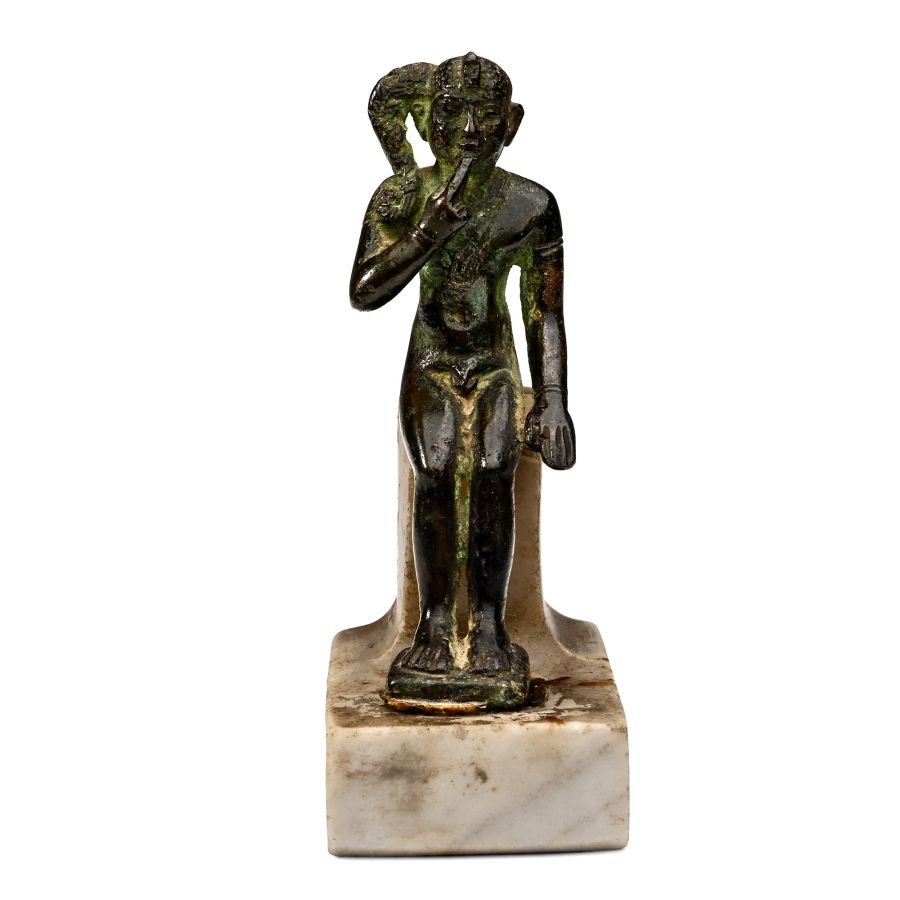
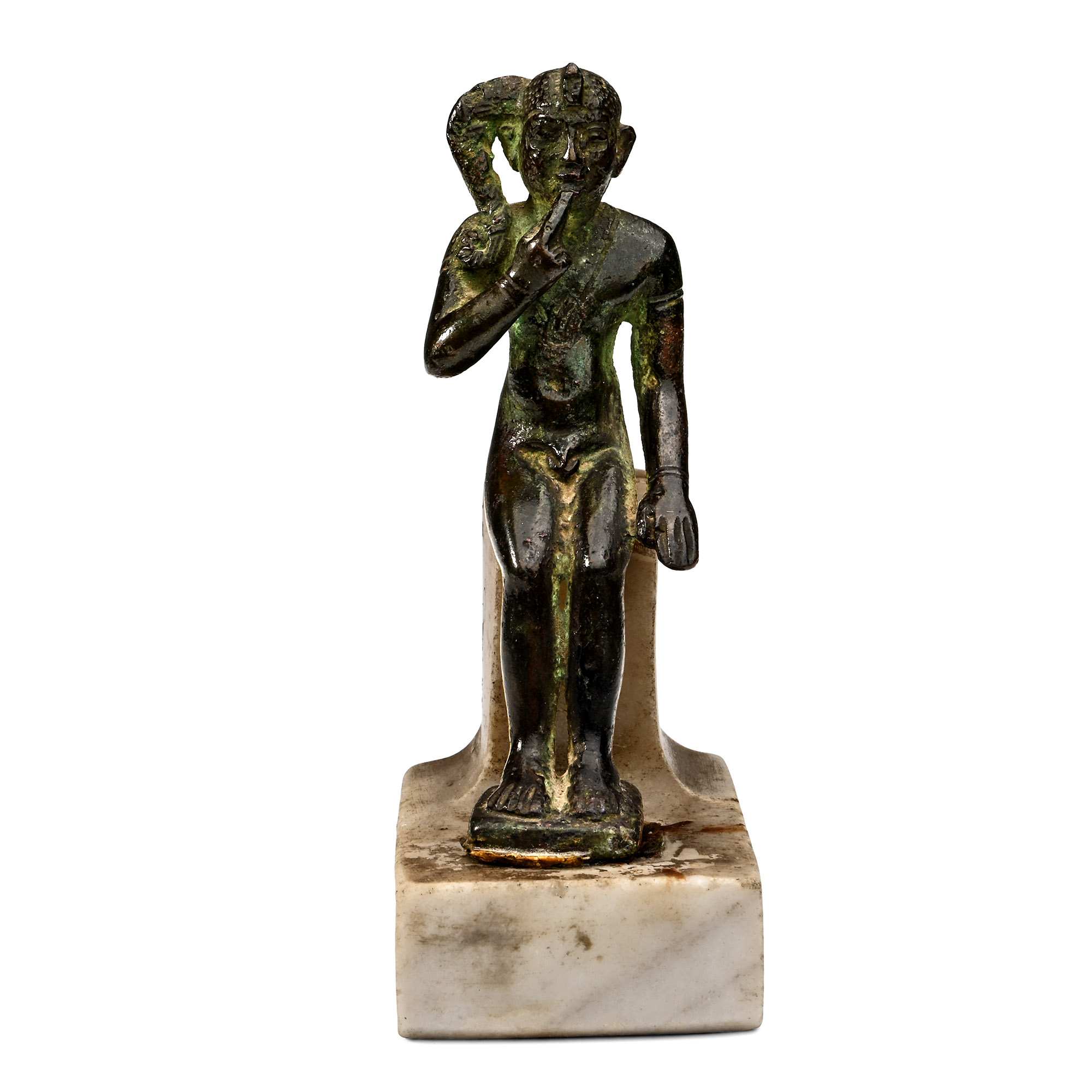
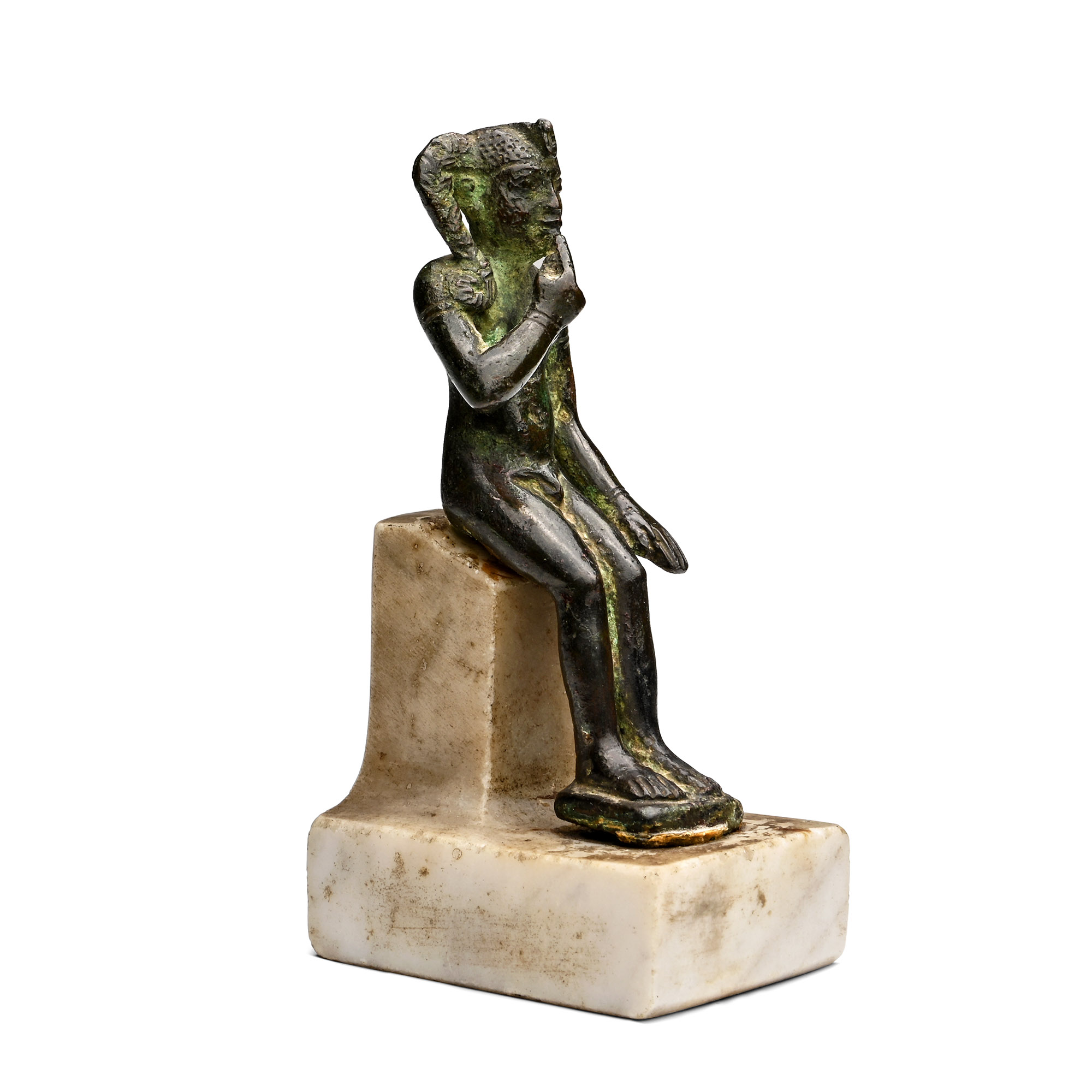
Egyptian Bronze Statuette of Harpocrates
3RD CENTURY B.C.
4 1/4 in. (281 grams, 10.7 cm high).
Votive statuette with youthful locks and a uraeus on his forehead; wearing the heart amulet around his neck; depicted nude, holding his finger to his mouth, a gesture identifying him as a child god; feet resting on a plinth.
ProvenanceEx Tschudi Carlin, circa 1920.
with Cahn Auktionen AG, Basel, Young Collectors Auction, 2015, no.147.
This lot has been checked against the Interpol Database of stolen works of art and is accompanied by search certificate no.13472-263066.
Cf. Roeder, G., Ägyptische Bronzefiguren II, Berlin, 1956, pl. 20a-b, for a similarly styled figure.
FootnotesHarpocrates is the Greek equivalent of the Egyptian name Hor-pa-khered, which means ‘Horus the Child’. This name refers to Horus as the divine infant of Isis and Osiris. Wearing an amulet of Harpocrates was believed to provide the same protection that Isis granted to her beloved son. Larger bronze statuettes were probably votive offerings to Harpocrates, intended to secure his favour and protection.
CONDITIONTimeLine Auctions follows a vetting process to ensure the authenticity and legality of all items, reinforcing our commitment to integrity and responsible trading. Each antiquity, antique, and coin lot undergoes thorough examination by a vetting committee of at least ten external specialists, professional trade association members, scientists, and archaeologists: Our Vetting Process
AUCTIONS:
TimeLine is a leading auction house specialising in antiquities, ancient art, collectables, natural history, coins, medals, and books. Our auctions offer museums, collectors, historians, and enthusiasts the opportunity to acquire unique and historically significant pieces.
LOT 0062
Egyptian Bronze Statuette of Harpocrates
Estimate £2,000 - 3,000€2,320 - 3,480 (for guidance only)$2,700 - 4,050 (for guidance only)
Opening Bid
£1,100 (EUR 1,276; USD 1,485) ‡+BP*
-
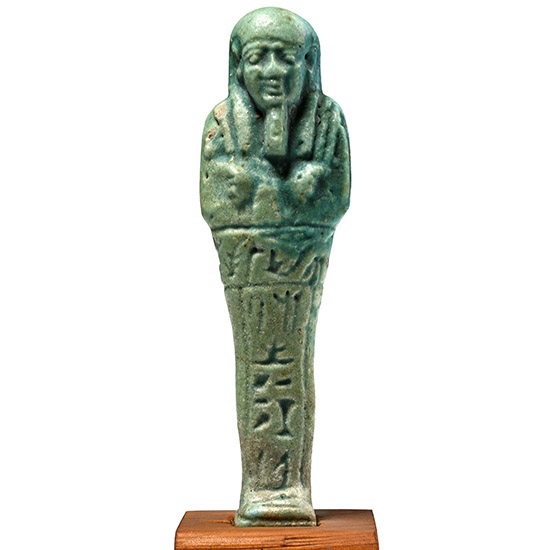
Egyptian Blue Glazed Faience Shabti of the Royal Scribe Aahmes
Persian Period, circa 6th century B.C.Estimate: £500 - 700 (+bp*)
Bids: 3 | Current Bid: £110
Mummiform figure wearing a lappet wig and long false beard, arms crossed over the chest; the left hand holds a pick, the right a hoe, and a cord from a small seed bag hangs over the shoulder; plain dorsal pillar; a T-form hieroglyphic text arrangement on the lower body, with the horizontal line reading: 'The illuminated one, the Osiris, the royal scribe Aahmes,' and the central column 'born to Hotep-Bastet, true of voice'; with a wooden display stand bearing the legend 'Ushabti of Aahmes, Royal Scribe, Persian period'. 44.7 grams, 10.7 cm (62.2 grams total, 12.2 cm including stand)
Acquired Herne Bay High Street, circa February 1957, for 2 shillings and sixpence. From the private collection of Peter Clayton, FCILIP, Dip, Arch, FSA, FRNS, Hemel Hempstead, Hertfordshire, UK; formed since the late 1950s. Accompanied by an old handwritten information card by Peter Clayton, collection no.4. -
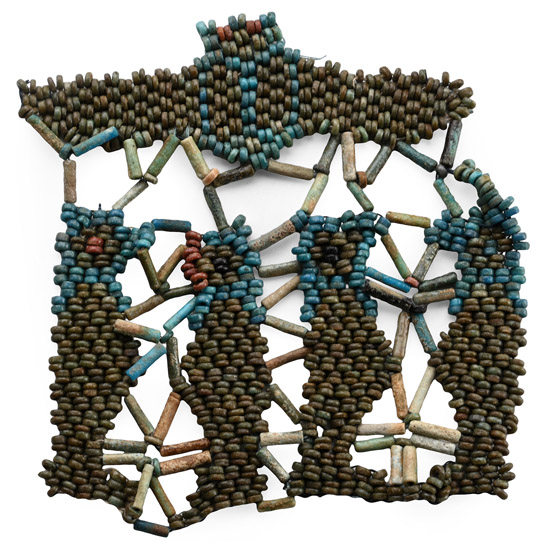
Egyptian Mummy Bead Winged Scarab and Four Sons of Horus
Late Period-Ptolemaic Period, circa 664-30 B.C.Estimate: £100 - 140 (+bp*)
Opening Bid: £50
Comprising a beaded winged scarab with the Four Sons of Horus beneath. 24.2 grams, 10.5 cm
Ex Art Shop Windsor, 1990s. From a private UK collection.
Winged scarabs were often used as funerary amulets and were believed to symbolise the deceased's rebirth and regeneration. The Four Sons of Horus were deities who safeguarded the deceased's internal organs. The human-headed Imsety protected the liver, the baboon-headed Hapy the lungs, the jackal-headed Duamutef the stomach, and the falcon-headed Qebehsenuef the intestines. -
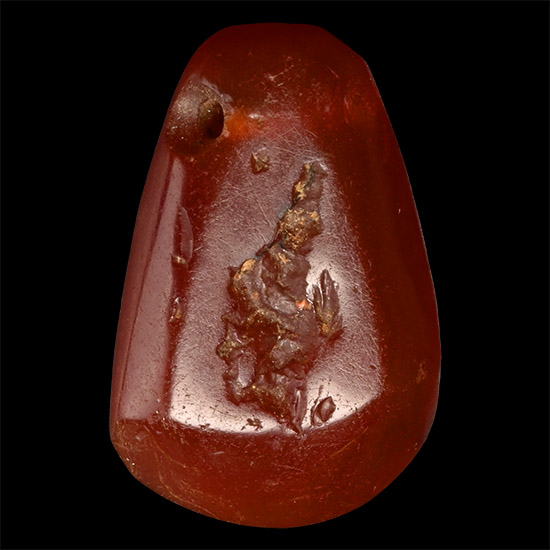
Egyptian Carnelian Amulet with Isis
Late-Ptolemaic Period, circa 664-30 B.C.Estimate: £200 - 300 (+bp*)
Opening Bid: £75
Trapezoidal in plan and biconvex in section, with faceted edges, bearing a depiction of Isis Lactans; pierced for suspension. 2.08 grams, 19 mm
Property of a London, UK, gentleman, 1970-2000.
