
Loading, please wait...


LOT 0476
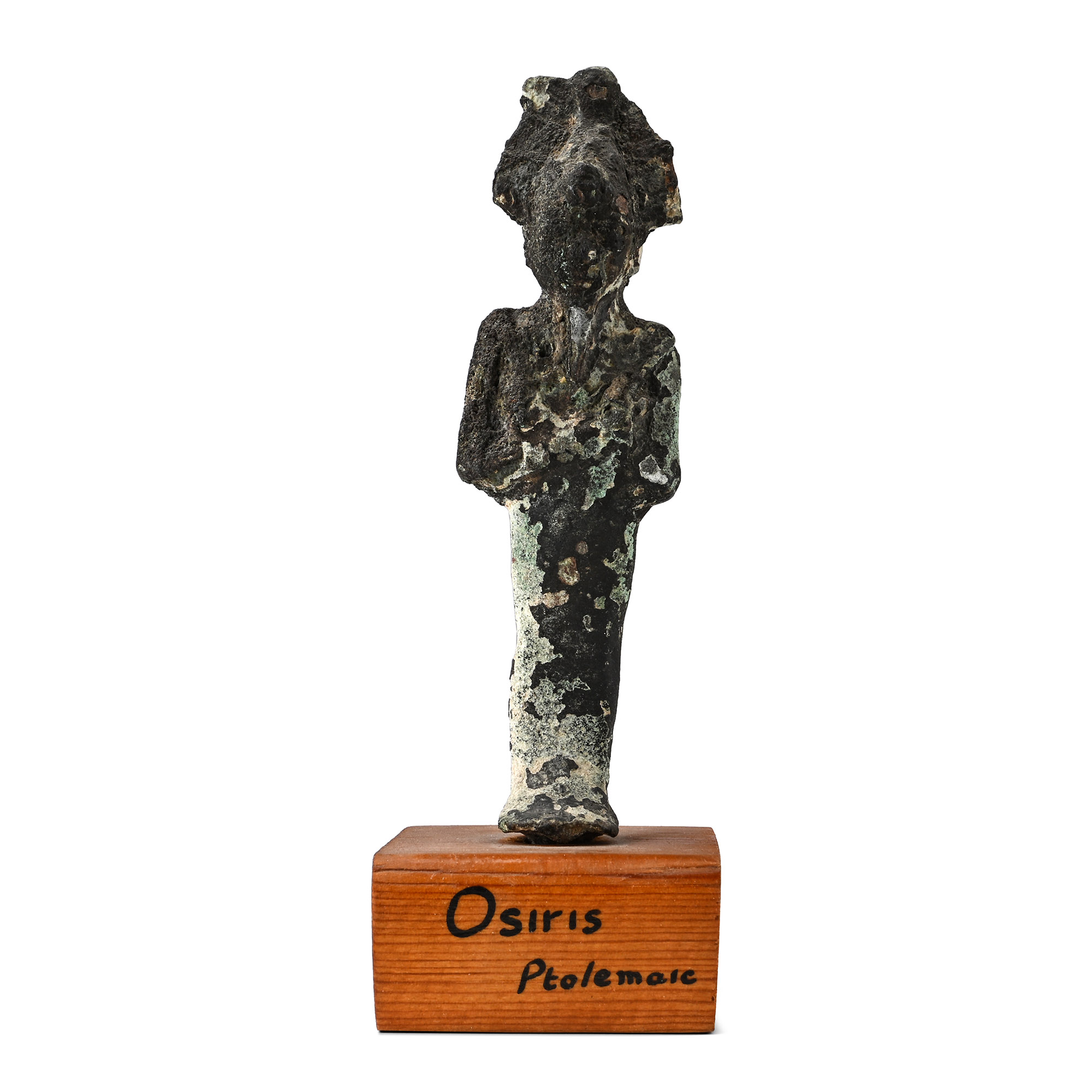
Egyptian Bronze Standing Figure of the God Osiris
LATE PERIOD-PTOLEMAIC PERIOD, 664-30 B.C.
4 1/2 in. (56.3 grams total, 11.6 cm high including stand).
Modelled in the round, with hands crossed on the chest, holding the deity's characteristic crook and flail, and wearing the atef- crown; mounted on a wooden display stand bearing the legend 'Osiris Ptolemaic'. [No Reserve]
ProvenanceAcquired Herne Bay High Street, June 1957.
From the private collection of Peter Clayton, FCILIP, Dip, Arch, FSA, FRNS, Hemel Hempstead, Hertfordshire, UK; formed since the late 1950s.
Accompanied by an old handwritten information card by Peter Clayton, collection no.8.
Cf. Tiribilli, E., The bronze figurines of the Petrie Museum from 2000 BC to AD 400, GHP Egyptology 28, London, 2018, p. 70, no. 83, for similar.
CONDITIONTimeLine Auctions follows a vetting process to ensure the authenticity and legality of all items, reinforcing our commitment to integrity and responsible trading. Each antiquity, antique, and coin lot undergoes thorough examination by a vetting committee of at least ten external specialists, professional trade association members, scientists, and archaeologists: Our Vetting Process
AUCTIONS:
TimeLine is a leading auction house specialising in antiquities, ancient art, collectables, natural history, coins, medals, and books. Our auctions offer museums, collectors, historians, and enthusiasts the opportunity to acquire unique and historically significant pieces.
LOT 0476
Egyptian Bronze Standing Figure of the God Osiris
Estimate £120 - 170€140 - 200 (for guidance only)$160 - 230 (for guidance only)
-
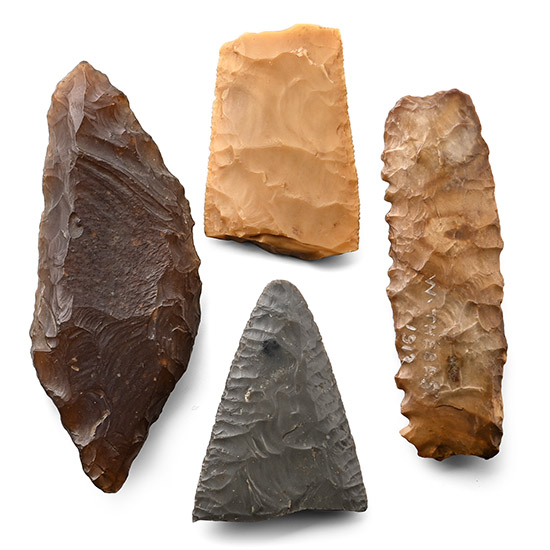
Egyptian Stone Age Knapped Tool Group from Thebes
Neolithic Period, 11,000-5,200 B.P.Estimate: £60 - 80 (+bp*)
Bids: 1 | Current Bid: £5
Comprising: a long, bifacially flaked blade, a rectangular scraper or adze, a slender, elongated blade or knife, and a triangular projectile point or axe head. 89 grams total, 52-94 mm
Found Thebes. From the collection of A.D. Passmore (1879-1958), his collection of flints from the area of Stonehenge was donated to the Ashmolean Museum in the 1950s. From the private collection of Peter Clayton, FCILIP, Dip, Arch, FSA, FRNS, Hemel Hempstead, Hertfordshire, UK; formed since the late 1950s. Accompanied by a copy of an old handwritten information card by Peter Clayton. -
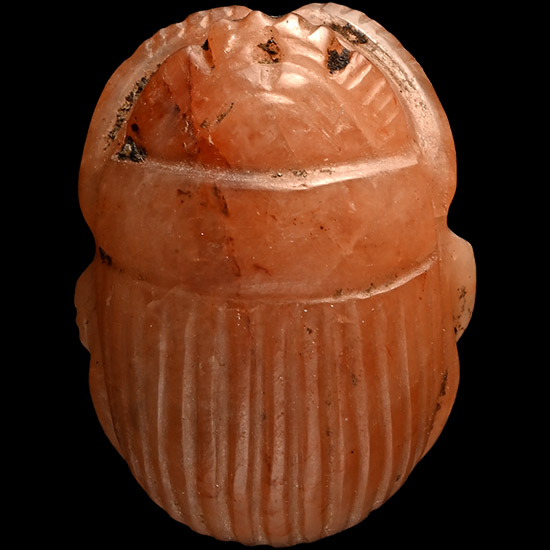
Egyptian Carnelian Heart Scarab
Late Period, 664-332 B.C.Estimate: £800 - 1,000 (+bp*)
Opening Bid: £400
With fine anatomical detailing on the body and striated wingcase, legs folded beneath the body and flanked by a ribbed suspension loop. 7.35 grams, 24 mm
From a mid 20th century collection.
The scarab amulet was one of ancient Egypt’s most widespread symbols, signifying rebirth, transformation, and protection. Modelled on the dung beetle associated with the sun god Khepri—believed to roll the sun across the sky—it symbolised the cycle of life and renewal. Used widely from the early Middle Kingdom onward, scarabs served as funerary amulets, personal charms, and seals, often inscribed with prayers or names. They reflect both spiritual beliefs and daily life in ancient Egypt. -
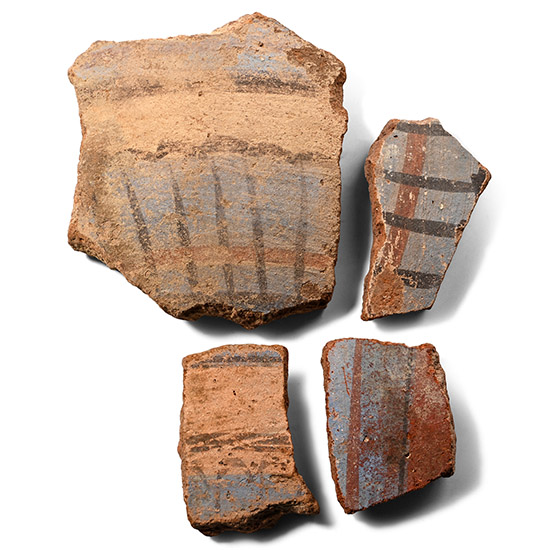
Egyptian Amarna Painted Pottery Fragments
New Kingdom, Amarna Period, 1353-1336 B.C.Estimate: £50 - 70 (+bp*)
Opening Bid: £5
Including bowl fragment with painted flower detailing, and other types. 65 grams total, 36-70 mm
From a private collection formed 1970s-1990s.
