
Loading, please wait...
LOT 0409
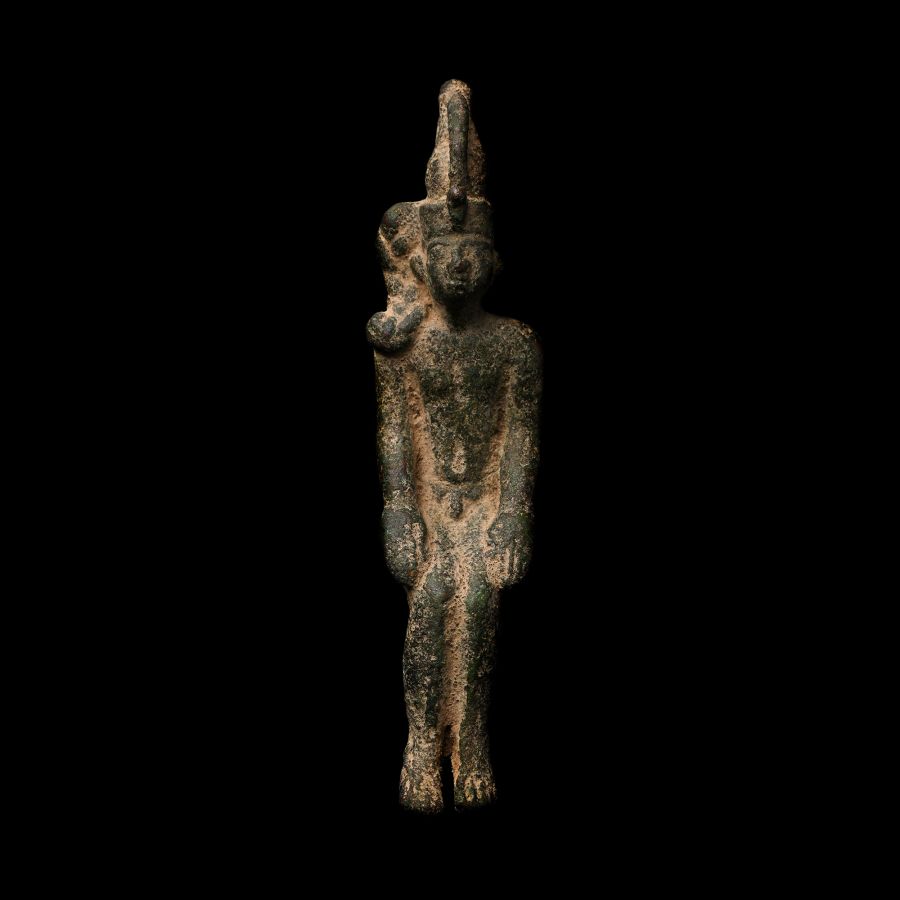
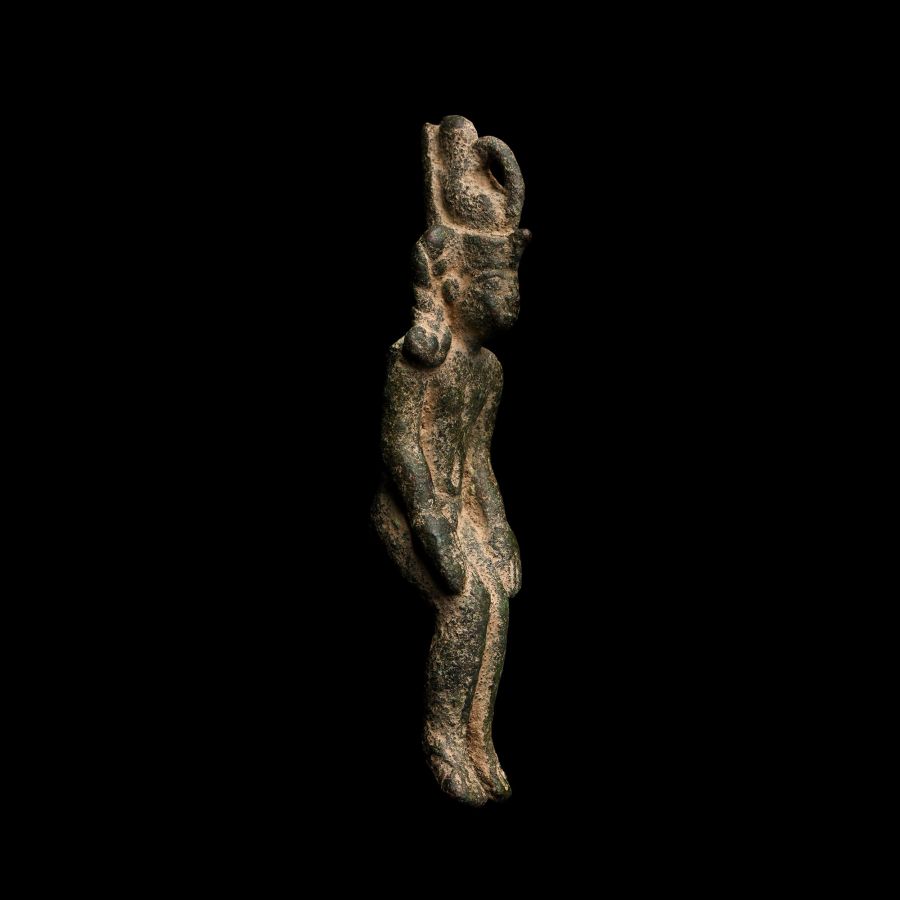
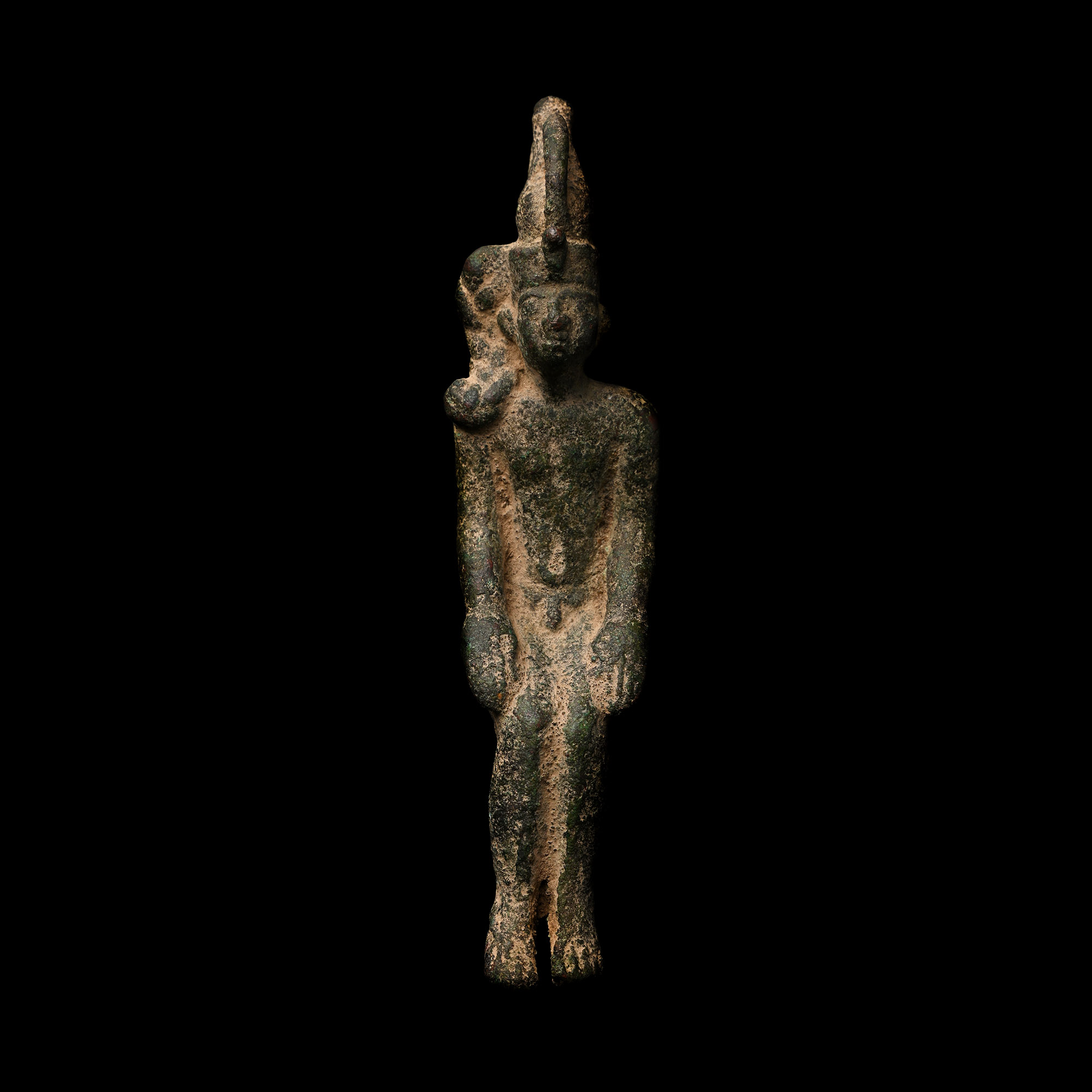
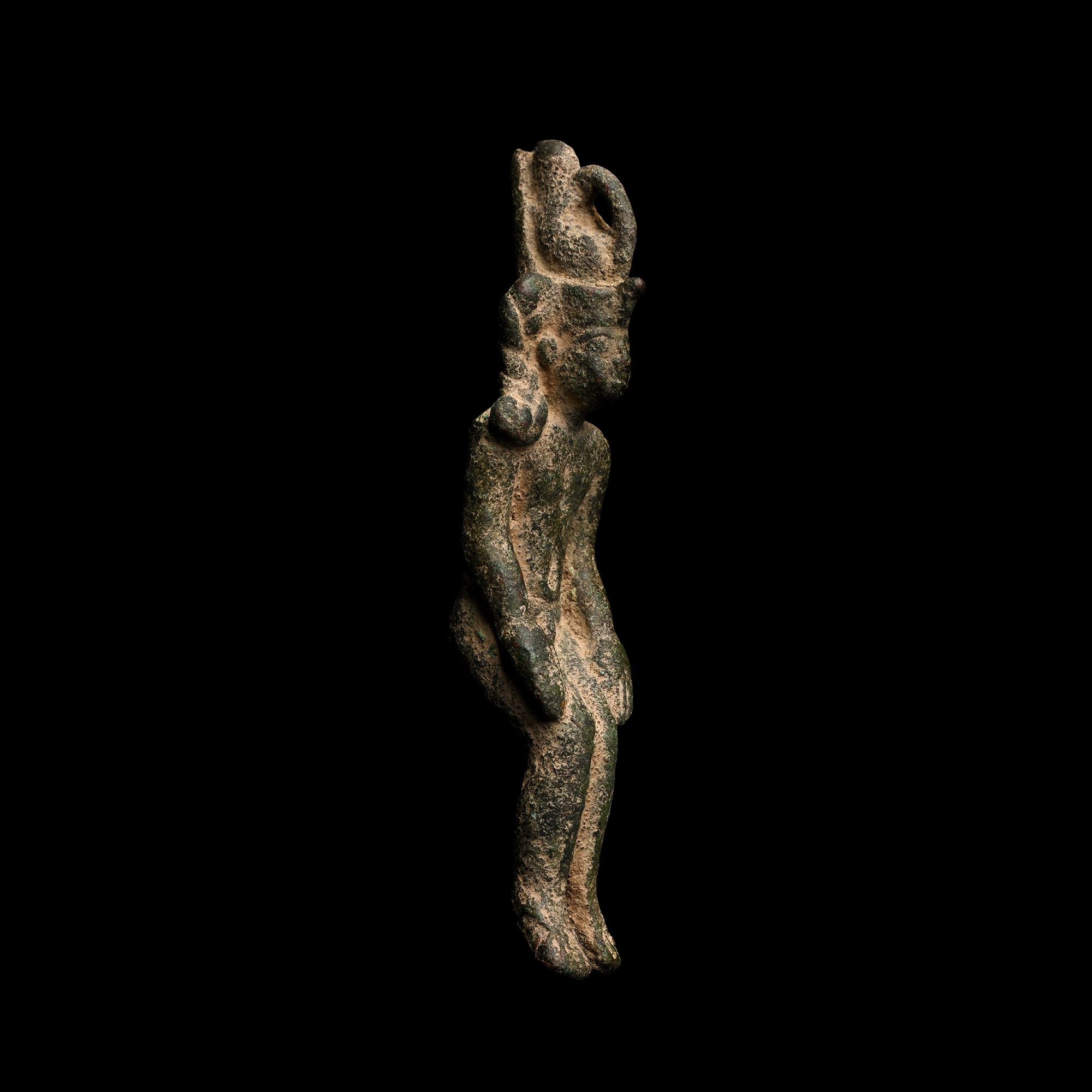
Egyptian Bronze Seated Harpocrates
LATE PERIOD, 664-332 B.C.
6 3/8 in. (389 grams, 16.2 cm).
Substantial cast figurine modelled in the round of Harpocrates sitting with hands on his thighs, double crown and sidelock.
ProvenanceFrom the collection of a gentleman, acquired on the London art market in the 1990s.
LiteratureCf. Roeder, G., Ägyptische Bronzefiguren II, Berlin, 1956, pl. 18p, for a similar example with heavy side-lock.
FootnotesHarpocrates is the Greek rendering of the Egyptian Hor-pa-khered, which means ‘Horus the Child’. This name refers to Horus as the divine infant of Isis and Osiris. Wearing an amulet of Harpocrates was believed to give the wearer the same protection that Isis offered to her beloved son. Larger bronze statuettes probably served as votive offerings to Harpocrates to secure his favour and protection.
CONDITIONTimeLine Auctions follows a vetting process to ensure the authenticity and legality of all items, reinforcing our commitment to integrity and responsible trading. Each antiquity, antique, and coin lot undergoes thorough examination by a vetting committee of at least ten external specialists, professional trade association members, scientists, and archaeologists: Our Vetting Process
AUCTIONS:
TimeLine is a leading auction house specialising in antiquities, ancient art, collectables, natural history, coins, medals, and books. Our auctions offer museums, collectors, historians, and enthusiasts the opportunity to acquire unique and historically significant pieces.
LOT 0409
Egyptian Bronze Seated Harpocrates
Estimate £800 - 1,000€930 - 1,160 (for guidance only)$1,080 - 1,350 (for guidance only)
-
.jpg)
Egypto-Phoenician Period Haematite Scarab with Winged Figure
700-500 B.C.Estimate: £500 - 700 (‡+bp*)
Opening Bid: £278
With a scene to underside of a winged figure advancing. 6.52 grams, 17 mm
Acquired in the mid 1980s-1990s. Private collection, Switzerland, thence by descent. Private collection, since the late 1990s. -
.jpg)
Large Egyptian Blue Faience Taweret Vessel
Late Period, 26th Dynasty, 664-525 B.C.Estimate: £8,000 - 10,000 (‡+bp*)
Opening Bid: £4,000
Composite animal figure with a hippopotamus's head and body, a crocodile's tail, and a human torso with arms, topped with a finely striated tripartite wig; the right hand, positioned beneath the left nipple, encloses a drilled hole connecting to the hollow body; a hole at the top of the head; mounted on a custom-made stand. 160 grams total, 17.3 cm including stand
Ex private French collection, since the early 1990s. Acquired from Galerie Reiner, rue Bonaparte, Paris. Artcurial, Paris, 6 November 2013, no.55. Accompanied by an academic report by Egyptologist Paul Whelan. Accompanied by a copy of French passport no.150578. This lot has been checked against the Interpol Database of stolen works of art and is accompanied by search certificate number no.13189-249212.
The vessel’s shape indicates it was likely used in magical and libationary rituals meant to invoke Taweret’s protective powers during childbirth and maternity. Usually depicted as a female hippopotamus with lion-like arms and legs and a crocodile’s back and tail, Taweret remains one of the most distinctive and recognisable deities in the Egyptian pantheon. Her name comes from the Egyptian word for "great" or "large" (tꜣwꜣrt), emphasising her powerful and protective nature. -
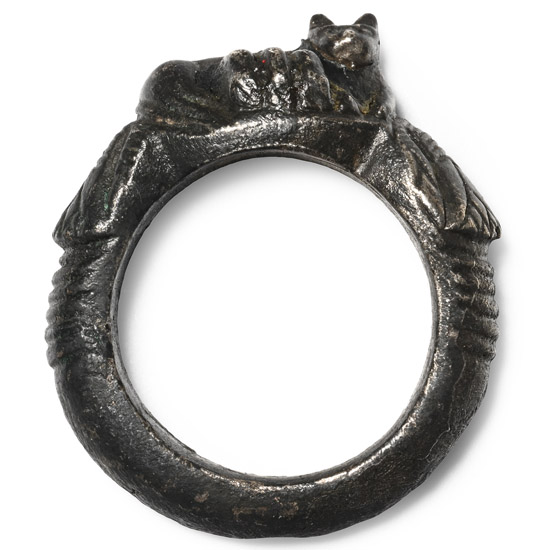
Romano-Egyptian Silver Ring with Cat and Kittens
Roman Period, 30 B.C.-323 AD.Sold for (Inc. bp): £468
D-section hoop with ribbed shoulder, papyrus-stem detailing and reclining cat with suckling kittens. 14.92 grams, 28.49 mm overall, 17.35 mm internal diameter (approximate size British M1/2, USA 6 1/4, Europe 13.09, Japan 12)
Ex Essex, UK, gentleman's collection, 1990s.
