
Loading, please wait...
LOT 0548
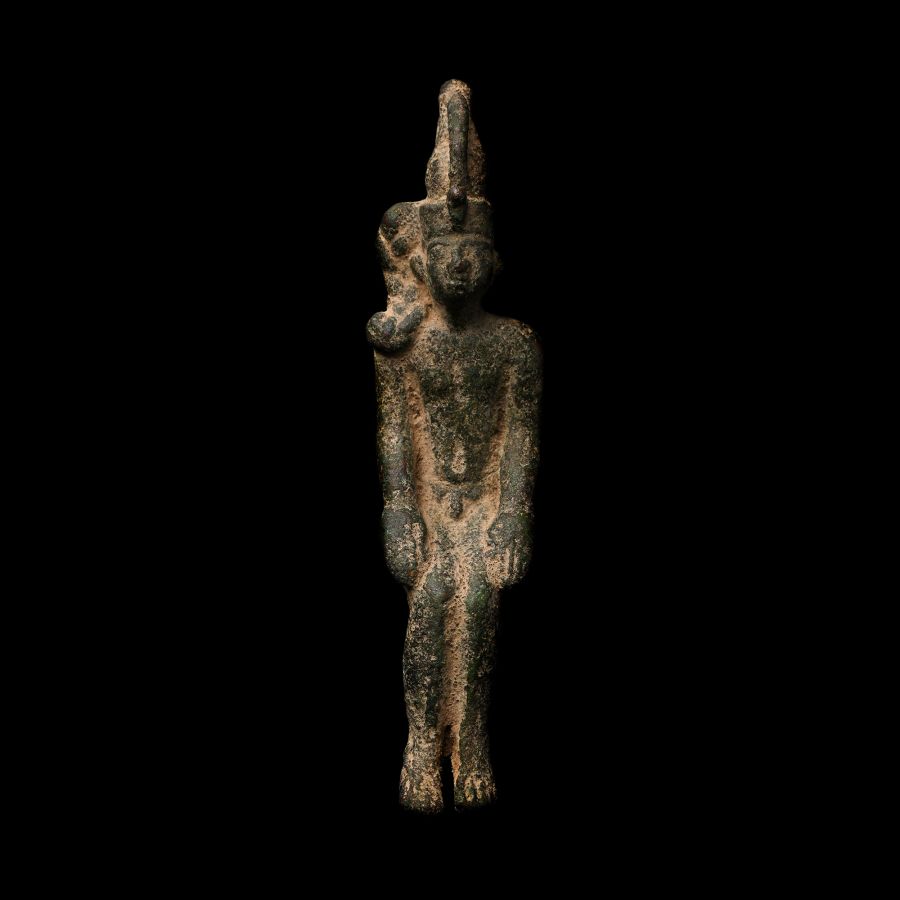
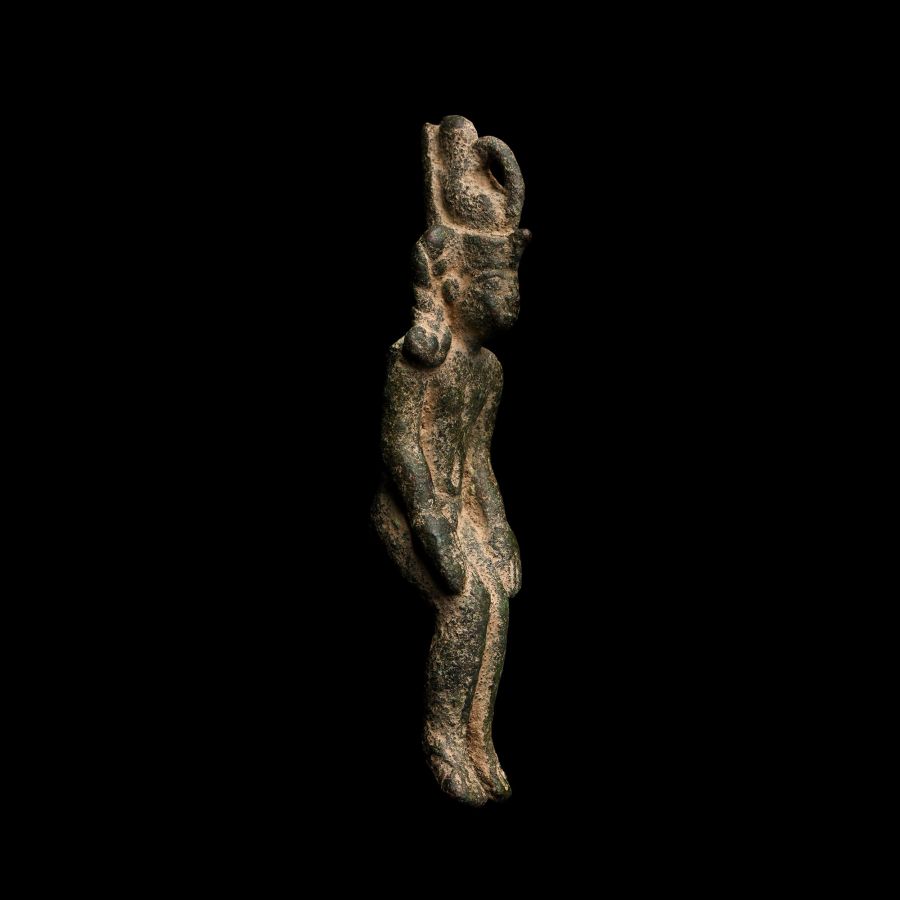
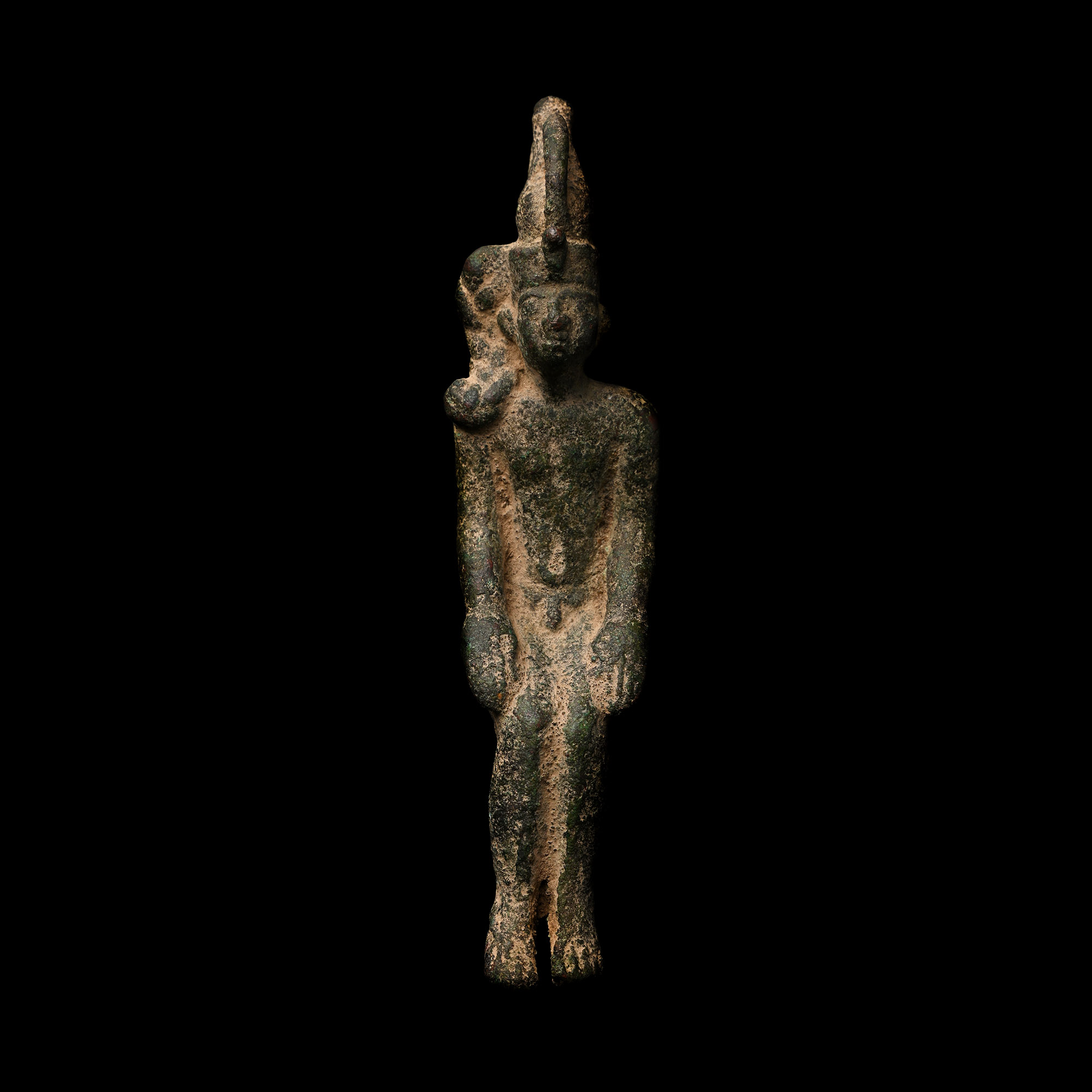
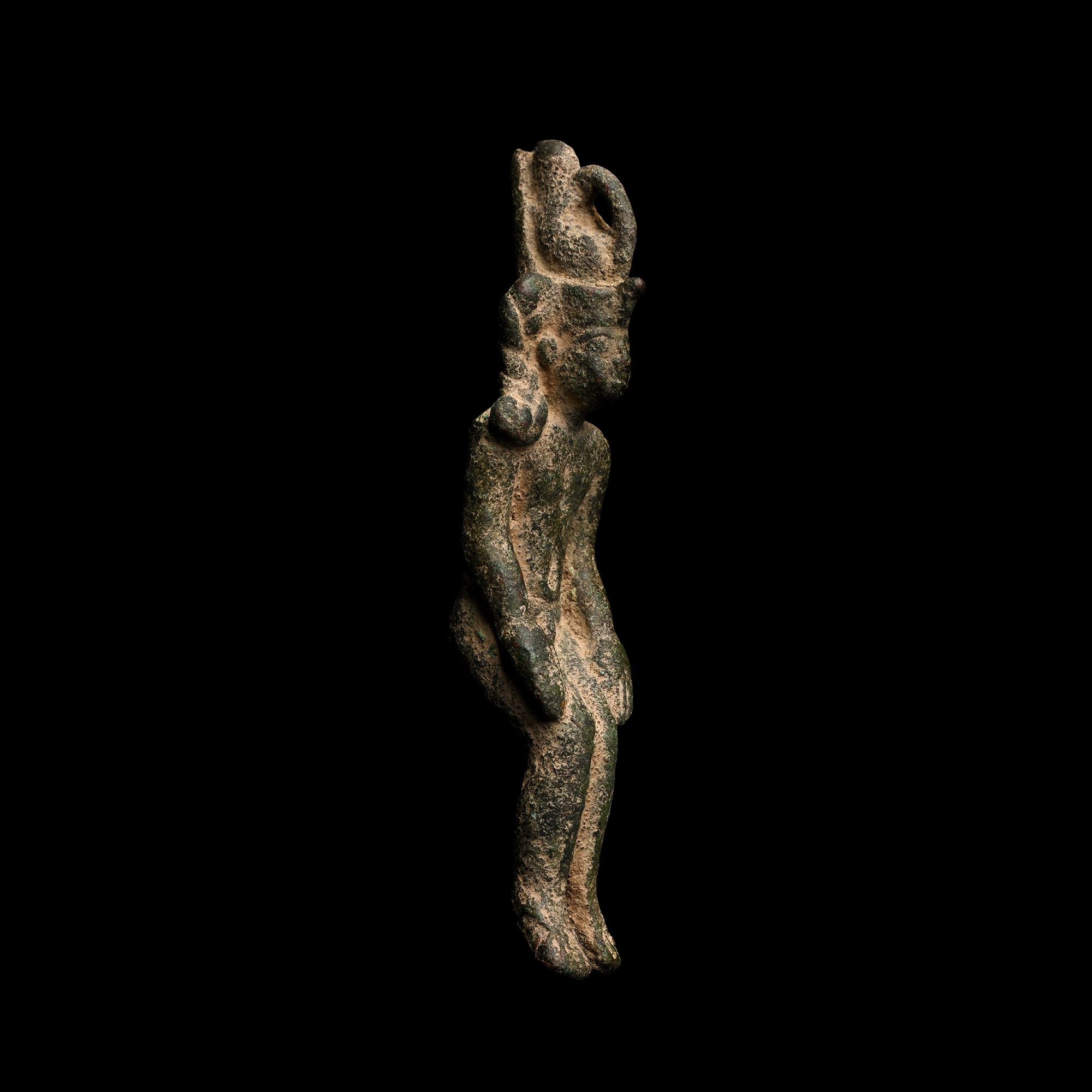
Egyptian Bronze Seated Harpocrates
LATE PERIOD, 664-332 B.C.
6 3/8 in. (389 grams, 16.2 cm).
Substantial cast figurine modelled in the round of Harpocrates sitting with hands on his thighs, double crown and sidelock.
ProvenanceFrom the collection of a gentleman, acquired on the London art market in the 1990s.
LiteratureCf. Roeder, G., Ägyptische Bronzefiguren II, Berlin, 1956, pl. 18p, for a similar example with heavy side-lock.
FootnotesHarpocrates is the Greek rendering of the Egyptian Hor-pa-khered, which means ‘Horus the Child’. This name refers to Horus as the divine infant of Isis and Osiris. Wearing an amulet of Harpocrates was believed to give the wearer the same protection that Isis offered to her beloved son. Larger bronze statuettes probably served as votive offerings to Harpocrates to secure his favour and protection.
CONDITIONTimeLine Auctions follows a vetting process to ensure the authenticity and legality of all items, reinforcing our commitment to integrity and responsible trading. Each antiquity, antique, and coin lot undergoes thorough examination by a vetting committee of at least ten external specialists, professional trade association members, scientists, and archaeologists: Our Vetting Process
AUCTIONS:
TimeLine is a leading auction house specialising in antiquities, ancient art, collectables, natural history, coins, medals, and books. Our auctions offer museums, collectors, historians, and enthusiasts the opportunity to acquire unique and historically significant pieces.
LOT 0548
Egyptian Bronze Seated Harpocrates
Estimate £900 - 1,200€1,040 - 1,390 (for guidance only)$1,220 - 1,620 (for guidance only)
-
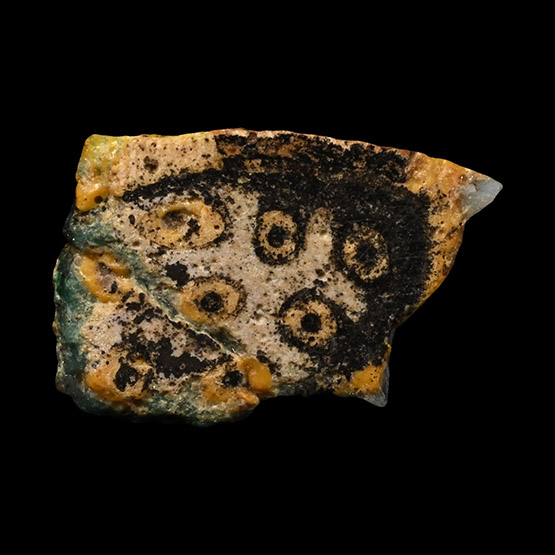
Egyptian Glass Panel with Eyes
Late Period, 664-332 B.C.Estimate: £220 - 320 (+bp*)
Opening Bid: £118
Irregular glass panel fragment with inlaid mosaic eye motifs; repaired. 1.57 grams, 18 mm
From the collection of a gentleman, acquired on the London art market in the 1990s. -
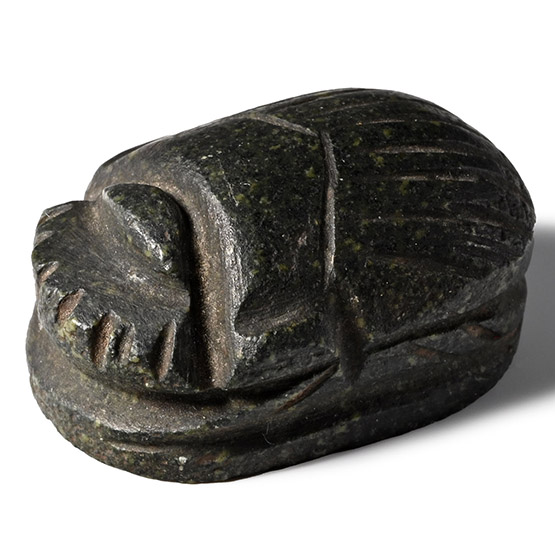
Egyptian Black Hardstone Scarab
Late Period, 664-332 B.C.Sold for (Inc. bp): £234
Dark green hardstone with paler speckles; with a boldly carved head, clypeus, prothorax and elytra, and legs indicated at the sides; plain underside. 17 grams, 29 mm
Ex Irene Newman, Birdham, Chichester, West Sussex, England. with Stride & Son Auctioneers, Chichester, West Sussex, England, 23 April 2015, no.1599 [Part]. Acquired by the present owner at the above sale.
The scarab, which represented the dung beetle, was the most popular amulet in ancient Egypt for approximately two thousand years until the Ptolemaic Period when it gradually fell out of favour. The popularity of scarabs extended beyond the borders of Egypt, and they were also distributed and produced in other regions, such as Phoenicia and Israel. The beetle is named khepri, derived from the verb 'to come into existence', and was considered the embodiment of the creator god Khepri, who was self-engendered. The ancient Egyptians mistakenly believed that the young beetle emerging from the dung ball was the result of an act of self-creation. -
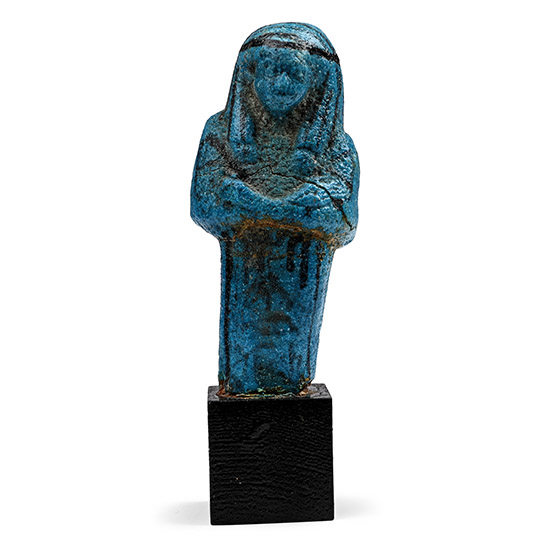
Egyptian Deep Blue Faience Shabti with Hieroglyphic Inscription
Third Intermediate Period, 1069-735 B.C.Sold for (Inc. bp): £468
Comprising the upper part of the mummiform figure with the arms crossed at the chest and holding agricultural implements in each hand, wearing a tripartite wig with a headband with ties hanging down at the back; a seed bag suspended below the wig; the outline of the hoes, striations on the wig and the seed bag painted black; a central column of hieroglyphs on the front; mounted on a display stand. 125 grams total, 13 cm including stand
Ex Shropshire, UK, collection. From a Cambridgeshire, UK, collection.
