
Loading, please wait...
LOT 0008
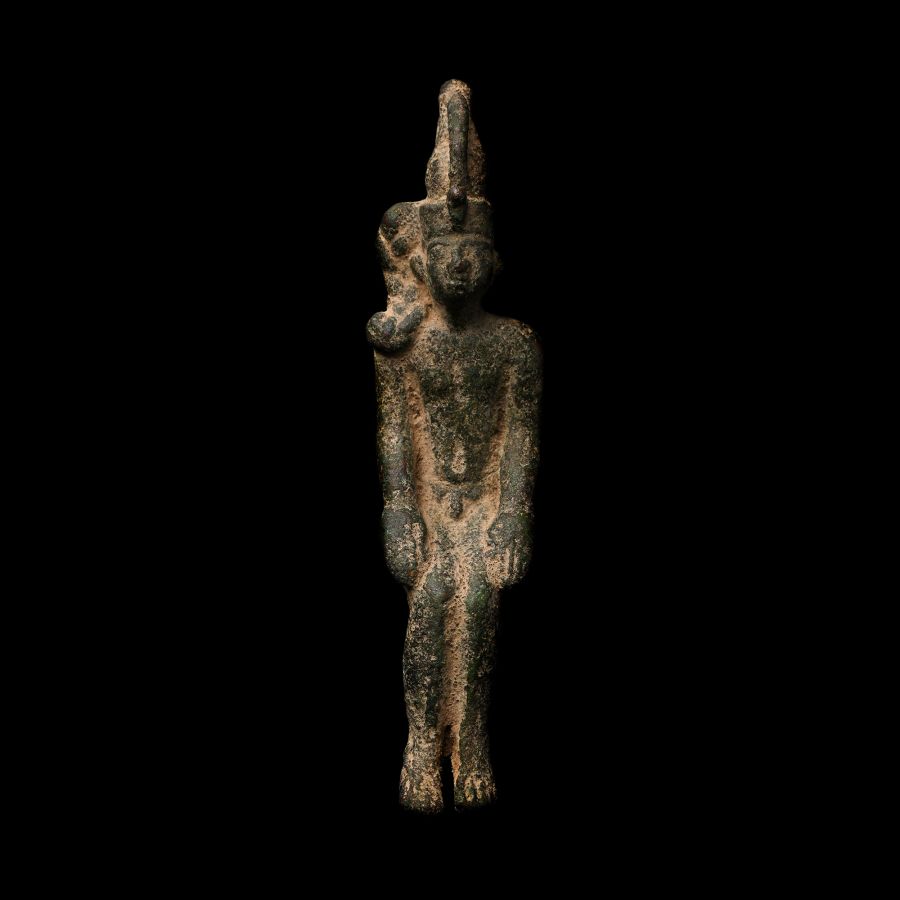
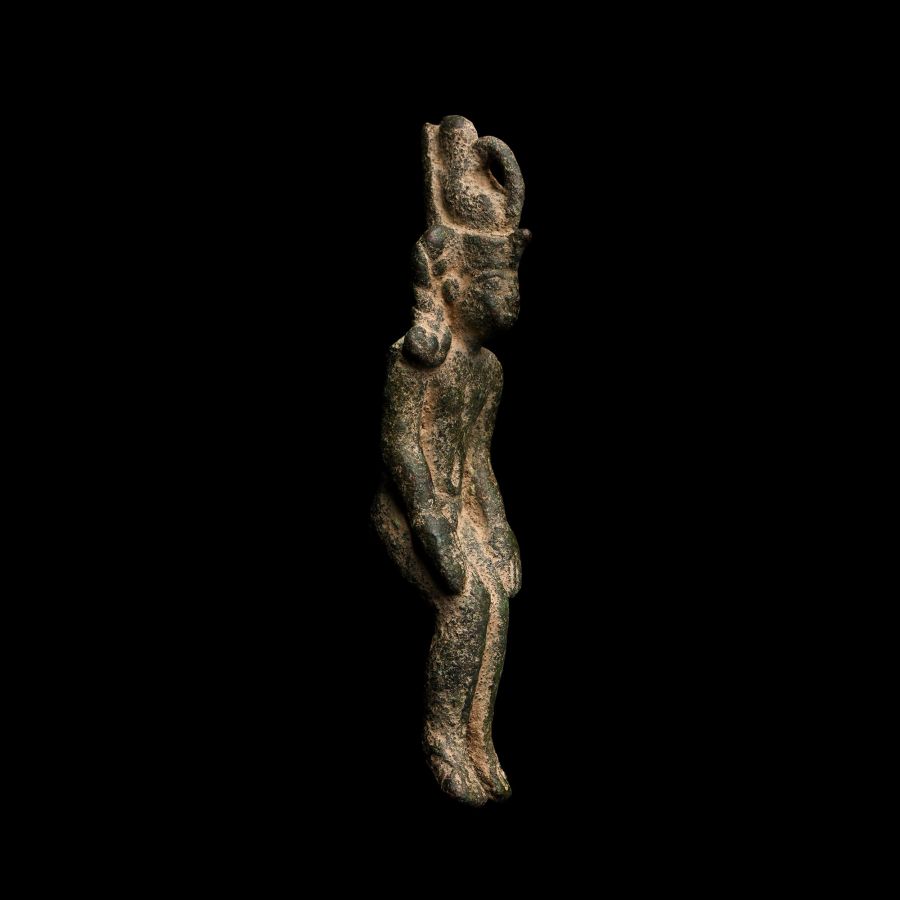
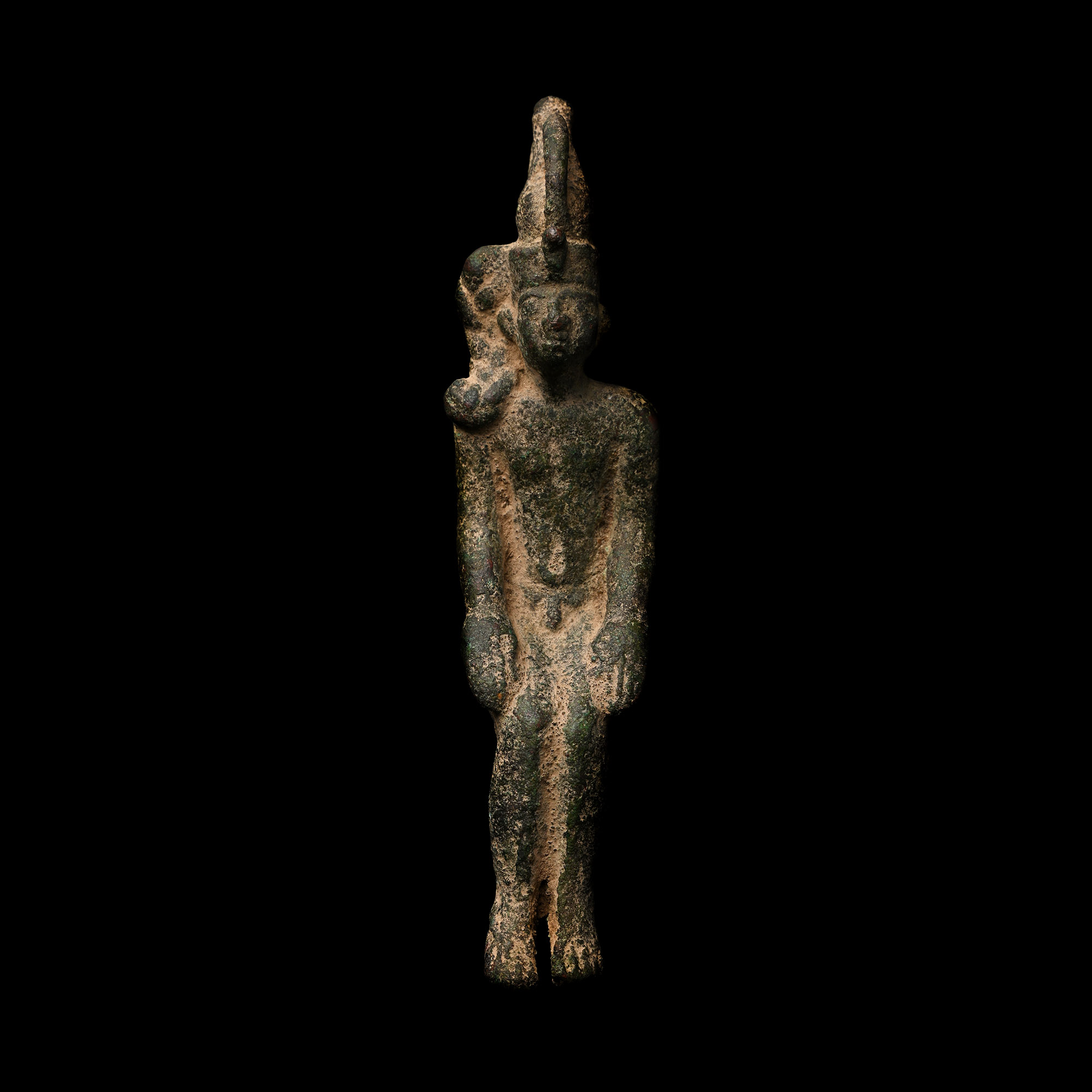
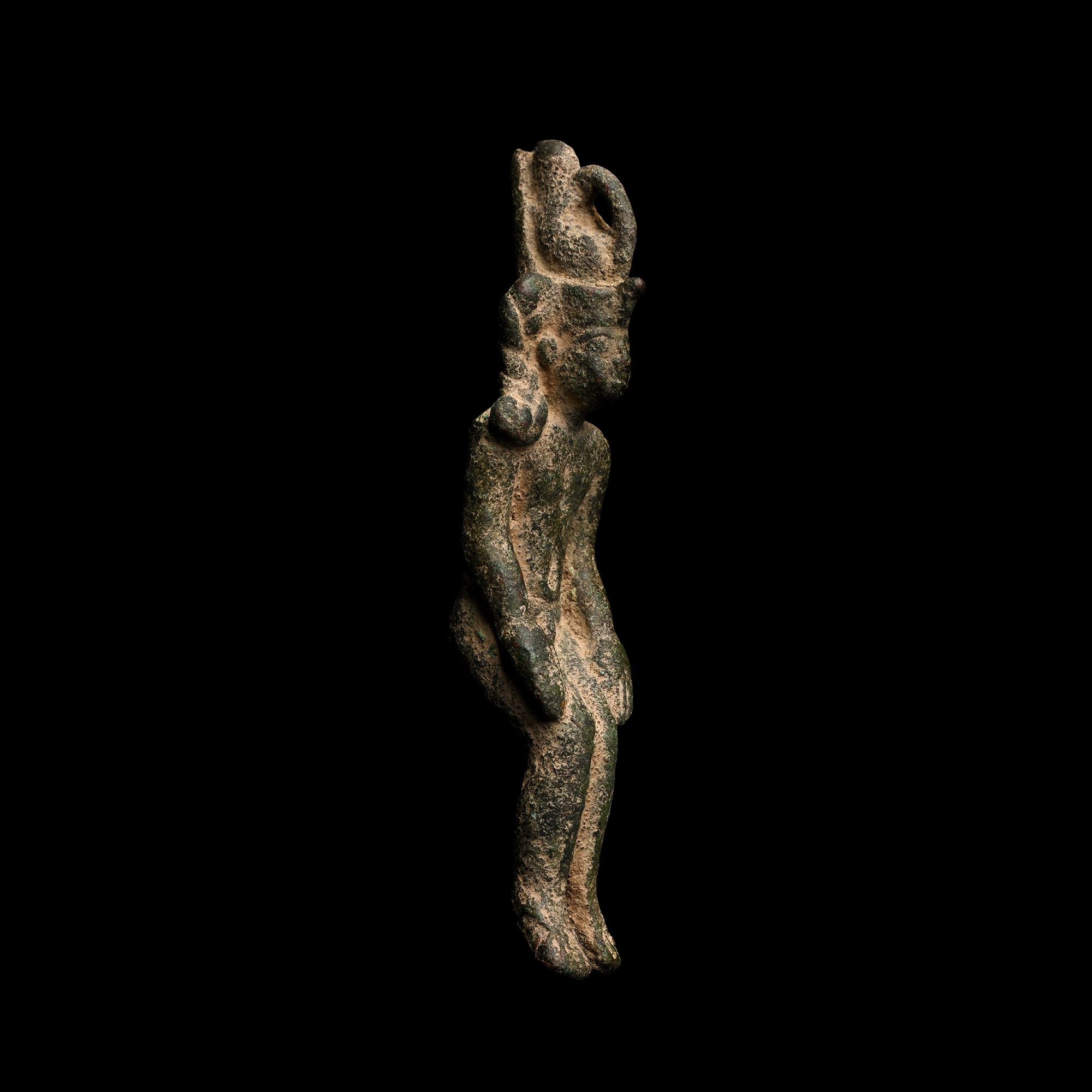
Egyptian Bronze Seated Harpocrates
LATE PERIOD, 664-332 B.C.
6 3/8 in. (389 grams, 16.2 cm).
Substantial cast figurine modelled in the round of Harpocrates sitting with hands on his thighs, double crown and sidelock.
ProvenanceFrom the collection of a gentleman, acquired on the London art market in the 1990s.
This lot is accompanied by an illustrated lot declaration signed by the Head of the Antiquities Department, Dr Raffaele D'Amato.
Cf. Roeder, G., Ägyptische Bronzefiguren II, Berlin, 1956, pl. 18p, for a similar example with heavy side-lock.
FootnotesHarpocrates is the Greek rendering of the Egyptian Hor-pa-khered, which means ‘Horus the Child’. This name refers to Horus as the divine infant of Isis and Osiris. Wearing an amulet of Harpocrates was believed to give the wearer the same protection that Isis offered to her beloved son. Larger bronze statuettes probably served as votive offerings to Harpocrates to secure his favour and protection.
CONDITIONTimeLine Auctions follows a vetting process to ensure the authenticity and legality of all items, reinforcing our commitment to integrity and responsible trading. Each antiquity, antique, and coin lot undergoes thorough examination by a vetting committee of at least ten external specialists, professional trade association members, scientists, and archaeologists: Our Vetting Process
AUCTIONS:
TimeLine is a leading auction house specialising in antiquities, ancient art, collectables, natural history, coins, medals, and books. Our auctions offer museums, collectors, historians, and enthusiasts the opportunity to acquire unique and historically significant pieces.
LOT 0008
Egyptian Bronze Seated Harpocrates
Estimate £1,000 - 1,400€1,160 - 1,620 (for guidance only)$1,350 - 1,890 (for guidance only)
-
Historic Collection of 969 Slides of Archaeological Sites in Egypt
1960s-1980s A.D.Sold for (Inc. bp): £845
Housed in five linen-covered boxes, covering Dendereh, Karnak, Valley of the Kings, Seti I, Medinewt Habu, Luxor, Saqqara etc. 4.52 kg total, 26.5 x 16.5 x 6.5 cm each box
Property of archaeologist Stephanie Gee, N.W. London, UK, 1960s-1980s. This lot is accompanied by an illustrated lot declaration signed by the Head of the Antiquities Department, Dr Raffaele D'Amato.
Stephanie Gee was a prominent archaeologist who took part in several expeditions in Egypt. She was a trusted assistant to the British-Australian archaeologist Veronica Seton-Williams, who excavated in Egypt, Britain, and the Near East. Stephanie also took part in the Tell El-Farâ'în expeditions of 1965-1968, and assisted Seton-Williams with preparing the 1966 expedition report. Their collaboration continued and Stephanie helped with the manuscript of Seton-Williams’ book ‘The Road to El-Aguzein’, a narrative account of her life that was first published in 1988. -
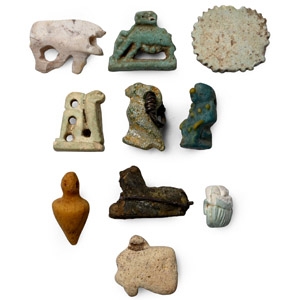
Egyptian Faience and Hardstone Amulet Group
Late-Ptolemaic Period, 664-30 B.C.Sold for (Inc. bp): £221
Including two wedjat eyes, a seated baboon, plumb bob, uraeus, scarab, falcon, recumbent lion, suckling sow (representing Nut), and a fringe-edged disc bead. 8.08 grams total, 9-18 mm
From an early 20th century collection. This lot is accompanied by an illustrated lot declaration signed by the Head of the Antiquities Department, Dr Raffaele D'Amato. -
.jpg)
Very Large Phoenician Stone Scarab with Hieroglyphics
8th-7th century B.C.Estimate: £8,000 - 10,000 (‡+bp*)
Opening Bid: £4,000
Plano-convex in section with segmented carapace and longitudinal piercing; underside with dense eight-line hieroglyphic text. 209 grams, 68 mm
Private collection, Switzerland, circa 1980. Acquired in 1994. Private collection, Switzerland, thence by descent. Private collection, since the late 1990s. This lot has been checked against the Interpol Database of stolen works of art and is accompanied by a search certificate number no.12850-241676. This lot has been cleared against the Art Loss Register database, and is accompanied by an illustrated lot declaration signed by the Head of the Antiquities Department, Dr Raffaele D'Amato.
