
Loading, please wait...
LOT 0480
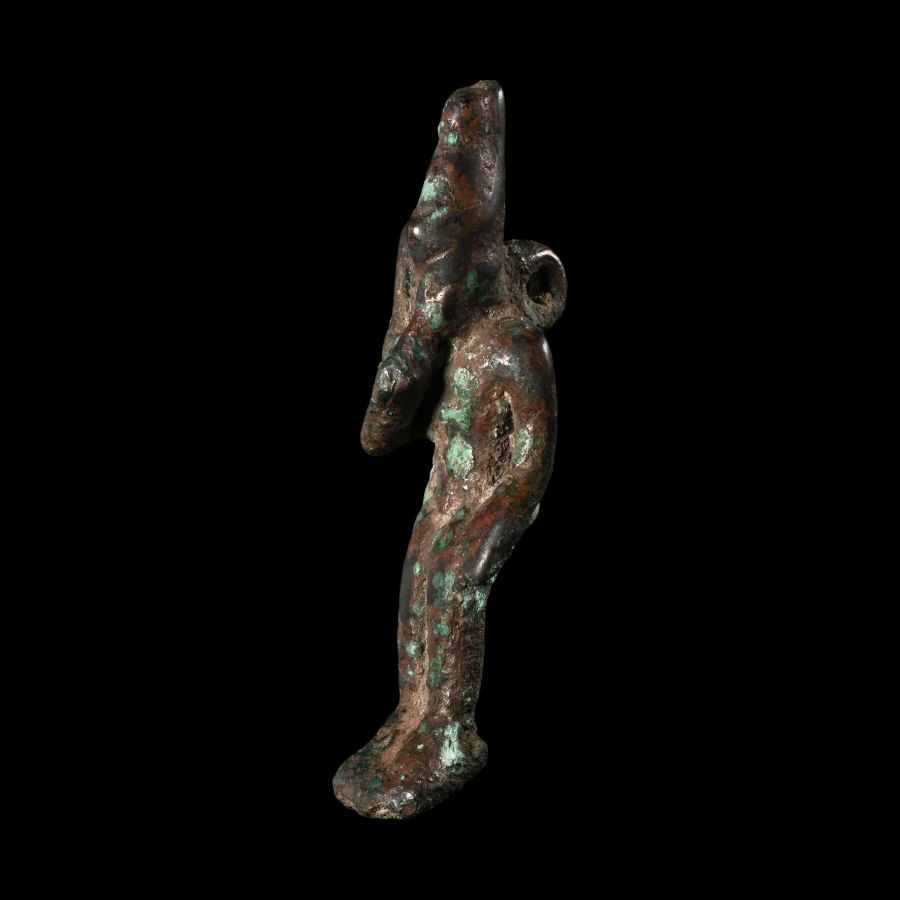
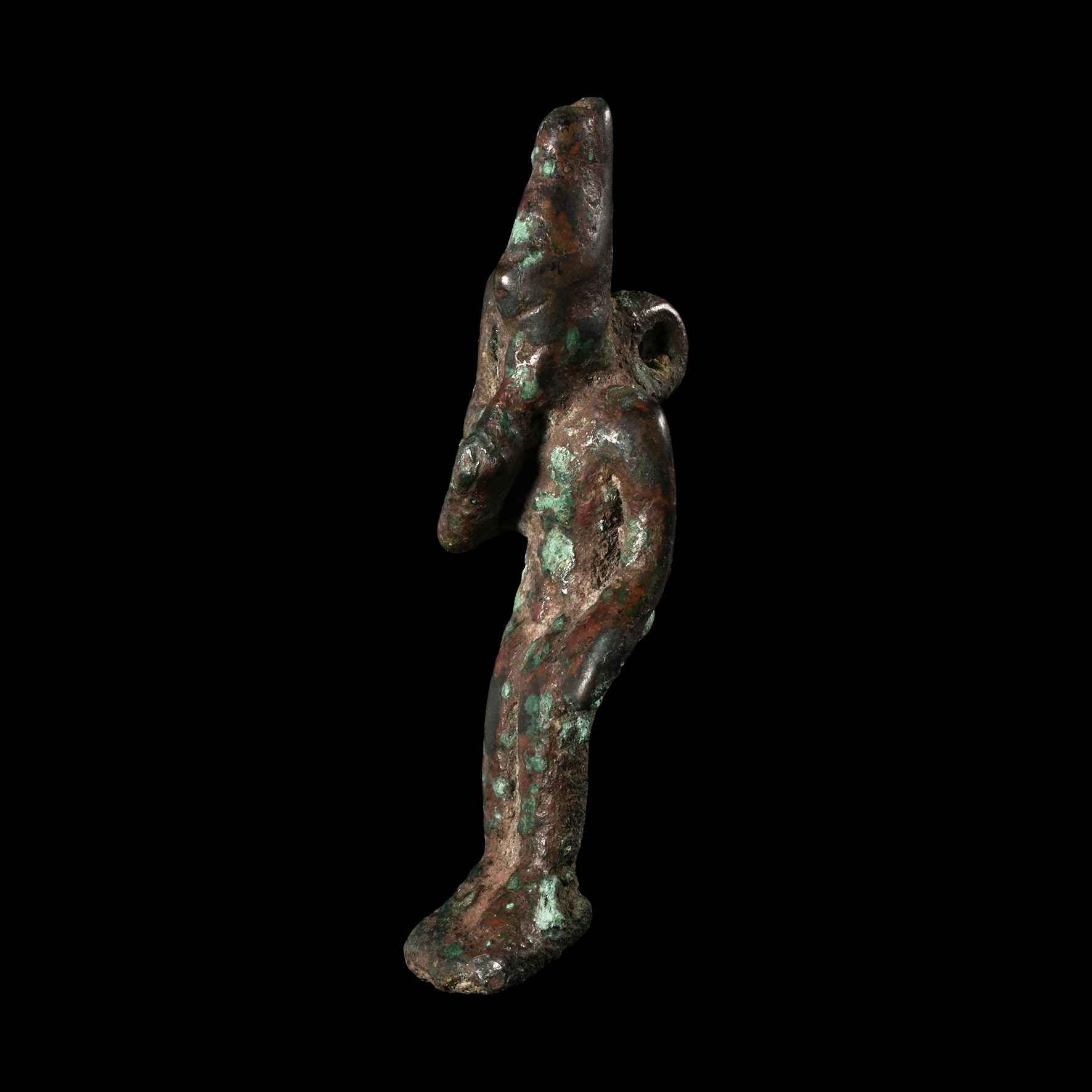
Egyptian Bronze Seated Harpocrates Figure
LATE PERIOD, 664-332 B.C.
2 3/4 in. (40.2 grams, 71 mm).
Modelled in the round with suspension loop to the reverse, with double crown and sidelock of youth.
ProvenanceAcquired from a private UK collection in the late 1990s.
Private collection of Mr T.H., Norfolk, UK.
Cf. similar in the collection of the British Museum under accession no.EA64633.
FootnotesHarpocrates is the Greek rendering of the Egyptian Hor-pa-khered, which translates as 'Horus the Child' and refers to Horus as the divine infant of Isis and Osiris. Wearing the amulet of Harpocrates could provide the wearer with the same protection that Isis gave to her beloved son.
CONDITIONTimeLine Auctions follows a vetting process to ensure the authenticity and legality of all items, reinforcing our commitment to integrity and responsible trading. Each antiquity, antique, and coin lot undergoes thorough examination by a vetting committee of at least ten external specialists, professional trade association members, scientists, and archaeologists: Our Vetting Process
AUCTIONS:
TimeLine is a leading auction house specialising in antiquities, ancient art, collectables, natural history, coins, medals, and books. Our auctions offer museums, collectors, historians, and enthusiasts the opportunity to acquire unique and historically significant pieces.
-
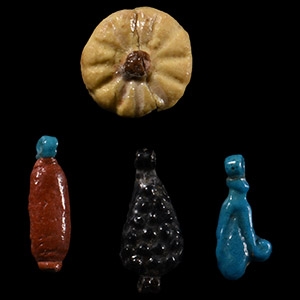
Egyptian Faience Amulet Collection
New Kingdom, 1550-1070 B.C.Sold for (Inc. bp): £182
Comprising: black bunch of grapes; red date; blue palmette frond; white daisy rosette. 1.51 grams, 12-16 mm
From the M.S. Ciappara collection, 1930s-1950s; and the flower amulet from a UK collection, 19202-1940s. Ex Den of Antiquity, Cambridgeshire, UK, and Ancient Art, London N14, UK. Private collection of Mr T.H., Norfolk, UK. Accompanied by two previous dealer's certificates of authenticity. -
.jpg)
Egyptian Painted Wooden Mask
Late Period, 664-332 B.C.Estimate: £1,500 - 2,000 (‡+bp*)
Opening Bid: £750
With remains of polychrome painted detailing, depicting a large part of a face with eye detailing and remains of segmented headwear; old collection number 'E.352' and a later suspension loop to the reverse. 283 grams, 23.5 cm high
Ex Roger Liechti collection, Geneva, Switzerland. This lot has been checked against the Interpol Database of stolen works of art and is accompanied by search certificate no.11606-198998. -
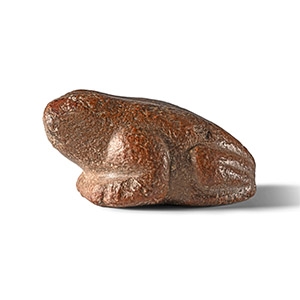
Egyptian Stone Frog Amulet
Ptolemaic Period, 332-30 B.C.Estimate: £500 - 700 (+bp*)
Opening Bid: £200
Modelled in the round as a crouching frog. 62.3 grams, 52 mm
Ex Paris collection. French gallery, Paris, 1990-2000s.
