
Loading, please wait...
LOT 0494
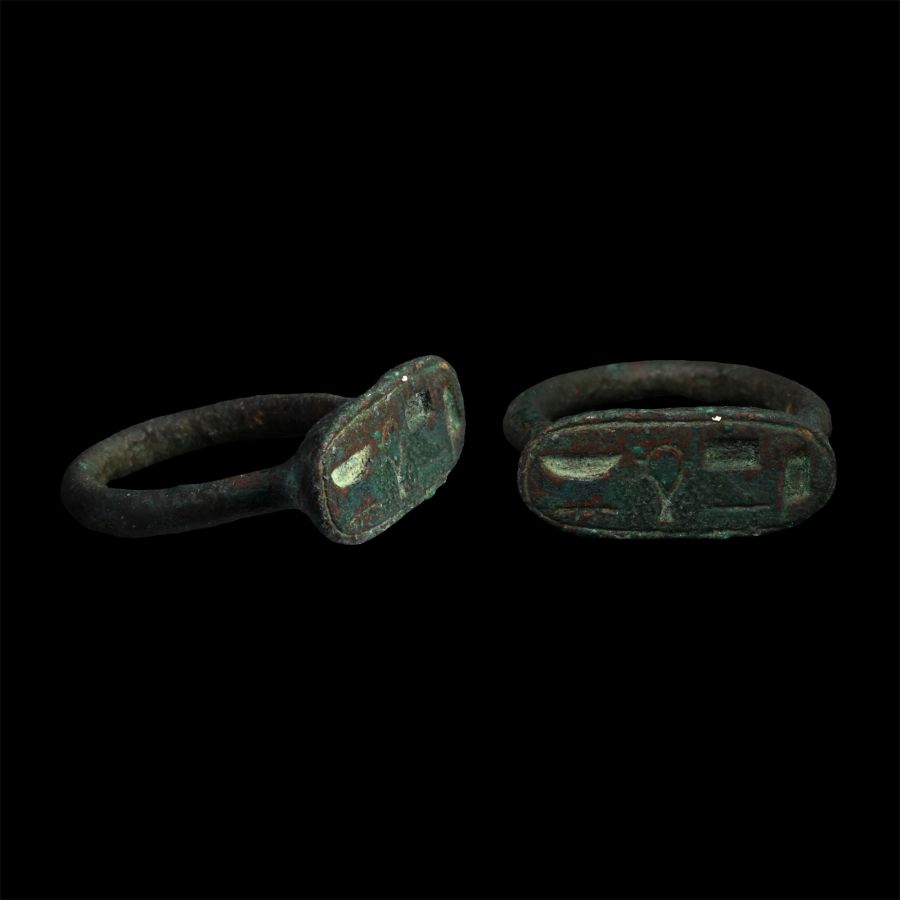
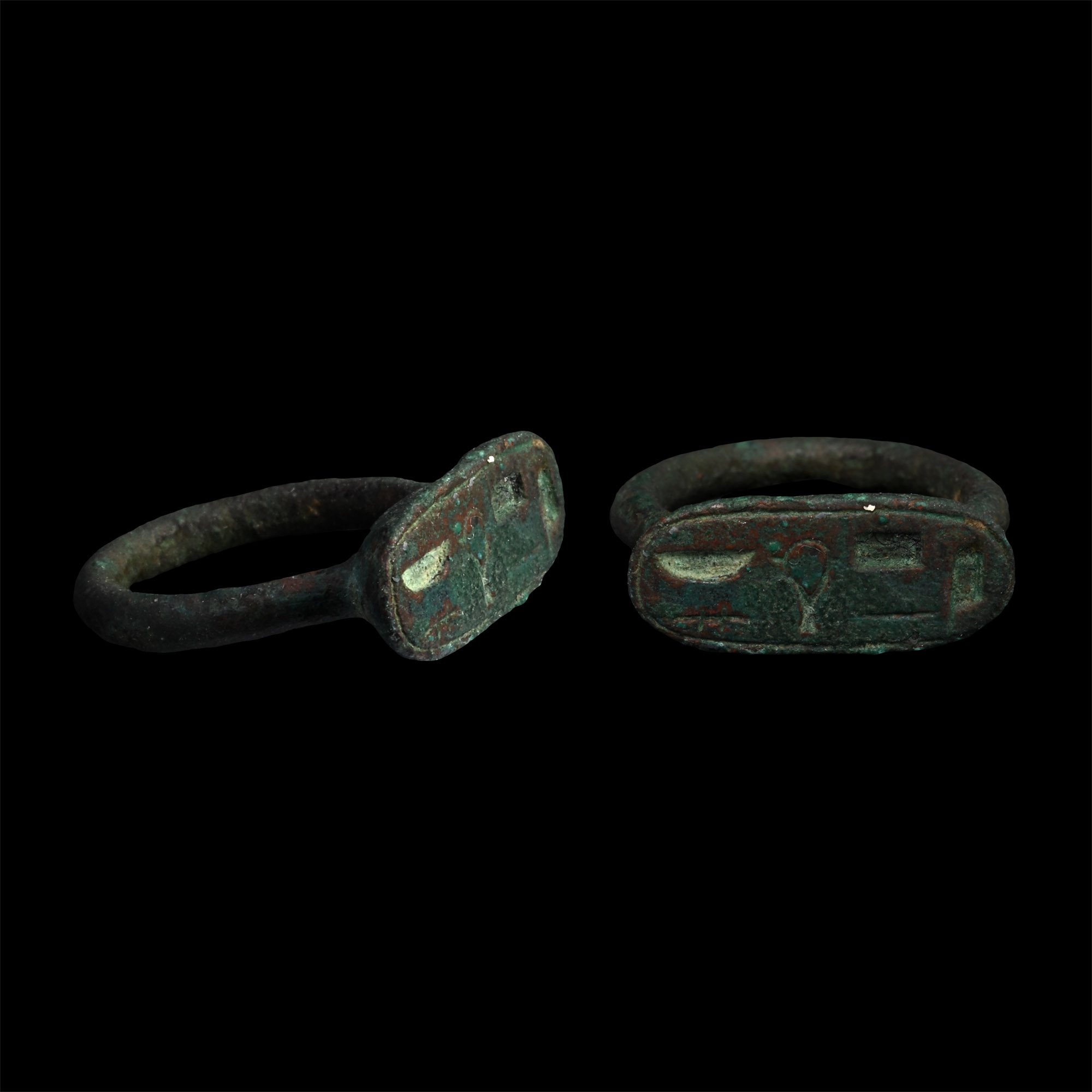
Egyptian Bronze Ring with Hieroglyphic Motto
LATE PERIOD, 664-332 B.C.
7/8 in. (4.30 grams, 21.48 mm overall, 14.60 mm internal diameter (approximate size British G, USA 3 1/4, Europe 4.92, Japan 4)).
With slim loop and cartouche-shaped bezel inscribed with hieroglyphs ı͗mn-sꜢ-nb.s, 'Amun lord (of) her protection'.
ProvenanceFrom an early 20th century collection.
LiteratureCf. Andrews, C., Ancient Egyptian Jewellery, London, 1990, p.165, pl. 148a, for a ring of similar style.
CONDITIONTimeLine Auctions follows a vetting process to ensure the authenticity and legality of all items, reinforcing our commitment to integrity and responsible trading. Each antiquity, antique, and coin lot undergoes thorough examination by a vetting committee of at least ten external specialists, professional trade association members, scientists, and archaeologists: Our Vetting Process
AUCTIONS:
TimeLine is a leading auction house specialising in antiquities, ancient art, collectables, natural history, coins, medals, and books. Our auctions offer museums, collectors, historians, and enthusiasts the opportunity to acquire unique and historically significant pieces.
-
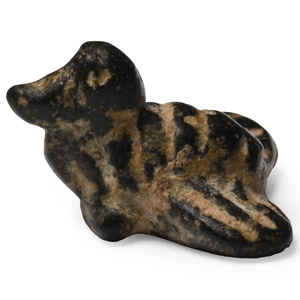
Phoenician Stone Bird-Shaped Weight
Late 1st millennium B.C.Sold for (Inc. bp): £351
Fashioned as a seated bird with partly outspread wings. 4.15 grams, 15 mm
From a London, UK, based collection, 1990s. -
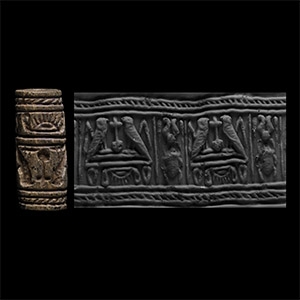
Egyptian Cylinder Seal with Hieroglyphs
Late Period, 664-332 B.C.Sold for (Inc. bp): £390
Steatite cylinder producing a decorative top and bottom border enclosing a scene depicting a nefer sign flanked by two falcons surmounting the hieroglyph for gold, nub, and another scene to the side depicting a scarab beetle with a double plumed sun disc above; with a suspension hole running through the cylinder's centre. 4.65 grams, 25 mm
From the collection of a gentleman, acquired on the London art market in the 1990s. -
.jpg)
Egyptian Silver Isis and Horus Amulet
Late Period, 664-332 B.C.Sold for (Inc. bp): £234
Isis enthroned wearing a cow's horn headdress with a solar disc, suckling the infant Horus on her lap; loop to rear of crown; mounted on a custom-made stand. 6.2 grams, 39 mm (20.7 grams total, 62 mm including stand)
Ex Mythes & Legend. Ex Cohen collection 2011. Property of a French collector.
In ancient Egyptian mythology, Isis was the sister-wife of Osiris and the mother of the sky god Horus. She is associated with aspects of fertility and motherhood and is often depicted in various artworks seated in a nursing pose with her son Horus on her lap, as here.
