
Loading, please wait...
LOT 0512
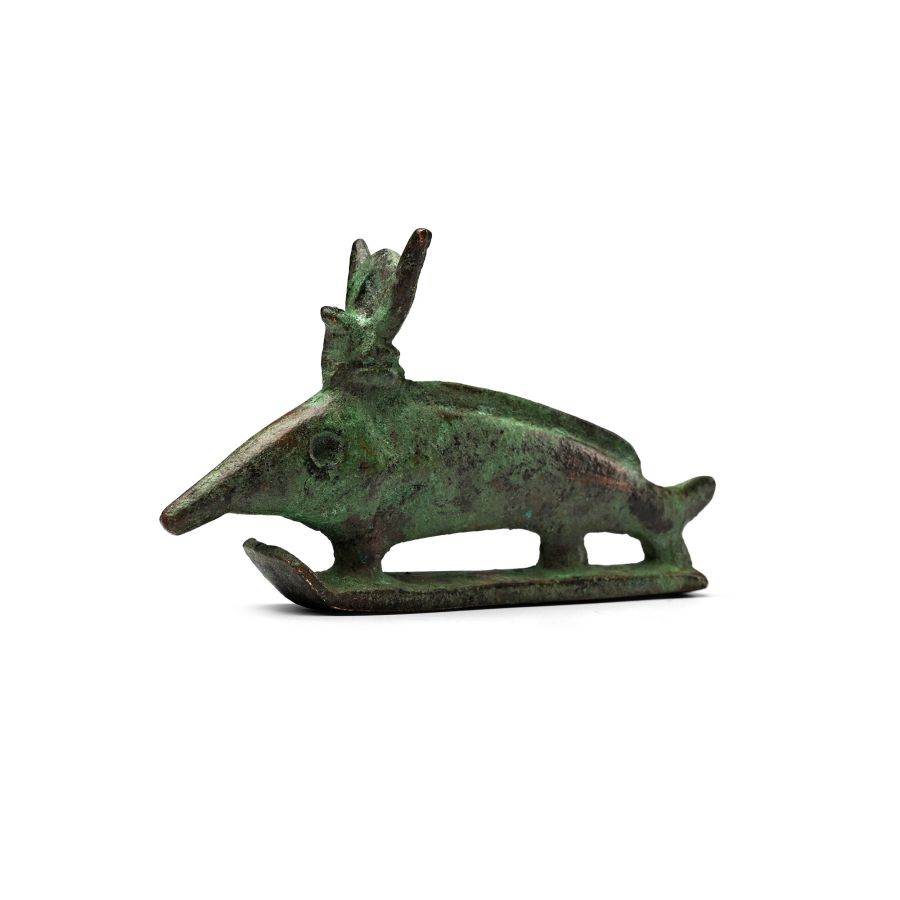
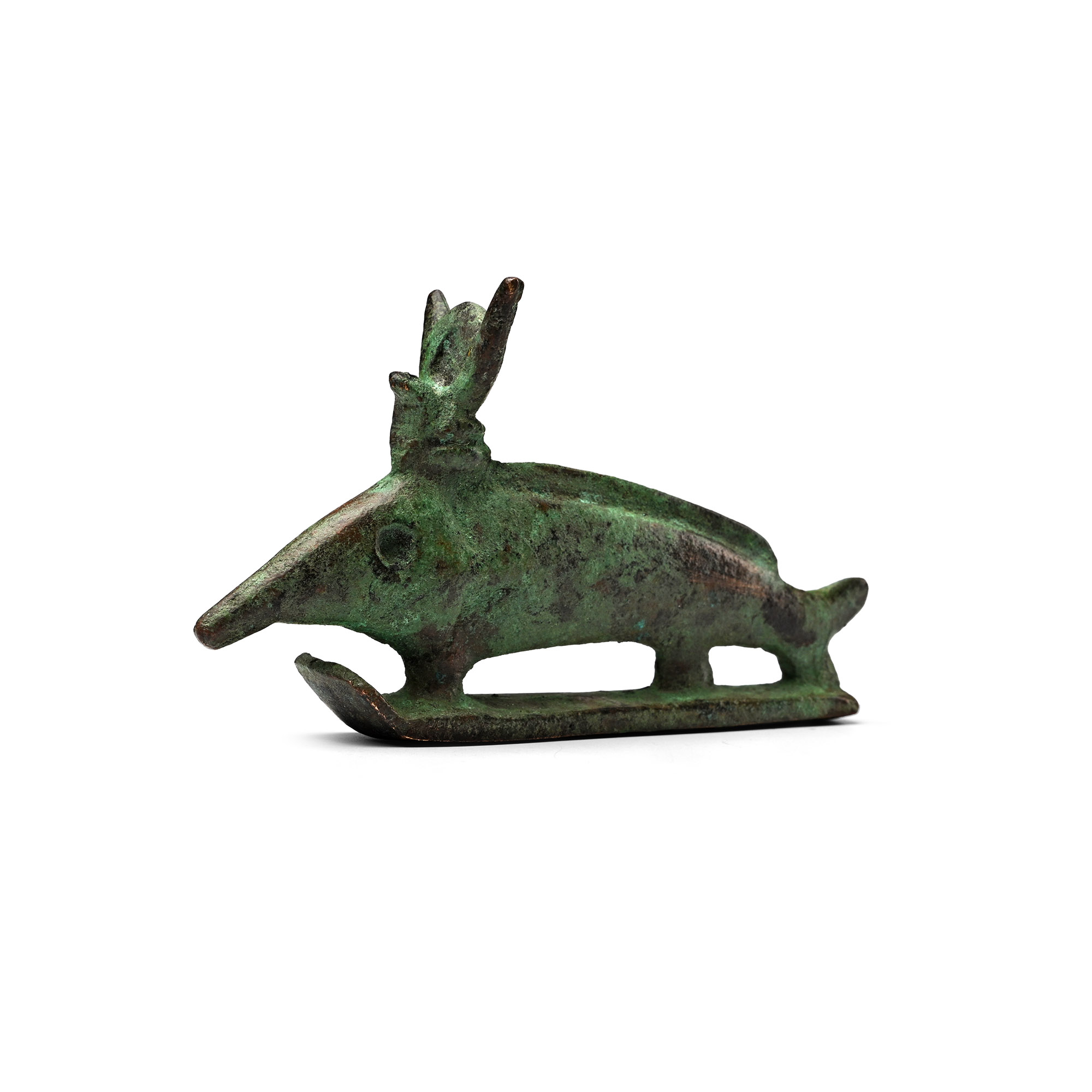
Egyptian Bronze Oxyrhynchus Fish
LATE PERIOD, 664-332 B.C. OR LATER
4 1/2 in. (203 grams, 11.5 cm).
Modelled in the round on a sledge attached by ventral and pectoral fins; with forked tail, a dorsal ridge, and a tapering nose, featuring recessed circular eyes to accept an insert, a horned sun disc headdress fronted by a uraeus, and a suspension loop behind.
ProvenanceFrom the collection of a gentleman, acquired on the London art market in the 1990s.
This lot is accompanied by an illustrated lot declaration signed by the Head of the Antiquities Department, Dr Raffaele D'Amato.
Cf. Kozloff, A.P., Animals in Ancient Art from the Leo Mildenberg Collection, Mainz am Rhein, 1981, fig. 60, for a similar example; Tiribilli, E., The bronze figurines of the Petrie Museum from 2000 BC to AD 400, London, 2018, p.229, for discussion.
CONDITIONTimeLine Auctions follows a vetting process to ensure the authenticity and legality of all items, reinforcing our commitment to integrity and responsible trading. Each antiquity, antique, and coin lot undergoes thorough examination by a vetting committee of at least ten external specialists, professional trade association members, scientists, and archaeologists: Our Vetting Process
AUCTIONS:
TimeLine is a leading auction house specialising in antiquities, ancient art, collectables, natural history, coins, medals, and books. Our auctions offer museums, collectors, historians, and enthusiasts the opportunity to acquire unique and historically significant pieces.
LOT 0512
Egyptian Bronze Oxyrhynchus Fish
Estimate £700 - 900€810 - 1,040 (for guidance only)$950 - 1,220 (for guidance only)
-
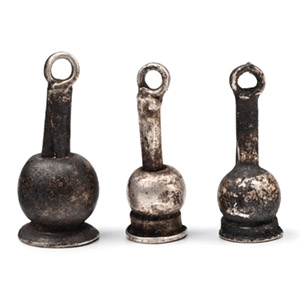
Egyptian Silver Poppy Amulet Group
Late-Ptolemaic Period, 664-30 B.C.Sold for (Inc. bp): £124
Three pendants each with poppy-head and loop at the apex. 3.68 grams total, 17-19 mm
Ex London, UK, gentleman 1980-1990s. This lot is accompanied by an illustrated lot declaration signed by the Head of the Antiquities Department, Dr Raffaele D'Amato.
Amulets in the form of poppies were used to heal and alleviate pain and to ward off death. These types of amulets were also linked to Osiris, the Egyptian deity of agriculture, death, and the afterlife. -
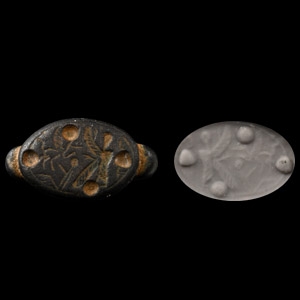
Phoenician Bronze Scarab Pendant
6th-4th century B.C.Estimate: £250 - 350 (+bp*)
Opening Bid: £125
With suspension loop and frame, intaglio figural scene including stylised birds and winged scarabs, with recesses; with museum-quality impression. 13.5 grams, 23 mm
Ex London, UK, gentleman 1980-2000s. This lot is accompanied by an illustrated lot declaration signed by the Head of the Antiquities Department, Dr Raffaele D'Amato. -
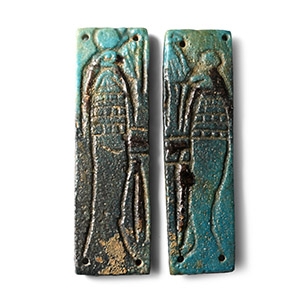
Egyptian Blue Faience Sons of Horus Plaques
Late Period, 664-332 B.C.Sold for (Inc. bp): £286
Two rectangular plaques, each depicting one of the 'Four Sons of Horus' - Qebehsenuef and Hapi - shown mummiform, wearing a tripartite wig and broad collar, both pierced at the upper and lower edges. 26.8 grams total, 79-80 mm
Professor Haeberlin collection, acquired in Egypt in the late 19th century. Acquired by E.S., Germany, in 1962. Private collection of Mr K.A., acquired in the 1990s-early 2000s. This lot is accompanied by an illustrated lot declaration signed by the Head of the Antiquities Department, Dr Raffaele D'Amato.
The Four Sons of Horus were deities tasked with protecting the internal organs of the deceased. The human-headed Imsety safeguarded the liver, the baboon-headed Hapy looked after the lungs, the jackal-headed Duamutef defended the stomach, and the falcon-headed Qebehsenuef protected the intestines. Amulets featuring these deities were included within the mummy wrappings.
