
Loading, please wait...
LOT 0480
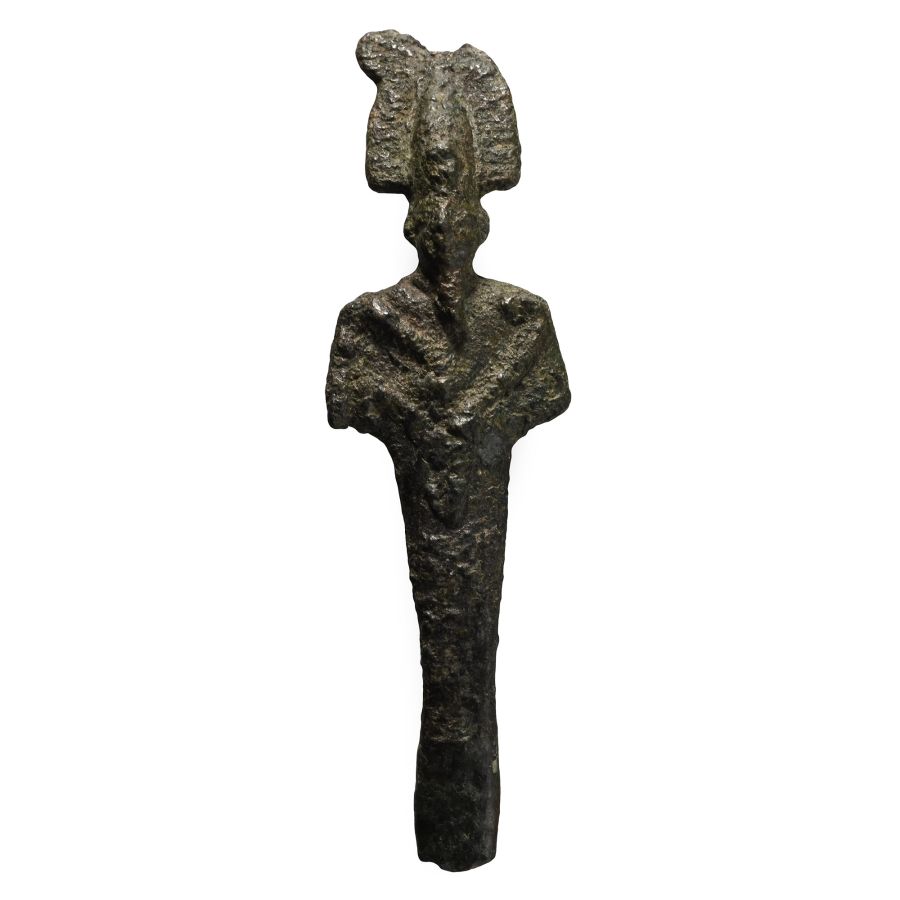
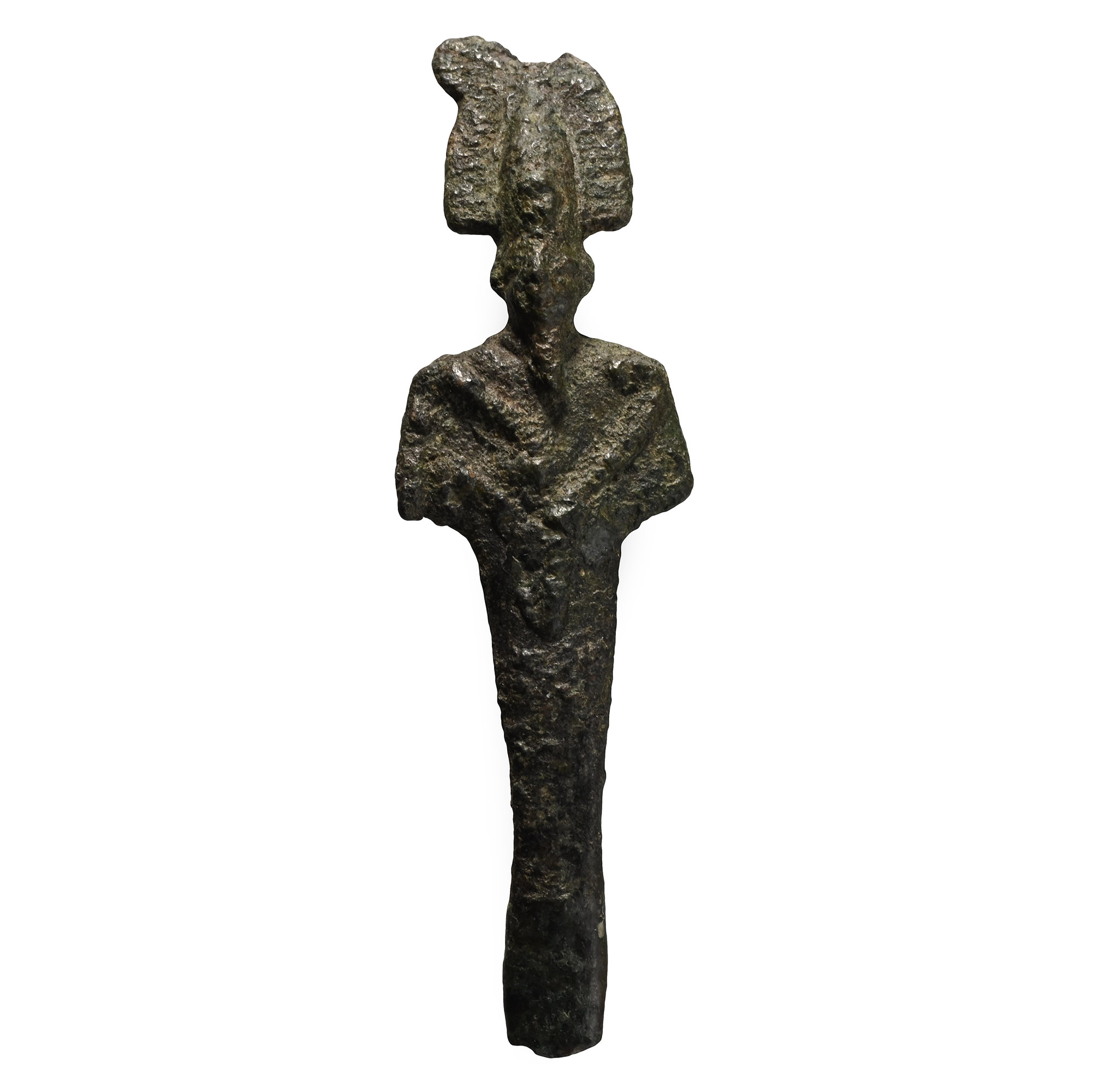
Egyptian Bronze Osiris Statuette
LATE PERIOD, 664-332 B.C.
2 3/4 in. (16.5 grams, 69 mm).
Standing mummiform figure, wearing the conical Atef crown with flanking ostrich plumes and frontal uraeus, holding the crook (heka) and flail (nekhakha) regalia; minor chip to the crown. [No Reserve]
ProvenanceEx Constable collection, 1990s.
Ex P. Morris collection.
Cf. Tiribilli, E., The bronze figurines of the Petrie Museum from 2000 BC to AD 400, GHP Egyptology 28, London, 2018, p. 83, no. 110 (UC 8022B), for a similar example from Coptos.
CONDITIONTimeLine Auctions follows a vetting process to ensure the authenticity and legality of all items, reinforcing our commitment to integrity and responsible trading. Each antiquity, antique, and coin lot undergoes thorough examination by a vetting committee of at least ten external specialists, professional trade association members, scientists, and archaeologists: Our Vetting Process
AUCTIONS:
TimeLine is a leading auction house specialising in antiquities, ancient art, collectables, natural history, coins, medals, and books. Our auctions offer museums, collectors, historians, and enthusiasts the opportunity to acquire unique and historically significant pieces.
-
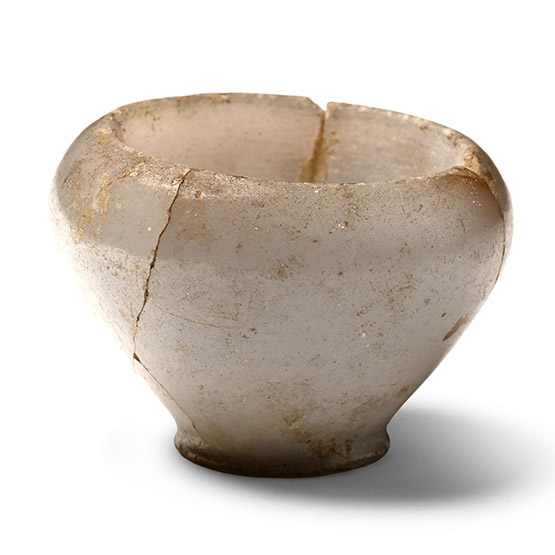
Egyptian Anhydrite Cosmetic Bowl
Middle Kingdom, circa 2040-1780 B.C.Sold for (Inc. bp): £156
Conical in profile with rounded rim, narrow disc base; repaired; a rare stone. 33.68 grams, 39 mm
Ex William Ohly, 1883-1955. Ex Abbey Museum, Barnet, by descent.
Anhydrite, incorrectly called "blue marble" by early excavators, was a stone favoured by the ancient Egyptians from the Middle Kingdom to the Second Intermediate Period. This particular example follows a Middle Kingdom-style cosmetic kohl jar that could be modelled with or without an integral rim. -
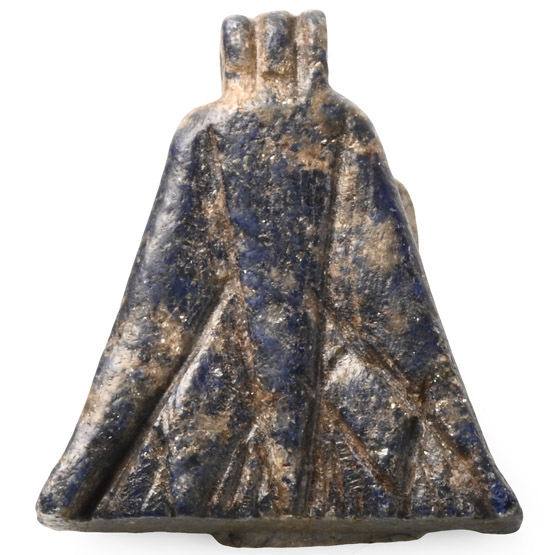
Egyptian Lapis Lazuli Lotus Amulet
Late Period, 664-332 B.C.Sold for (Inc. bp): £117
With ribbed suspension loop bell-shaped plaque; collector's sticker to reverse. 1.77 grams, 17 mm
Ex UK collection, 1970s.
The lotus served as a symbol of both divine beauty and the sun's rejuvenating power. -
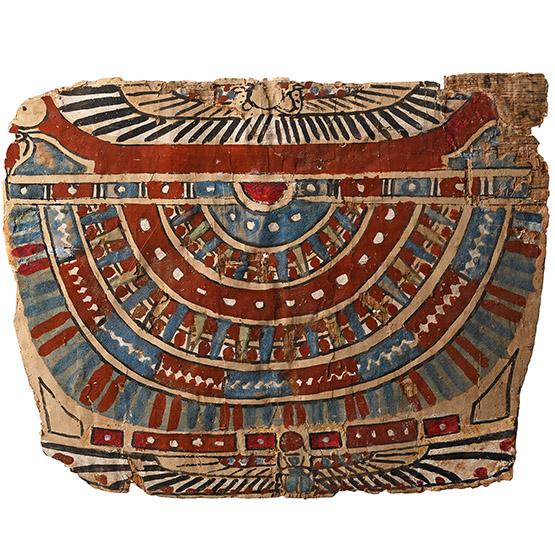
Egyptian Cartonnage Panel with Pectoral
Late Period-Ptolemaic Period, circa 664-30 B.C.Estimate: £1,800 - 2,400 (+bp*)
Opening Bid: £900
A rectangular cartonnage panel with bands of triangles, teardrops and other motifs in white, red, blue and pale green; winged scarab to the bottom, lower portion of a winged sun disc flanked by uraei to the top; mounted on a custom-made stand. 2.06 kg total, 31.4 cm wide including stand
Ex early 20th century collection, London, UK. This lot has been checked against the Interpol Database of stolen works of art and is accompanied by search certificate number no.13096-249409
This piece was probably part of a set of cartonnage trappings placed on the mummy.
