
Loading, please wait...
LOT 0478
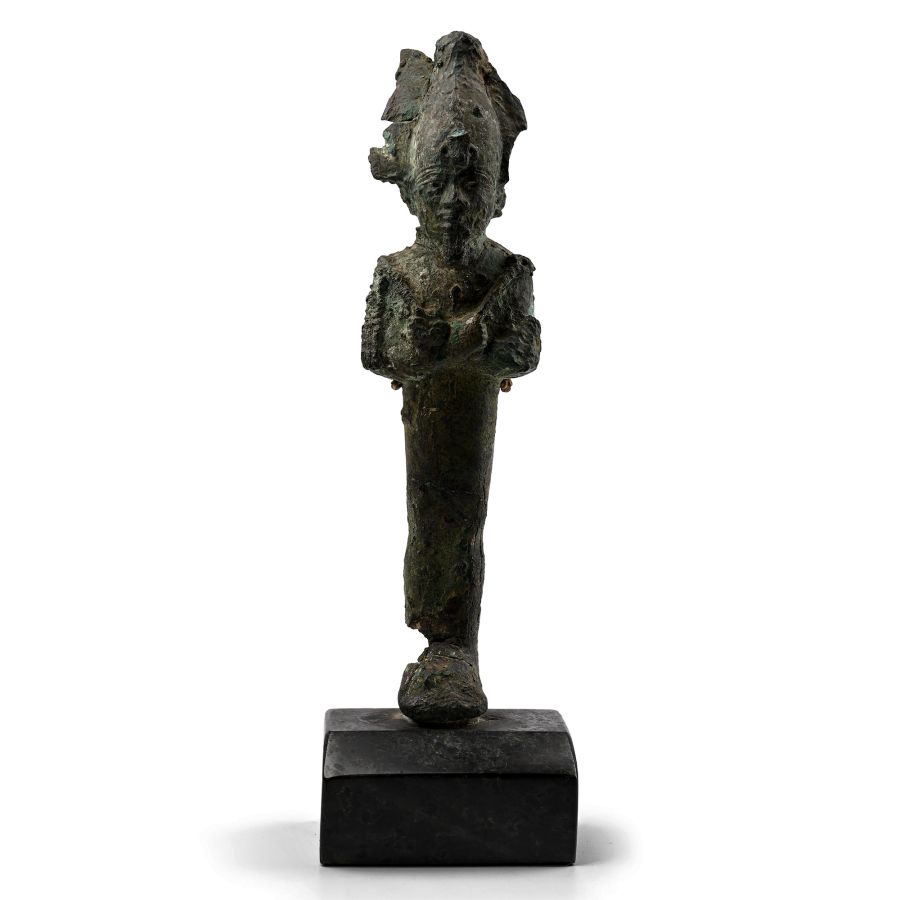
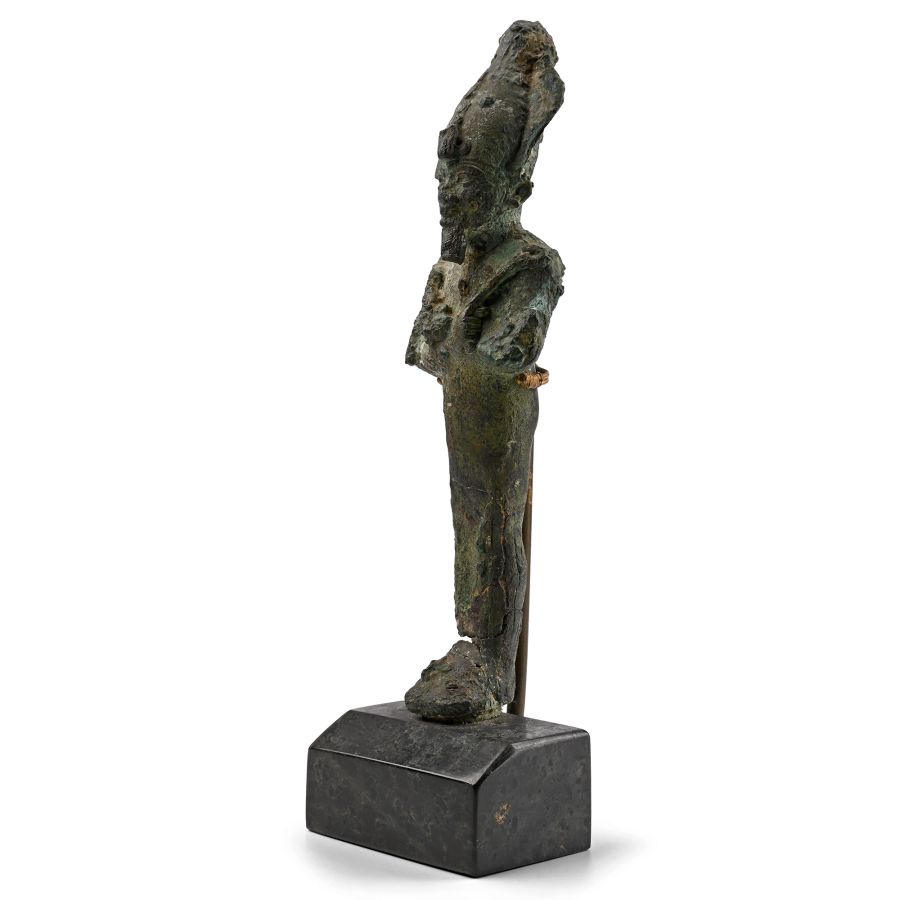
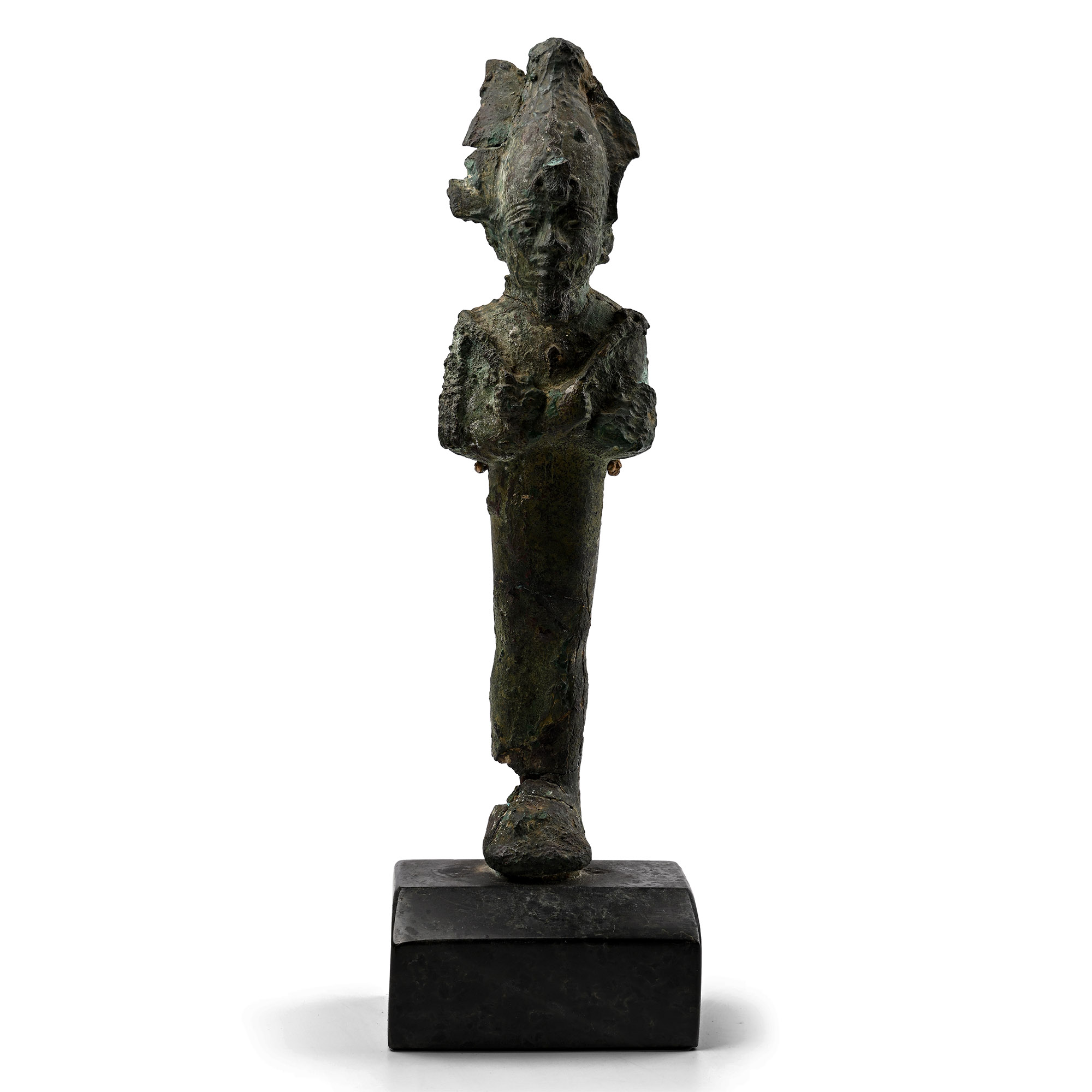
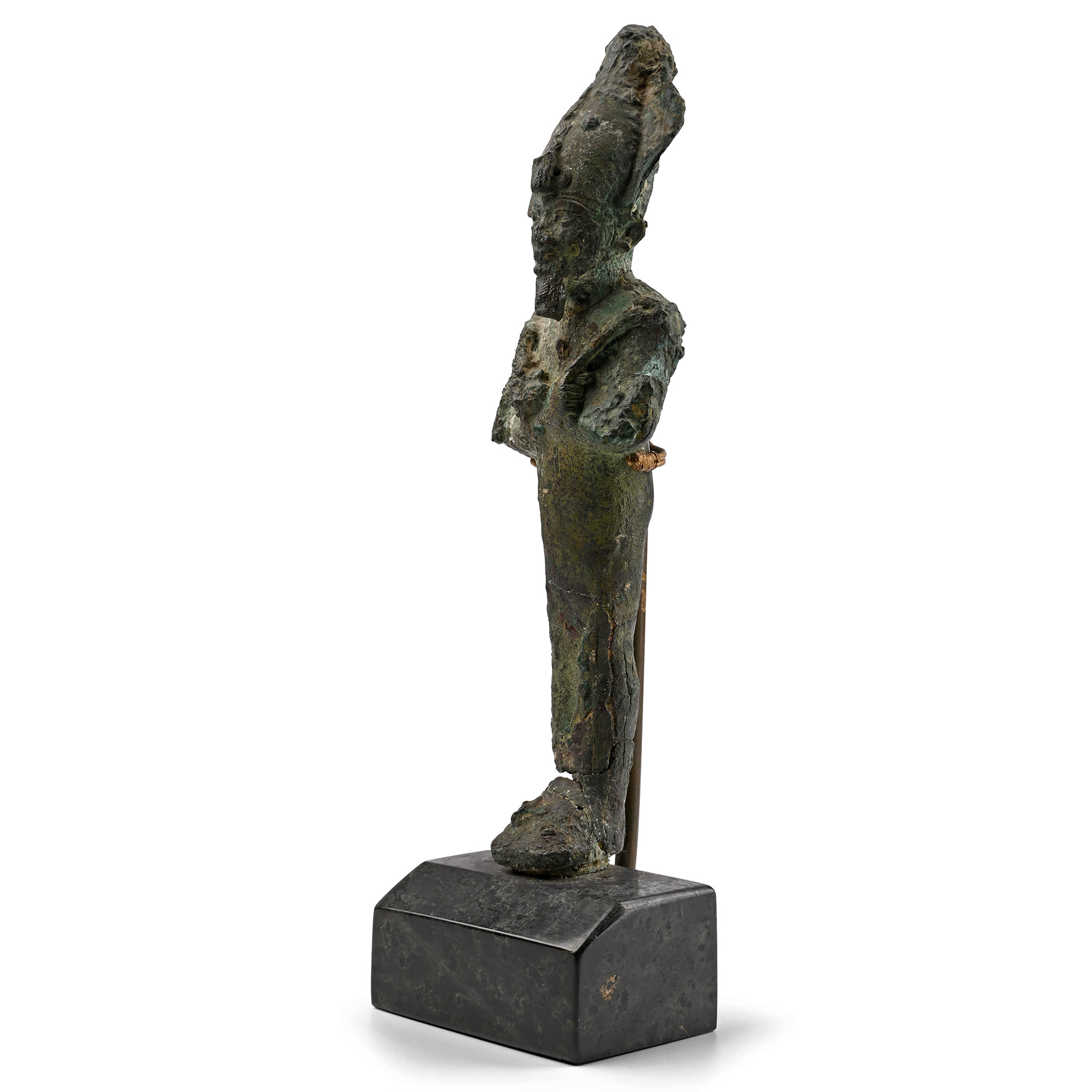
Egyptian Bronze Osiris Statue
LATE PERIOD, 664-332 B.C.
10 1/4 in. (821 grams total, 26 cm high including stand).
A sizeable, slender standing mummiform figure of Osiris, wearing his iconic tall conical Atef crown with flanking ostrich plumes and a central uraeus, holding the crook (heka) and flail (nekhakha) regalia; mounted on a display stand. [No Reserve]
ProvenanceFrom the estate of Alexander Dobkin (1908-1975), New York, USA, acquired prior to 1975.
Thence by descent to his daughter, Katherine Dobkin, New York, USA..
Cf. Tiribilli, E., The bronze figurines of the Petrie Museum from 2000 BC to AD 400, GHP Egyptology 28, London, 2018, p. 79, no. 102 (UC 6575), for a similar statuette.
FootnotesOsiris was associated with death and fertility and was widely recognised as the supreme god of renewal and rebirth. Although he was once a mortal ruler, as a deity, his domain was the Underworld. Abydos served as the main site of Osiris’ worship, where a renowned annual celebration in his honour took place.
CONDITIONTimeLine Auctions follows a vetting process to ensure the authenticity and legality of all items, reinforcing our commitment to integrity and responsible trading. Each antiquity, antique, and coin lot undergoes thorough examination by a vetting committee of at least ten external specialists, professional trade association members, scientists, and archaeologists: Our Vetting Process
AUCTIONS:
TimeLine is a leading auction house specialising in antiquities, ancient art, collectables, natural history, coins, medals, and books. Our auctions offer museums, collectors, historians, and enthusiasts the opportunity to acquire unique and historically significant pieces.
-
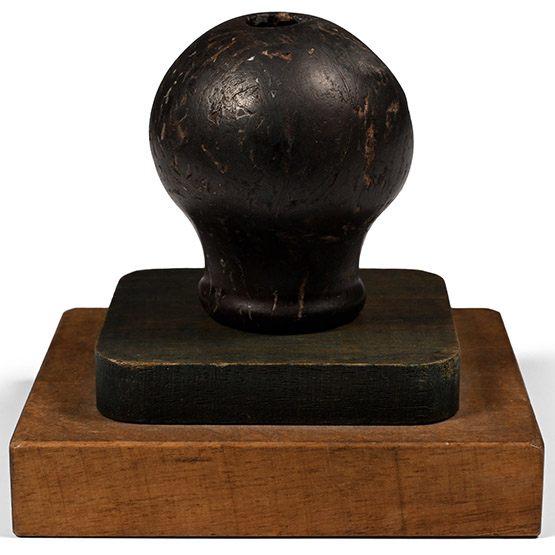
Egyptian Haematite Mace Head
4th-3rd millennium B.C.Estimate: £500 - 700 (+bp*)
Opening Bid: £250
Globular body with short socket and thickened rim; accompanied by a custom-made display stand. 457 grams total, mace: 60 mm high
Ex Norman Fargo collection. with Olympia Auctions, 26 June 2024, no.119. This lot is accompanied by an illustrated lot declaration signed by the Head of the Antiquities Department, Dr Raffaele D'Amato.
Norman Fargo was born in Los Angeles, California in 1945, the son of Hungarian immigrant Frank and his wife, Rose. His lifelong passion for collecting began at the age of six with a simple interest in rocks. By the 1960s, Norman had become a dedicated student of antique arms and armour, developing a deep appreciation for both craftsmanship and historical context. He began collecting at a time when many items now considered rare were still relatively accessible. A friendship with renowned collector Howard Curtis—whose important collection was partially sold at Christie’s, London in 1984—opened doors to early and exceptional material. Norman also acquired outstanding pieces from respected figures such as Frank Bivens and others known today through museum and auction catalogue provenance. Alongside his core collection of arms and armour (c.1450-1700), Norman developed an eye for period furniture and accessories. He also built a growing collection of Pre-Columbian art with an emphasis on Southern Mexican cultures, particularly Veracruz, as well as fine examples of Japanese Satsuma ware and cloisonné. -
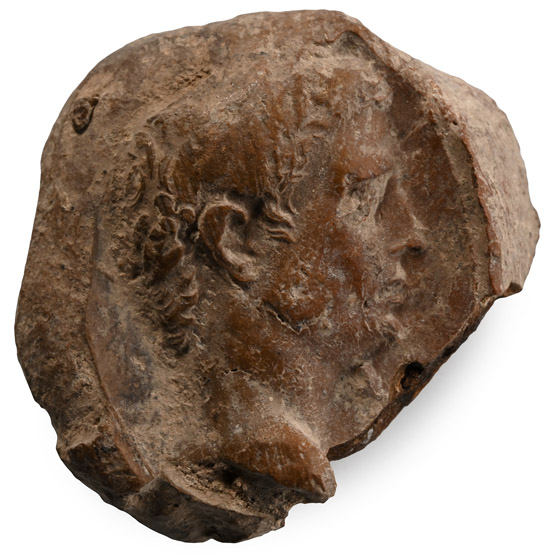
Egyptian Clay Papyrus Document Sealing with Bust of Tiberius
Roman Period, early 1st century A.D.Sold for (Inc. bp): £208
Discoid in plan with impressed seal, profile bust of Tiberius (14-37 A.D.) placed to one side. 3.78 grams, 25 mm
Ex German art market, 2000s. Acquired from an EU collector living in London. From the collection of a Surrey, UK, gentleman. -
.jpg)
Egyptian Bronze Figure of Horus Standing on an Oryx
Late Period-Ptolemaic Period, 664-30 B.C.Estimate: £20,000 - 30,000 (+bp*)
Opening Bid: £10,000
Standing falcon-headed deity with eyes inlaid in gold, wearing the traditional shendyt kilt, a tripartite wig topped by the double crown (pa-sekhemty) fronted by a uraeus, as worn by Egyptian pharaohs, and a wesekh collar; the figure depicted striding forward, with the position of the left arm and drilled hand indicating that it originally held the shaft of a sceptre or a weapon; the right hand also drilled to hold an attribute; the rectangular base featuring a low-relief depiction of an oryx beneath the god’s feet, the four sides of the base bear a line of hieroglyphic invocation giving the name of the deity represented by the statuette and those of the dedicator and his family; two tenons on underside for attachment; mounted on a custom-made display stand. 1.1 kg total, 23 cm high including stand
with Sakae Art Gallery, Nagoya, Japan, 1981. Accompanied by an academic report by Dr Alberto Pollastrini. This lot has been checked against the Interpol Database of stolen works of art and is accompanied by a search certificate number no.13161-248074.
The hieroglyphic inscription surrounding the base is worn and difficult to interpret. Based on the formulas preserved on similar statuettes, a tentative interpretation of its meaning can be proposed. The text begins with the customary formula ḏd mdw, meaning “words to be spoken,” followed by the hieroglyph of a falcon, indicating that the deity addressed is Horus. The following signs are unclear, making it hard to identify which specific form of Horus is meant, possibly Horus of Hebenu or Horus the Elder. The formula continues with a plea for the god to grant the dedicator life, prosperity, health, longevity, and a good old age. The inscription ends with the name of the offerer: “Pa-iu, son of Pa-di-Aset; his mother Ta-heret; and his wife Aset, justified.”
