
Loading, please wait...
LOT 0407
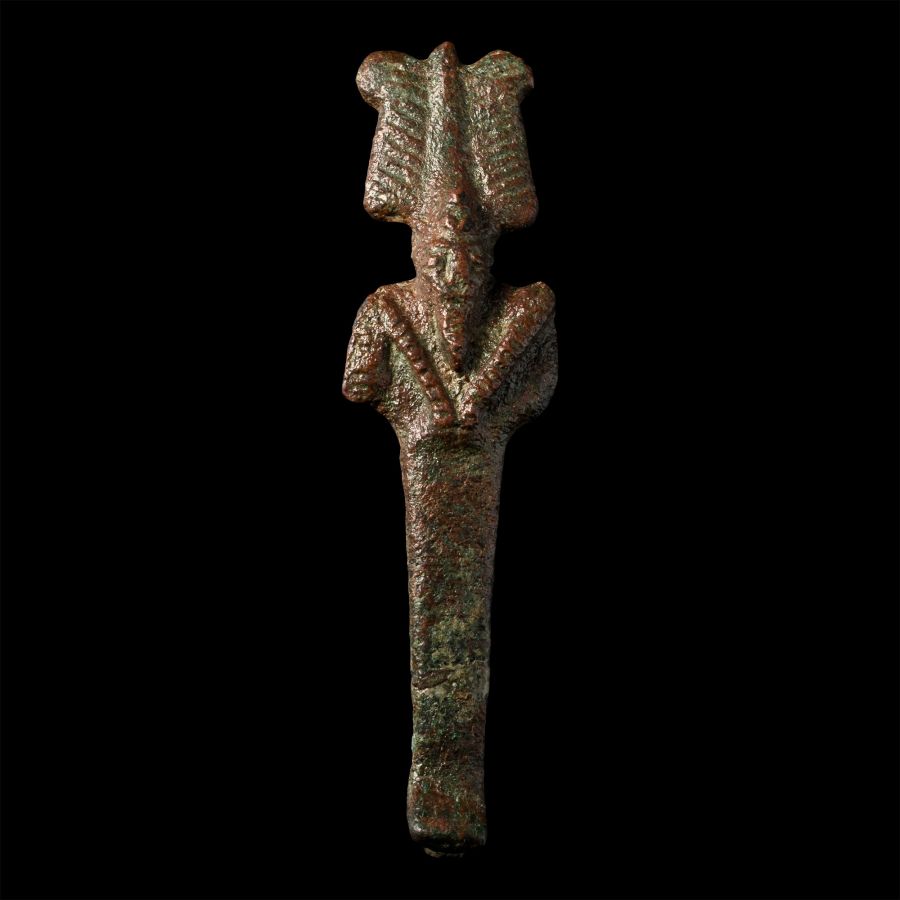
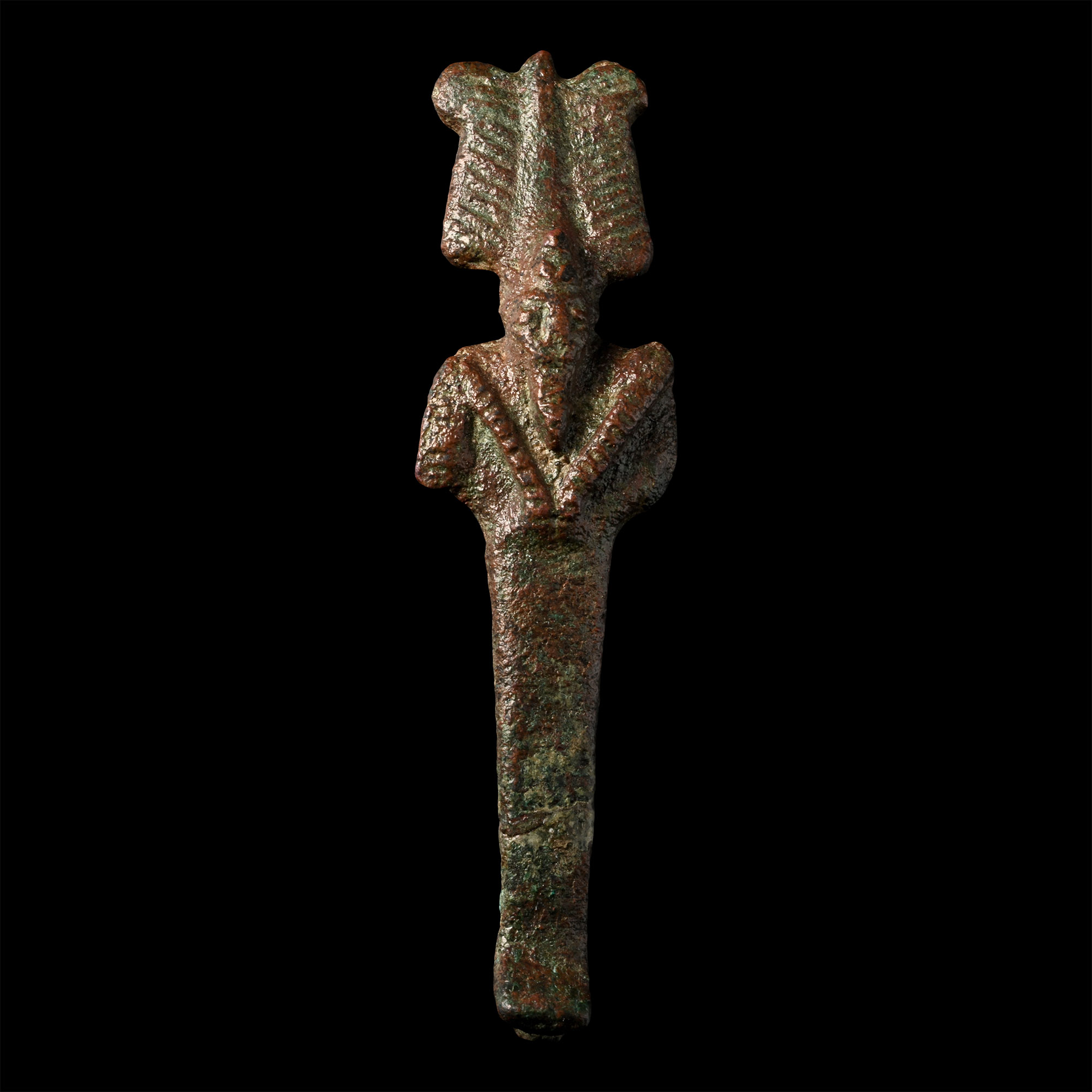
Egyptian Bronze Osiris Figure
LATE-PTOLEMAIC PERIOD, CIRCA 664-30 B.C.
2 5/8 in. (16.17 grams, 68 mm).
Standing pose wearing the atef crown with flanking ostrich plumes and frontal uraeus; holding the crook (heka) and flail (nekhakha) regalia in his crossed hands; peg to underside of feet; repaired. [No Reserve]
ProvenanceFrom the private collection of a Canadian gentleman living in Essex, UK, formed since the 1920s-circa 1990.
Property of an Essex lady until the late 1990s; thence by descent.
From the private collection of an Essex gentleman since the late 1990s.
Cf. Roeder, G., Ägyptische Bronzefiguren II, Berlin, 1956, pl. 20g, for a more elaborate example.
CONDITIONTimeLine Auctions follows a vetting process to ensure the authenticity and legality of all items, reinforcing our commitment to integrity and responsible trading. Each antiquity, antique, and coin lot undergoes thorough examination by a vetting committee of at least ten external specialists, professional trade association members, scientists, and archaeologists: Our Vetting Process
AUCTIONS:
TimeLine is a leading auction house specialising in antiquities, ancient art, collectables, natural history, coins, medals, and books. Our auctions offer museums, collectors, historians, and enthusiasts the opportunity to acquire unique and historically significant pieces.
-
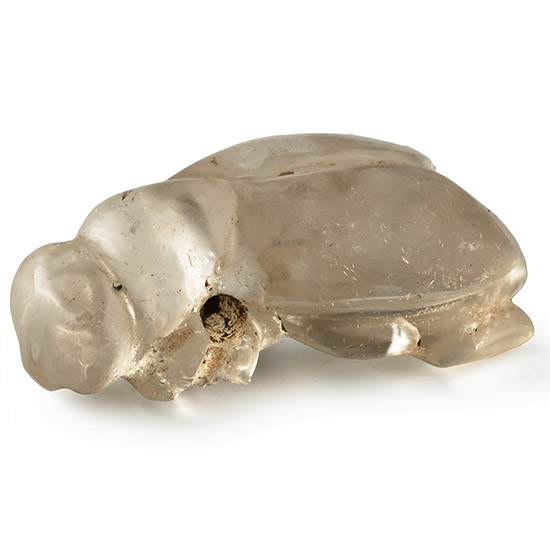
Egyptian Rock Crystal Locust Pendant
New Kingdom, circa 1400–1292 B.C.Sold for (Inc. bp): £650
Carved in the round with closed wings and a slightly curving body, pierced through the body for suspension. 3.7 grams, 26 mm
From the private collection of a European gentleman (1942-2024), formed since the 1970s.
The depiction somewhat resembles a cicada, although this would be very rare in ancient Egyptian plastic arts. The grasshopper and the locust were known in Egyptian as sꜣnḥm or snḥm. Although the insect was often depicted in Old Kingdom tomb scenes, it appeared in various other forms of visual art, such as amulets, cosmetic vessels, and beads, only during the New Kingdom, when it served as a symbol of regeneration. -
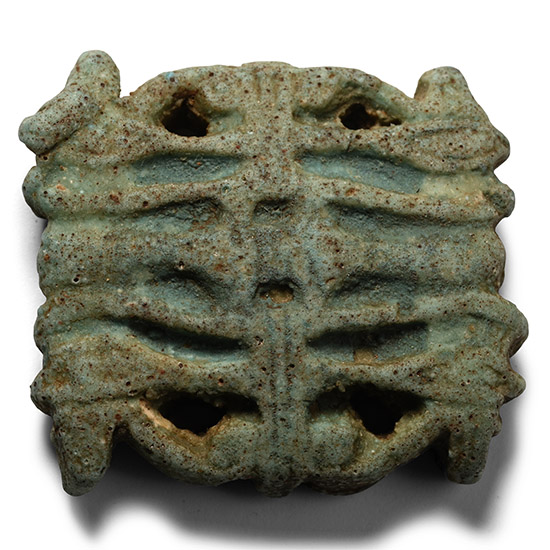
Egyptian Faience Multiple Eye of Horus Amulet
New Kingdom-Late Period, 1550-332 B.C.Estimate: £200 - 300 (+bp*)
Current Winning Bid: £5
Green glazed amulet with two wedjats at the top and the mirror image below, pierced through the centre for suspension. 11.83 grams, 33 mm
From an early 20th century UK collection. Accompanied by a previously illustrated catalogue card with provenance. -
.jpg)
Egyptian Blue Glazed Faience Pectoral
Late Period, 664-332 B.C.Sold for (Inc. bp): £364
Large rectangular shrine-shaped pectoral with subtle cavetto cornice top; obverse with black-painted Anubis reclining on a low pedestal, the reverse with two stylised tyet flanking a djed pillar; four piercings through the rear edge. 20 grams, 45 mm
From a 20th century UK collection.
