
Loading, please wait...
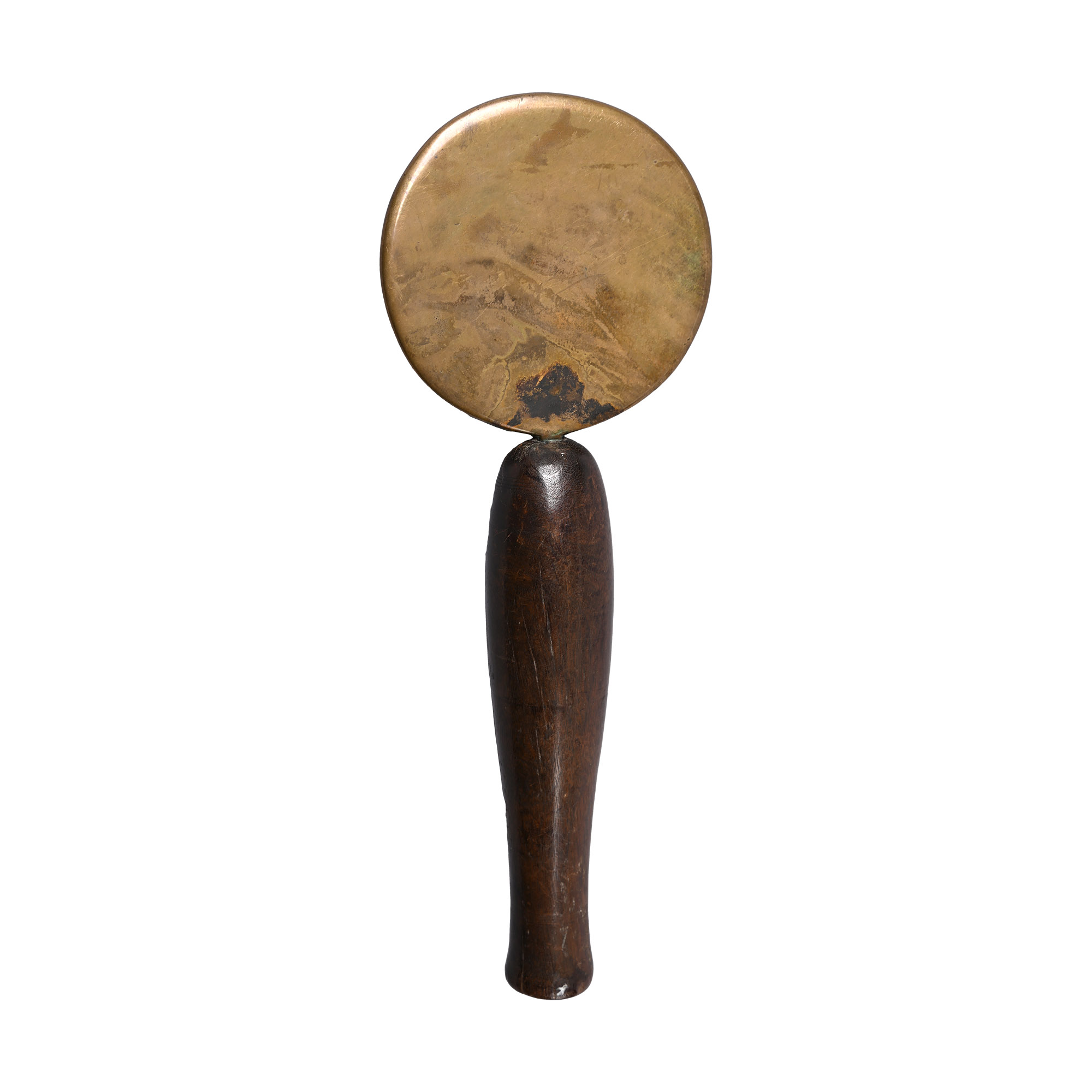
LOT 0065
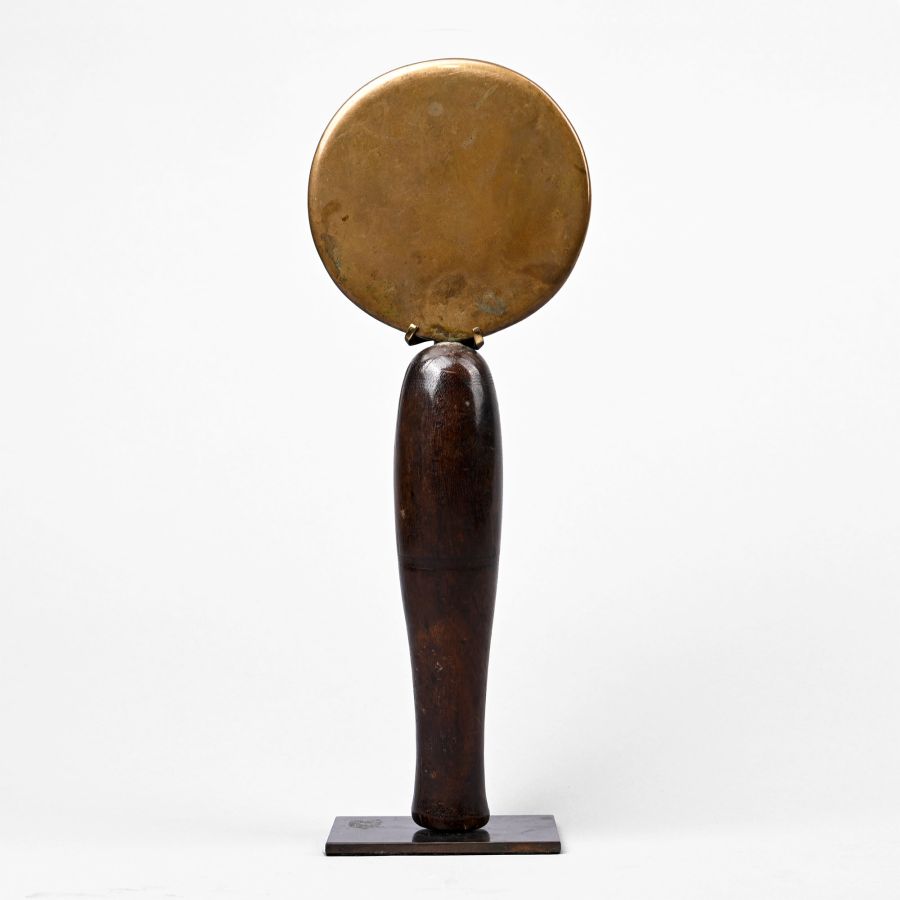
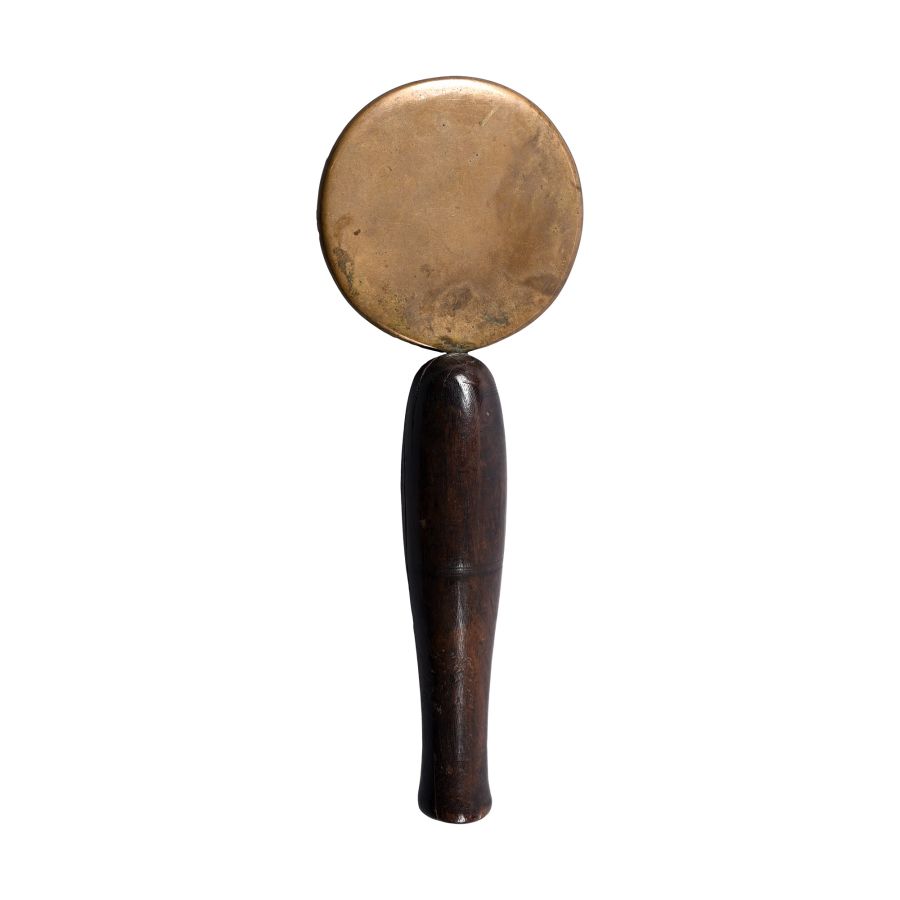
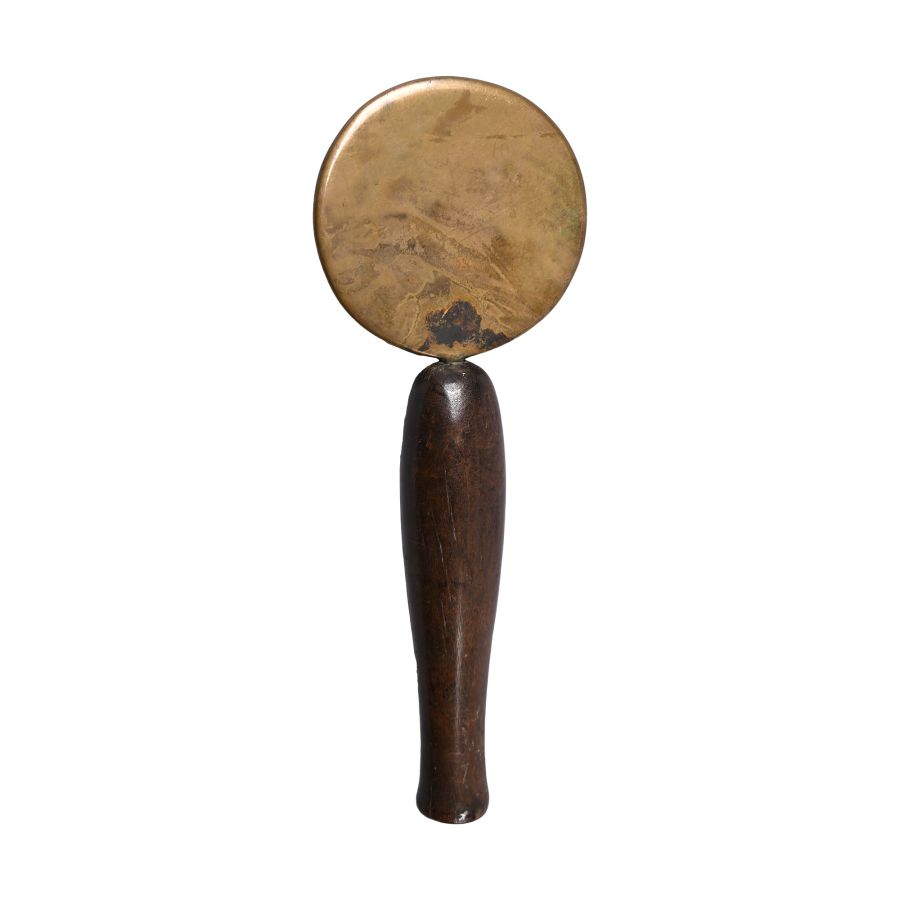
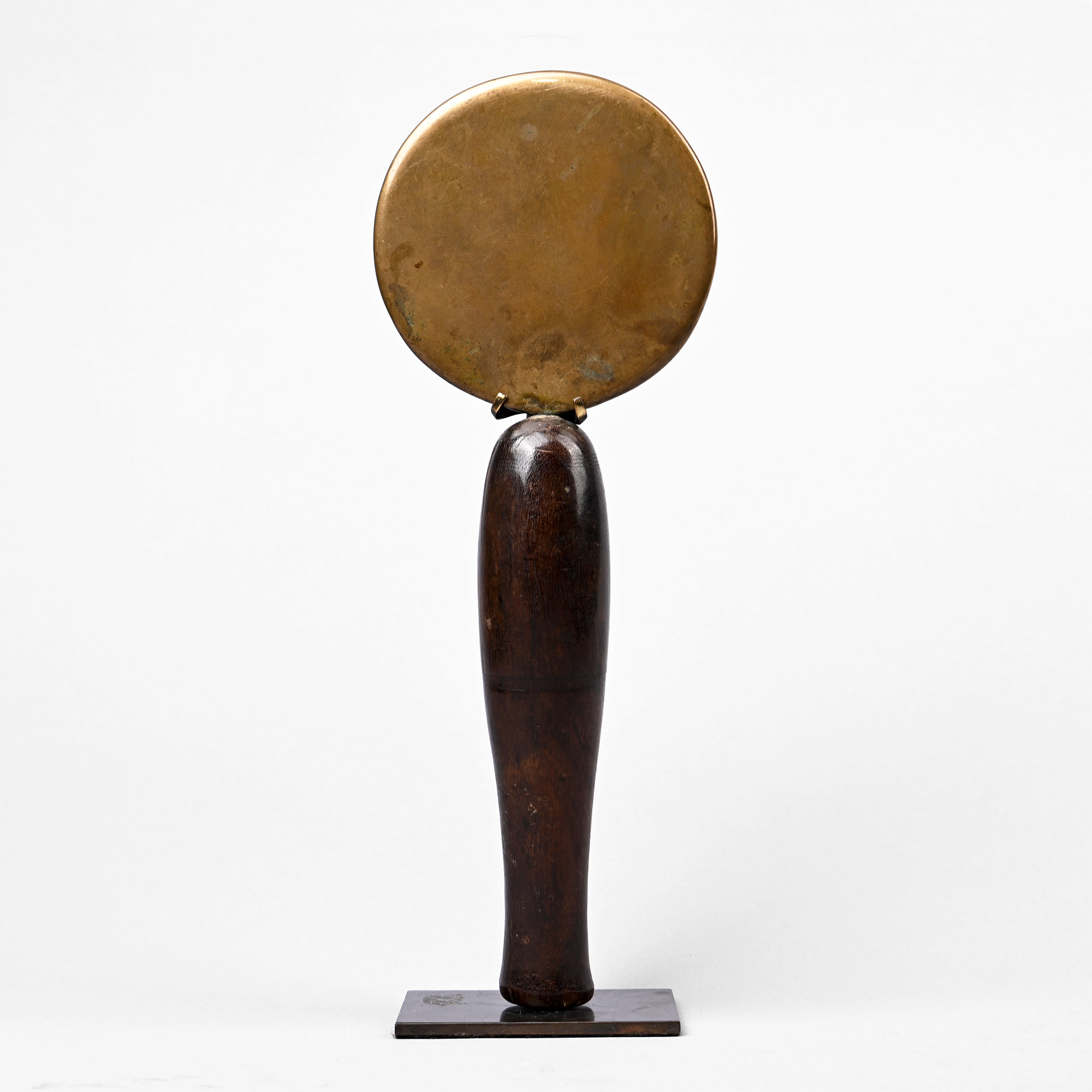
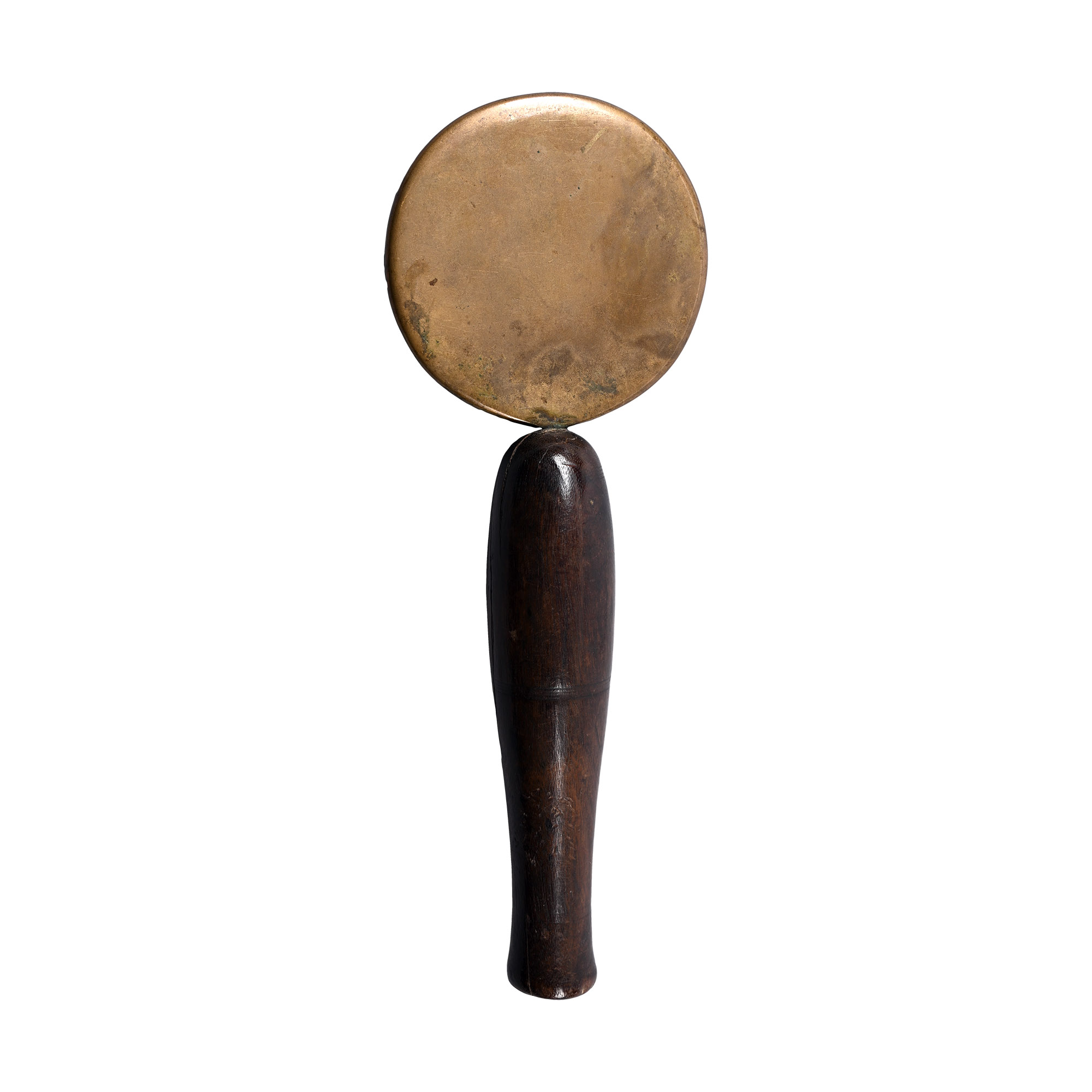
Egyptian Bronze Mirror with Wooden Handle
NEW KINGDOM, 18TH-20TH DYNASTY, 1550-1070 B.C.
11 3/8 in. (766 grams total, 29 cm high including stand).
The rounded cylindrical handle narrowing towards the base and decorated with three horizontal bands; the circular, heavy bronze mirror highly polished and relatively small; accompanied by a custom-made display stand.
Provenancewith Rupert Wace, Ancient Art, 2003.
Private collection, UK.
This lot has been checked against the Interpol Database of stolen works of art and is accompanied by search certificate no.13517-263432.
Cf. Christie's, 7 December 2006, no.21, for a near-identical example; for a mirror with a similar club handle dating to the New Kingdom, see E. Brovarski, S. K. Doll and R. A. Freed (eds.), Egypt's Golden Age: The Art of Living in the New Kingdom, 1558-1085 BC, Boston, 1982, p. 188, fig.219; Vandier d’Abbadie, J., Les objets de toilette égyptiens au Musée du Louvre, Paris, 1972, pp. 169-170, no. 756, for a similar mirror and handle; 180, 182, for examples of hem handles.
FootnotesThe club-type handle resembles the hieroglyph hem, which can mean 'servant'. Therefore, the handle is thought to represent the mirror disc's servant. This type appears in pictorial scenes; for example, a similar smaller disc mirror with a hem handle is depicted in the Theban tomb (TT 60) of Senet (Davies, N.de G., The Tomb of Antefoker, Vizier of Sesostris I, and of His Wife, Senet, London 1930, pl. 30), and another with a larger disc and a shorter hem handle is depicted on the inside of the coffin of Sebeka (Steindorff, G., Grabfunde des mittleren Reichs in den königlichen Museen zu Berlin. Part 2: Der Sarg des Sebk.-o.- ein Grabfund aus Gebelen, Berlin, 1896, 2, pl. 2).
CONDITIONTimeLine Auctions follows a vetting process to ensure the authenticity and legality of all items, reinforcing our commitment to integrity and responsible trading. Each antiquity, antique, and coin lot undergoes thorough examination by a vetting committee of at least ten external specialists, professional trade association members, scientists, and archaeologists: Our Vetting Process
AUCTIONS:
TimeLine is a leading auction house specialising in antiquities, ancient art, collectables, natural history, coins, medals, and books. Our auctions offer museums, collectors, historians, and enthusiasts the opportunity to acquire unique and historically significant pieces.
LOT 0065
Egyptian Bronze Mirror with Wooden Handle
Estimate £4,000 - 6,000€4,640 - 6,960 (for guidance only)$5,400 - 8,100 (for guidance only)
Opening Bid
£2,000 (EUR 2,320; USD 2,700) +BP*
-
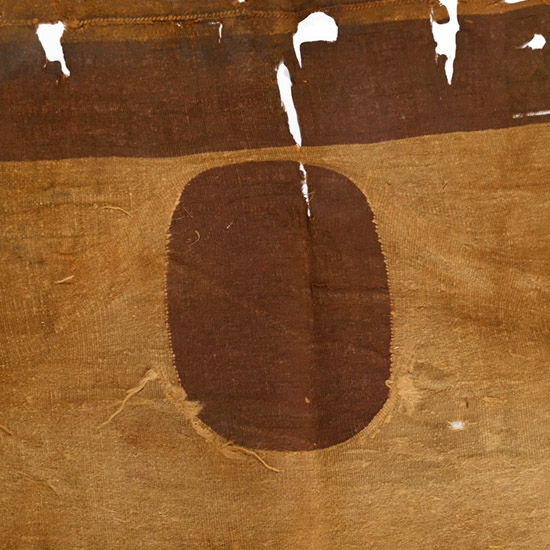
Large Egyptian Coptic Textile Shoulder Fragment of a Man's Military Tunic with Clavus and Orbiculus
Circa 5th-6th century A.D.Estimate: £200 - 300 (+bp*)
Bids: 1 | Current Bid: £5
Large section of a shoulder from a man's tunic in wool on linen, decorated with a long purple clavus featuring geometric squares and a purple orbiculus on the shoulder; tapestry, weave braids with right-angled borders. 233 grams total including paper folder, 82 cm
Acquired 1970s-1996. Property of a North American collector. London collection, 2016.
The tunic was decorated in purple with opus phrygium embroidery. This corresponds to the iconography of military tunics for 5th-7th century Roman soldiers. The archaeological evidence from the desert cemeteries of Egypt offers striking confirmation of pictorial sources on late Roman clothing around the empire. -
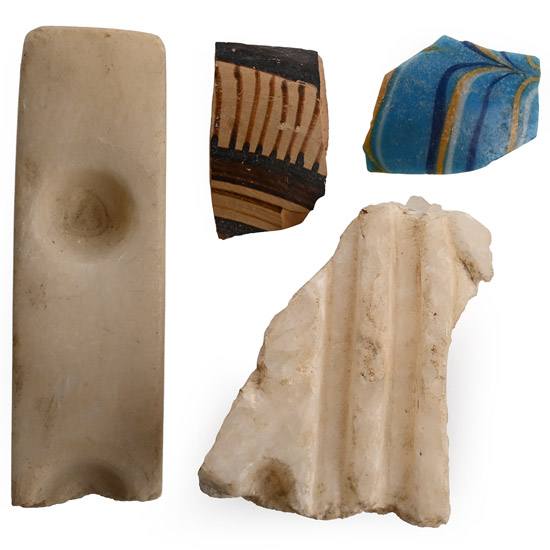
Egyptian Alabaster and Ceramic Group
New Kingdom, 18th Dynasty, Amarna Period, 1353-1336 B.C.Estimate: £60 - 80 (+bp*)
Opening Bid: £5
Comprising: an alabaster fragment with two deeply incised lines and part of a hieroglyph; a portion of a narrow rectangular inkwell with two feet on the underside; a fragment of an opaque blue glass vessel with dark blue, yellow and white decoration; and a fragment of a decorated Mycenaean vessel. 94 grams total, 29-78 mm
From the private collection of Peter Clayton, FCILIP, Dip, Arch, FSA, FRNS, Hemel Hempstead, Hertfordshire, UK; formed since the late 1950s. -
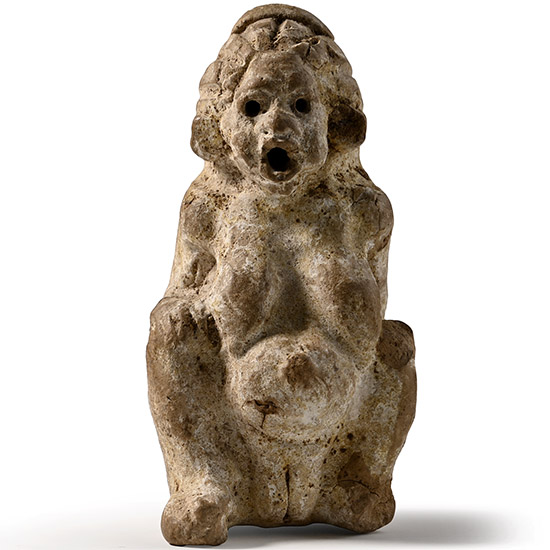
Egyptian Libation Vessel in the Form of a Squatting Woman
3rd century B.C.-2nd century A.D.Estimate: £1,200 - 1,700 (‡+bp*)
Opening Bid: £675
Formed as a naked pregnant woman in a squatting position, with sagging breasts and a strongly bulging belly; pubis clearly visible between the legs, which are spread wide apart; eyes and mouth perforated to serve as a spout; filling hole at the back of the head; left foot partly absent. 161 grams, 10 cm
Hans Jurgen Döpp (1940), Frankfurt. From The Erotica Collection of Christian von Faber-Castell, Küsnacht ZH, Switzerland; acquired from Bernd Gackstätter, Antikenkabinett Frankfurt.
