
Loading, please wait...
LOT 0061
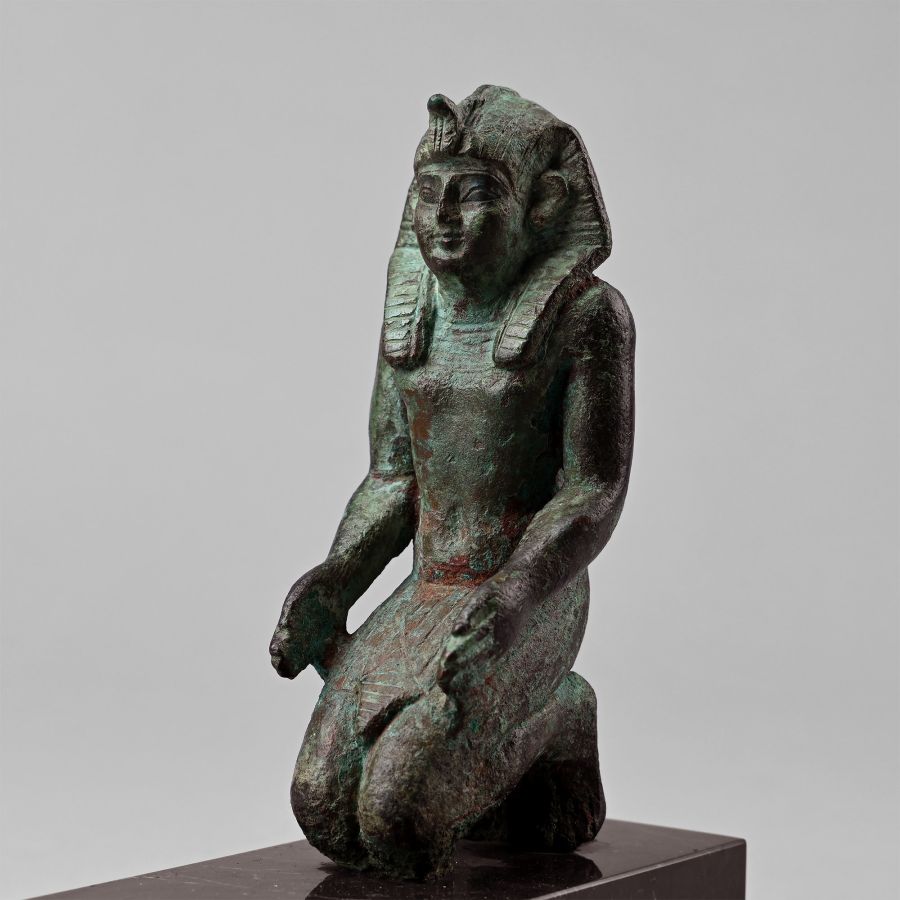
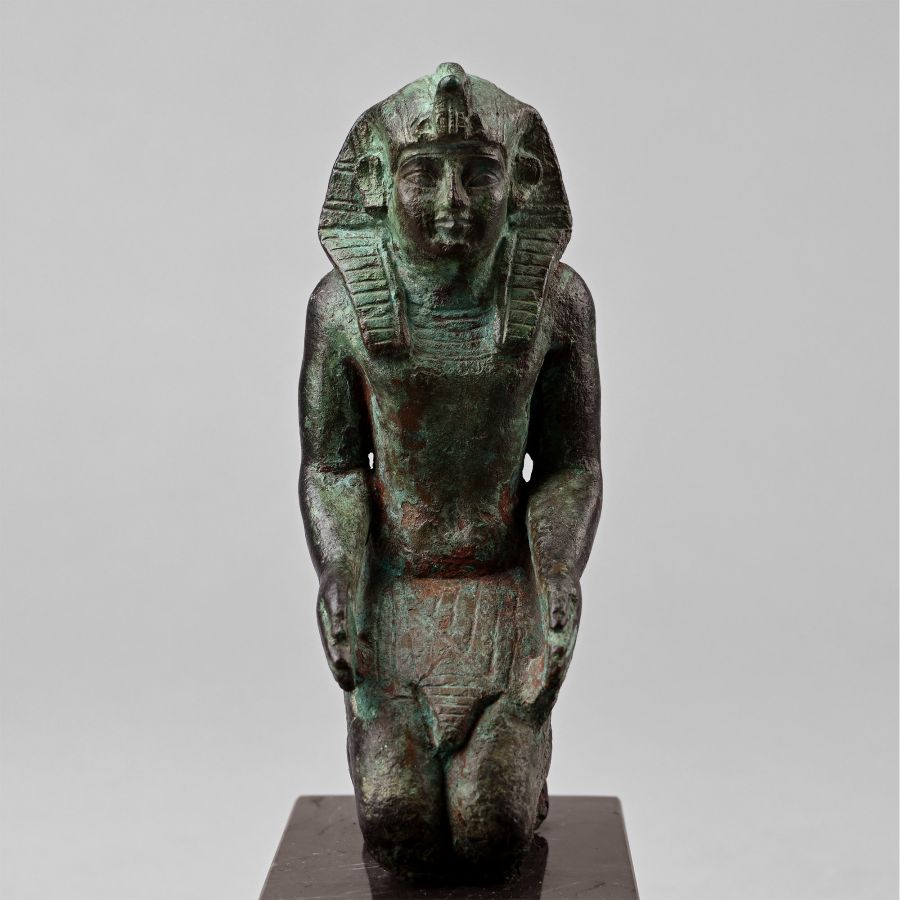
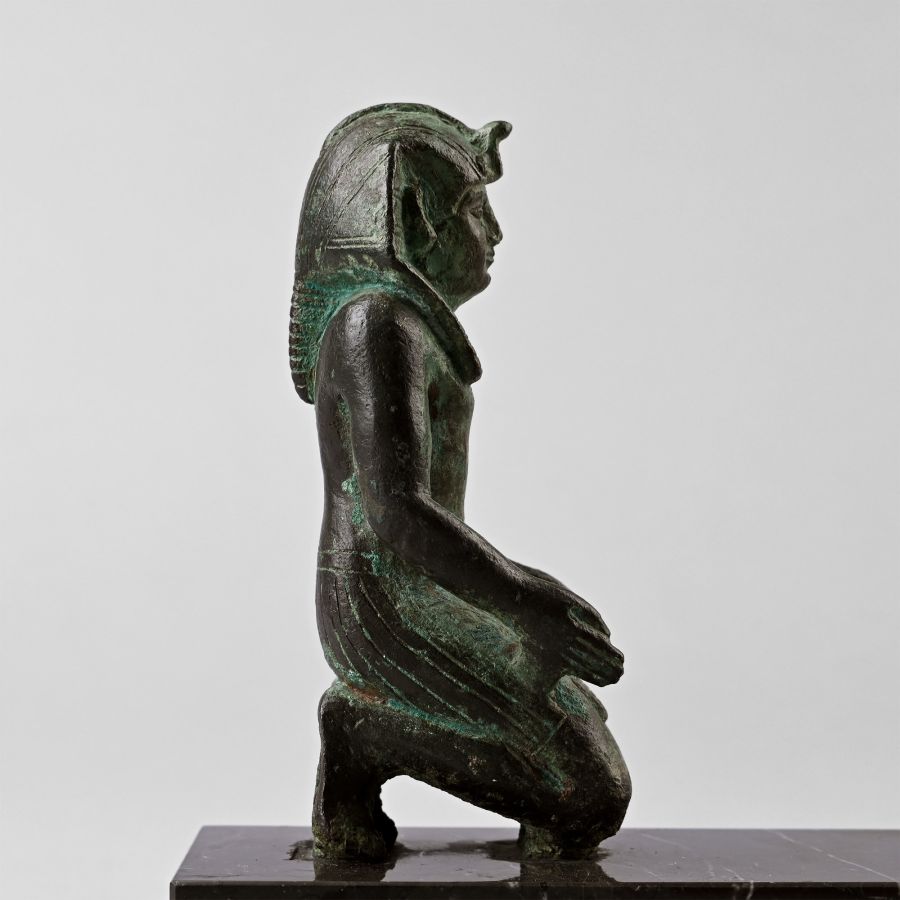
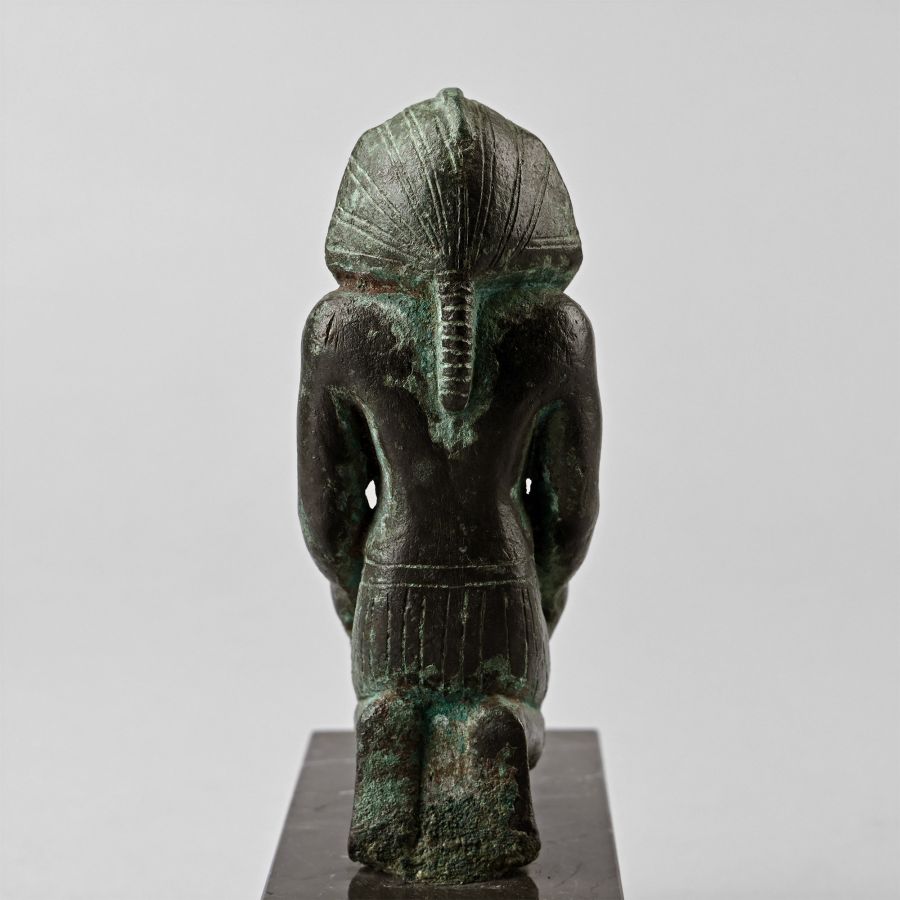
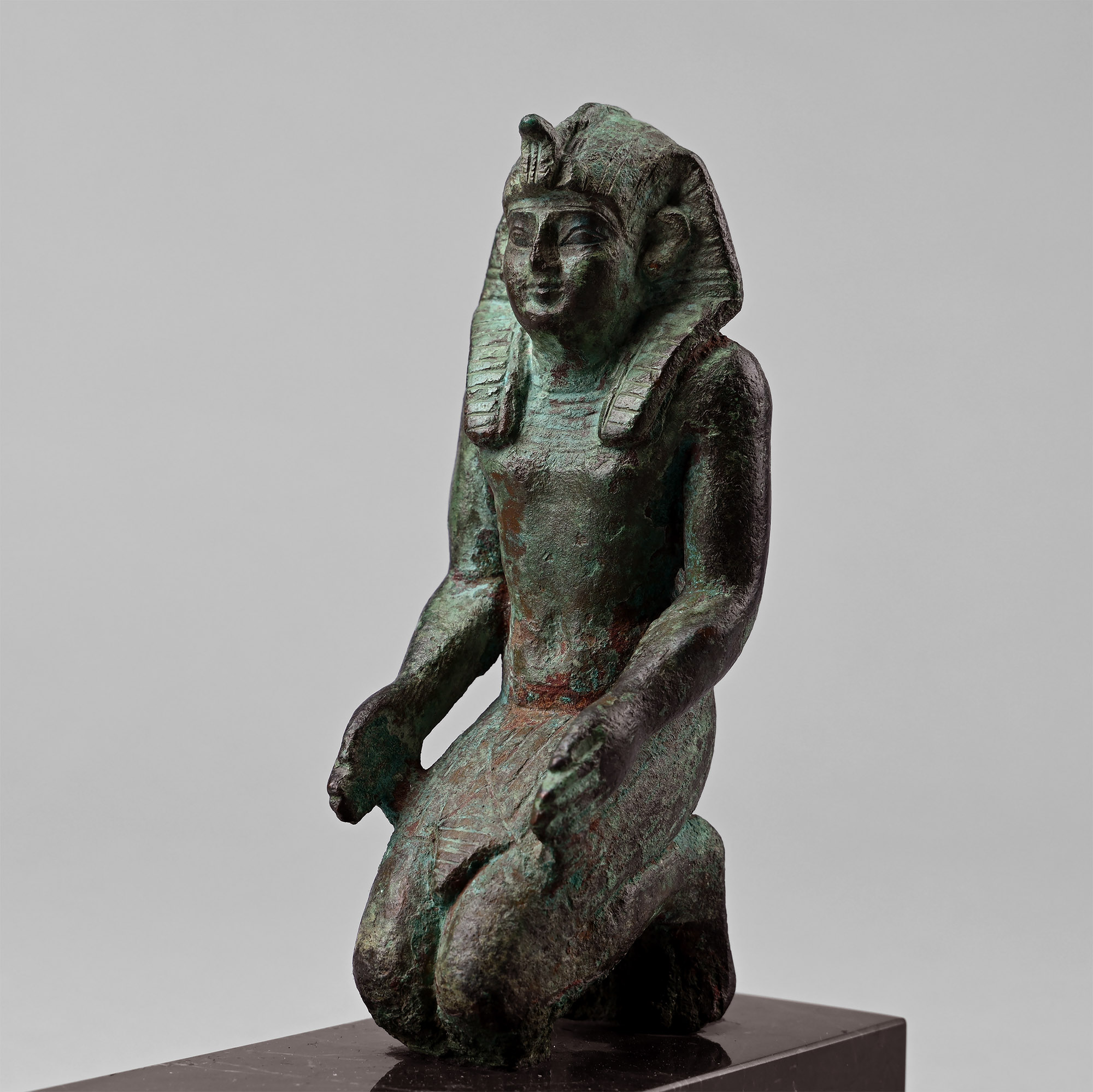
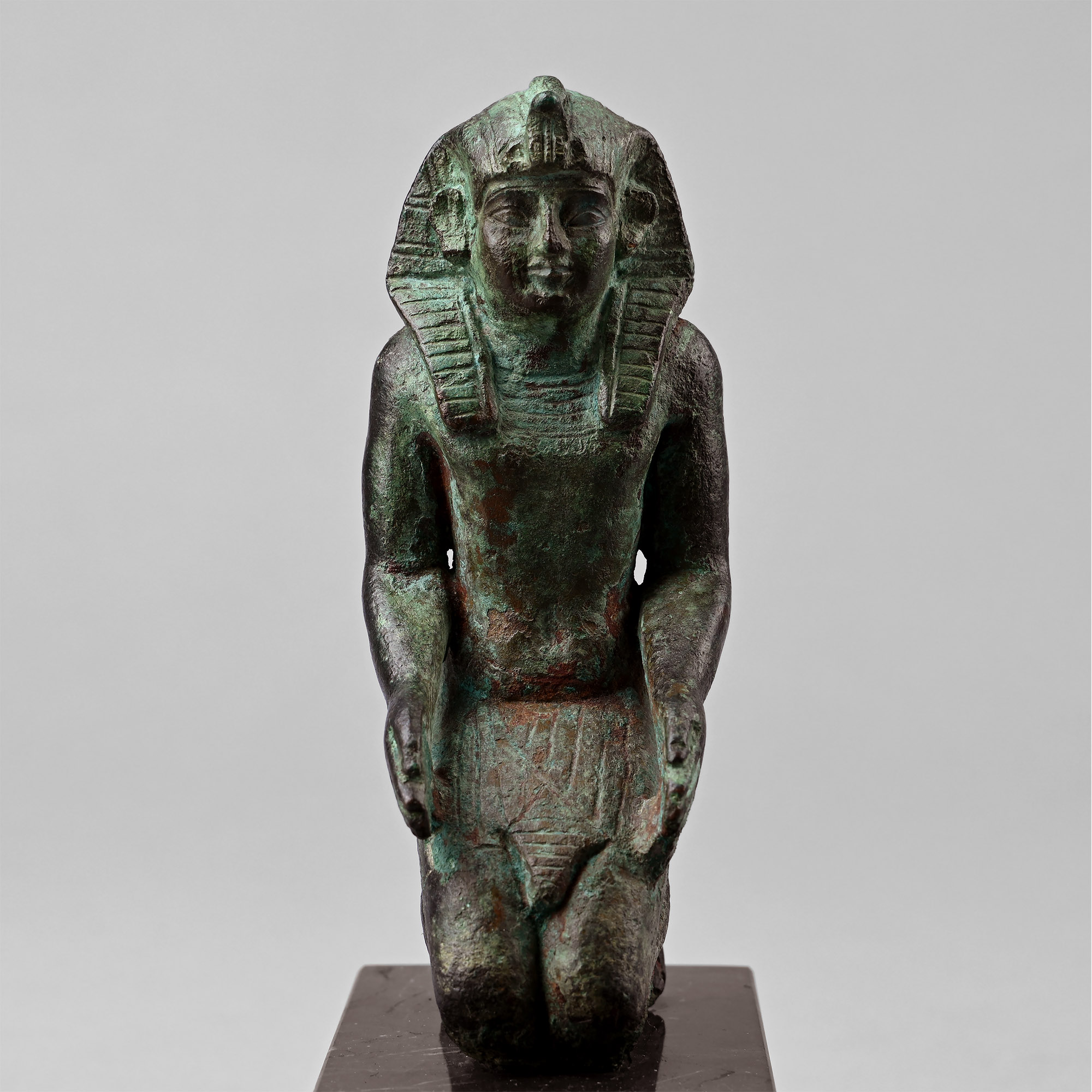
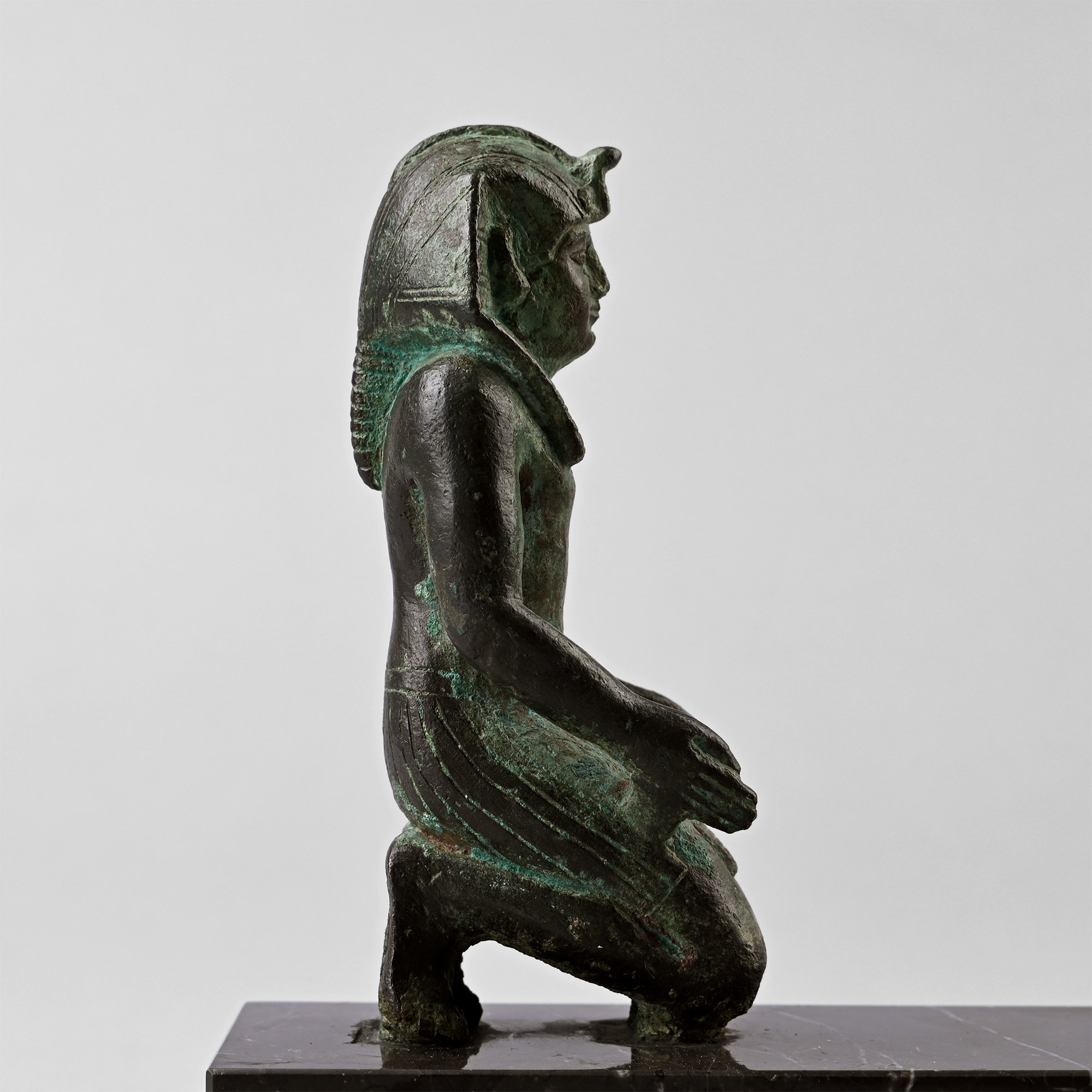
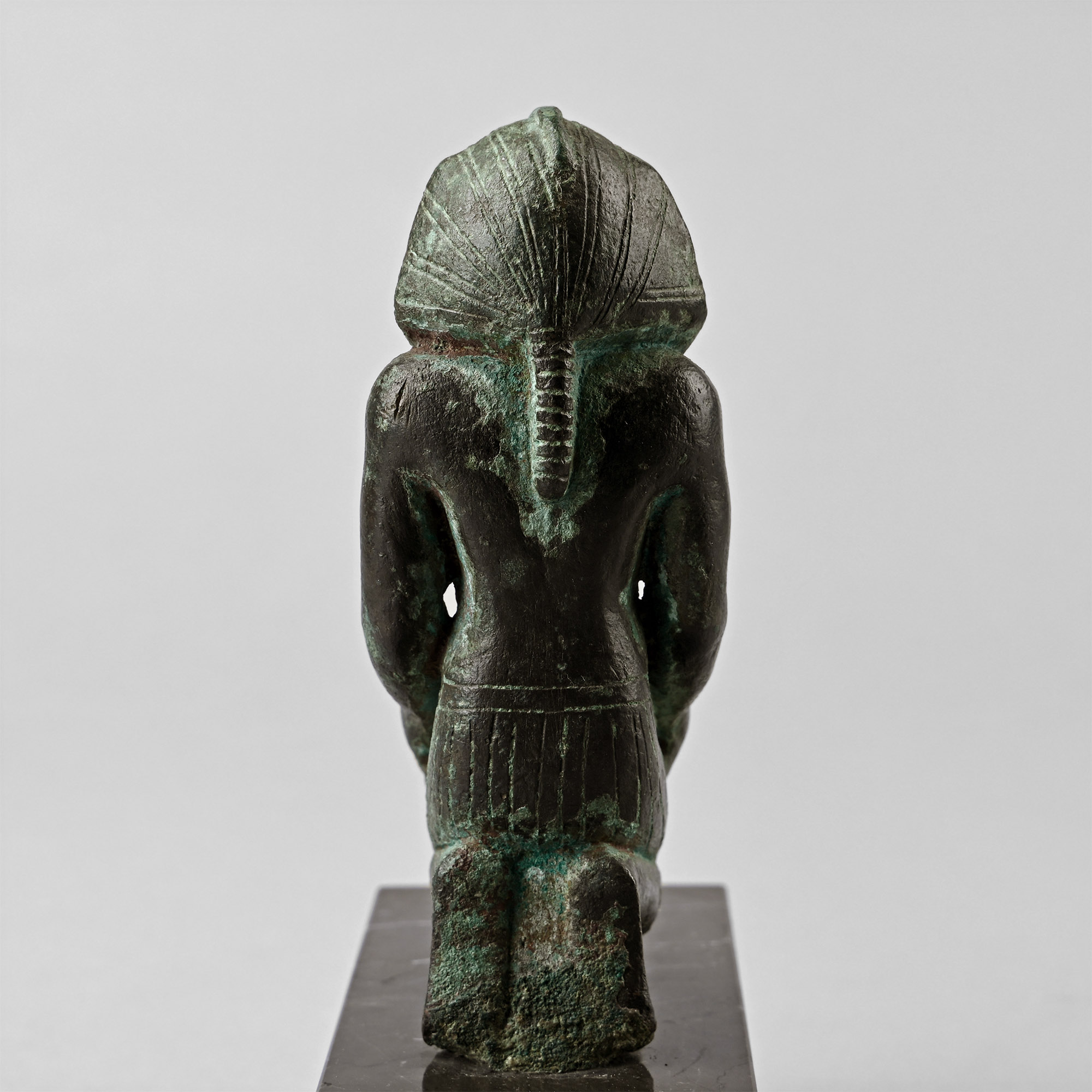
Egyptian Bronze Kneeling Figure of a King
LATE PERIOD-PTOLEMAIC PERIOD, CIRCA 664-30 B.C.
6 1/2 in. (1.62 kg total, 16.7 cm high including stand).
A solid cast statuette modelled in the round as a kneeling pharaoh wearing a thigh-length shendyt kilt, a broad collar and a nemes headdress adorned with a uraeus to the brow; with open hands positioned as though they once held an object, palms facing inward; mounted on a custom-made stand.
ProvenancePrivate collection, E.M. (1880-1954), since the 1930s.
Accompanied by an academic report by Egyptologist Paul Whelan.
This lot has been checked against the Interpol Database of stolen works of art and is accompanied by search certificate no.13196-249244.
Cf. Hill, M., Royal Bronze Statuary from Ancient Egypt: With Special Attention to the Kneeling Pose, Leiden, 2004, p. 173 and pl. 50, for a comparable example dated to the early 26th Dynasty; The Cleveland Museum of Art, Gift of the John Huntington Art and Polytechnic Trust, 1914.575, for a statuette of a kneeling king from the Graeco-Roman Period.
FootnotesThe figure's overall appearance, particularly the muscular upper body, resembles two kneeling bronze figures – Brooklyn Museum 71.11 and Pennsylvania Museum E.13004 – both bearing the cartouche of 26th Dynasty pharaoh Necho II (610-595 BC). Unlike the varied poses of kneeling stone statues, those in bronze consistently rest on their knees and toes, with heels positioned under their buttocks. Figures with this hand gesture are often thought to have originally held an offering vessel or ritual object. However, none of the existing examples shows signs of having held an object. Instead, the gesture may symbolise both giving and receiving, representing veneration, offering, and a plea for protection to a particular deity.
CONDITIONTimeLine Auctions follows a vetting process to ensure the authenticity and legality of all items, reinforcing our commitment to integrity and responsible trading. Each antiquity, antique, and coin lot undergoes thorough examination by a vetting committee of at least ten external specialists, professional trade association members, scientists, and archaeologists: Our Vetting Process
AUCTIONS:
TimeLine is a leading auction house specialising in antiquities, ancient art, collectables, natural history, coins, medals, and books. Our auctions offer museums, collectors, historians, and enthusiasts the opportunity to acquire unique and historically significant pieces.
LOT 0061
Egyptian Bronze Kneeling Figure of a King
Estimate £25,000 - 35,000€29,000 - 40,600 (for guidance only)$33,750 - 47,250 (for guidance only)
Opening Bid
£13,000 (EUR 15,080; USD 17,550) ‡+BP*
-
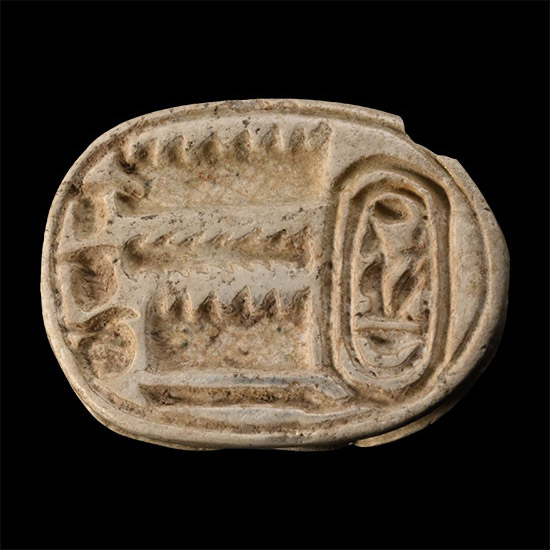
Egyptian Steatite Scarab for Pharaoh Amenhotep III
New Kingdom, 18th Dynasty, circa 1386-1349 B.C.Estimate: £300 - 400 (+bp*)
Bids: 1 | Current Bid: £5
Ellipsoid in plan with carapace and leg detailing; on the underside, a cartouche of Amenhotep III and possible epithet to the side, nb-mꜢꜤt-RꜤ (s)mn mnw ('Neb-maat-Re, establisher of monuments'). 2.54 grams, 17 mm
with a privately curated collection, 1980s-early 2000s. From the private collection and estate of Christine Simons (1943-2025), West Midlands, UK. Accompanied by a copy of a two page archival record and provenance report. -
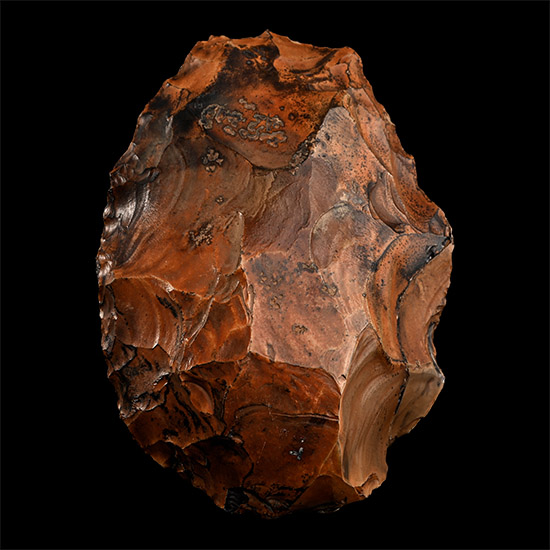
Egyptian Stone Age Knapped Handaxe
Lower Palaeolithic Period, circa 500,000-250,000 B.P.Estimate: £150 - 200 (+bp*)
Bids: 3 | Current Bid: £15
Expertly shaped through percussion flaking, creating zigzagging lateral edges, with a roughly ovate or teardrop form and a heavy, thick butt, tapering down to a distinct working edge. 363 grams, 12.5 cm
From the collection of A.D. Passmore (1879-1958), his collection of flints from the area of Stonehenge was donated to the Ashmolean Museum in the 1950s. From the private collection of Peter Clayton, FCILIP, Dip, Arch, FSA, FRNS, Hemel Hempstead, Hertfordshire, UK; formed since the late 1950s. Accompanied by a copy of an old handwritten information card by Peter Clayton.
The Egyptian flint hand axe, or biface, is a prehistoric stone tool with two faces. This tool holds the record for being the longest-used tool in human history. The technical term 'biface' comes from the archetypal model, generally a bifacial Lithic flake with an almond-shaped morphology. Hand axes typically have a pointed end and a rounded base, giving them their characteristic shape, and both faces have been knapped to remove the natural cortex, at least partially. -
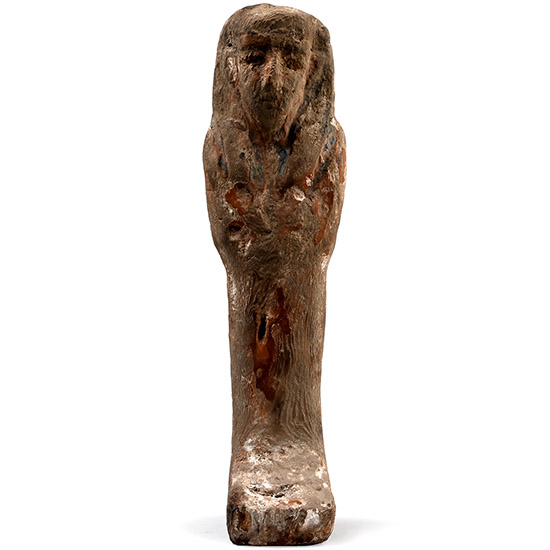
Large Egyptian Painted Wooden Ptah-Sokar-Osiris Figure
New Kingdom, circa 12th century B.C. or laterEstimate: £800 - 1,000 (+bp*)
Opening Bid: £400
Mummiform figure wearing a long lappet wig, with traces of blue and white pigment; a hole in the top of the head, likely to accept a separately fashioned headdress. 460 grams, 34.5 cm
with a privately curated collection, 1980s-early 2000s. From the private collection and estate of Christine Simons (1943-2025), West Midlands, UK.
Initially representing Osiris, this statuette type gradually merged with the Memphite deity Ptah-Sokar. It became a common grave good in the Late Period and the Graeco-Roman era. It was typically depicted standing on a long, rectangular base, wearing a tall, distinctive crown of two large, opposing feathers, with a sun disc on the lower front and ram's horns beneath. The recess in the crown of the present example was likely intended to accommodate this crown.
