
Loading, please wait...

LOT 0667
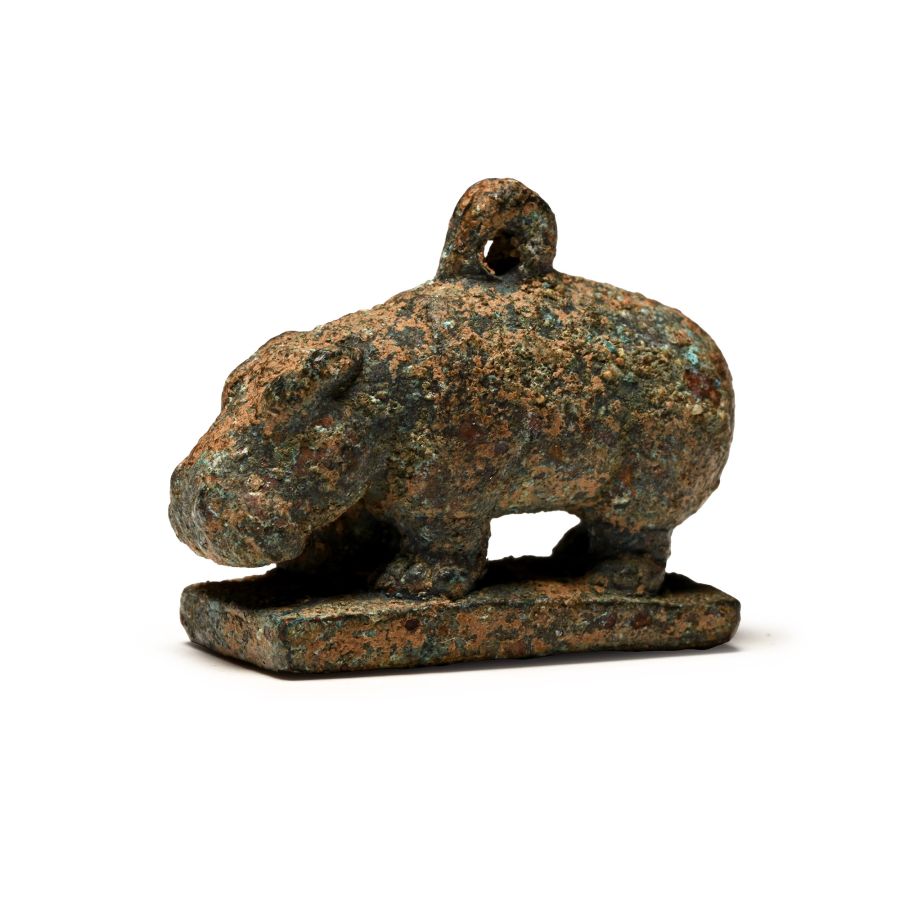
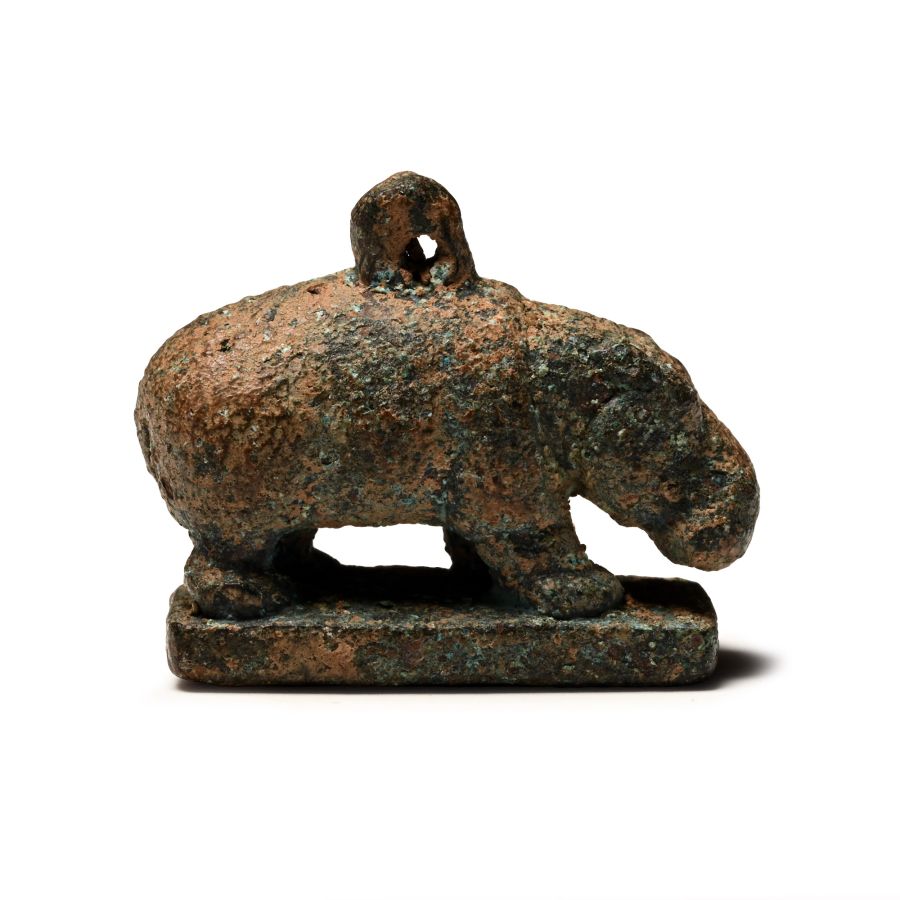
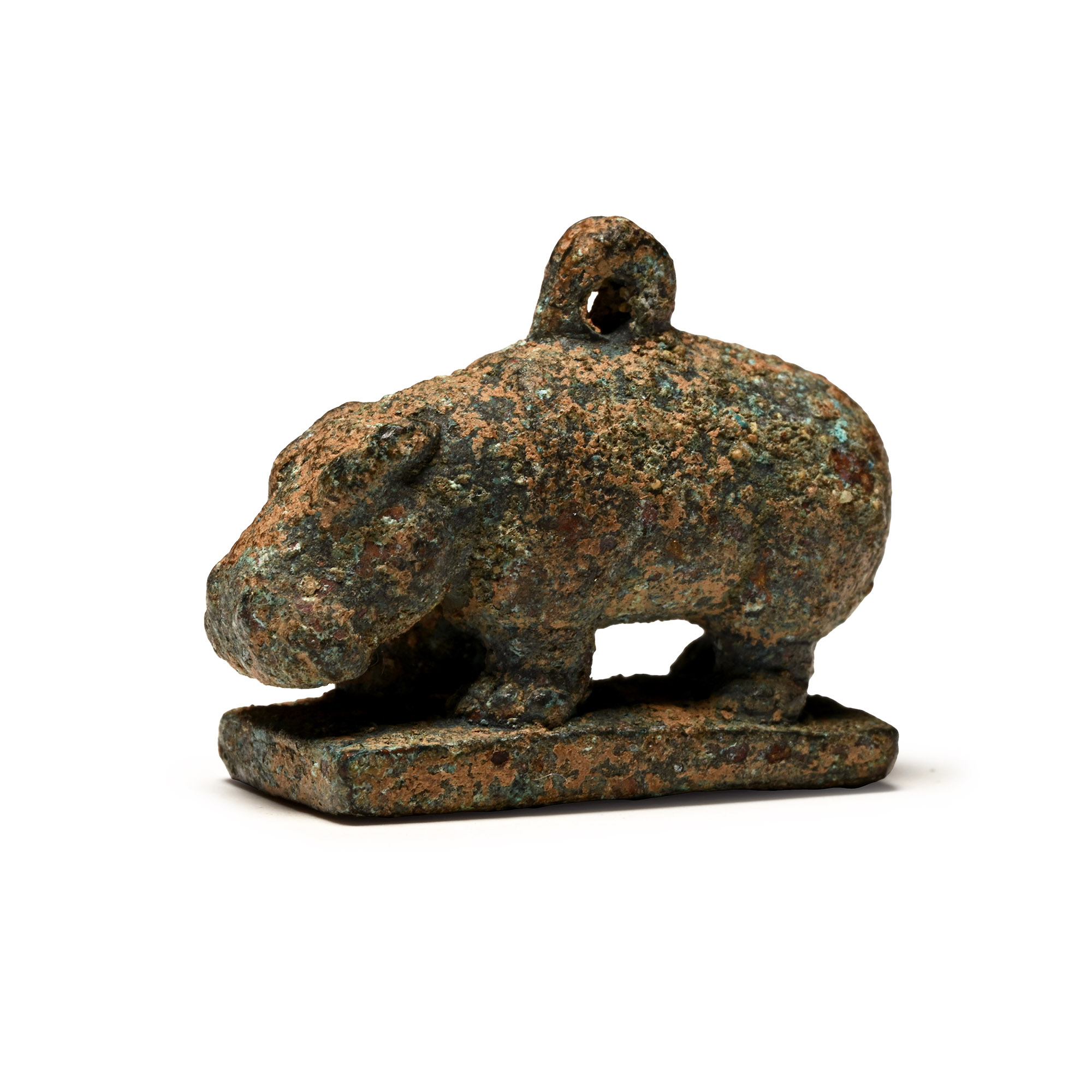
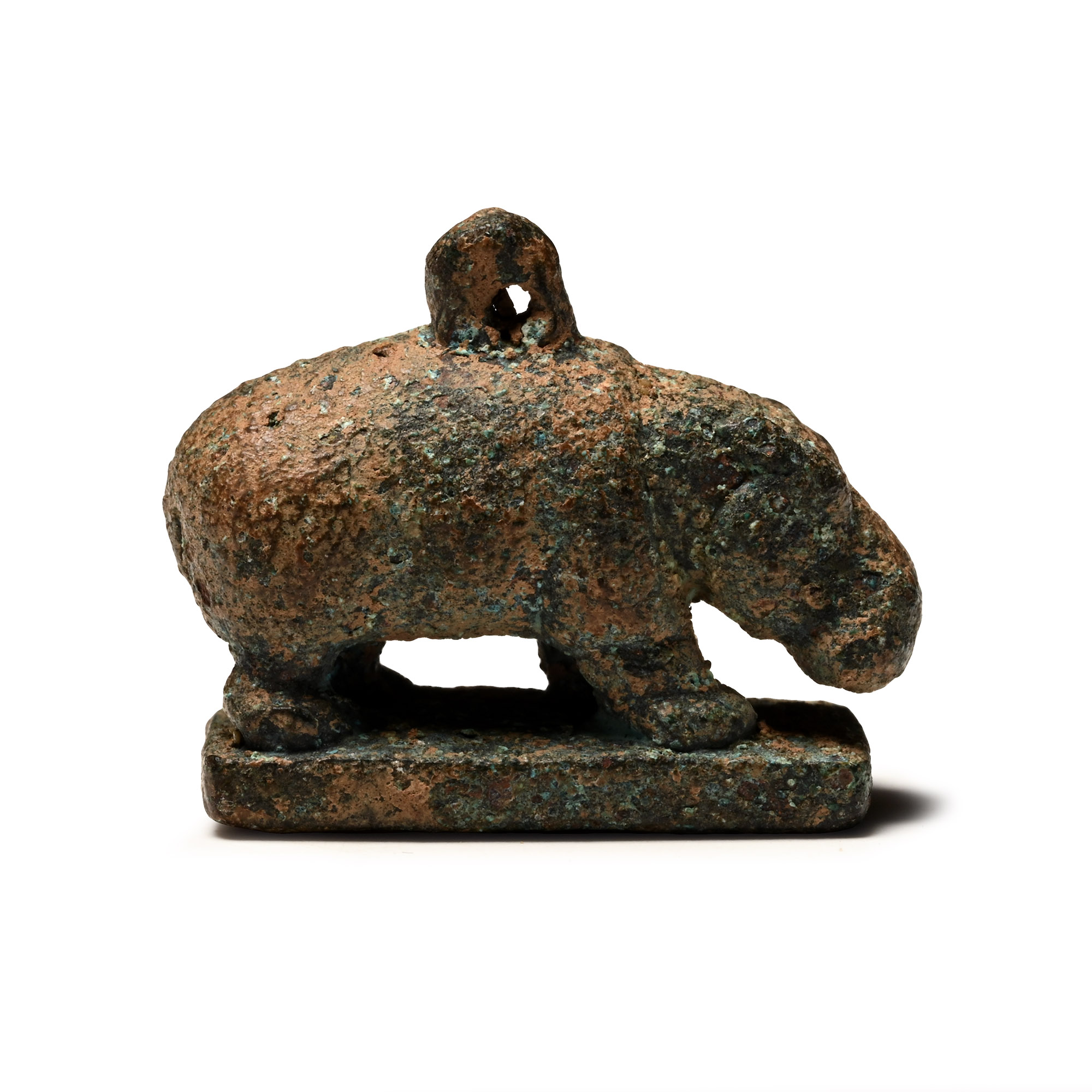
Egyptian Bronze Hippopotamus Amulet
LATE PERIOD, 664-332 B.C. OR LATER
1 in. (20.5 grams, 26 mm).
Modelled in the round on a rectangular base with a dorsal loop.
ProvenanceEx mid 19th century London, UK, collection.
FootnotesMetal hippopotamus amulets are comparatively rare compared with faience and stone examples. A gold hippopotamus amulet of similar size was discovered in Tomb W 643 at Meroe, Sudan, and is now in the Museum of Fine Arts, Boston (inv. no. 23.380).
Egyptian art depicted the Nile hippopotamus in Old, Middle, and New Kingdom limestone reliefs, as well as in faience, stone, and metal statuettes. Egyptians both admired and feared them: powerful and unpredictable, hippos attack when threatened. Their fearsome reputation made them potent apotropaic amulets, giving the wearer power over evil and chaotic forces.
TimeLine Auctions follows a vetting process to ensure the authenticity and legality of all items, reinforcing our commitment to integrity and responsible trading. Each antiquity, antique, and coin lot undergoes thorough examination by a vetting committee of at least ten external specialists, professional trade association members, scientists, and archaeologists: Our Vetting Process
AUCTIONS:
TimeLine is a leading auction house specialising in antiquities, ancient art, collectables, natural history, coins, medals, and books. Our auctions offer museums, collectors, historians, and enthusiasts the opportunity to acquire unique and historically significant pieces.
LOT 0667
Egyptian Bronze Hippopotamus Amulet
Estimate £600 - 800€700 - 930 (for guidance only)$810 - 1,080 (for guidance only)
Opening Bid
£300 (EUR 348; USD 405) +BP*
-
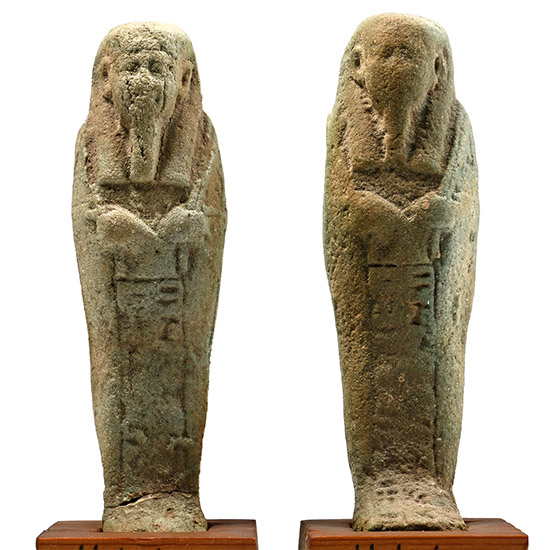
Egyptian Blue Faience Palestinian Shabti Pair
Late Period, 664-332 B.C.Estimate: £400 - 600 (+bp*)
Opening Bid: £5
Two mummiform figures, produced from the same mould, wearing lappet wigs, with arms crossed and hands holding agricultural implements; illegible hieroglyphic text on the lower body; display stand marked 'Ushabti Palestinian 1000-800 B.C.'. 120 grams total, 11.5-11.6 cm
Acquired near the British Museum, circa 1949, at 3 shillings each. From the private collection of Peter Clayton, FCILIP, Dip, Arch, FSA, FRNS, Hemel Hempstead, Hertfordshire, UK; formed since the late 1950s. Accompanied by an old handwritten information card by Peter Clayton, collection nos.7,7a. -
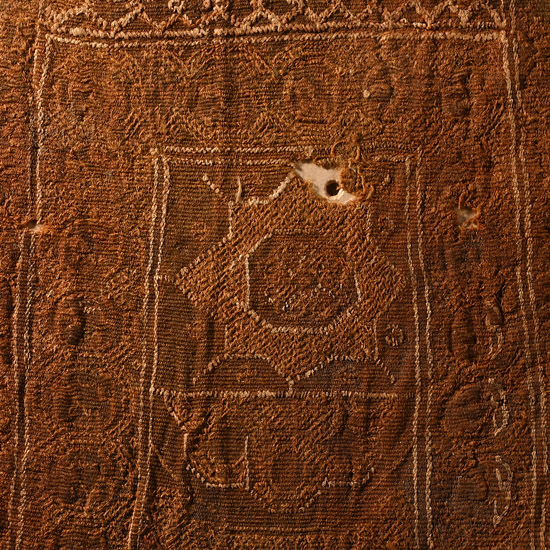
Egyptian Mounted Coptic Textile Fragment of a Central Clavus
Circa 6th-7th century A.D.Estimate: £40 - 60 (+bp*)
Opening Bid: £5
Wide tunic fragment in coarse linen and purple-violet wool with animal figures enclosed within an orbiculi, the central part of the fragment featuring a geometric decoration of stars and lozenges; mounted on cardboard backing. 45 grams total, 22 cm
Acquired 1970s-1996. Property of a North American collector. London collection, 2016.
Among the many fragments from wool tunics, there are several long strips that match to form nearly full-length central pectoral clavi. They are patterned with a profusion of small figures or interlaced abstract designs, birds, plants and animals, with a contrasting border filled with geometric motifs. -
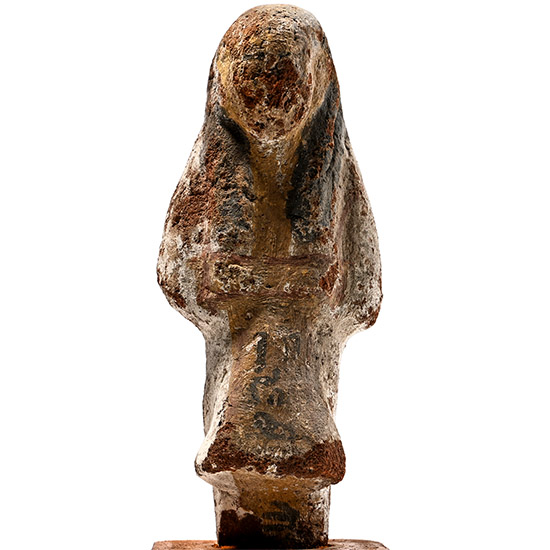
Egyptian Painted Clay Shabti in Daily Dress
New Kingdom, 19th-20th Dynasty, circa 1292-1069 B.C.Estimate: £600 - 800 (+bp*)
Opening Bid: £5
Shabti wearing the kilted dress of daily life, painted white, a blue-black lappet wig, arms crossed, and hands holding hoes, applied in red pigment; the face yellow; a yellow panel of hieroglyphic text on and beneath the kilt reading: 'The illuminated one, the Osiris, Wen....'; feet missing; mounted on a display stand. 119 grams total, 12.5 cm including stand
Acquired from the Egypt Exploration Society, 30th June 1965, for 2 shillings and sixpence. From the private collection of Peter Clayton, FCILIP, Dip, Arch, FSA, FRNS, Hemel Hempstead, Hertfordshire, UK; formed since the late 1950s. Accompanied by an old handwritten information card by Peter Clayton, collection no.115.
