
Loading, please wait...
LOT 0507
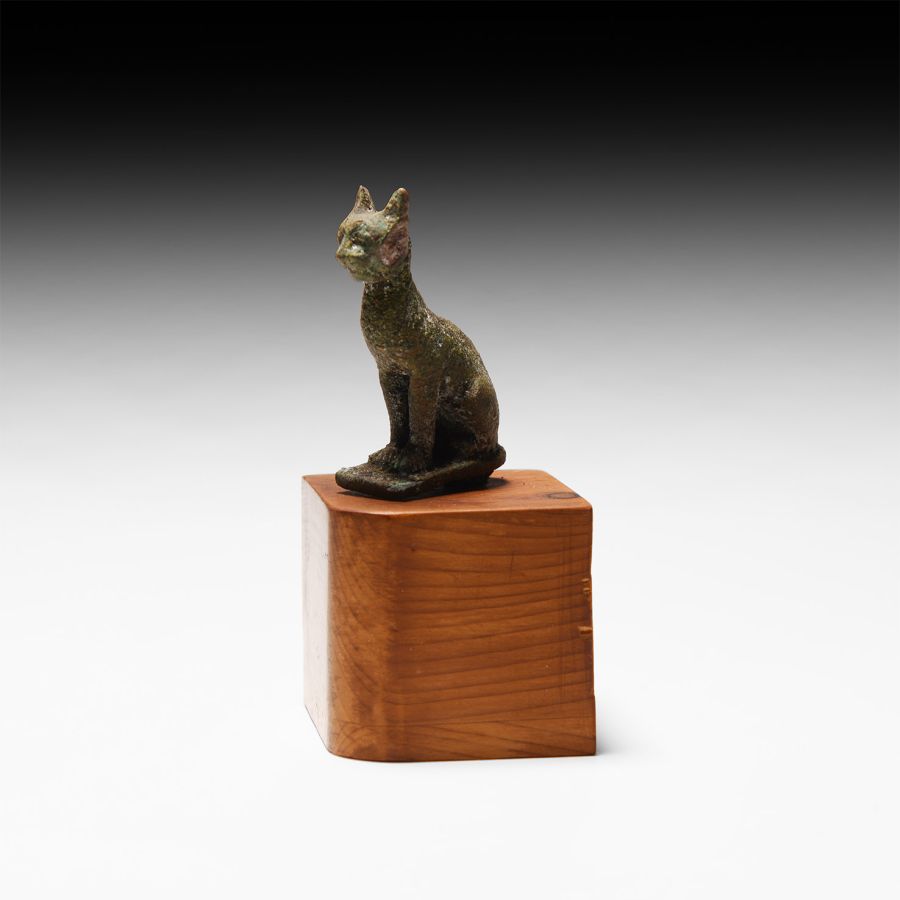
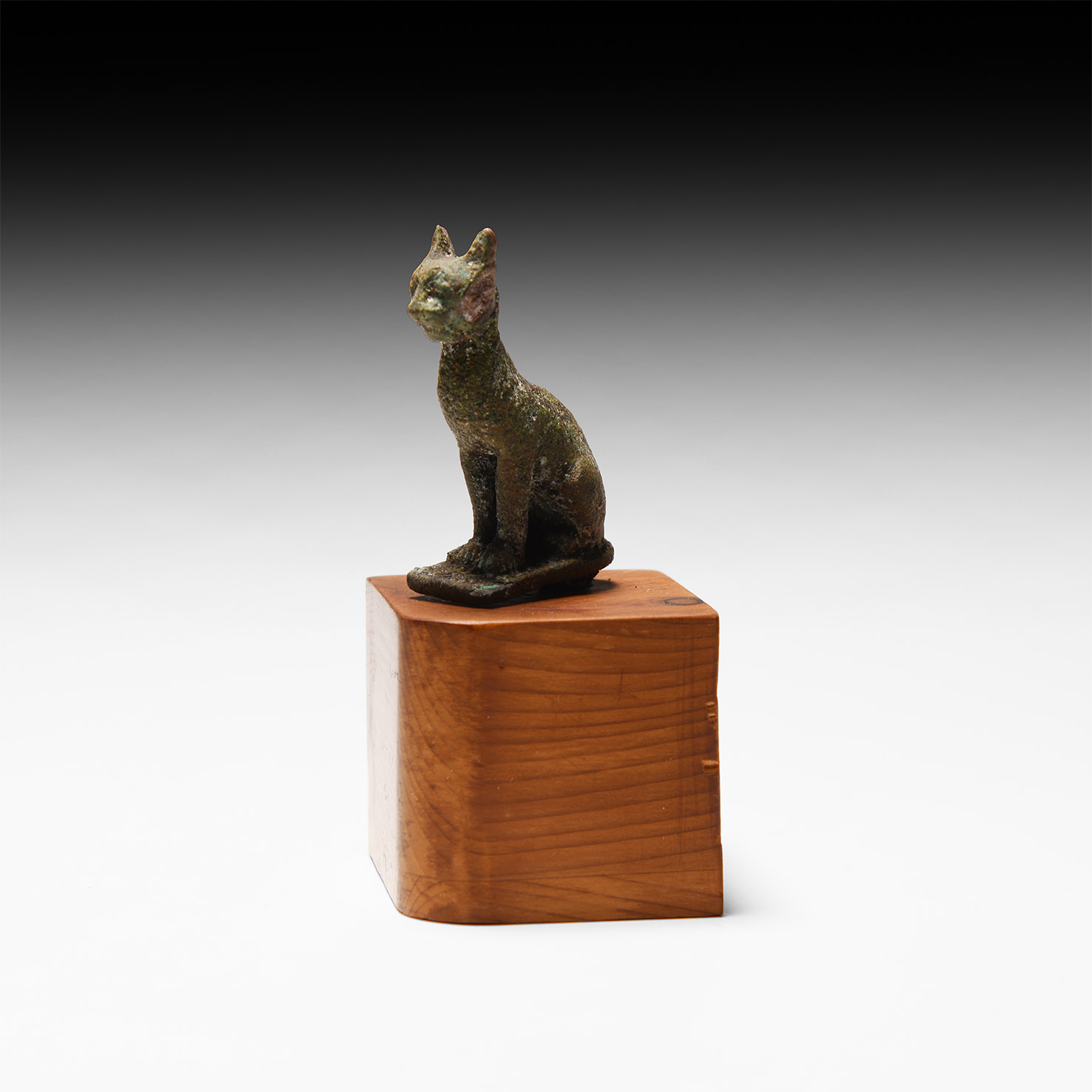
Egyptian Bronze Goddess Bastet as Seated Cat
LATE PERIOD-PTOLEMAIC PERIOD, 664-30 B.C.
4 in. (137 grams total, 10 cm high including stand).
A bronze figure of the cat goddess Bastet, squatting poised and alert with her tail wrapped close to right side of her body, seated on a tongue-shaped base, short lug below; accompanied by a custom-made display base.
ProvenanceAcquired 1980s.
Private collection of L.H., Staffordshire, UK.
Property of a Sussex, UK, teacher.
Cf. The Metropolitan Museum, New York, accession numbers 2021.41.166 and 44.4.9, for similar; Tiribilli, E., The bronze figurines of the Petrie Museum from 2000 BC to AD 400, London, 2018, p.190, no.268, for similar.
FootnotesBastet was a powerful goddess of Lower Egypt, one who was protective and could bring about great prosperity.
Cat statuettes were among some of the most common zoomorphic dedications of the Late and Ptolemaic Periods. Small statuettes like this one would have been dedicated as offerings to temples or deposited in catacombs alongside cat mummies, as at the extensive catacombs at Bubastis and Saqqara. Sometimes larger hollow examples held a cat mummy inside.
TimeLine Auctions follows a vetting process to ensure the authenticity and legality of all items, reinforcing our commitment to integrity and responsible trading. Each antiquity, antique, and coin lot undergoes thorough examination by a vetting committee of at least ten external specialists, professional trade association members, scientists, and archaeologists: Our Vetting Process
AUCTIONS:
TimeLine is a leading auction house specialising in antiquities, ancient art, collectables, natural history, coins, medals, and books. Our auctions offer museums, collectors, historians, and enthusiasts the opportunity to acquire unique and historically significant pieces.
-
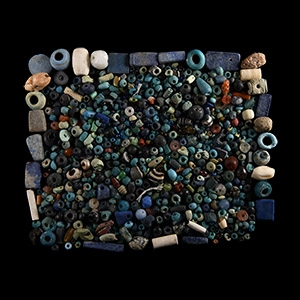
Egyptian and Other Faience and Hardstone Bead Collection
1st millennium B.C. and laterSold for (Inc. bp): £312
A mixed group of mainly composition, glass, shell and stone polychrome beads of various types and dates. 167 grams total, 2-26 mm
Acquired in the 1970s. Important European collection. -
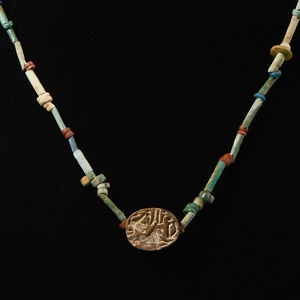
Egyptian Bead Necklace with Scarab
Late Period, 664-525 B.C.Sold for (Inc. bp): £195
A restrung necklace of composition beads of various types with polychrome glazes, together with a central scarab with seated deities to the base. 9.72 grams, 58 cm long
Ex early 20th century French collection. -
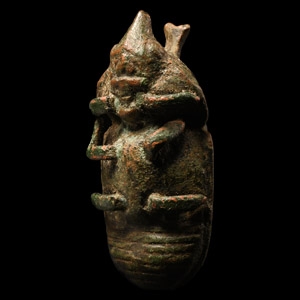
Egyptian Bronze Beetle
Late Period, 664-525 B.C.Sold for (Inc. bp): £130
A bronze horned beetle figure modelled in the round with semi-naturalistic anatomical detailing, its legs held tightly against its abdomen, possibly indicating that this is a beetle in a mummified form. 49.8 grams, 43 mm
Acquired 1990s-2000s. From the collection of an Essex gentleman.
