
Loading, please wait...

LOT 0495
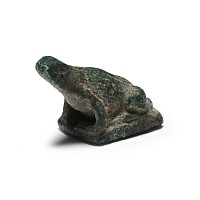
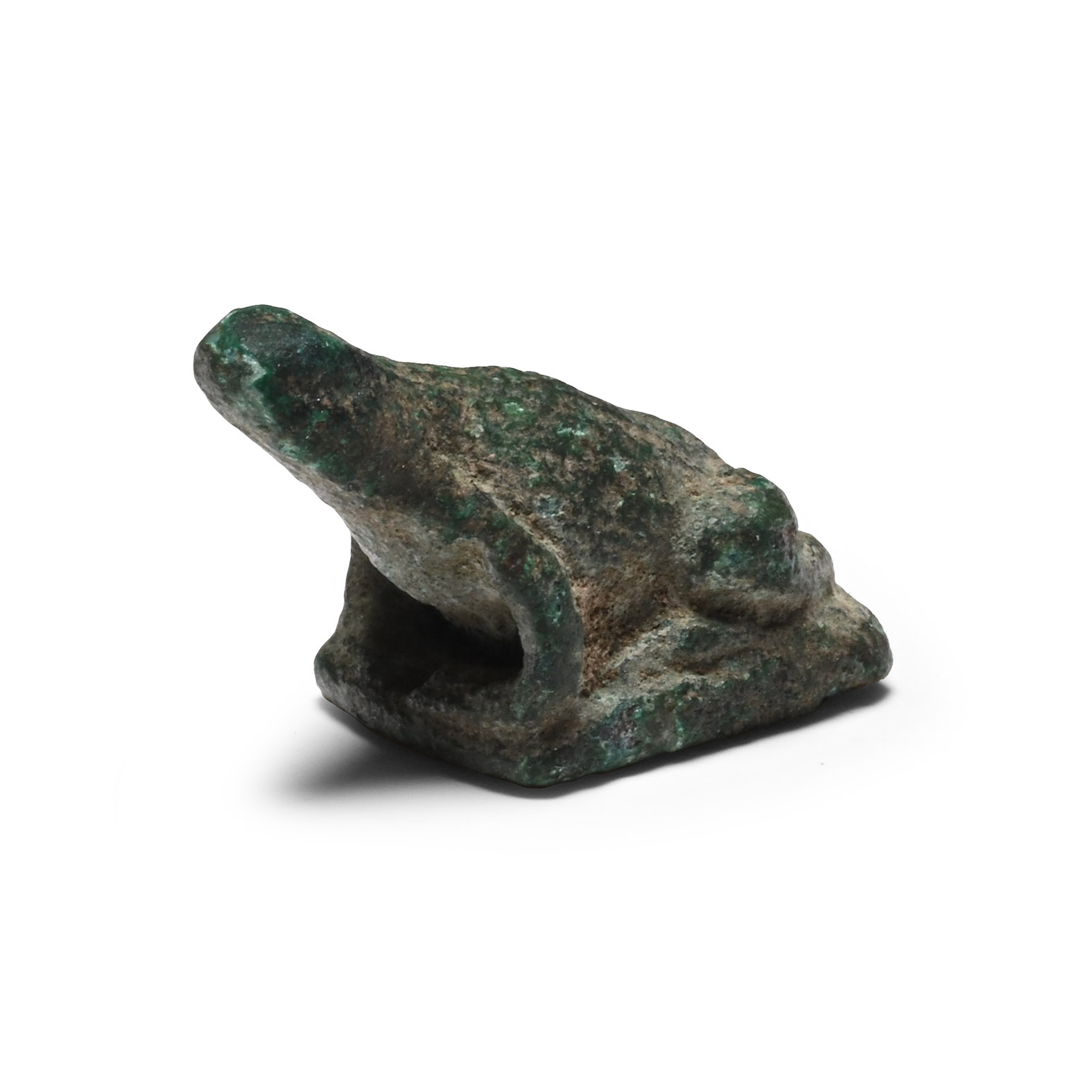
Egyptian Bronze Frog Weight
ROMAN PERIOD, 30 B.C.-323 A.D. OR EARLIER
1 in. (9.6 grams, 24 mm wide).
Modelled as a standing frog on a rectangular base.
ProvenanceFrom the collection of a gentleman, acquired on the London art market in the 1990s.
CONDITIONTimeLine Auctions follows a vetting process to ensure the authenticity and legality of all items, reinforcing our commitment to integrity and responsible trading. Each antiquity, antique, and coin lot undergoes thorough examination by a vetting committee of at least ten external specialists, professional trade association members, scientists, and archaeologists: Our Vetting Process
AUCTIONS:
TimeLine is a leading auction house specialising in antiquities, ancient art, collectables, natural history, coins, medals, and books. Our auctions offer museums, collectors, historians, and enthusiasts the opportunity to acquire unique and historically significant pieces.
-
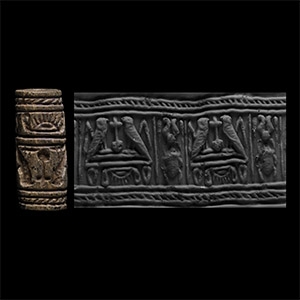
Egyptian Cylinder Seal with Hieroglyphs
Late Period, 664-332 B.C.Sold for (Inc. bp): £390
Steatite cylinder producing a decorative top and bottom border enclosing a scene depicting a nefer sign flanked by two falcons surmounting the hieroglyph for gold, nub, and another scene to the side depicting a scarab beetle with a double plumed sun disc above; with a suspension hole running through the cylinder's centre. 4.65 grams, 25 mm
From the collection of a gentleman, acquired on the London art market in the 1990s. -
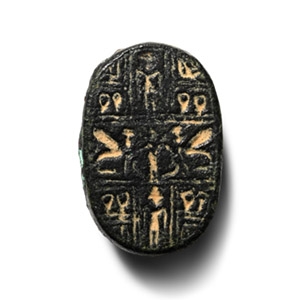
Phoenician Bronze Scarab
Late 1st millennium B.C.Estimate: £350 - 450 (+bp*)
Opening Bid: £180
Scaraboid with incised detailing to the underside, with a central column depicting standing figures top and bottom, each flanked by two ankh symbols, and a central motif of a standing figure grasping a sceptre and winged serpent in each hand. 6.54 grams, 17 mm
From an early 20th century Home Counties, UK, collection. -
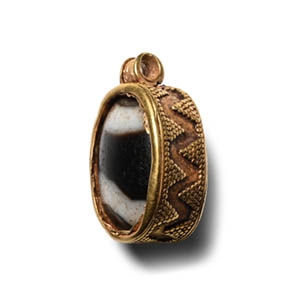
Gold Pendant with Agate Scaraboid
5th-3rd century B.C.Sold for (Inc. bp): £1,170
Banded agate scaraboid with openwork gold frame, tubular suspension loop, triangular clusters of granules to the edge; Phoenician or Achaemenid. 4.20 grams, 21 mm
Acquired in the mid 1980s-1990s. Private collection, Switzerland, thence by descent. Private collection, since the late 1990s.
