
Loading, please wait...
LOT 0483
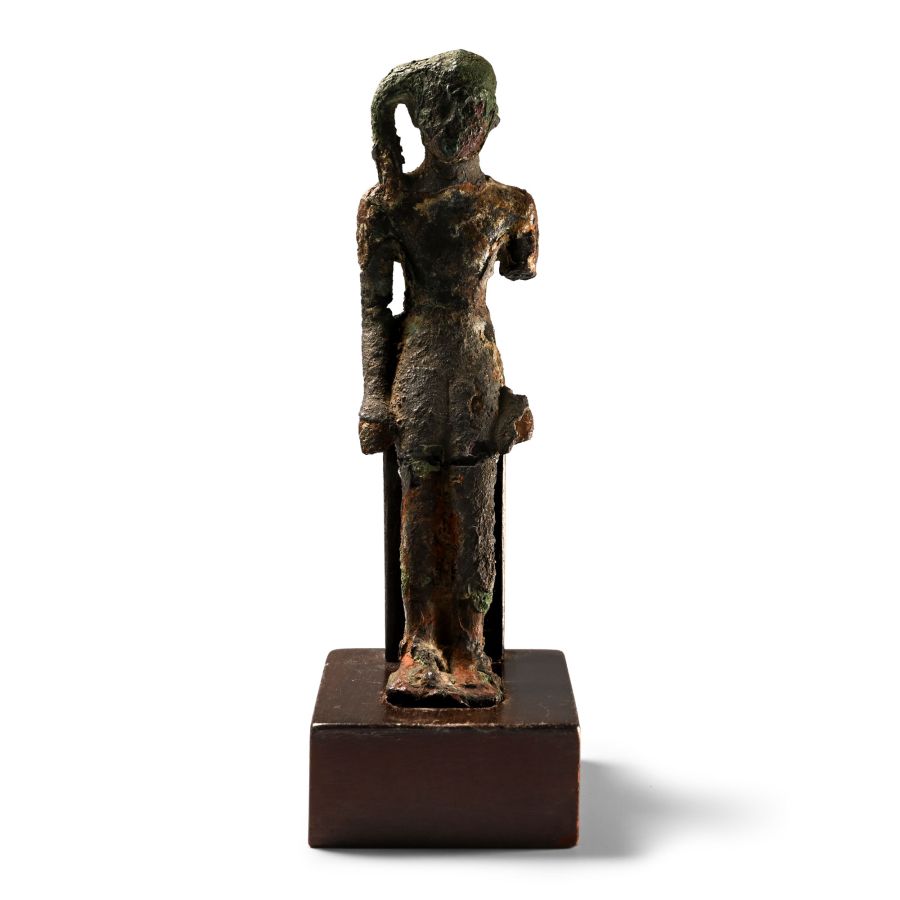
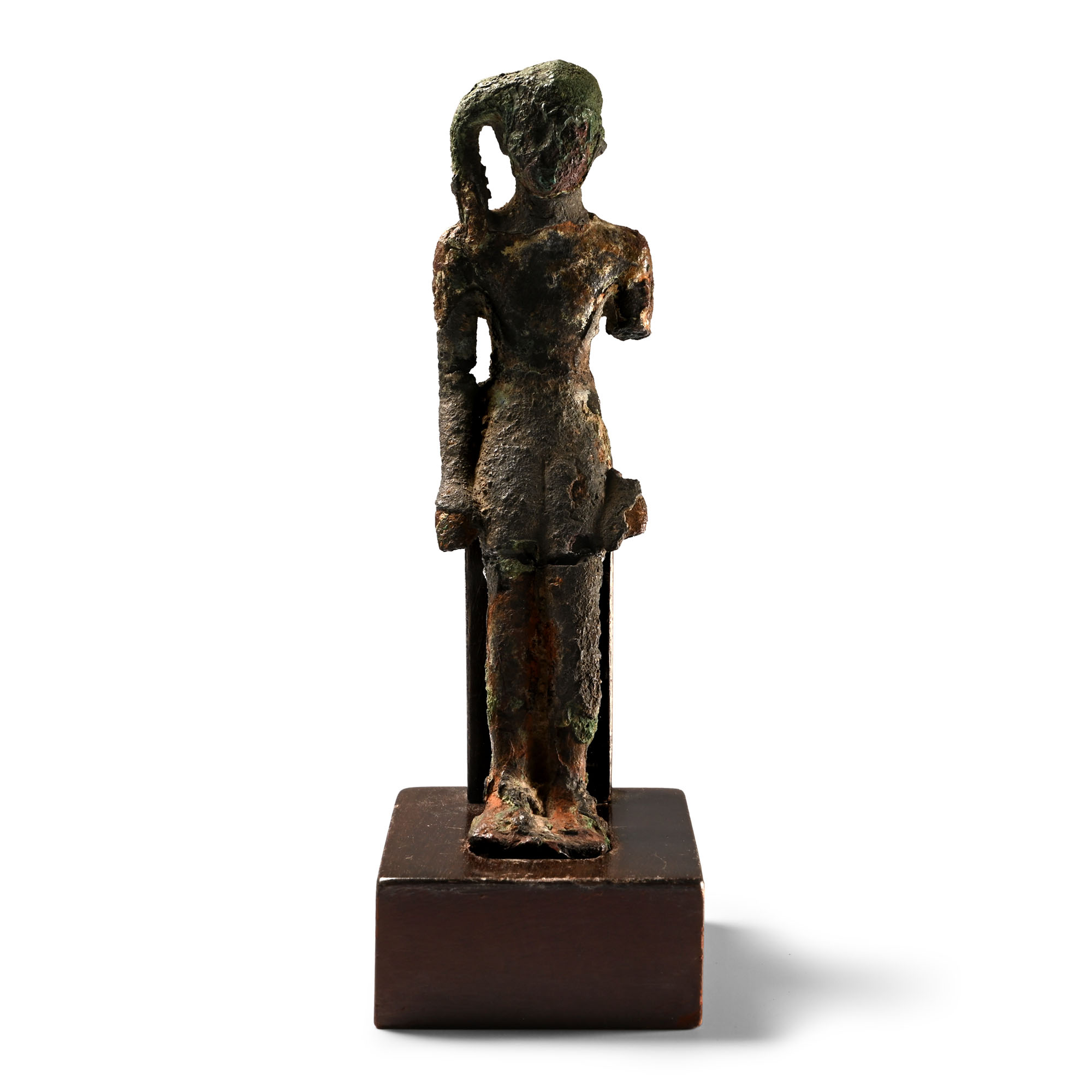
Egyptian Bronze Figurine of Harpocrates
LATE PERIOD, 664-332 B.C.
4 3/4 in. (5 3/4 in.) (146 grams, 12.2 cm (202 grams total, 13.7 cm including stand)).
Modelled in the round depicted in a seated pose with bold sidelock reaching to the shoulder; kilt to the thighs, D-shaped base beneath the feet, socket to the middle of the back; provided with a custom-made display stand.
Provenancewith Max Hagemann, prior 1964.
This lot is accompanied by an illustrated lot declaration signed by the Head of the Antiquities Department, Dr Raffaele D’Amato.
Cf. Tiribilli, E., The bronze figurines of the Petrie Museum from 2000 BC to AD 400, GHP Egyptology 28, London, 2018, p.58, no. 62, for a similar statuette.
FootnotesHarpocrates is the Greek rendering of the Egyptian Hor-pa-khered, which translates as 'Horus the Child', referring to Horus as the divine infant of Isis and Osiris.
CONDITIONTimeLine Auctions follows a vetting process to ensure the authenticity and legality of all items, reinforcing our commitment to integrity and responsible trading. Each antiquity, antique, and coin lot undergoes thorough examination by a vetting committee of at least ten external specialists, professional trade association members, scientists, and archaeologists: Our Vetting Process
AUCTIONS:
TimeLine is a leading auction house specialising in antiquities, ancient art, collectables, natural history, coins, medals, and books. Our auctions offer museums, collectors, historians, and enthusiasts the opportunity to acquire unique and historically significant pieces.
LOT 0483
Egyptian Bronze Figurine of Harpocrates
Estimate £200 - 300€230 - 350 (for guidance only)$270 - 410 (for guidance only)
-
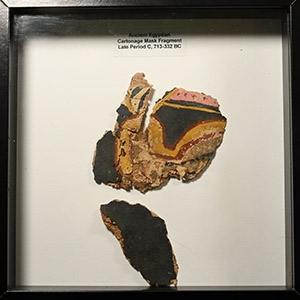
Egyptian Painted Cartonnage Cartouche Fragment
Late-Ptolemaic Period, 664-31 B.C.Sold for (Inc. bp): £143
Two large moulded fragments of cartonnage with polychrome painted decoration; mounted in a glazed frame. 824 grams including frame, 25.2 x 25.2 cm
Ex M.S. Ciappara collection, Norfolk, UK, 1939-1950. This lot is accompanied by an illustrated lot declaration signed by the Head of the Antiquities Department, Dr Raffaele D’Amato. -
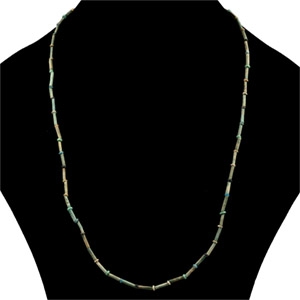
Egyptian Faience Bead Necklace String
Late Period, 664-332 B.C.Sold for (Inc. bp): £52
Comprising tubular beads with interstitial annular beads connecting. 5.11 grams, 70 cm
From an old English collection. Acquired from Helios Gallery, 2011. Ian Wilkinson collection, Nottinghamshire, UK, formed since 1985. This lot is accompanied by an illustrated lot declaration signed by the Head of the Antiquities Department, Dr Raffaele D’Amato. -
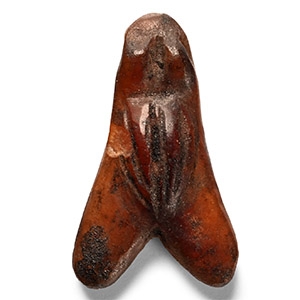
Egyptian Carnelian Fly Amulet
Late Period, 664-332 B.C.Sold for (Inc. bp): £182
Carved with simple body and eye detailing and polished; drilled through the eyes for suspension. 0.41 grams, 13 mm
From an early 20th century collection. This lot is accompanied by an illustrated lot declaration signed by the Head of the Antiquities Department, Dr Raffaele D’Amato.
Small fly amulets first appeared in burials during the Naqada II Period, c. 3200 B.C. These amulets grew in popularity and the materials used to make them expanded during the New Kingdom. They are crafted from a variety of materials such as gold, silver, lapis lazuli, carnelian, amethyst, faience, and bone. These amulets were thought to protect against insect bites and to ward off troublesome flying creatures through apotropaic magic. Some believe they may have even been intended to symbolise the fly’s fecundity. Additionally, pharaohs would bestow gold fly-shaped pendants as military awards to honour the bravery and fly-like persistence of soldiers in battle.
