
Loading, please wait...
LOT 0536
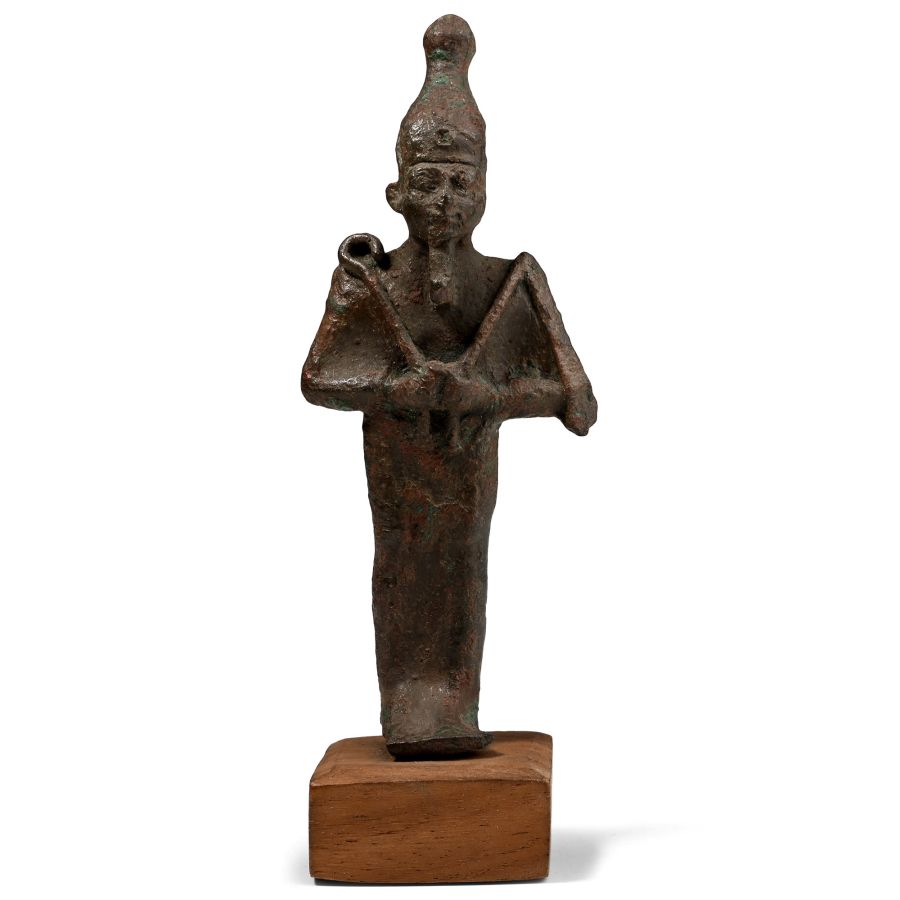
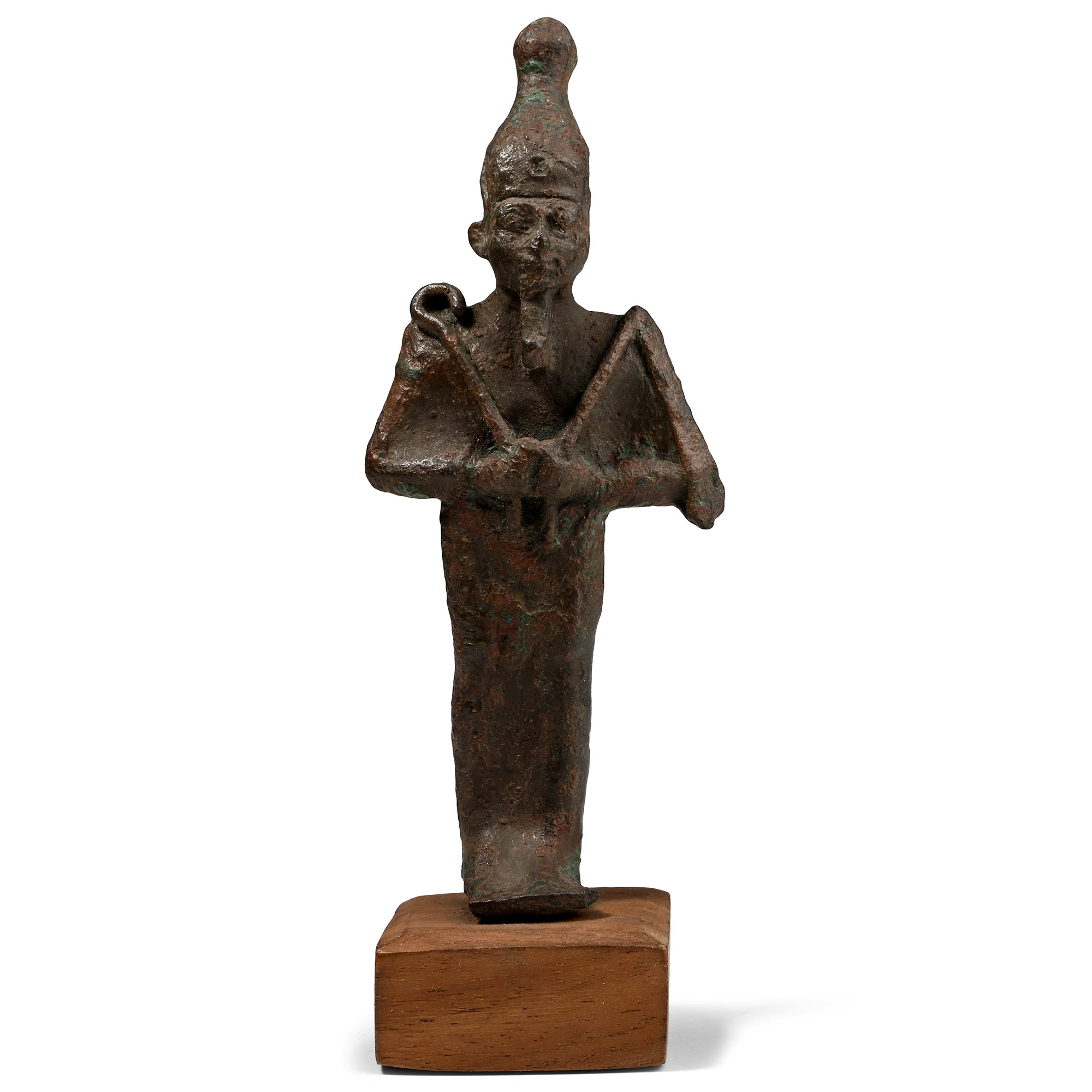
Egyptian Bronze Figure of Osiris
LATE PERIOD, 664-332 B.C.
6 1/8 in. (295 grams total, 15.7 cm high including stand).
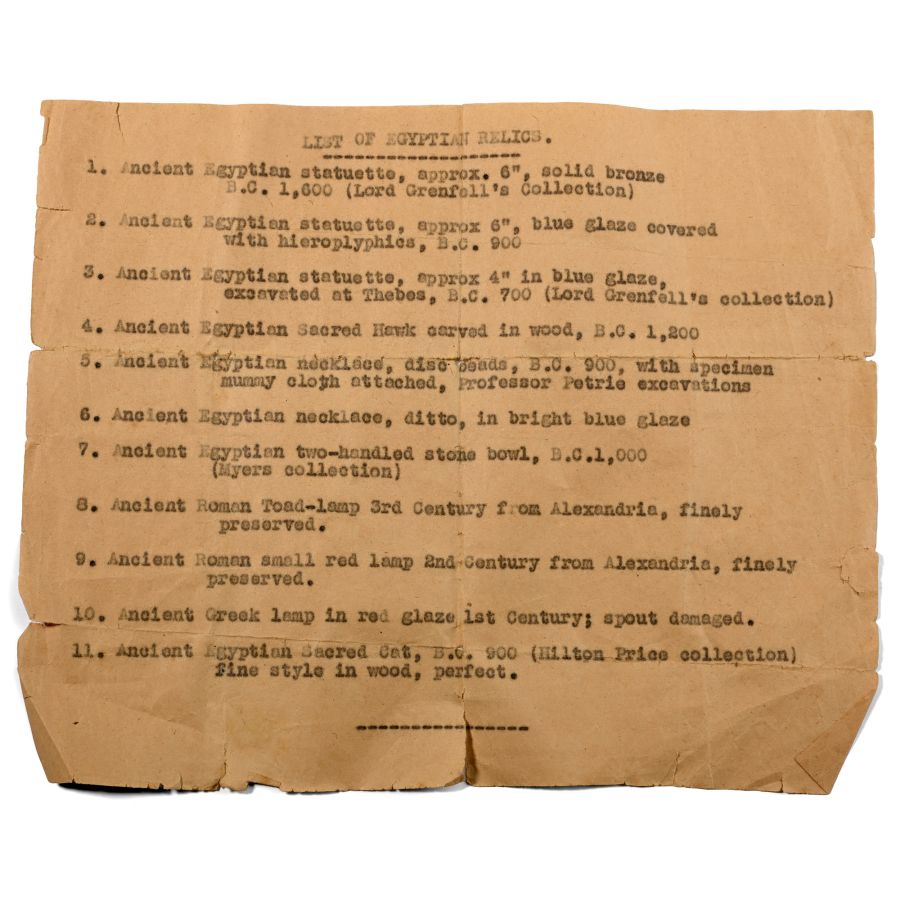
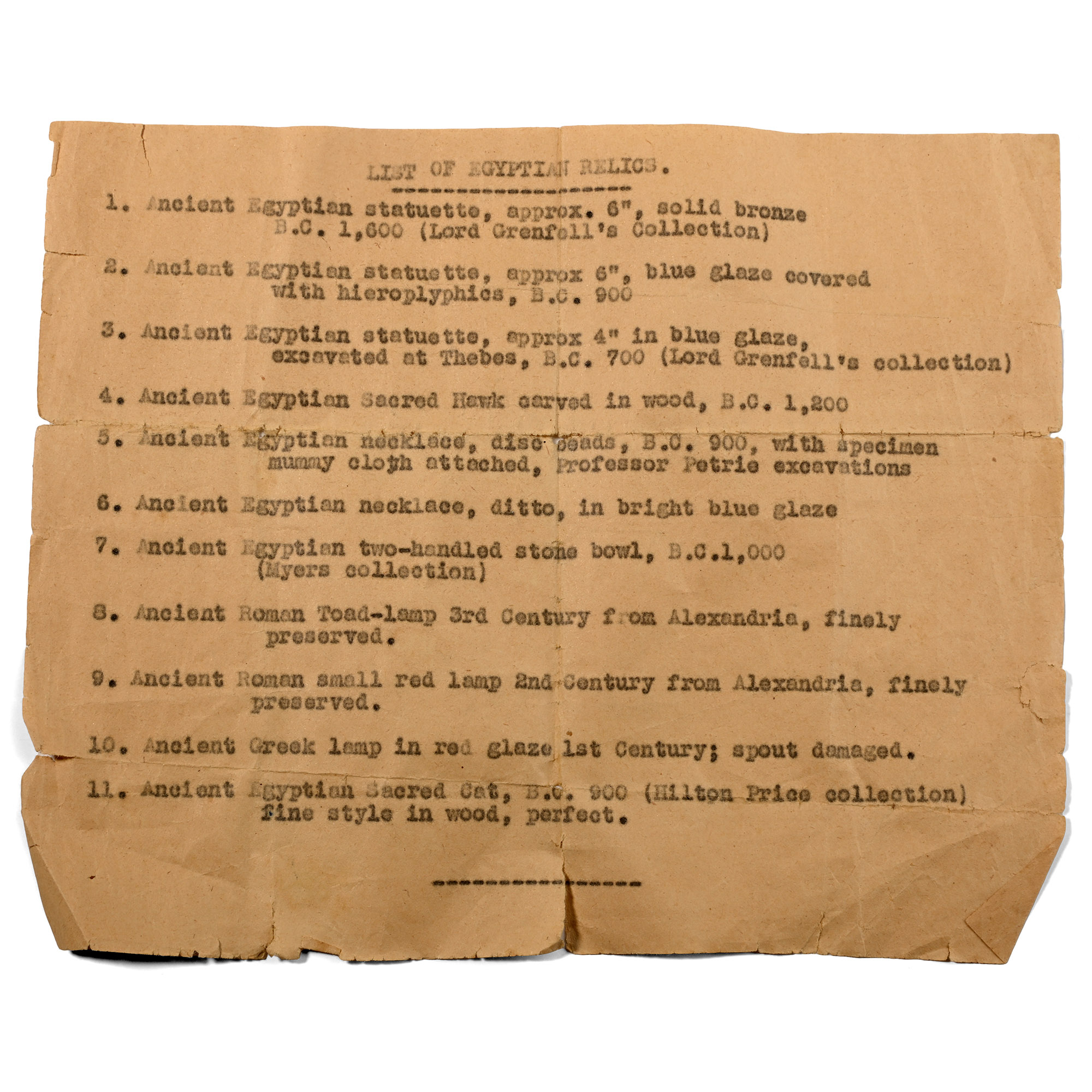
Modelled in the round, wearing the white crown and a divine beard, with arms bent and hands clasped knuckle-to-knuckle, holding Osiris's royal regalia - the crook and flail; accompanied by a typed inventory; mounted on a custom-made stand with an old handwritten label on the underside 'Osiris (Judge of the Dead) Solid Bronze B.C. 1600. Lord Grenfell's Collection'. [No Reserve]
ProvenanceEx Lord Grenfell's (1896-1926) collection, UK.
From the estate of a deceased Sussex private collector.
Accompanied by an original typed 'List of Egyptian Relics' in which this object is listed as no.1.
TimeLine Auctions follows a vetting process to ensure the authenticity and legality of all items, reinforcing our commitment to integrity and responsible trading. Each antiquity, antique, and coin lot undergoes thorough examination by a vetting committee of at least ten external specialists, professional trade association members, scientists, and archaeologists: Our Vetting Process
AUCTIONS:
TimeLine is a leading auction house specialising in antiquities, ancient art, collectables, natural history, coins, medals, and books. Our auctions offer museums, collectors, historians, and enthusiasts the opportunity to acquire unique and historically significant pieces.
LOT 0536
Egyptian Bronze Figure of Osiris
Estimate £80 - 100€93 - 116 (for guidance only)$108 - 135 (for guidance only)
-
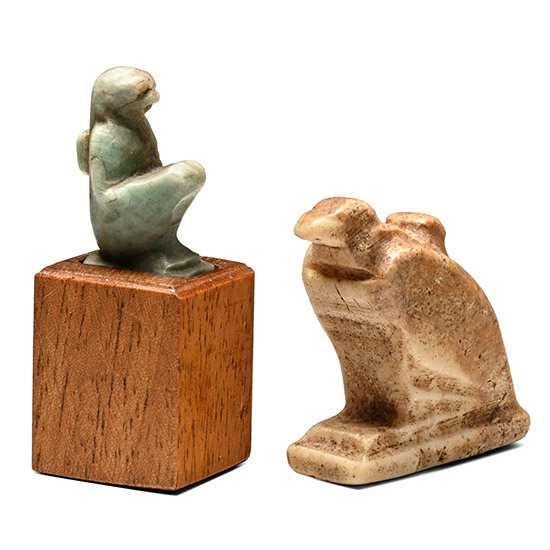
Egyptian Stone Amulet Collection
New Kingdom-Late Period, circa 1100-500 B.C.Estimate: £700 - 900 (‡+bp*)
Opening Bid: £365
Comprising: a feldspar amulet of the crouching god Sokar with falcon head and human body, custom-made display stand; a carved vulture amulet on a rectangular base; suspension loop on the back. 19.5 grmas total, 28-41 mm
Sokar: Ex Roger Liechti (1934-2010), Petit-Lancy, Switzerland (inv.no. E.601); acquired from Galerie Elsa-Bloch Diener, Bern. Thence by family descent. Vulture: Ex Roger Liechti (1934-2010), Petit-Lancy, Switzerland (inv.no. E. 772); acquired in 1984 from Mr Cohen, Galerie La Reine Margot, Paris. Thence by family descent, Switzerland.
Vulture representations are among the oldest amulet types, found in burials dating to the late Third millennium B.C. They provide apotropaic protection for the deceased. The vulture is associated with various Egyptian deities, especially with the goddess Nekhbet. Sokar, the hawk-god originally of the Memphite necropolis and deity of fertility and artisans, became closely linked with Osiris and Ptah, forming the syncretic deity Ptah-Sokar-Osiris. -
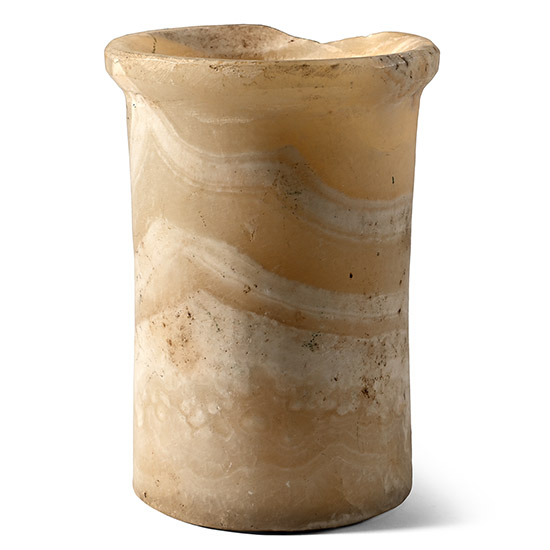
Egyptian Alabaster Cylindrical Storage Vessel
Old Kingdom, 5th-6th Dynasty, circa 2300-2100 B.C.Estimate: £200 - 300 (+bp*)
Bids: 1 | Current Bid: £5
Tubular type with an everted rounded rim; old dealer's note 'Alabaster cylindrical storage vessel, semi-translucent and with veining. Small abrasion to outturned flattened rim. Probably alabaster quarries at Hatnub, to north of el-Amarna. Egypt, early Dynastic, Vth-VIth Dynasties, c.2300-2100 BC. Bought Spitalfields Market, Thursday 12/1/19'. 508 grams, 11.8 cm
From the private collection of Peter Clayton, FCILIP, Dip, Arch, FSA, FRNS, Hemel Hempstead, Hertfordshire, UK; formed since the late 1950s. -
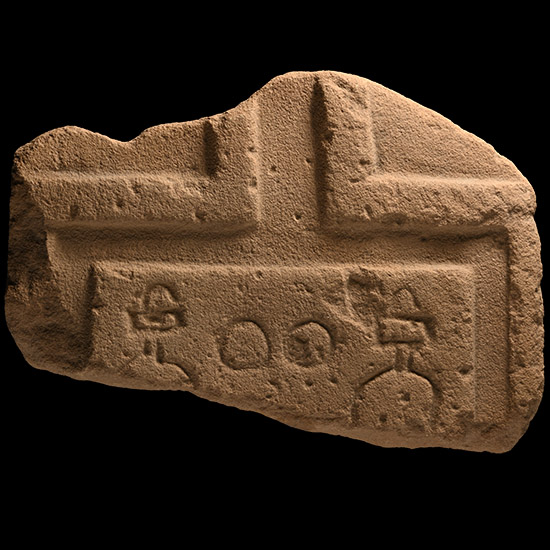
Egyptian Sandstone Offering Table Fragment
Late Period-Ptolemaic Period, 664-30 B.C.Estimate: £300 - 400 (+bp*)
Bids: 1 | Current Bid: £5
Fragment of a rectangular offering table with incised drainage channels forming a segmented surface, creating a spout at the top end and feeding channels around a central raised panel, bearing incised depictions of two circular loaves flanked by beer jugs; the underside dressed. 1.62 kg, 21.5 cm
Acquired in April 1963. From the private collection of Peter Clayton, FCILIP, Dip, Arch, FSA, FRNS, Hemel Hempstead, Hertfordshire, UK; formed since the late 1950s. Accompanied by an old handwritten identification card written by Peter Clayton.
Offering tables shaped like the hieroglyphic sign for a mat with a loaf of bread, meaning “offering,” were common throughout much of dynastic history and were essential to the funerary cult. They were usually placed near the deceased's tomb, in an offering niche or chapel. If the cult ceased to function, the carved images of food and drink on the table served as magical substitutes, ensuring the continued sustenance and survival of the deceased's ka, or spirit.
