
Loading, please wait...
_900x900.jpg "Egyptian Bronze Figure of Khnum, the Creator God")
_200x200.jpg "Egyptian Bronze Figure of Khnum, the Creator God")
_900x900.jpg "Egyptian Bronze Figure of Khnum, the Creator God")
_200x200.jpg "Egyptian Bronze Figure of Khnum, the Creator God")
_900x900.jpg "Egyptian Bronze Figure of Khnum, the Creator God")
_200x200.jpg "Egyptian Bronze Figure of Khnum, the Creator God")
.jpg "Egyptian Bronze Figure of Khnum, the Creator God")
.jpg "Egyptian Bronze Figure of Khnum, the Creator God")
.jpg "Egyptian Bronze Figure of Khnum, the Creator God")
LOT 0049
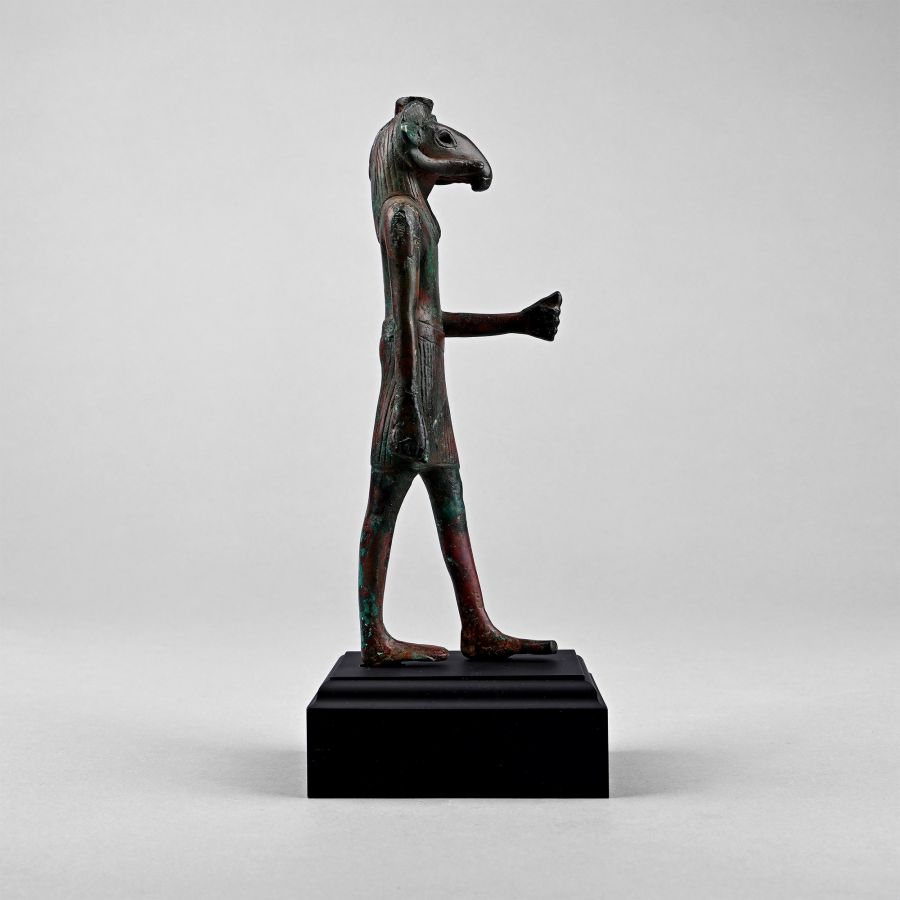
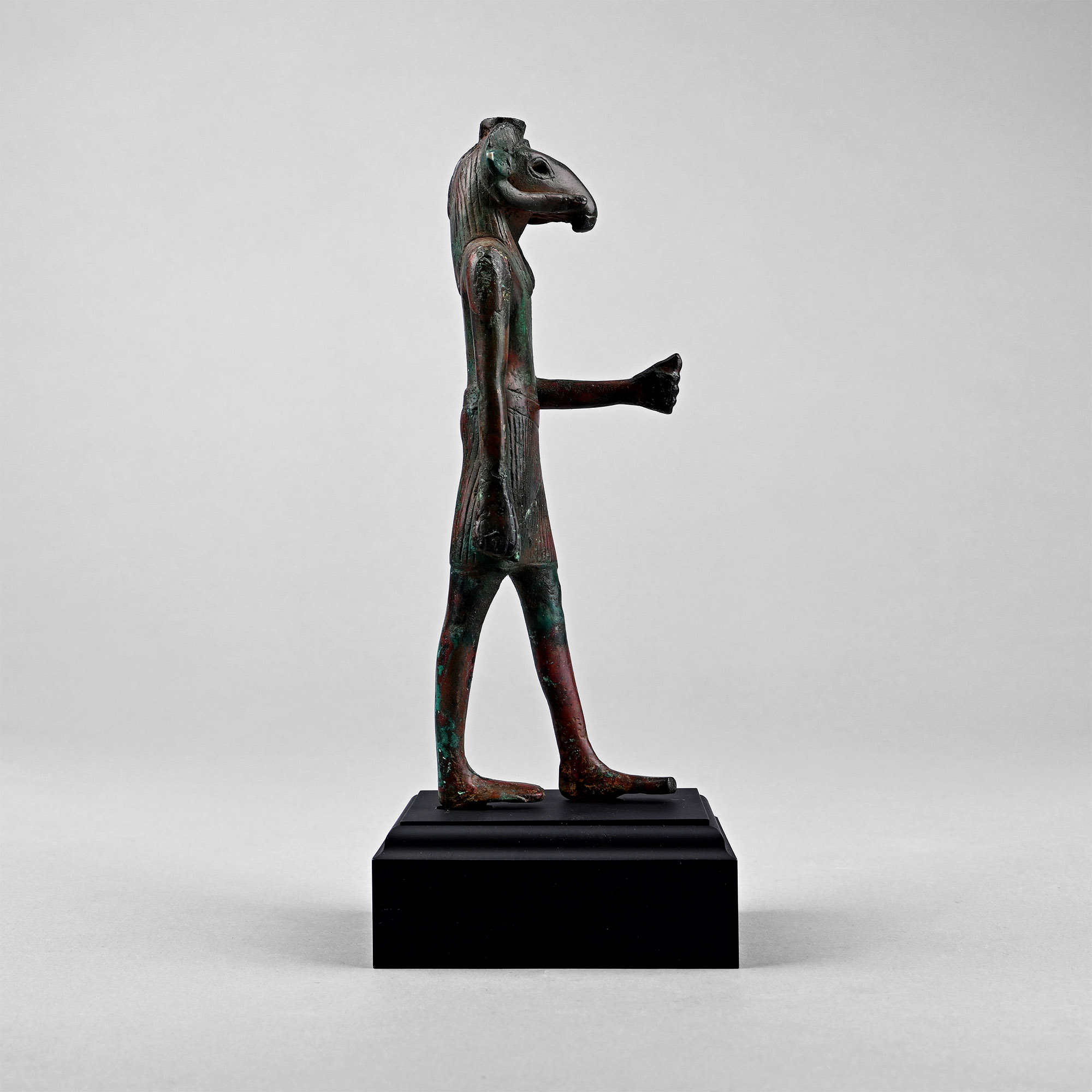
Egyptian Bronze Figure of Khnum, the Creator God
LATE PERIOD, 664-332 B.C.
8 5/8 in. (9 3/8 in.) (466 grams, 22 cm high (803 grams total, 23.8 cm high including stand)).
A substantial figure of the ram-headed god Khnum advancing, wearing a tripartite wig with low central modius drilled for a separately cast headdress and finely pleated kilt, with ram's horns and eyes recessed for inlay, raised left hand, the right arm along the side; mounted on a custom-made stand.
ProvenanceWith Stendahl Art Gallery, Los Angeles, by at least circa 1950s, accompanied by an inventory card #39, with a matching number on the original base, and a photograph.
Private collection, Hollywood, California, acquired from the above, circa 1950s.
Accompanied by a copy of an Art Loss Register certificate, no.S00256888.
This lot has been checked against the Interpol Database of stolen works of art and is accompanied by search certificate no. 13240-251804.
Cf. Roeder, G., Ägyptische Bronzefiguren II, Berlin, 1956, pl. 72a, for a closely comparable example in Toronto (acc. no. 948.10.2).
FootnotesThe god Khnum (or Khnemu), the 'Moulder', was one of the earliest gods of Egypt, worshipped especially at Philae and Elephantine, both in Nubia. He was thought to have made mankind out of clay on a potter's wheel. It was Khnum who helped Isis to gather the severed fragments of the body of the god Osiris and reassemble them. He was considered the father of the gods, along with Amun-Ra and Ptah.
CONDITIONTimeLine Auctions follows a vetting process to ensure the authenticity and legality of all items, reinforcing our commitment to integrity and responsible trading. Each antiquity, antique, and coin lot undergoes thorough examination by a vetting committee of at least ten external specialists, professional trade association members, scientists, and archaeologists: Our Vetting Process
AUCTIONS:
TimeLine is a leading auction house specialising in antiquities, ancient art, collectables, natural history, coins, medals, and books. Our auctions offer museums, collectors, historians, and enthusiasts the opportunity to acquire unique and historically significant pieces.
-
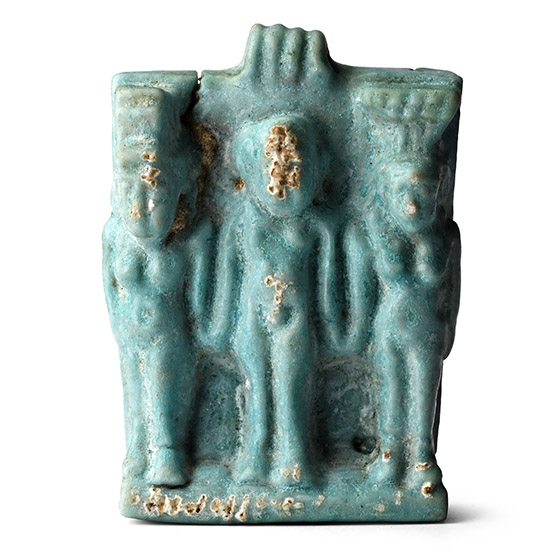
Egyptian Faience Triad Amulet
Late Period, 664-332 B.C.Estimate: £400 - 600 (+bp*)
Opening Bid: £200
Depicting in high-relief the Osirian triad (Isis, Horus, Nephthys) standing side by side on an integral plinth against a dorsal pillar; Nephthys (right) and Isis (left) are shown frontally, wearing headdresses with their specific attributes, each holding the hands of the central Horus figure, shown naked and with the side-lock of youth; a ribbed loop at the top for suspension. 8.56 grams, 33 mm
From the collection of a Swedish noble family, 1920s.
Isis and Nephthys operate as complementary sister deities who guard both Osiris and the deceased through mourning, magical protection, and ritual lamentation, while Horus, the child of Isis, signifies renewal and legitimate kingship. On amulets, the triad translates into a compact visual statement of protection: the deceased is imagined as being held within the sisters’ magical and ritual care, while Horus embodies the successful outcome of that protection in the form of rebirth and continuity. -
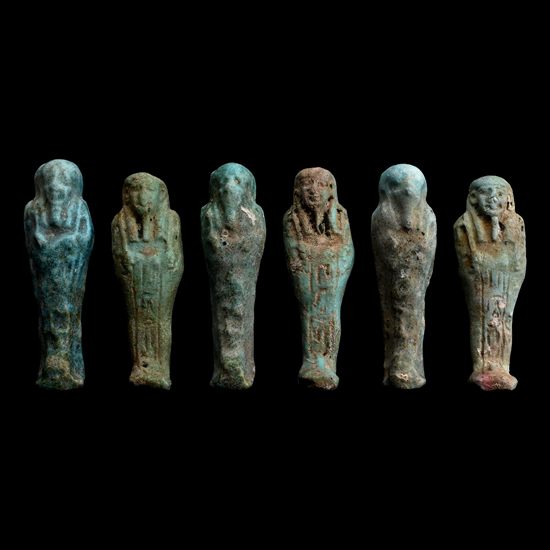
Egyptian Faience Shabti Collection
Late Period-Ptolemaic Period, 664-30 B.C.Sold for (Inc. bp): £468
Comprising mainly D-section types with moulded facial detailing some with vertical band of hieroglyphs to the lower body. 11.1 grams total, 67-72 mm
From the collection of a gentleman, acquired on the London art market in the 1990s. -
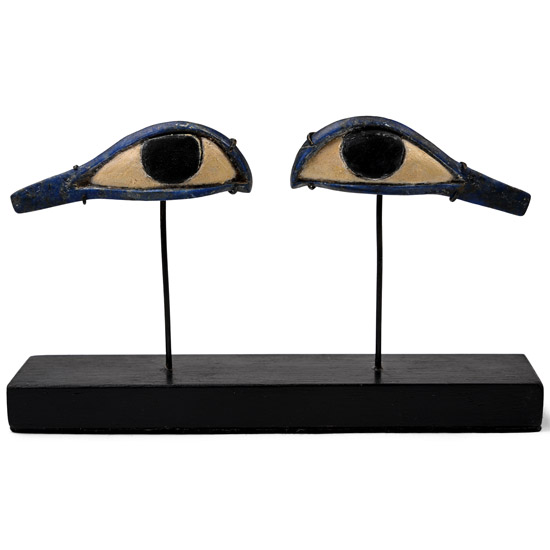
Egyptian Blue Glass Mummy Eye Pair
Late Period, 664-332 B.C.Sold for (Inc. bp): £2,340
Composed of overpainted white sclerae with obsidian irises, set into contoured blue glass lids with extending cosmetic lines; mounted on a custom-made display stand. 44.35 grams total including stand, 56 mm each
Property of a North American gentleman, London, UK, 1990-2010. This lot has been checked against the Interpol Database of stolen works of art and is accompanied by search certificate number no.13254-252260.
The eyes would have been applied to a mummy case. They were carefully bevelled and ground to fit the original mummy case. They could also have been used for the mummy masks.
