
Loading, please wait...
LOT 0469
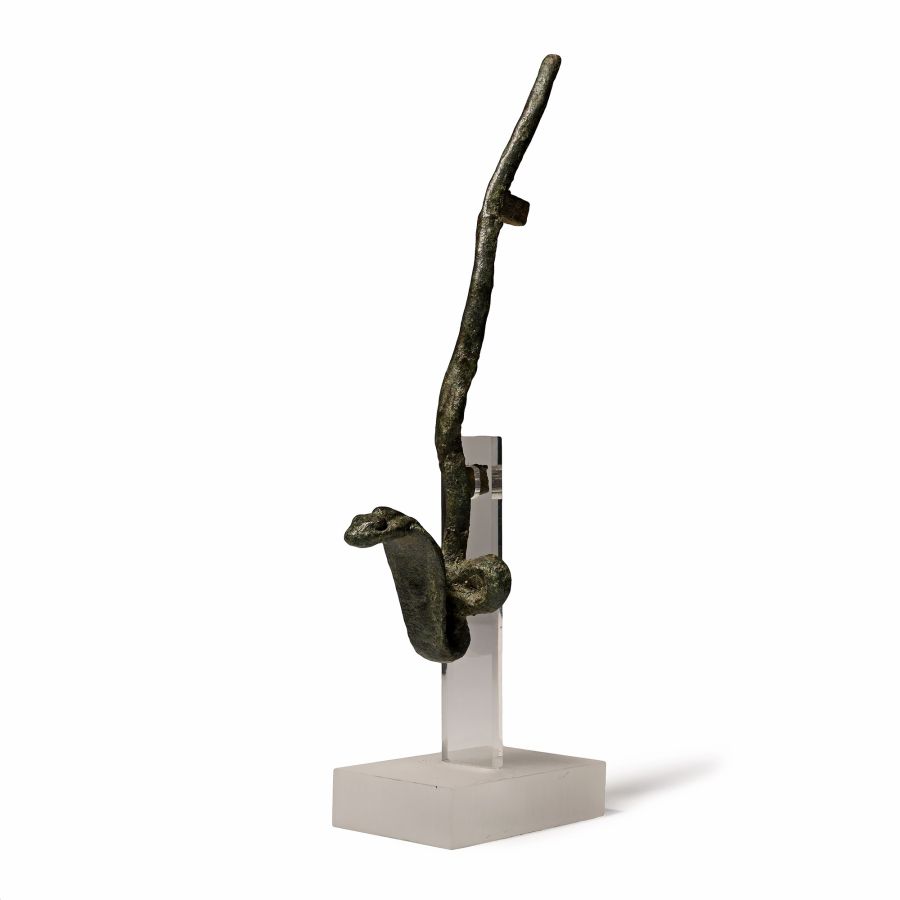
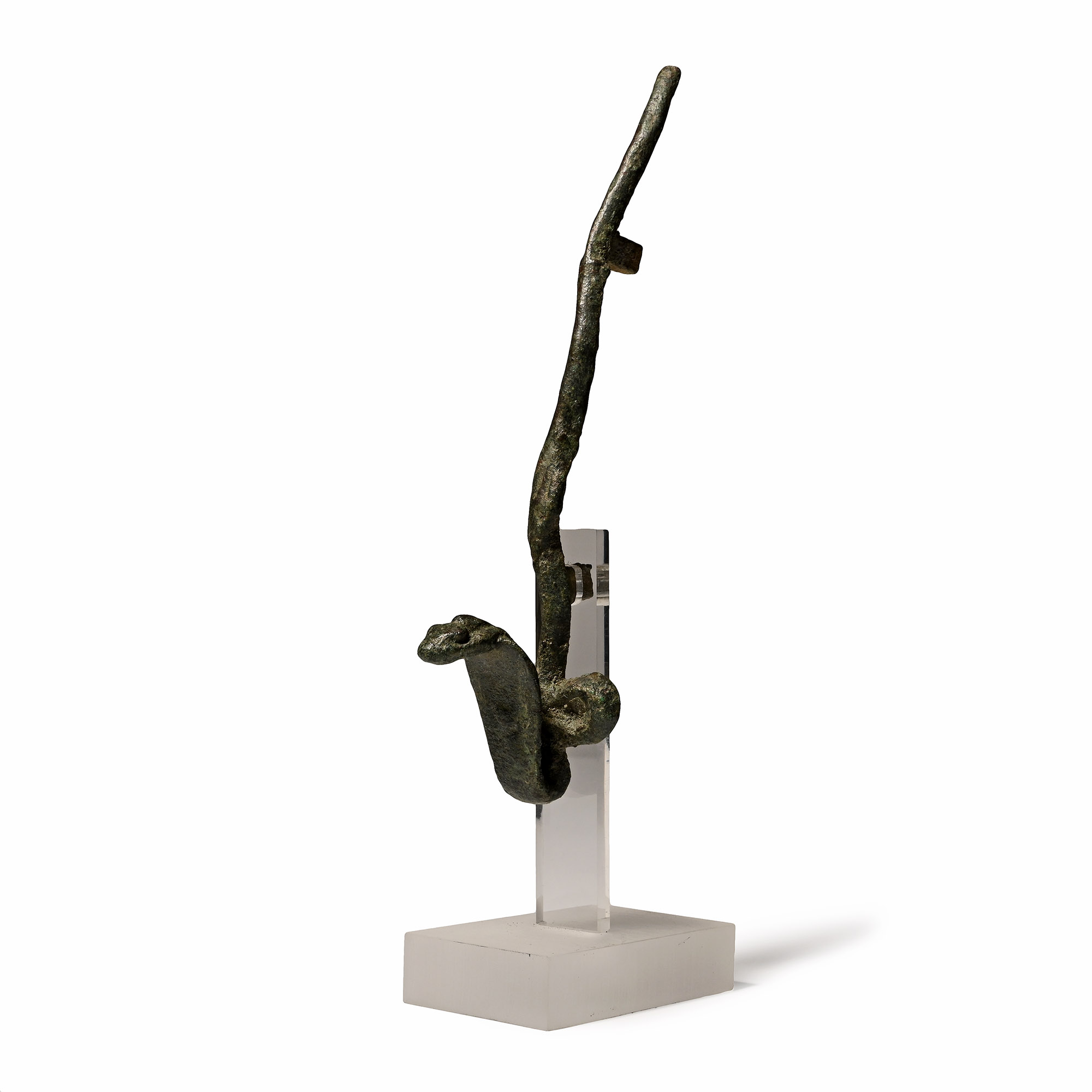
Egyptian Bronze Cobra Mount
LATE PERIOD, 6TH CENTURY B.C.
8 5/8 in. (182 grams, 22 cm).
Cobra-shaped mount with head raised and hood expanded, two mounting studs to the reverse; mounted on a custom-made stand.
ProvenancePrivate Israeli collection.
Ex Archaeological Center, Tel Aviv, Israel, 2015.
Private European collection.
Cf. Tiribilli, E., The bronze figurines of the Petrie Museum from 2000 BC to AD 400, GHP Egyptology 28, London, 2018, p. 295, no. 480, for a similar, though smaller, example.
FootnotesThe mount most likely adorned the Atef crown of a statue of Osiris.
CONDITIONTimeLine Auctions follows a vetting process to ensure the authenticity and legality of all items, reinforcing our commitment to integrity and responsible trading. Each antiquity, antique, and coin lot undergoes thorough examination by a vetting committee of at least ten external specialists, professional trade association members, scientists, and archaeologists: Our Vetting Process
AUCTIONS:
TimeLine is a leading auction house specialising in antiquities, ancient art, collectables, natural history, coins, medals, and books. Our auctions offer museums, collectors, historians, and enthusiasts the opportunity to acquire unique and historically significant pieces.
LOT 0469
Egyptian Bronze Cobra Mount
Estimate £1,000 - 1,400€1,160 - 1,620 (for guidance only)$1,350 - 1,890 (for guidance only)
-
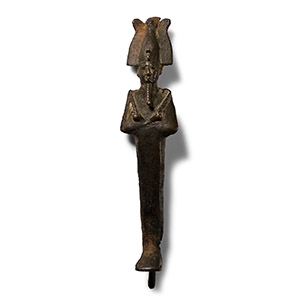
Egyptian Bronze Statuette of Osiris
Late Period, 664-332 B.C.Sold for (Inc. bp): £650
A slender standing figure of Osiris in iconic mummiform appearance, wearing the tall conical Atef crown with its flanking Ostrich plumes, and central uraeus, a long, internally-detailed divine beard, and holding the crook (heka) and flail (nekhakha) regalia; with tang under feet for attachment. 63 grams, 15 cm
Acquired on the German art market, 1989-1995. with The Museum Gallery, 19 Bury Place, London, WC1, UK, 1998-2003. Property of a London based academic, 2003-present.
Osiris is a deity who represents death and fertility and is commonly regarded as the quintessential god of rebirth. Though he was once a mortal ruler, as a deceased entity, his domain was the Underworld. Abydos was the primary centre of Osiris’ cult, where a renowned yearly celebration of the god was held. -
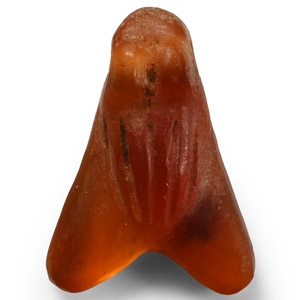
Egyptian Carnelian Fly Amulet
Late Period, 664-332 B.C.Sold for (Inc. bp): £117
Formed as a fly with long triangular wings and domed eyes. 0.42 grams, 12 mm
From an early 20th century collection.
Fly amulets first appeared in burials as early as c. 3200 B.C., but their popularity expanded during the New Kingdom. They were made from various materials such as gold, silver, lapis lazuli, carnelian, amethyst, faience, and bone. Fly amulets were thought to protect against insect bites and to ward off troublesome flying creatures through apotropaic magic. They may also have even been intended to symbolise the fly’s fecundity. Pharaohs would bestow gold fly-shaped pendants as military awards to honour the bravery and fly-like persistence of soldiers in battle. -
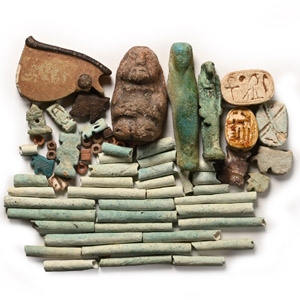
Egyptian Faience Amulet and Bead Group
Mainly Late Period, 664-332 B.C.Sold for (Inc. bp): £546
Comprising tubular and ring beads, wedjat-eye amulets, Bes amulets, scarabs, a Khnum amulet, a shabti, and others. 44 grams total, 3-47 mm
From the private collection of H. Norry, 1980s-1990s.
