
Loading, please wait...
LOT 0011
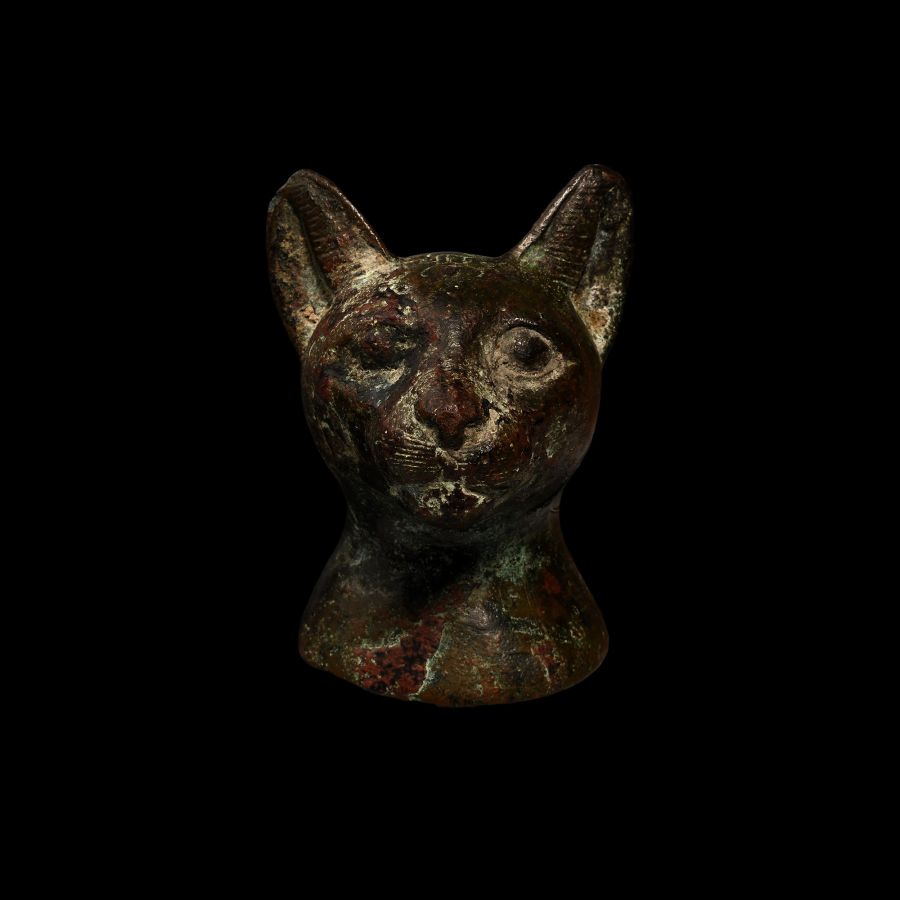
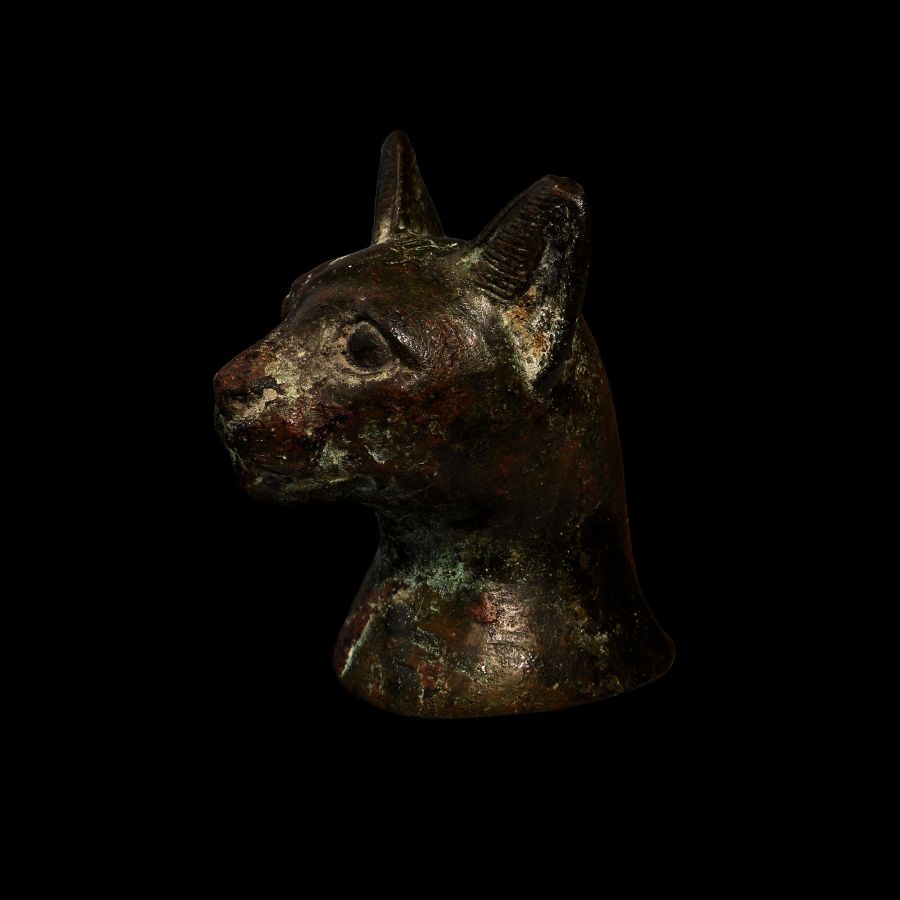
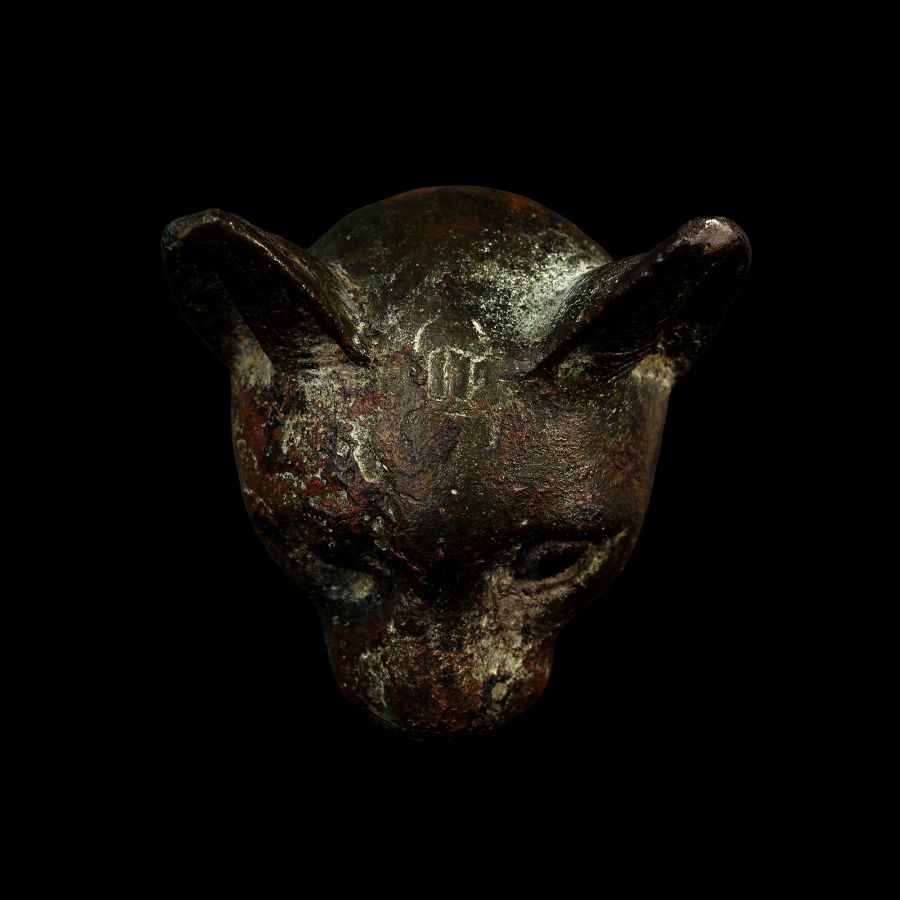
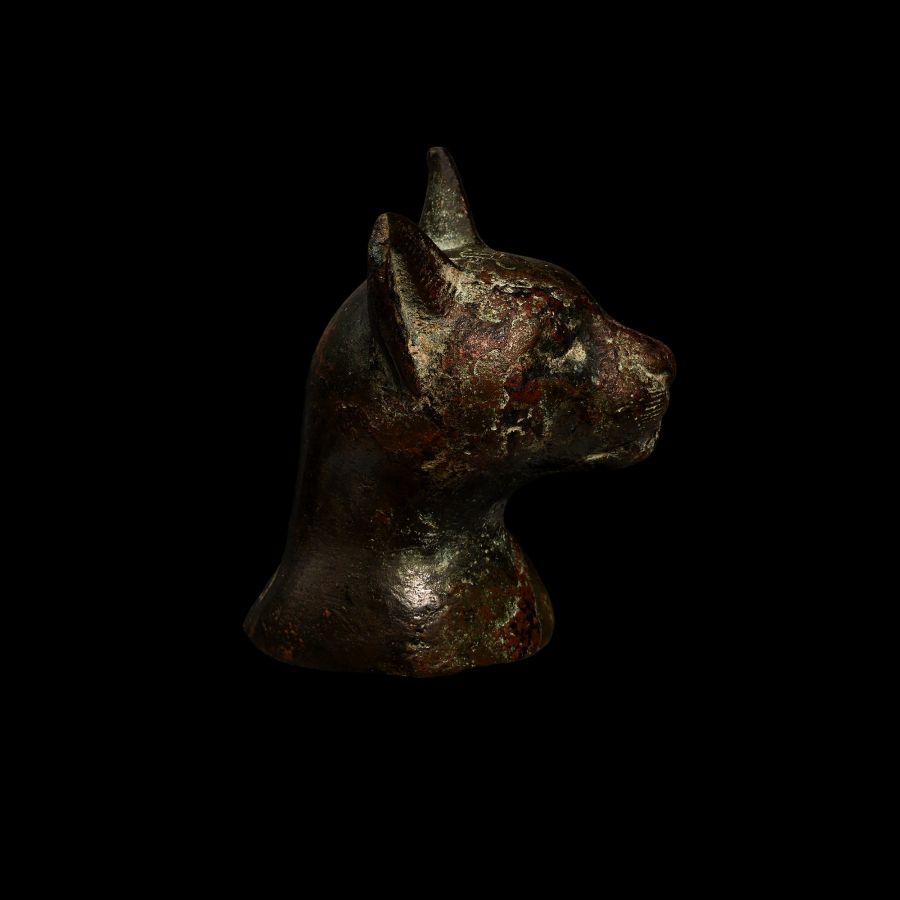
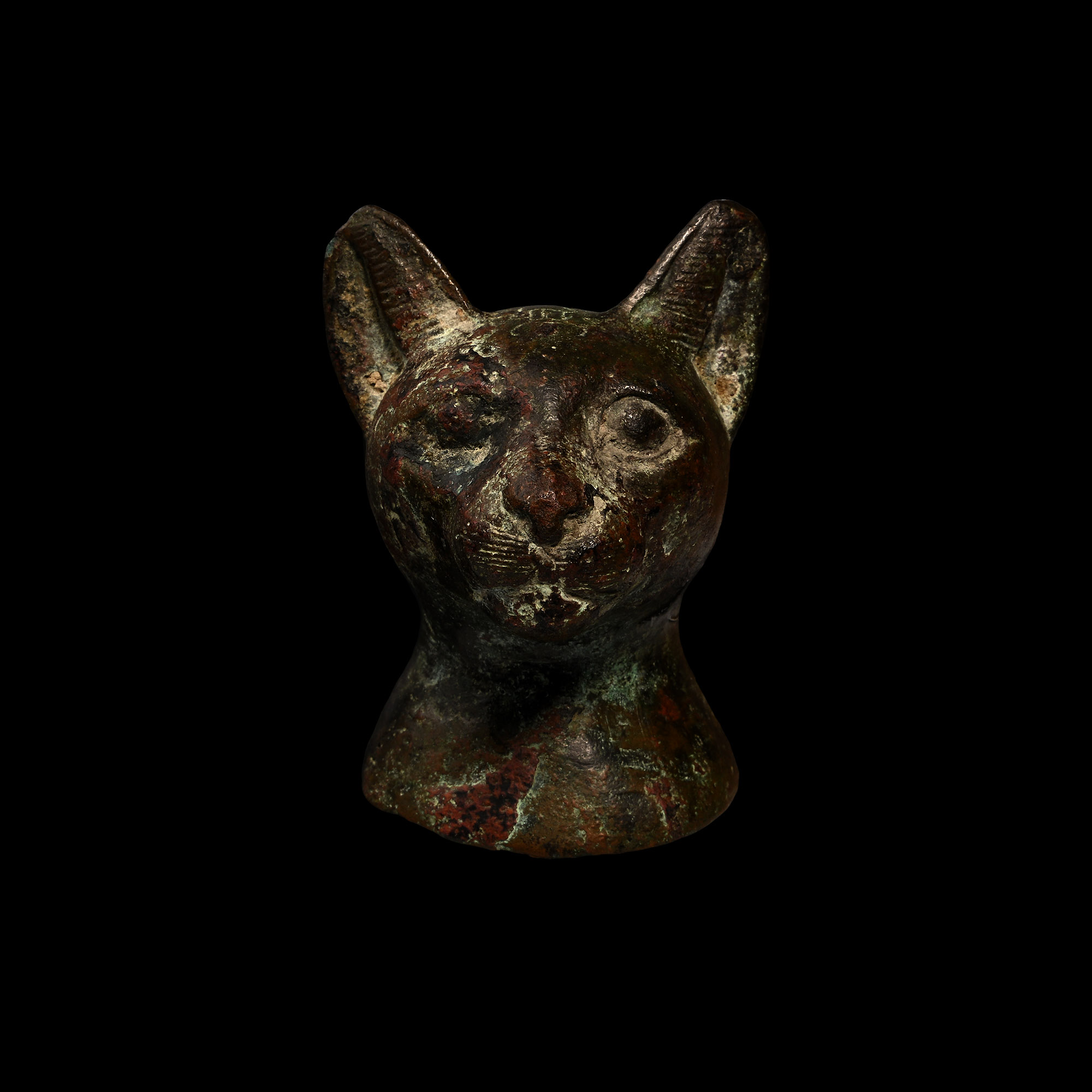
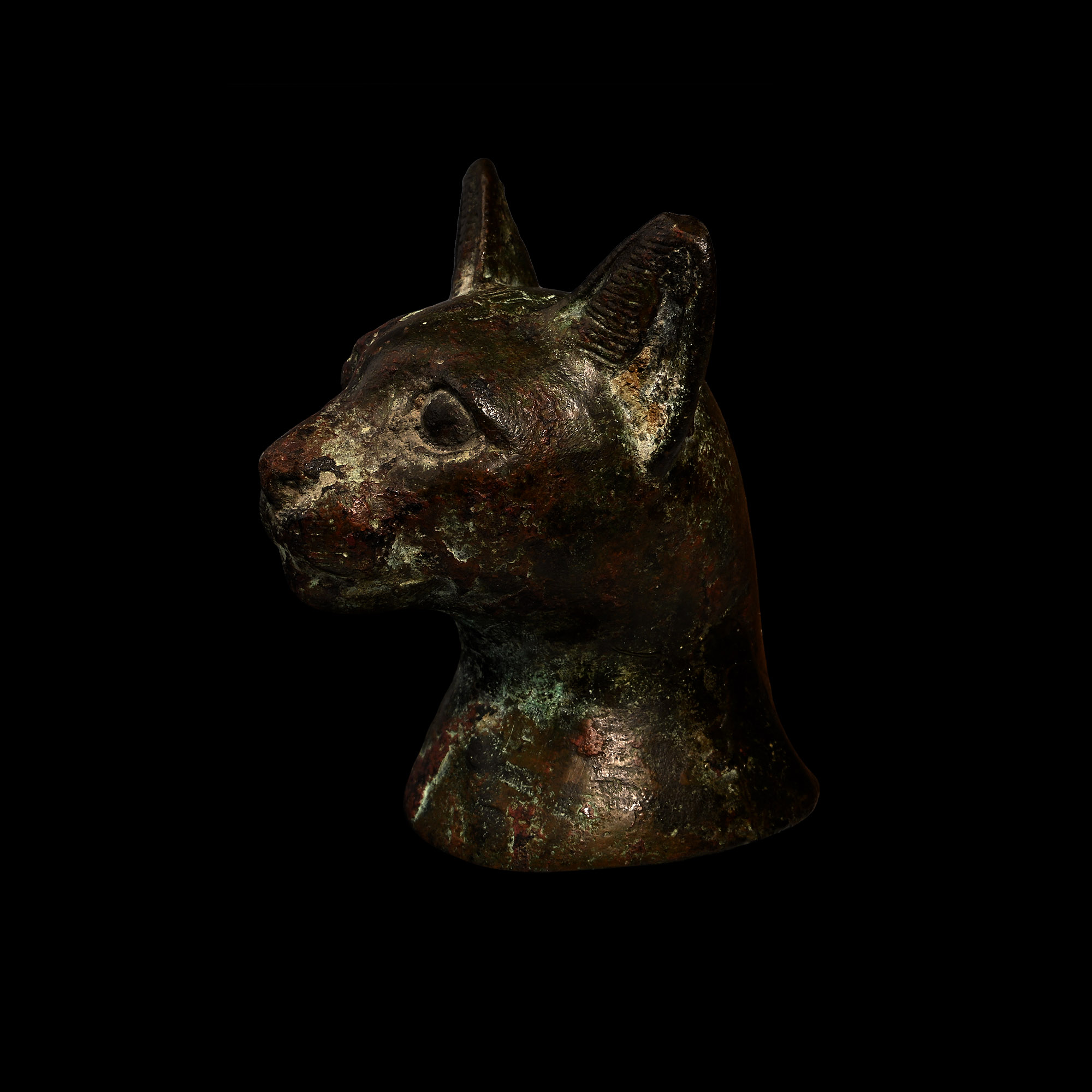
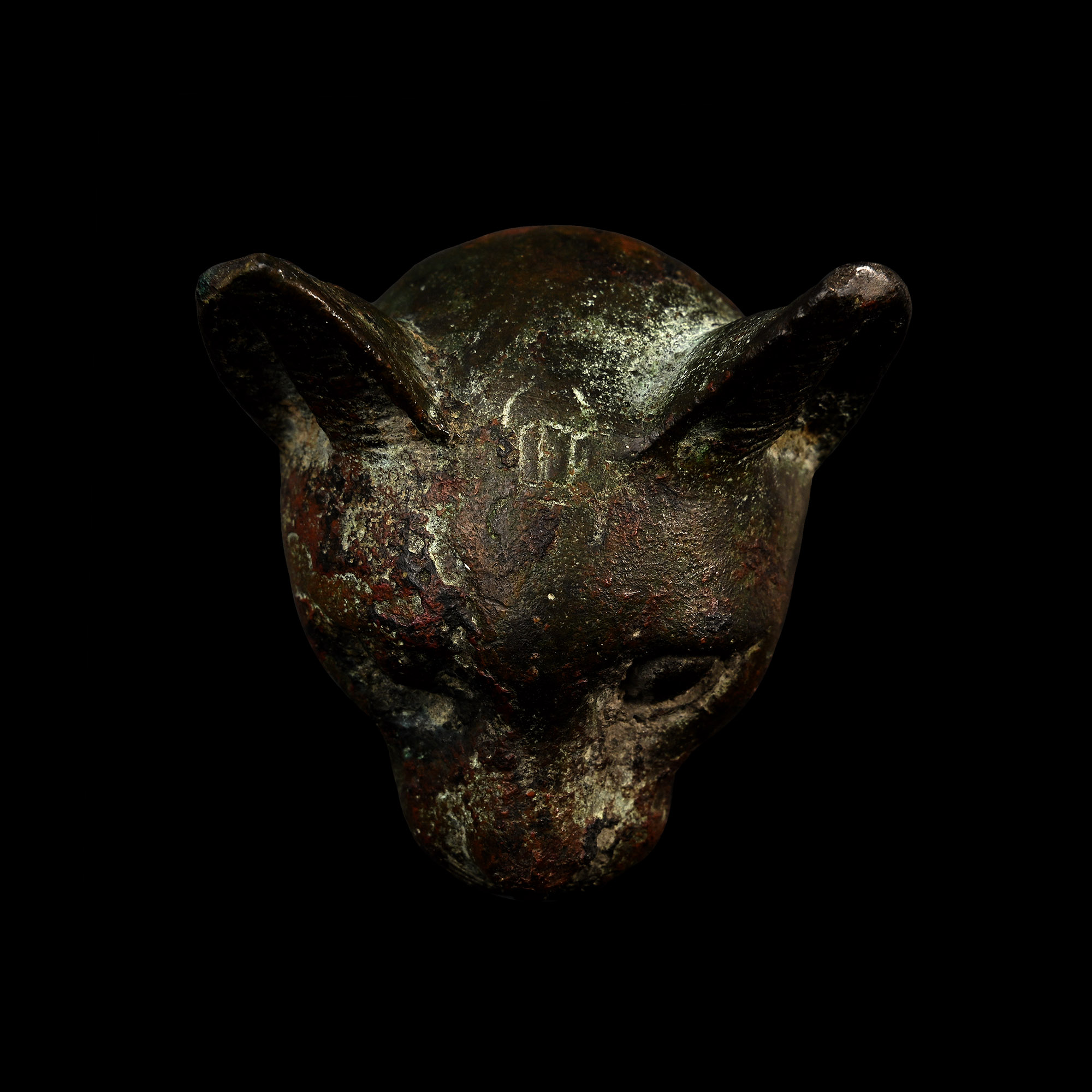
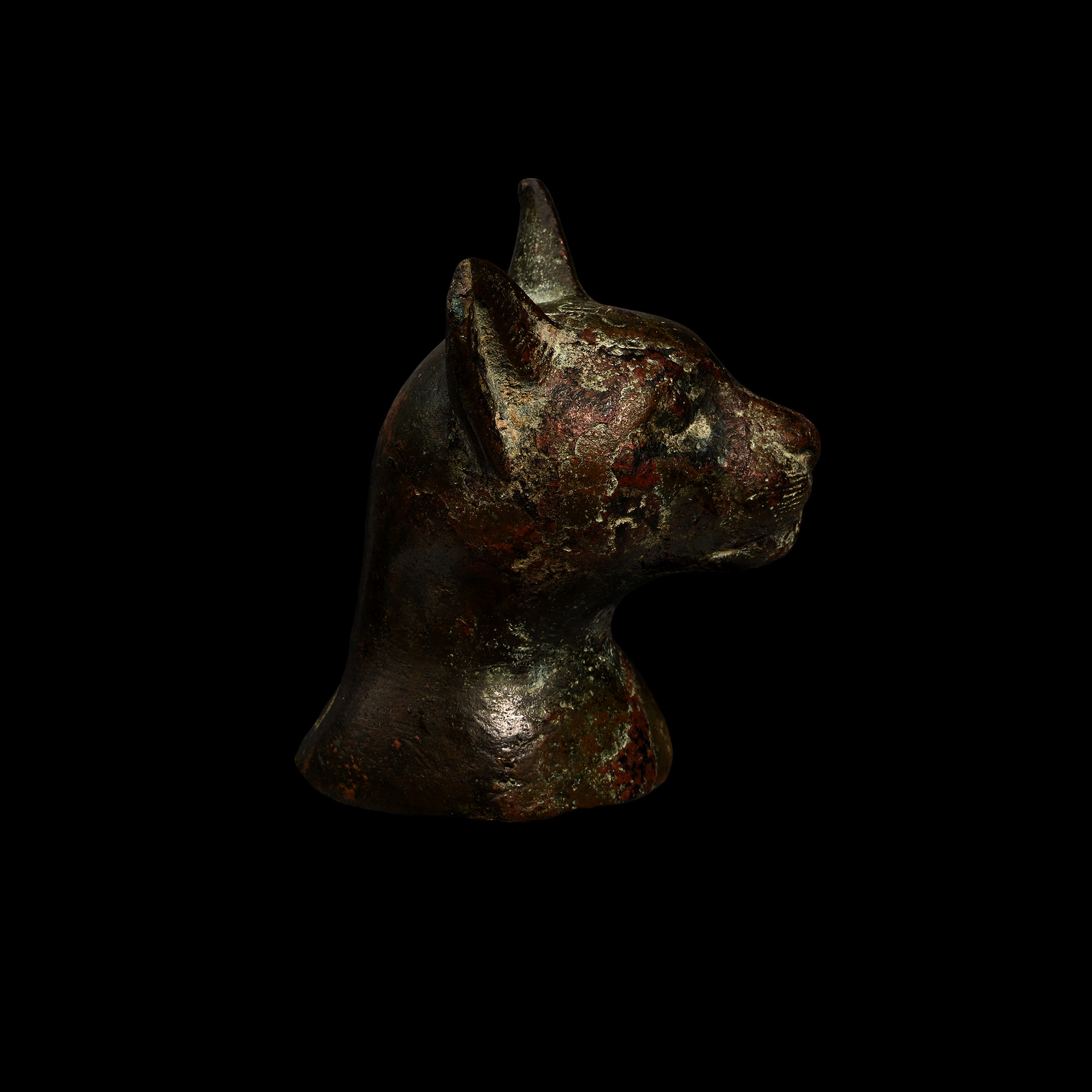
Egyptian Bronze Cat Head with Incised Scarab
LATE PERIOD, 664-332 B.C.
2 1/4 in. (92.5 grams, 58 mm).
The head of goddess Bastet modelled in the round with alert ears and eyes, fine whisker detailing to the gently elongated muzzle, hair detailing to the inner edges of the ears and the lower outer edges pierced to accept separate earrings, incised scarab on the top of the head.
ProvenanceElizabeth Helene Demarest Osten Driesen (1892-1931).
Given as a gift to her granddaughter, Lady Annabel Sutherland, by descent in the late 1960s.
This lot has been checked against the Interpol Database of stolen works of art and is accompanied by search certificate number no.12762-237137.
This lot has been cleared against the Art Loss Register database, and is accompanied by an illustrated lot declaration signed by the Head of the Antiquities Department, Dr Raffaele D'Amato.
Cf. Berlev, O. and Hodjash, S., Catalogue of Monuments of Ancient Egypt: From the Museums of the Russian Federation, Ukraine, Bielorussia, Caucasus, Middle Asia and the Baltic States, Orbis Biblicus et Orientalis 17, Fribourg/Göttingen, 1998, pl. 90 VI.34, for a similar example; Waziry, M., Vestiges of Ancient Egypt: The Bubasteion Votive Cachette at Saqqara, Houston, 2023, p. 68, no. 19, for a recently excavated wooden cat coffin with a bronze head still in place.
FootnotesIn ancient Egypt, the cat was venerated as the sacred animal of the goddess Bastet, whose principal cult centre was Bubastis in the Nile Delta. Although cats were once part of folk practice, their veneration as part of formal cults spread across Egypt during the Late Period. Bastet was closely linked to lion-headed goddesses like Sekhmet, Tefnut, and Pakhet, and the cat itself became associated with solar imagery: the Book of the Dead portrays the sun god as a Great Cat vanquishing Apophis beneath the sacred Ished Tree. The cat could also embody the Eye of the Sun or, more often in Bastet’s case, the Eye of the Moon. Mummified cats were frequently dedicated as votive offerings, and some of their feline-shaped coffins were adorned with finely crafted bronze heads to enhance their divine likeness.
CONDITIONTimeLine Auctions follows a vetting process to ensure the authenticity and legality of all items, reinforcing our commitment to integrity and responsible trading. Each antiquity, antique, and coin lot undergoes thorough examination by a vetting committee of at least ten external specialists, professional trade association members, scientists, and archaeologists: Our Vetting Process
AUCTIONS:
TimeLine is a leading auction house specialising in antiquities, ancient art, collectables, natural history, coins, medals, and books. Our auctions offer museums, collectors, historians, and enthusiasts the opportunity to acquire unique and historically significant pieces.
-
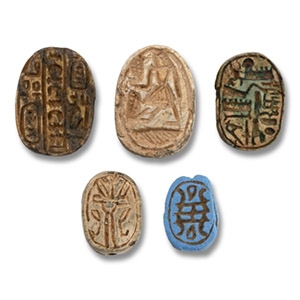
Egyptian Steatite Scarab Group
Mainly Second Intermediate Period–New Kingdom, circa 1660-1069 B.C.Sold for (Inc. bp): £286
Designs include: a tripartite design with ankh, water, nwb, and men signs, with indistinct cartouches possibly of Thutmose III, and signs spelling the phrase 'powerful is the justice of Re' (user-Maat-Re); a line border enclosing the stylised depiction of a striding figure grasping a crocodile, with a neb sign below; a line border enclosing a multitude of signs, including Thutmose III’s throne name (men-kheper-Re), and that of Amun; A line border enclosing central Hathoric sistrum; a line border enclosing a symmetrical motif in contrasting black glaze. 10.6 grams total, 13-19 mm
Acquired on the European art market in the early 2000s. with Galerie Rhéa, Zurich, Switzerland. This lot is accompanied by an illustrated lot declaration signed by the Head of the Antiquities Department, Dr Raffaele D'Amato. -
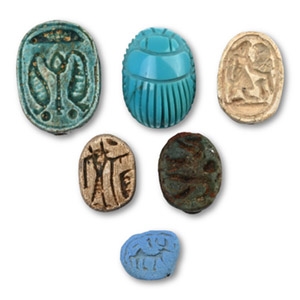
Egyptian Steatite Scarab Group
Mainly Late Period, 664-332 B.C.Sold for (Inc. bp): £247
The designs include: a line border enclosing a central nefer sign, flanked by two rearing cobras with sun discs above, and a neb sign below; a turquoise scarab with deeply incised body detailing; a line border enclosing a striding figure before a cobra(?) and a nefer sign, with a neb sign below; a standing figure with a long staff and a sun disc above, facing an indeterminate object; indeterminate symbols with a sun disc above; and a quadruped with a long tail and erect ears or horns (possibly a jackal or an ibex). 11.7 grams total, 10-20 mm
Acquired on the European art market in the early 2000s. with Galerie Rhéa, Zurich, Switzerland. This lot is accompanied by an illustrated lot declaration signed by the Head of the Antiquities Department, Dr Raffaele D'Amato. -
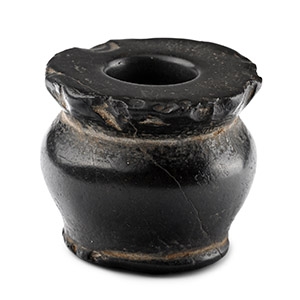
Egyptian Basalt Kohl Pot
16th-11th century B.C.Estimate: £400 - 600 (‡+bp*)
Opening Bid: £200
Carved into the shape of a poppy head with flange rim; old inked collector's number to base '1935.438'. 78 grams, 40 mm
From the estate of a deceased American, acquired between 1970-1989. with Bonhams, London, Knightsbridge, 28 October 2009, no.23 [part]. This lot is accompanied by an illustrated lot declaration signed by the Head of the Antiquities Department, Dr Raffaele D'Amato.
