
Loading, please wait...
LOT 0525
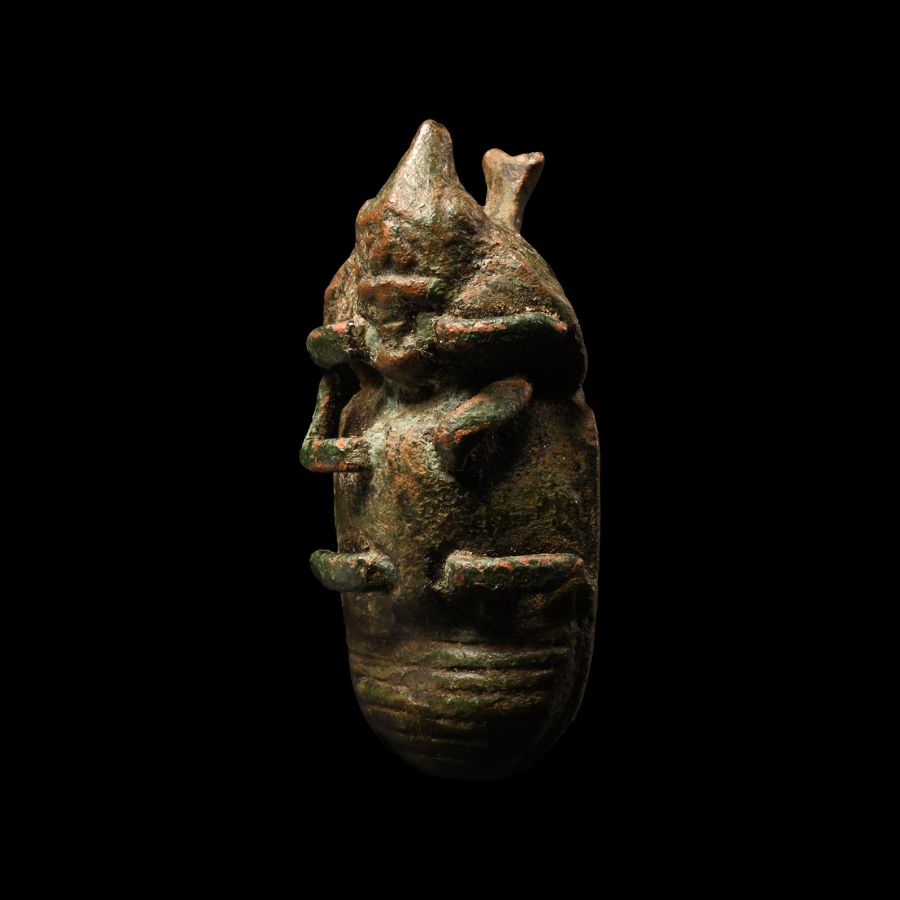
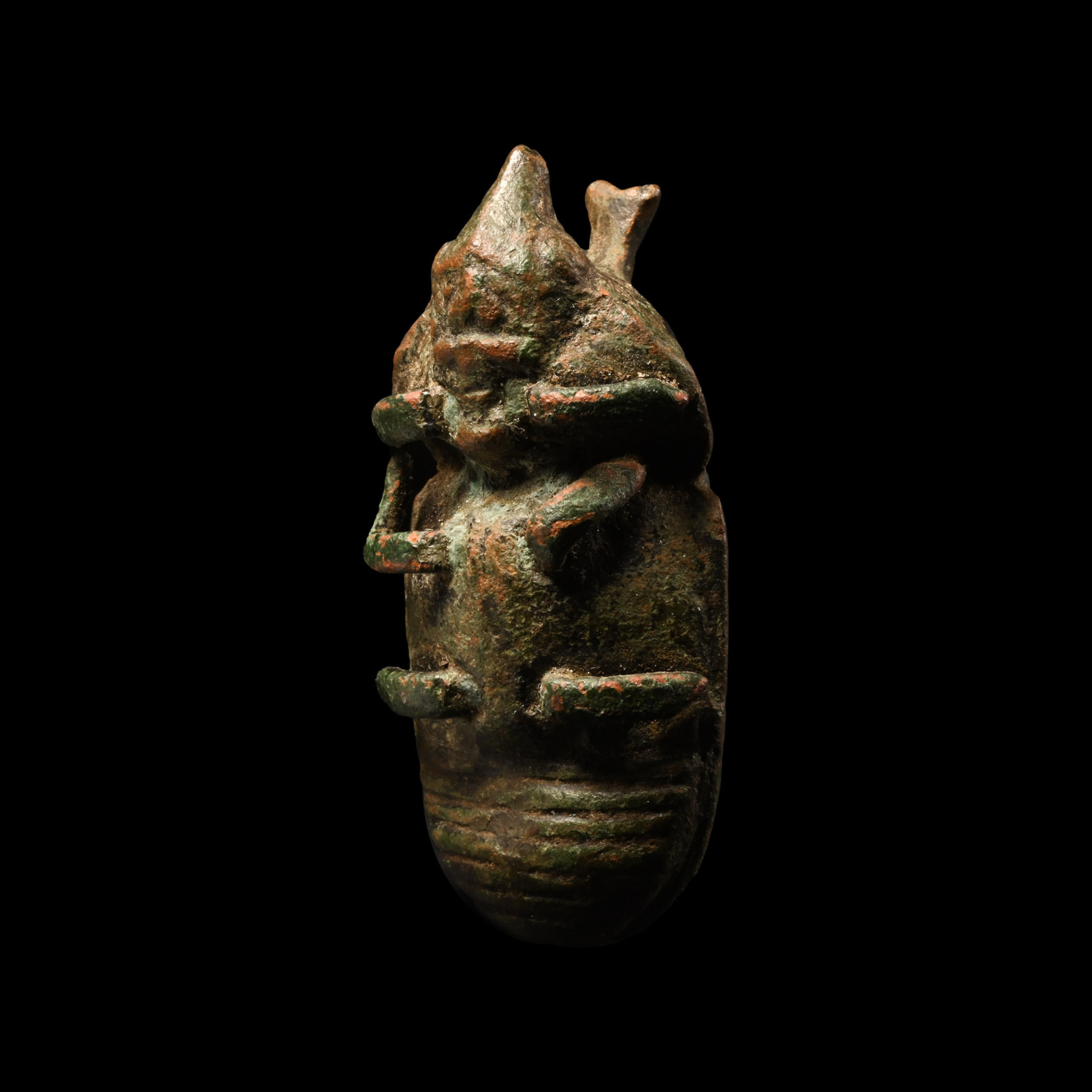
Egyptian Bronze Beetle
LATE PERIOD, 664-525 B.C.
1 3/4 in. (49.8 grams, 43 mm).
A bronze horned beetle figure modelled in the round with semi-naturalistic anatomical detailing, its legs held tightly against its abdomen, possibly indicating that this is a beetle in a mummified form. [No Reserve]
ProvenanceAcquired 1990s-2000s.
From the collection of an Essex gentleman.
TimeLine Auctions follows a vetting process to ensure the authenticity and legality of all items, reinforcing our commitment to integrity and responsible trading. Each antiquity, antique, and coin lot undergoes thorough examination by a vetting committee of at least ten external specialists, professional trade association members, scientists, and archaeologists: Our Vetting Process
AUCTIONS:
TimeLine is a leading auction house specialising in antiquities, ancient art, collectables, natural history, coins, medals, and books. Our auctions offer museums, collectors, historians, and enthusiasts the opportunity to acquire unique and historically significant pieces.
-
Coptic Kohl Container
6th-7th century A.D.Estimate: £1,200 - 1,700 (+bp*)
Opening Bid: £600
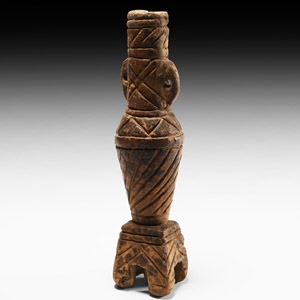
A heavily carved wooden kohl vessel, tubular with pierced lateral flanges and rectangular base with a stub foot to each corner; with old collector's label reading 'Coptic kohol container VI-VIII C. OFRA10P / Q Louvre Cat. des Bois de l'Egypte Copte, Paris 1986 no.39-41'. 129 grams, 19.5 cm
Acquired in the late 1980s-early 1990s. Important North West London collection. -
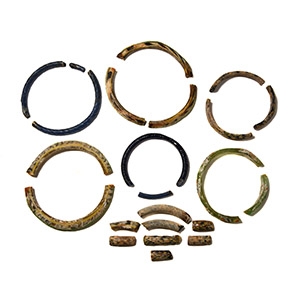
Egyptian Glass Bangle Fragment Group
Graeco-Roman Period, 332 B.C.-323 A.D.Sold for (Inc. bp): £39
A mixed group of glass bangle fragments including polychrome and decoratively twisted examples; iridescence to the surfaces of most. 110 grams total, 16-82 mm
Acquired before 1979. From the private collection of Mr F. A., South Kensington, London, UK; thence by descent 2014. -
.jpg)
Egyptian Statue Fragment Group
Circa 1st millennium B.C.Sold for (Inc. bp): £169
A group of five ceramic and composition statuette fragments including glazed examples: a terracotta royal head with Nemes headdress and uraeus; the green glazed foot of a shabti with hieroglyphs; the head of a figure in raised relief, painted geometric column to the rear; copper-alloy strap junction displaying a human face, four-way attachment reverse; glass ram head with applied eyes and horns. 105 grams total, 21-54 mm
Acquired early 1990s. Ex private American collection; thence by descent. Private collection since 1998.
