
Loading, please wait...
LOT 0020
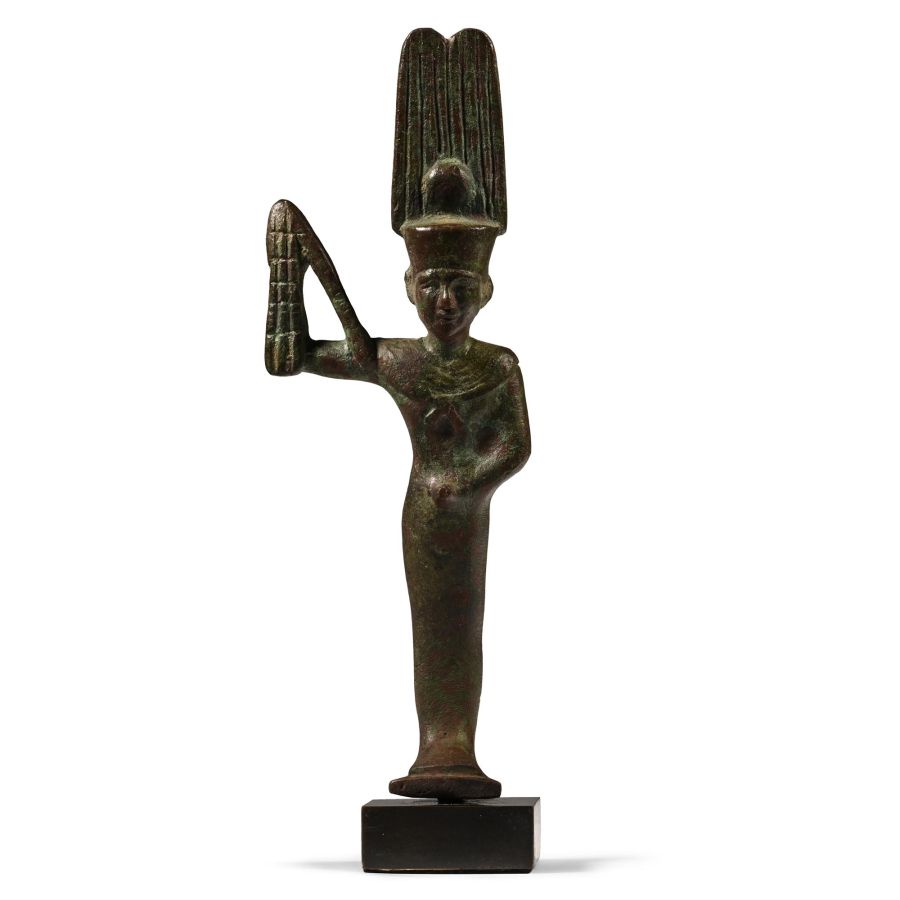
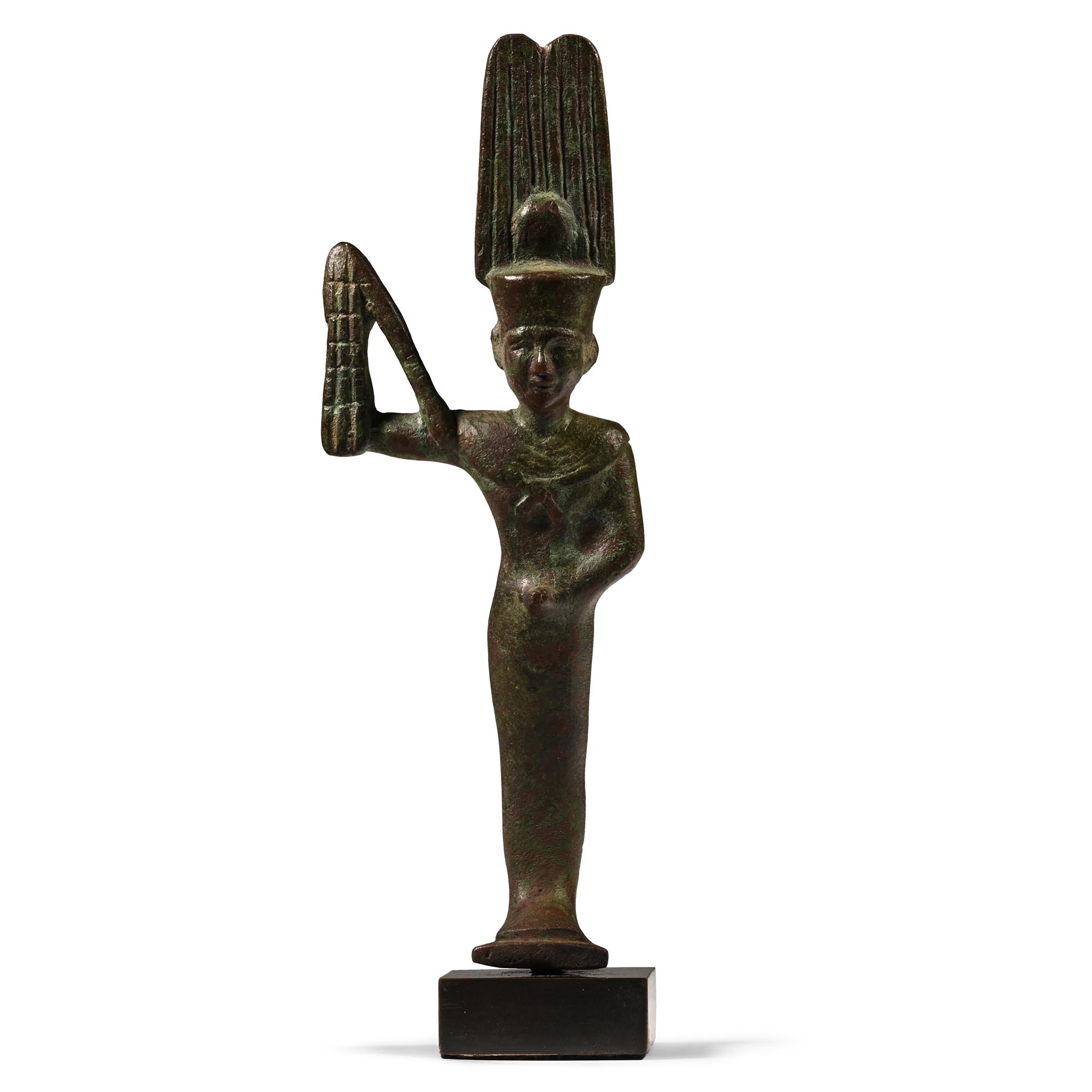
Egyptian Bronze Amun-Min-Kamutef Statuette
LATE PERIOD, 664-332 B.C.
8 1/4 in. (538 grams total, 21 cm high including stand).
Modelled in the round as a votive ithyphallic figure wearing a double-plumed crown with a sun disc, holding a flail in his outstretched right hand and his erect phallus in the left; mounted on a custom-made display base.
ProvenanceAcquired on the London art market.
Ex 'K' collection, 1990-2020s.
This lot has been cleared against the Art Loss Register database, and is accompanied by an illustrated lot declaration signed by the Head of the Antiquities Department, Dr Raffaele D’Amato.
Cf. The Royal Ontario Museum for a similar figure (inv. no. 910.17.14); cf. Daressy, G., Catalogue général des antiquitéségyptiennes du Musée du Caire N° 38001-39384 Statues de divinités, Cairo, 1906, pl. XXVII, no. 38479, for a similar example.
FootnotesAmun-Min-Kamutef was a syncretic deity combining the attributes of Amun, the supreme god of the Egyptian pantheon, and Min who represents sexual procreation. The iconography of Amun's ithyphallic form Kamutef is essentially that of Min, and serves to emphasise the sexual prowess of the god. Kamutef means 'bull of his mother' and appears to refer both to Amun's sky-goddess mother in her cow form and to the bull's sexual prowess and strength.
CONDITIONTimeLine Auctions follows a vetting process to ensure the authenticity and legality of all items, reinforcing our commitment to integrity and responsible trading. Each antiquity, antique, and coin lot undergoes thorough examination by a vetting committee of at least ten external specialists, professional trade association members, scientists, and archaeologists: Our Vetting Process
AUCTIONS:
TimeLine is a leading auction house specialising in antiquities, ancient art, collectables, natural history, coins, medals, and books. Our auctions offer museums, collectors, historians, and enthusiasts the opportunity to acquire unique and historically significant pieces.
-
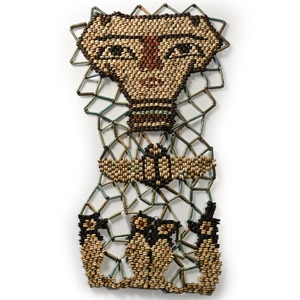
Egyptian Faience Mummy Beadwork Mask
Ptolemaic Period, 332-30 B.C.Sold for (Inc. bp): £676
A netted beadwork panel of annular and tubular glazed composition beads depicting a mummy face mask with a false beard, a scarab with extended wings below, and beneath the 'Four Sons of Horus’, Hapy, Imsety, Qebehsenuef, and Duamutef, joined together with areas of open netting of tubular examples; restrung with some later beads. 145 grams, 32 cm
Mariaud de Serres, Paris, 1990s. This lot is accompanied by an illustrated lot declaration signed by the Head of the Antiquities Department, Dr Raffaele D’Amato.
The Four Sons of Horus were deities responsible for protecting the deceased's internal organs. The human-headed Imsety protected the liver, the baboon-headed Hapy protected the lungs, the jackal-headed Duamutef protected the stomach, and the falcon-headed Qebehsenuef protected the intestines. These internal organs were often placed in canopic jars with the head of the respective Son of Horus. -
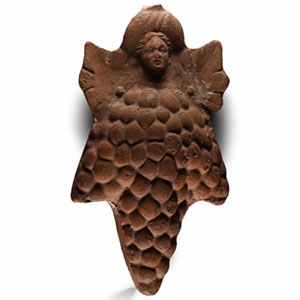
Egyptian Terracotta Figure of Artemis of Ephesus
Ptolemaic Period, 2nd-1st century B.C.Sold for (Inc. bp): £910
Hollow-formed figure of Artemis wearing a voluminous wreath, head emerging from a bunch of grapes between two vine leaves; vent on top of the head; opening to rear. 222 grams, 18 cm
The Erotica Collection Christian von Faber-Castell, Küsnacgt ZH, Switzerland, since the late 1970s. This lot is accompanied by an illustrated lot declaration signed by the Head of the Antiquities Department, Dr Raffaele D’Amato.
The statue of Artemis at Ephesus (modern Turkey) is modelled with breasts in multiple tiers and with a hairstyle reminiscent of that on this figure. -
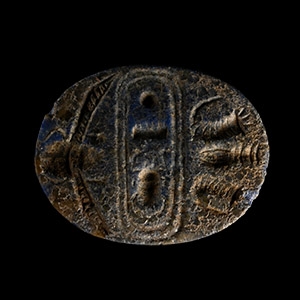
Egypto-Phoenician Lapis Lazuli Scarab with Cartouche for Thutmose III
Late 1st millennium B.C.Estimate: £2,500 - 3,500 (‡+bp*)
Opening Bid: £1,250
With carapace detailing to obverse, plaque with intaglio cartouche for the throne name of Thutmose III men-kheper-Re, winged scarab at one end and a central floral motif flanked by cornucopia at the other end. 7.4 grams, 25 mm
Private collection of Mr S.A., Switzerland, 1990s, thence by descent. This lot has been checked against the Interpol Database of stolen works of art and is accompanied by search certificate no.12127-211877. This lot has been cleared against the Art Loss Register database, and is accompanied by an illustrated lot declaration signed by the Head of the Antiquities Department, Dr Raffaele D’Amato.
