
Loading, please wait...
LOT 0479
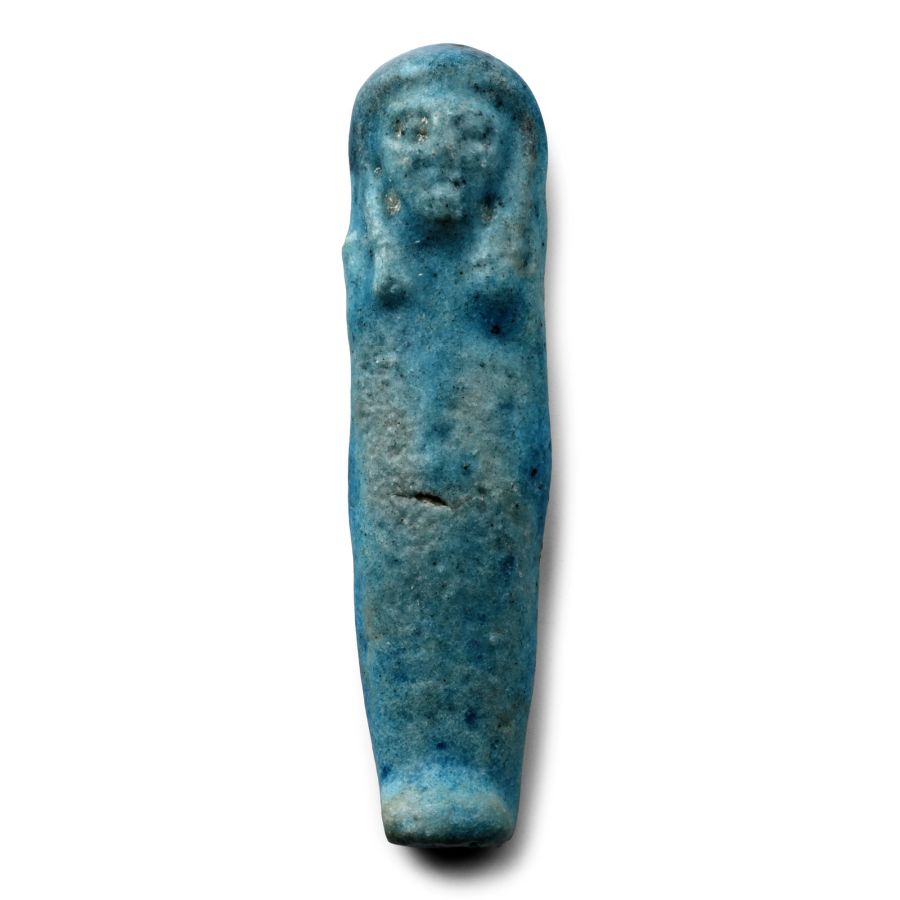
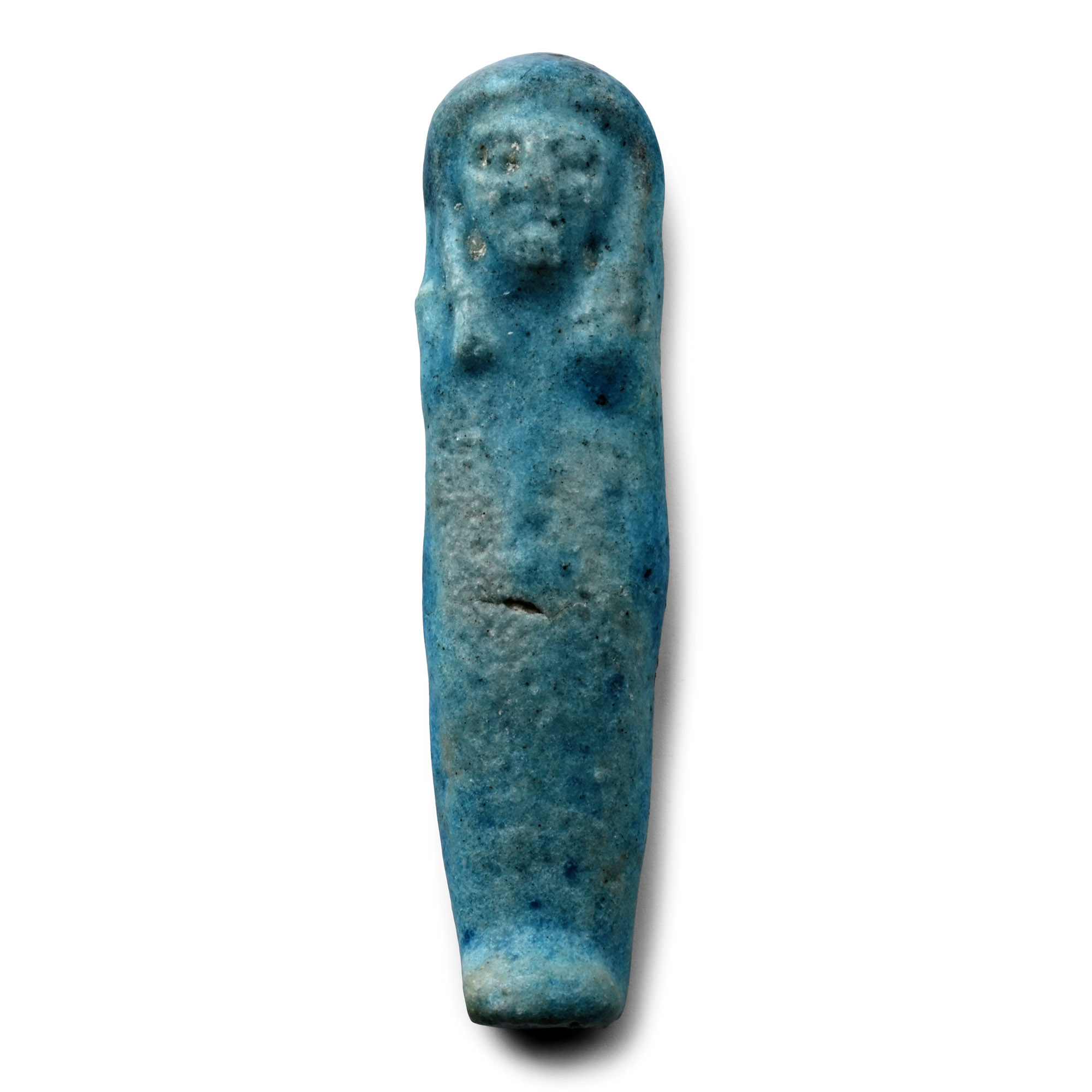
Egyptian Bright Blue Faience Shabti
PTOLEMAIC PERIOD, 332-30 B.C.
2 1/8 in. (7.05 grams, 54 mm).
Mummiform figure with facial detailing and wearing a lappet wig. [No Reserve]
ProvenanceEx London, UK, collection, 1990s.
This lot is accompanied by an illustrated lot declaration signed by the Head of the Antiquities Department, Dr Raffaele D'Amato.
Cf. Schlögl, H., and Brodbeck, A., Ägyptische Totenfiguren aus öffentlichen und privaten sammlungen der Schweiz, Göttingen, 1990, p. 310, no. 223, for a similar Ptolemaic example.
CONDITIONTimeLine Auctions follows a vetting process to ensure the authenticity and legality of all items, reinforcing our commitment to integrity and responsible trading. Each antiquity, antique, and coin lot undergoes thorough examination by a vetting committee of at least ten external specialists, professional trade association members, scientists, and archaeologists: Our Vetting Process
AUCTIONS:
TimeLine is a leading auction house specialising in antiquities, ancient art, collectables, natural history, coins, medals, and books. Our auctions offer museums, collectors, historians, and enthusiasts the opportunity to acquire unique and historically significant pieces.
-
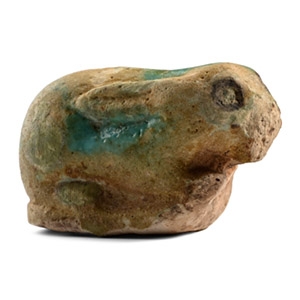
Egyptian Faience Hare Statuette
Ptolemaic Period, 332-30 B.C.Sold for (Inc. bp): £130
Modelled in the round in crouching position with its ears pulled back and resting along the body, black detailing to the eyes. 25 grams, 44 mm
Private collection of Mr K.A., acquired in the 1990s-early 2000s. This lot is accompanied by an illustrated lot declaration signed by the Head of the Antiquities Department, Dr Raffaele D'Amato.
The desert hare was one of the most common wild animals in Egypt. The female hare was sacred to Wenut, goddess of the 15th Upper Egyptian nome, though no specific hare cults are known. The purpose of hare figurines remains uncertain. According to Plutarch, Egyptians regarded the hare’s speed and keen senses—reflected in its open eyes—as divine. -
.jpg)
Egyptian Basalt Statue Base For The Priest Hor-sa-aseti
Late Period, 664-332 B.C.Estimate: £4,000 - 6,000 (+bp*)
Opening Bid: £2,000
Fragment of the rectangular base of a statue, preserving an integral pair of feet on the upper surface; lower end of dorsal column inscription at the rear with two hieroglyphs; below, a horizontal band of hieroglyphic text extending onto both short sides including part of an offering formula for the ḥm-nṯr ı͗wnw-smꜤ ḥr-sꜢ-Ꜣstı͗ (the priest [of the] Southern Heliopolis [i.e., Thebes], Hor-sa-aseti); old collectors' labels on the underside; supplied with a custom-made wooden display stand. 1.37 kg, 12.9 cm (4.08 kg total, 25 cm including stand)
Private New York, USA, collection, 1970. Ex Adrian Burns, Columus, Ohio, USA, from an old estate collection. Ex Art for Eternity gallery, New York, USA. Ex Art Primativo, Auction 16, 2001, no.430. Ex private New York, USA, collection. Private collection, London, UK. Accompanied by an academic report by Egyptologist Paul Whelan. This lot has been checked against the Interpol Database of stolen works of art and is accompanied by a search certificate number no.12832-240779. This lot has been cleared against the Art Loss Register database, and is accompanied by an illustrated lot declaration signed by the Head of the Antiquities Department, Dr Raffaele D'Amato. -
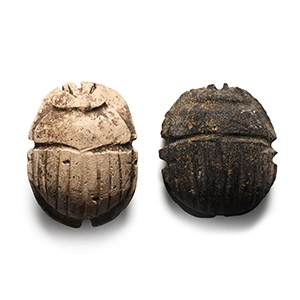
Egyptian Heart Scarab Group
Late Period, 664-332 B.C.Estimate: £150 - 200 (+bp*)
Opening Bid: £75
Comprising two scarabs with striated wing cases and ribbed underside. 7.5 grams total, 18-20 mm
From the collection of a gentleman, acquired on the London art market in the 1990s. This lot is accompanied by an illustrated lot declaration signed by the Head of the Antiquities Department, Dr Raffaele D'Amato.
The scarab amulet was a powerful symbol of rebirth, transformation, and protection in ancient Egypt. Modelled after the beetle linked to the sun god Khepri, it represented the cycle of life and regeneration. Used from the Middle Kingdom (c. 2050 BCE) onwards, scarabs served as funerary amulets, personal charms, and seals—often inscribed with prayers or names—reflecting both spiritual beliefs and daily life.
