
Loading, please wait...
LOT 0434
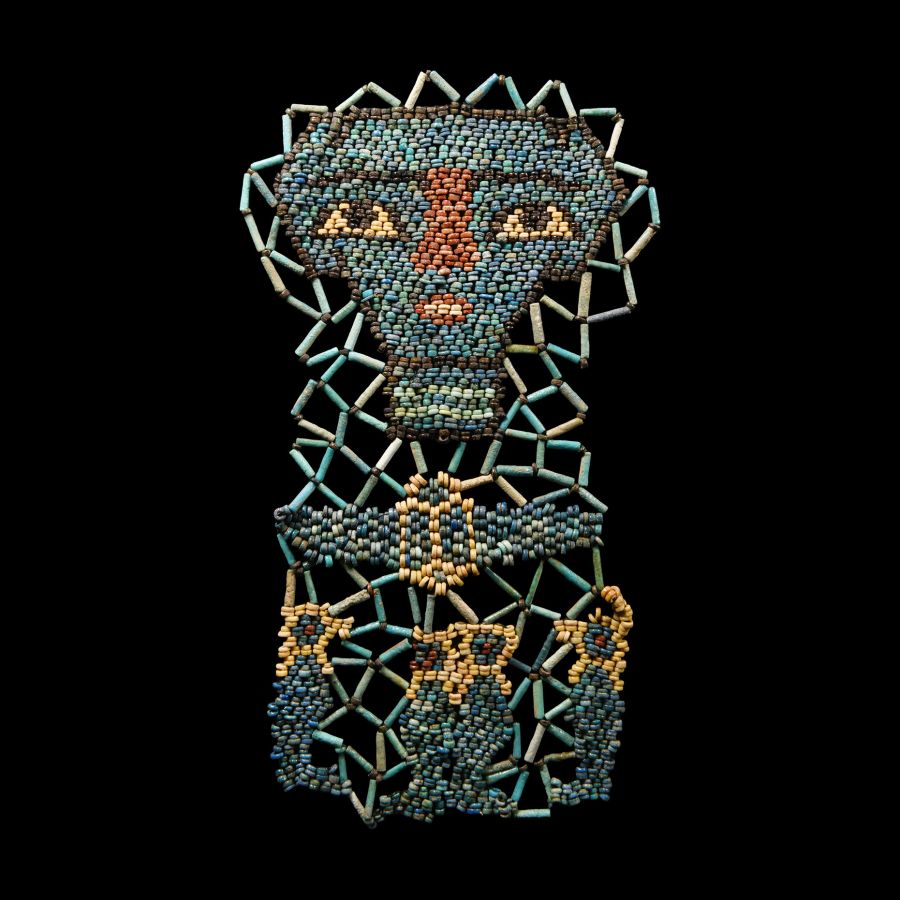
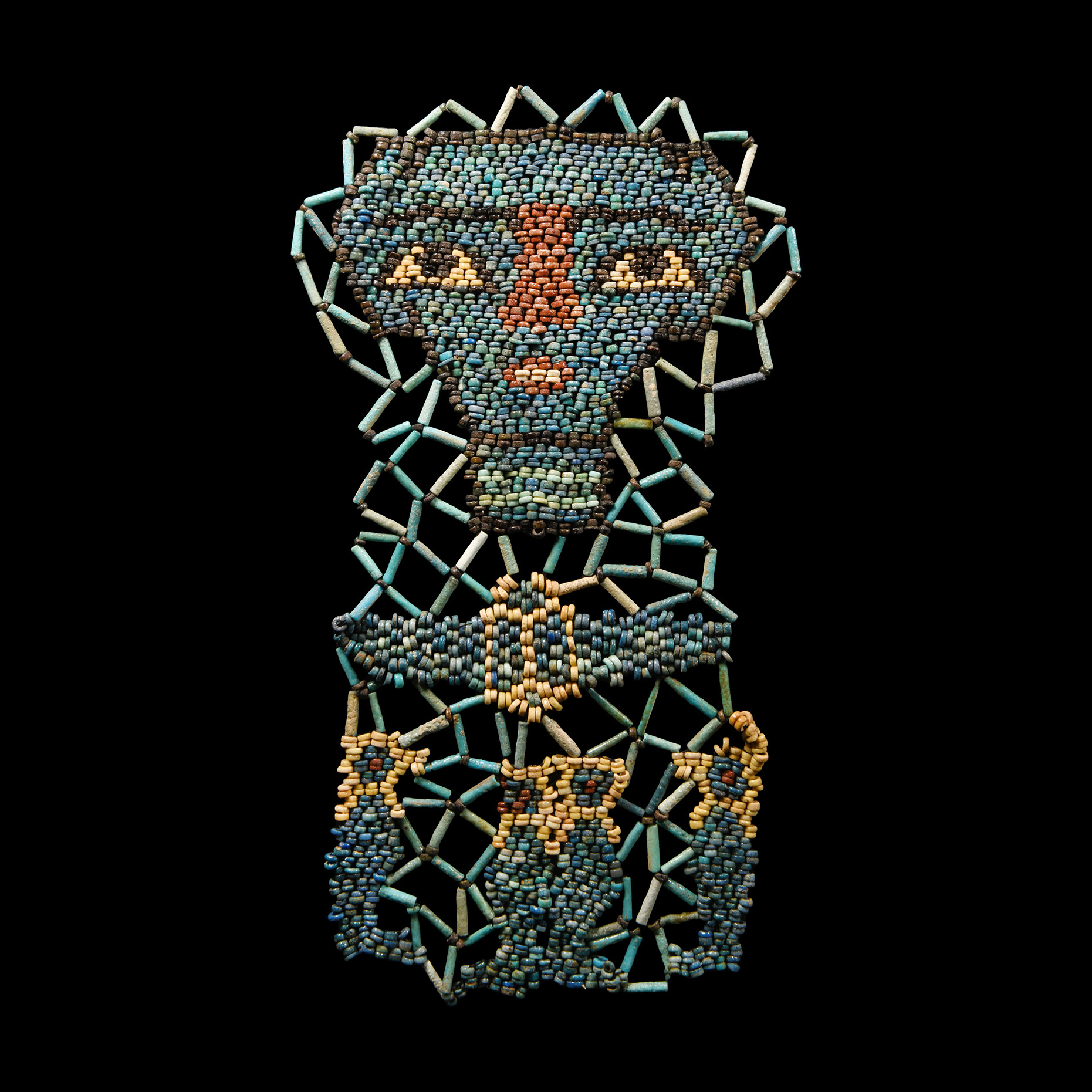
Egyptian Bright Blue Beaded Mummy Mask with Sons of Horus
PTOLEMAIC PERIOD, 332-30 B.C.
9 in. (60 grams, 23 cm high).
A restrung netted beadwork panel of annular and tubular glazed composition beads in blues, greens, black, cream and red-brown colours, depicting a mummy face mask with false beard, a scarab with extended wings below, the 'Four Sons of Horus’ beneath the scarab, joined together with areas of open netting of tubular beads.
ProvenanceAcquired 1990s.
Ex Mariaud des Serres, Paris, France.
TimeLine Auctions follows a vetting process to ensure the authenticity and legality of all items, reinforcing our commitment to integrity and responsible trading. Each antiquity, antique, and coin lot undergoes thorough examination by a vetting committee of at least ten external specialists, professional trade association members, scientists, and archaeologists: Our Vetting Process
AUCTIONS:
TimeLine is a leading auction house specialising in antiquities, ancient art, collectables, natural history, coins, medals, and books. Our auctions offer museums, collectors, historians, and enthusiasts the opportunity to acquire unique and historically significant pieces.
LOT 0434
Egyptian Bright Blue Beaded Mummy Mask with Sons of Horus
Estimate £300 - 400€350 - 460 (for guidance only)$410 - 540 (for guidance only)
-
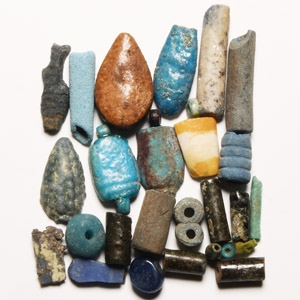
Egyptian Composition Amulet and Bead Collection
Late Period, 664-332 B.C.Sold for (Inc. bp): £85
Composed of various types of beads; glazed and pierced for suspension. 6.4 grams total, 6-18 mm
Ex early 20th century Home Counties, UK, collection. -
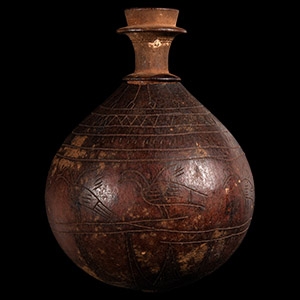
Egyptian Decorated Wooden Vessel with Stopper
Late Period, 664-332 B.C.Sold for (Inc. bp): £494
Spheroid wooden flask and stopper; the outer face with incised alternating bands of radiating triangles and hatching, the equator with frieze of perching birds and a hatched sunburst to the underside; turned hollow wooden stopper with carinated profile and flanges. 11 grams, 74 mm
Ex family collection since the 1950s. Property of an East Sussex, UK, teacher.
The vessel is a version in lathe-turned wood of a type known to have been produced in glass. -
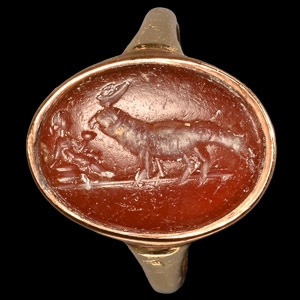
Egypto-Roman Red Carnelian Soknopaios Gemstone in Gold Ring
1st-2nd century A.D.Sold for (Inc. bp): £5,200
The 19th century ring with D-section hoop expanding at the shoulders; the oval intaglio engraved with a seated woman offering food or drink from a cup to a creature with the body of a crocodile and a falcon head; accompanied by a custom-made display case and impression. 5.23 grams, 23.98 mm overall, 18.87 mm internal diameter (approximate size British Q 1/2, USA 8 1/4, Europe 18.12, Japan 17)
Acquired in the 1980s. with Christie's, Ancient Jewellery, 7 December 2006, lot 277. Accompanied by an academic report by Dr Raffaele D’Amato. This lot has been checked against the Interpol Database of stolen works of art and is accompanied by a search certificate number no.11779-204569.
An important creator god, Soknopaios is depicted here with the crocodile body of Sobek and the falcon head of Re. It has been suggested that the falcon head of Soknopaios alludes to association with the goddess Isis's son Horus. It can also depict an image of the so-called ‘nine shaped one’ (εννεάμορφος), a figure mentioned several times in the magical rituals written in Greek but with a strong Egyptian religious background. This deity is often understood as the bios (i.e. an incarnation) of the supreme god Amun-Re, often accompanied by a surrounding ouroboros serpent.
