
Loading, please wait...
LOT 0485
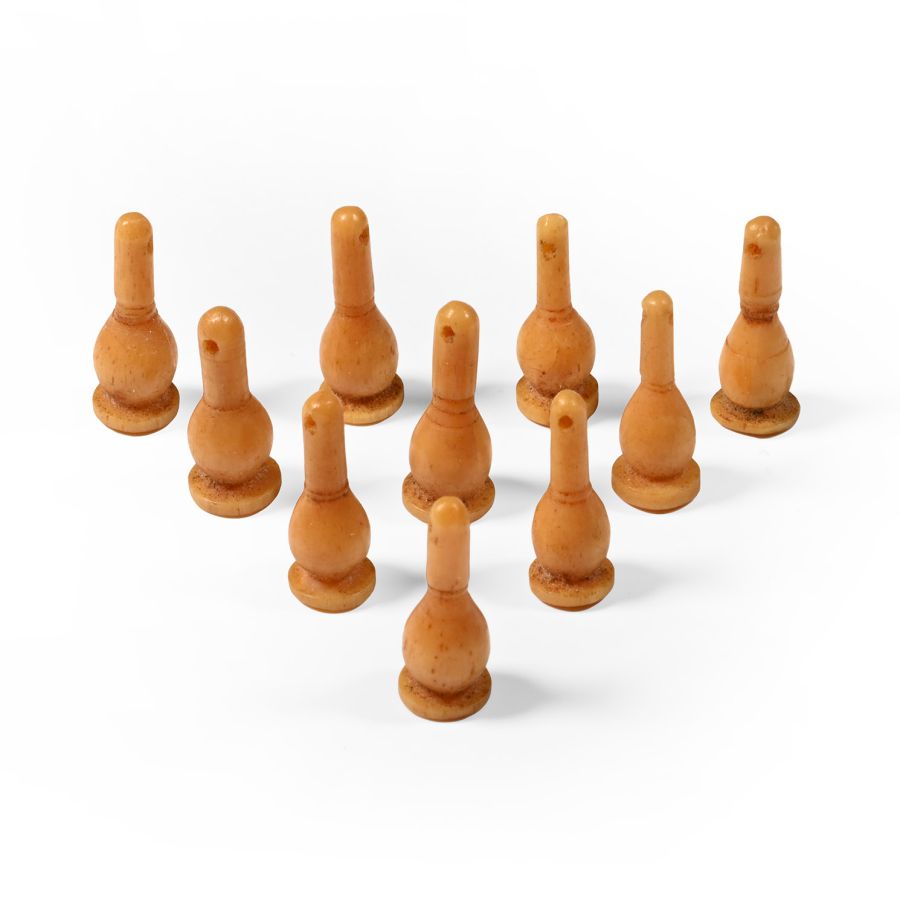
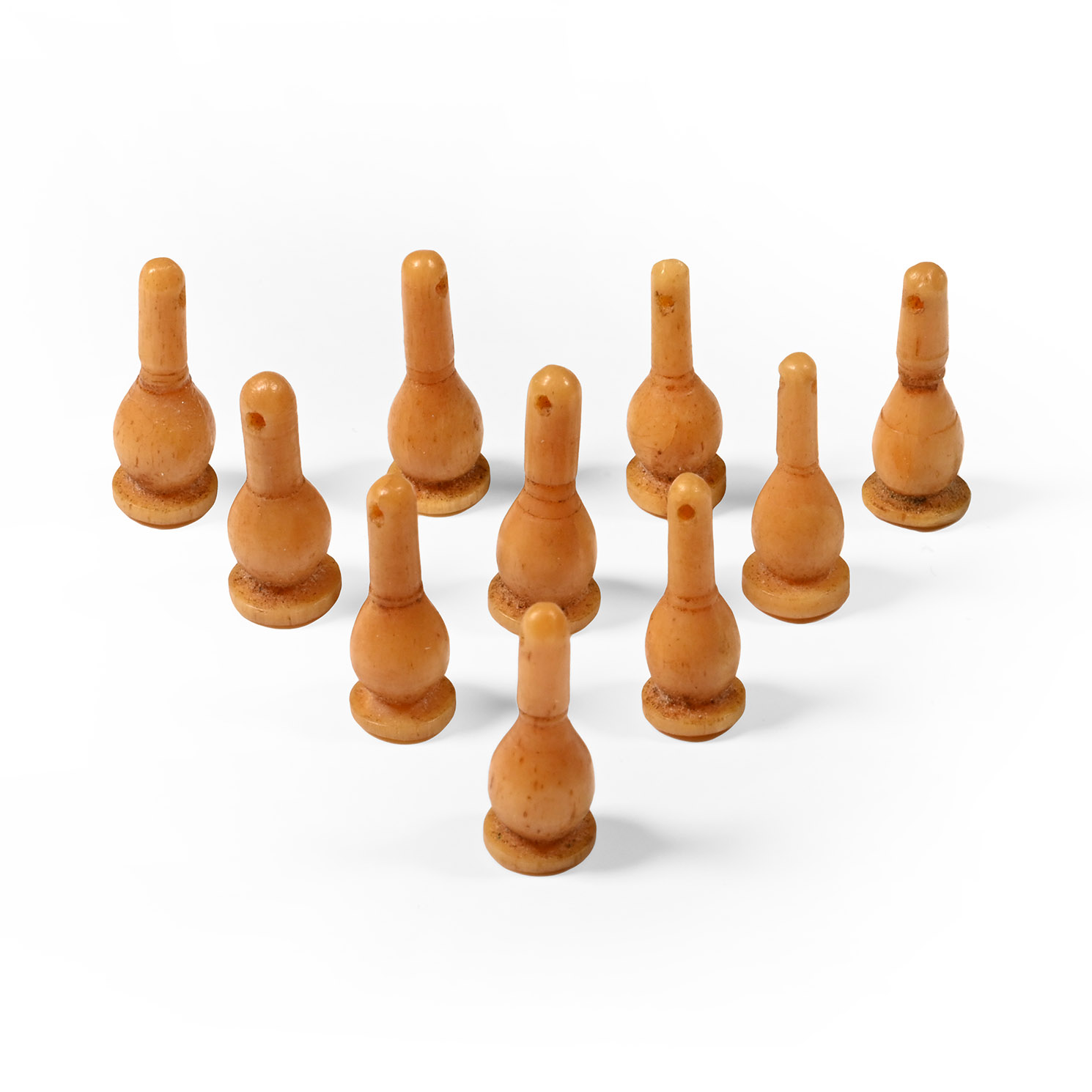
Egyptian Bone Poppy Head Amulet Group
LATE PERIOD, 664-332 B.C.
5/8 in. (4.65 grams total, 16-17 mm).
Carved and pierced at the stalk for threading. [10, No Reserve]
ProvenanceAcquired 1970s-1996.
Property of a North American collector.
London collection, 2016.
See Andrews, C., Amulets of Ancient Egypt, London, 1994, for discussion.
CONDITIONTimeLine Auctions follows a vetting process to ensure the authenticity and legality of all items, reinforcing our commitment to integrity and responsible trading. Each antiquity, antique, and coin lot undergoes thorough examination by a vetting committee of at least ten external specialists, professional trade association members, scientists, and archaeologists: Our Vetting Process
AUCTIONS:
TimeLine is a leading auction house specialising in antiquities, ancient art, collectables, natural history, coins, medals, and books. Our auctions offer museums, collectors, historians, and enthusiasts the opportunity to acquire unique and historically significant pieces.
-
.jpg)
Egyptian Faience Fish Amulet with Hieroglyphs
Second Intermediate Period, circa 1650 B.C.Sold for (Inc. bp): £546
Green glazed composition plaque with two tilapia fish placed tête-bêche, two groups of hieroglyphs to the underside. 5.43 grams, 23 mm
From a family collection formed 1900-1950; by descent circa 1980. -
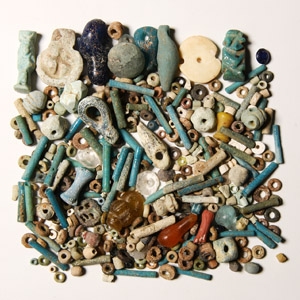
Egyptian and Other Faience Amulet and Bead Group
New Kingdom, 1315-1069 B.C. and laterSold for (Inc. bp): £286
Most covered in a coloured glaze; amulets including fruits and deities; beads of a range of types. 34 grams total, 2-20 mm
UK gallery, early 2000s. -
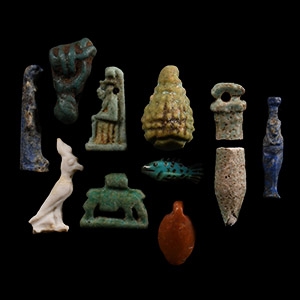
Egyptian Hardstone and Faience Amulet Collection
Late Period, 664-332 B.C.Sold for (Inc. bp): £468
Including red jasper heart ib, bunch of grapes, seated Hathor, Horus falcon, a sow, hand in 'fica' gesture, tilapia fish and other types. 10.8 grams total, 13-25 mm
Acquired 1970s-1996. Property of a North American collector. London collection, 2016.
