
Loading, please wait...


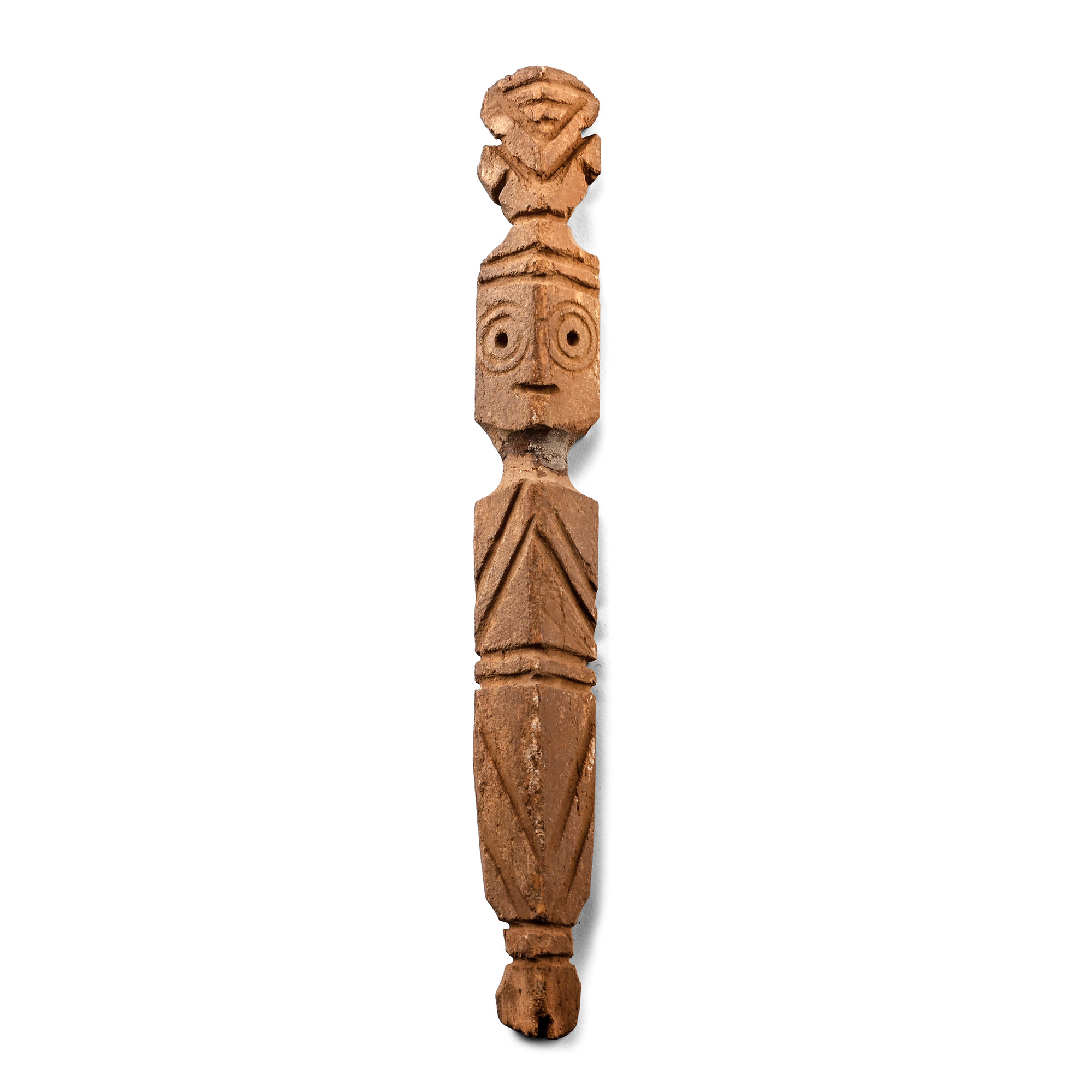
LOT 0402
Egyptian Bone Doll
4TH-6TH CENTURY A.D.
4 1/2 in. (9.03 grams, 11.6 cm).
Highly stylised human figurine with cuts to indicate features. [No Reserve]
ProvenanceFrom the private collection of Peter Clayton, FCILIP, Dip, Arch, FSA, FRNS, Hemel Hempstead, Hertfordshire, UK; formed since the late 1950s.
Accompanied by an old handwritten information slip by Peter Clayton.
TimeLine Auctions follows a vetting process to ensure the authenticity and legality of all items, reinforcing our commitment to integrity and responsible trading. Each antiquity, antique, and coin lot undergoes thorough examination by a vetting committee of at least ten external specialists, professional trade association members, scientists, and archaeologists: Our Vetting Process
AUCTIONS:
TimeLine is a leading auction house specialising in antiquities, ancient art, collectables, natural history, coins, medals, and books. Our auctions offer museums, collectors, historians, and enthusiasts the opportunity to acquire unique and historically significant pieces.
LOT 0402
Egyptian Bone Doll
Estimate £80 - 100€93 - 116 (for guidance only)$108 - 135 (for guidance only)
Opening Bid
£5 (EUR 6; USD 7) +BP*
-
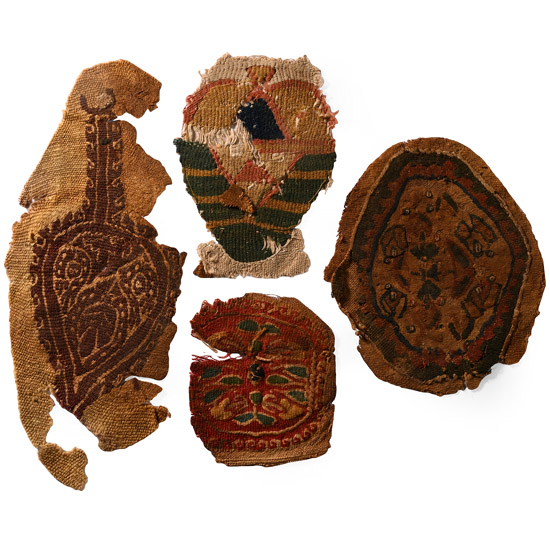
Egyptian Coptic Tunic Textile Fragments of Orbiculi with Vegetation, Fish and Geometric Ornament
Circa 6th-7th century A.D.Estimate: £80 - 100 (+bp*)
Opening Bid: £5
Comprising three lanceolate-shaped medallions in yellow, green, and red wool, decorated with birds and geometric and vegetal elements (left-facing); and a red wool orbiculus on white linen, featuring a floral design and a meander border. 17.7 grams total, 8.2-19.5 cm
Acquired 1970s-1996. Property of a North American collector. London collection, 2016.
The fragments are decorative parts of tunics. These are fabrics of great decorative finesse, with some elements displaying an unusual and extremely well-preserved colour palette. -
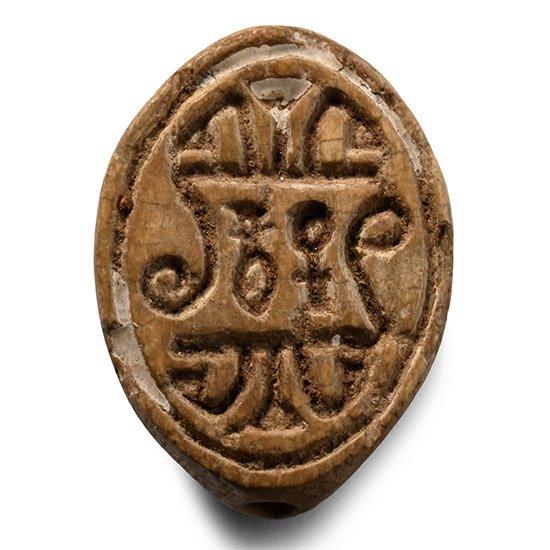
Egyptian Steatite Scaraboid Amulet with Hieroglyphs
Hyksos Period-early New Kingdom, circa 1782-1500 B.C.Estimate: £40 - 60 (+bp*)
Opening Bid: £5
Plano-convex in section, underside with nfr and ankh hieroglyphs meaning 'good life', with a stylised lotus plant motif above and below. 2.36 grams, 20 mm
Excavated from Egypt in 1914. From the private collection of Mr David Sams and his wife, Elizabeth Kate Sams, gentry and amateur archaeologists who travelled to Egypt in 1914 with their daughter, Ethel. Mr Sams and his wife led digging expeditions from which these items come, from the family estate of Mr and Mrs Sams, by direct descent to their granddaughter. -
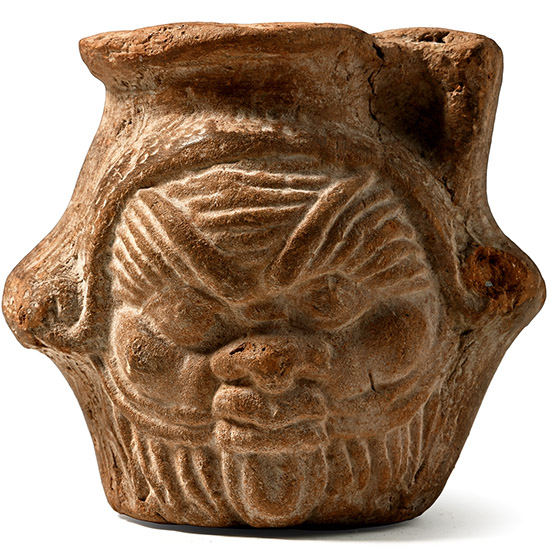
Egyptian Terracotta Bes Vessel
Graeco-Roman Period, 332 B.C.-323 A.D.Estimate: £500 - 700 (+bp*)
Opening Bid: £250
Bulbous in profile, with a short, broad neck, a rolled rim, and an angled handle; obverse with a moulded mask of Bes, with lentoid eyes and a hatched face. 140 grams, 68 mm
From the private collection of Peter Clayton, FCILIP, Dip, Arch, FSA, FRNS, Hemel Hempstead, Hertfordshire, UK; formed since the late 1950s.
Bes, a dwarf deity primarily of the household, was a powerful apotropaic entity who warded off evil spirits, guarded homes, and protected vulnerable family members, especially pregnant women and infants. Bes vessels were thought to imbue their contents with healing properties. Chemical analysis of some Graeco-Roman Bes vessels shows they held hallucinogenic, medicinal, and alcoholic blends explicitly tied to pregnancy rituals and ritual intoxication. During the Graeco-Roman Period, mould-made figure vessels and terracotta figurines became very common. By contrast, earlier eras produced almost none of these vessels; only one ceramic example is known from the New Kingdom, and none from the Third Intermediate or Late Periods. These mass-produced terracottas allowed non-elites to venerate cult images at home altars or leave them as accessible votive offerings at local sanctuaries.
