
Loading, please wait...

LOT 0737
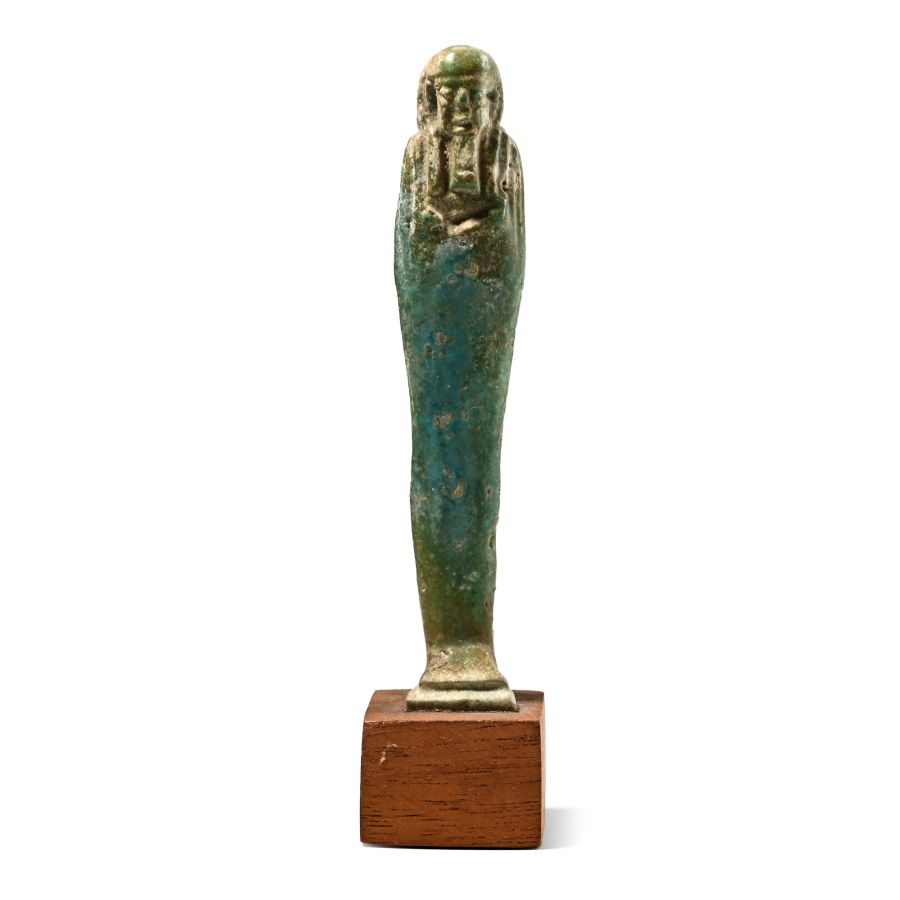
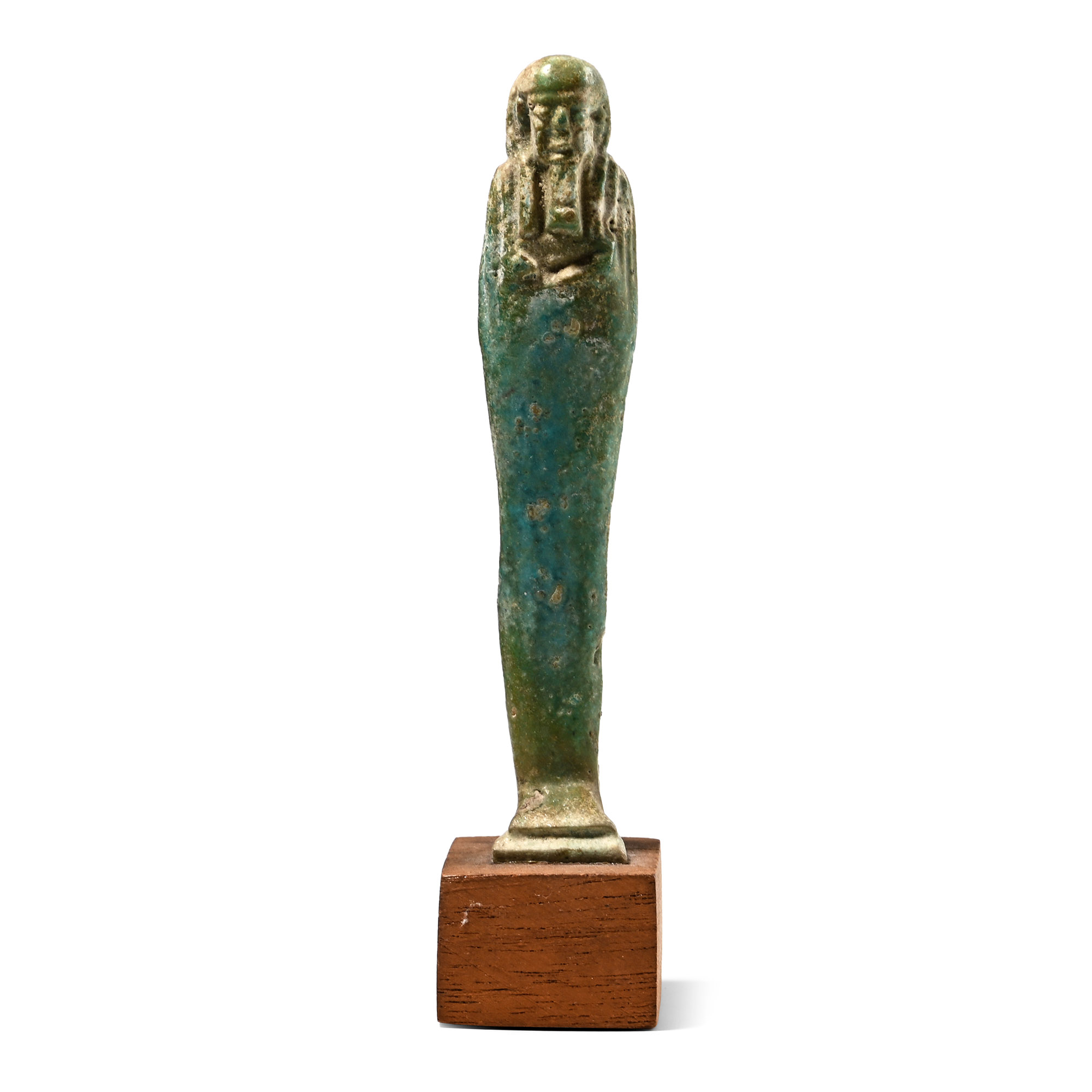
Egyptian Blue Glazed Shabti
30TH DYNASTY-PTOLEMAIC PERIOD, 380-30 B.C.
4 1/4 in. (5 in.) (28 grams, 10.8 cm (38 grams total, 12.6 cm high including stand)).
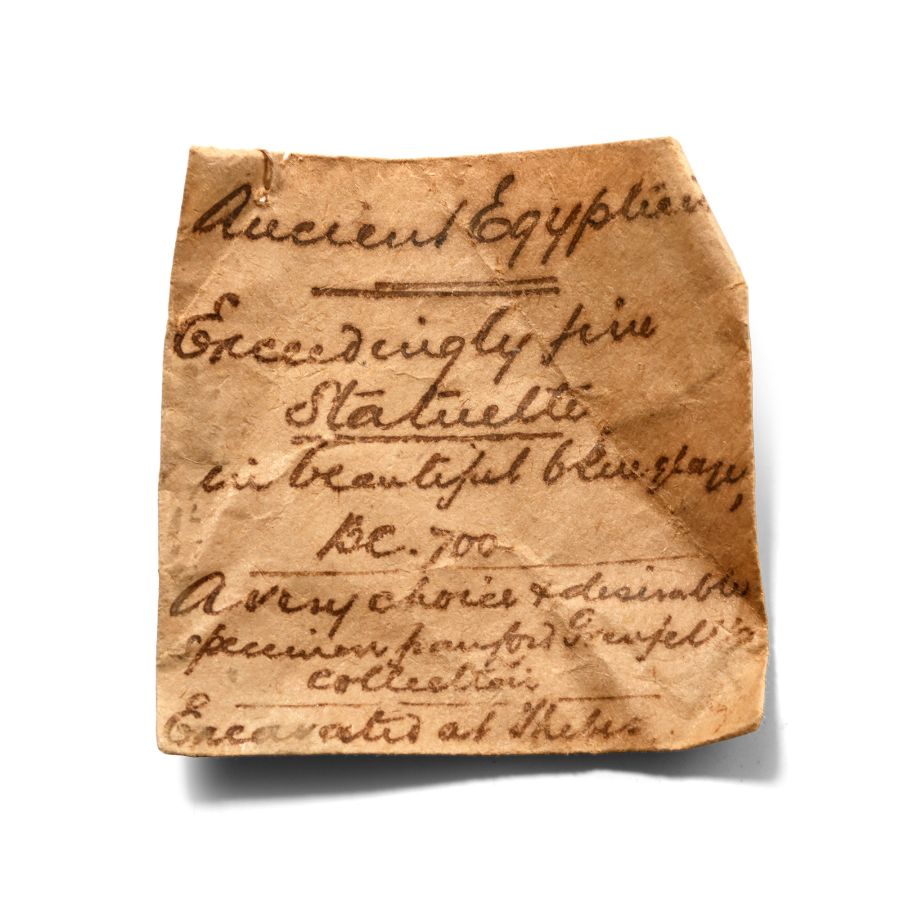
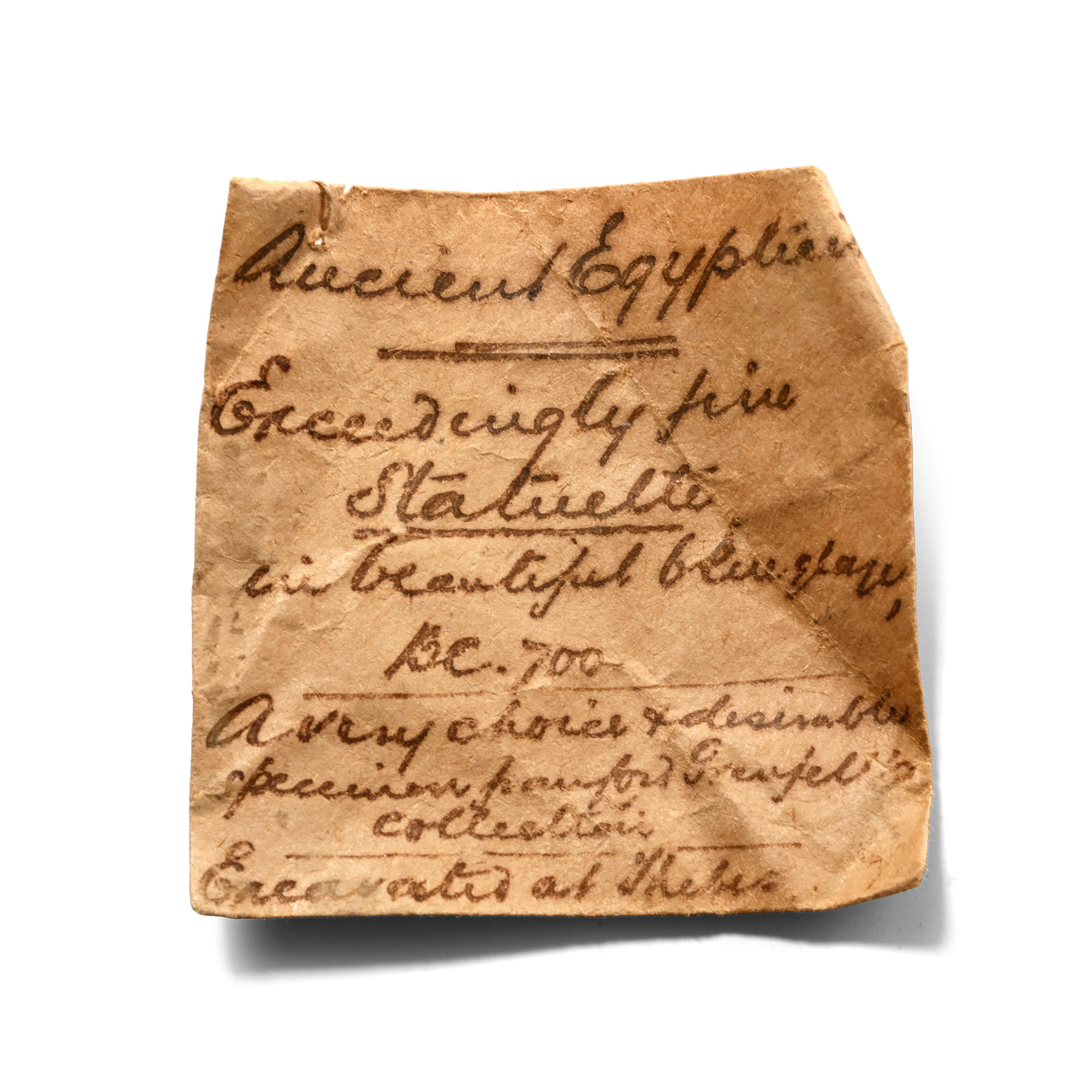
Slender mummiform type standing on an integral plinth, wearing a lappet wig with crossed arms holding agricultural tools; plain, broad dorsal pillar; with an old collector's note: 'Ancient Egyptian Exceedingly fine statuette in beautiful blue glaze B.C. 700 A very choice & desirable specimen from Lord Grenfell's collection. Excavated at Thebes'; mounted on a custom-made stand with label on the underside: 'Egyptian B.C. 700 Lord Grenfell's Collection. Excavated at Thebes'. [No Reserve]
ProvenanceExcavated Thebes, Egypt.
Ex Lord Grenfell's (1896-1926) collection, UK.
From the estate of a deceased Sussex private collector since the early 20th century.
Cf. Chappaz, J.-L., Les figurines funéraires égyptiennes du Musée d’art et d’histoire et de quelques collections privées, Geneva, 1984, p. 136, no. 180, for a similarly proportioned anepigraphic shabti with broad dorsal pillar.
CONDITIONTimeLine Auctions follows a vetting process to ensure the authenticity and legality of all items, reinforcing our commitment to integrity and responsible trading. Each antiquity, antique, and coin lot undergoes thorough examination by a vetting committee of at least ten external specialists, professional trade association members, scientists, and archaeologists: Our Vetting Process
AUCTIONS:
TimeLine is a leading auction house specialising in antiquities, ancient art, collectables, natural history, coins, medals, and books. Our auctions offer museums, collectors, historians, and enthusiasts the opportunity to acquire unique and historically significant pieces.
LOT 0737
Egyptian Blue Glazed Shabti
Estimate £80 - 100€93 - 116 (for guidance only)$108 - 135 (for guidance only)
Opening Bid
£5 (EUR 6; USD 7) +BP*
-
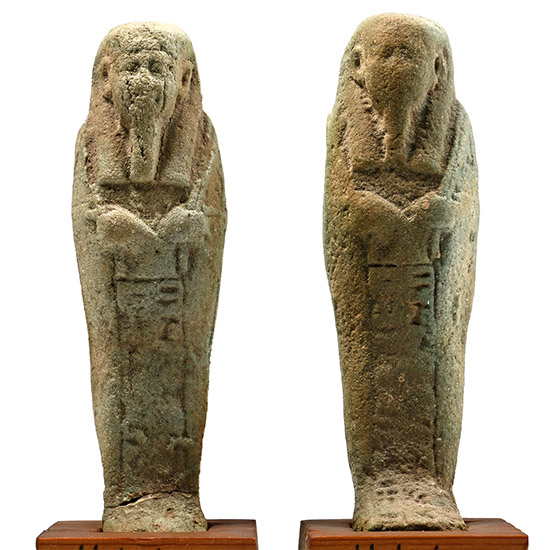
Egyptian Blue Faience Palestinian Shabti Pair
Late Period, 664-332 B.C.Estimate: £400 - 600 (+bp*)
Opening Bid: £5
Two mummiform figures, produced from the same mould, wearing lappet wigs, with arms crossed and hands holding agricultural implements; illegible hieroglyphic text on the lower body; display stand marked 'Ushabti Palestinian 1000-800 B.C.'. 120 grams total, 11.5-11.6 cm
Acquired near the British Museum, circa 1949, at 3 shillings each. From the private collection of Peter Clayton, FCILIP, Dip, Arch, FSA, FRNS, Hemel Hempstead, Hertfordshire, UK; formed since the late 1950s. Accompanied by an old handwritten information card by Peter Clayton, collection nos.7,7a. -
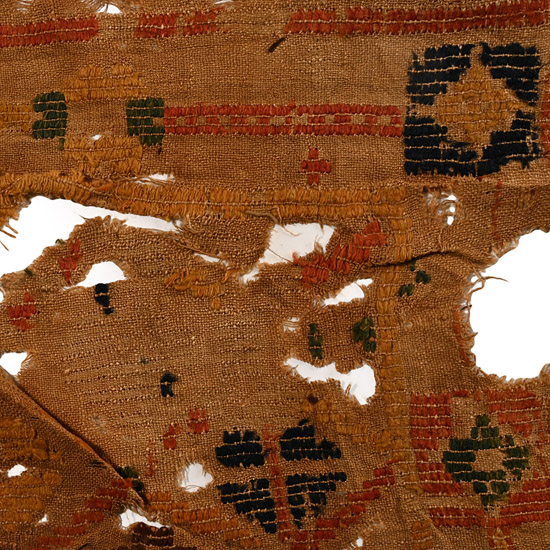
Egyptian Coptic Wall Tapestry Textile Fragment with Geometric Ornament
Circa 6th century A.D.Estimate: £60 - 80 (+bp*)
Opening Bid: £5
Fragment of tapestry or a cloak in light fabric, S-twist tapestry, embroidered with red, green, yellow, blue geometric ornaments in wool and linen. 37 grams total including paper folder, 37 cm
Acquired 1970s-1996. Property of a North American collector. London collection, 2016.
Most of the linen or wool garments found by A. Gayet in the Antinoe necropolis were woven in a specific pattern, in a single piece, on a horizontal warp. Another relatively common pattern for linen garments consisted of assembling three pieces woven on a single warp and forming the upper part of the garment, with the collar and sleeves. -
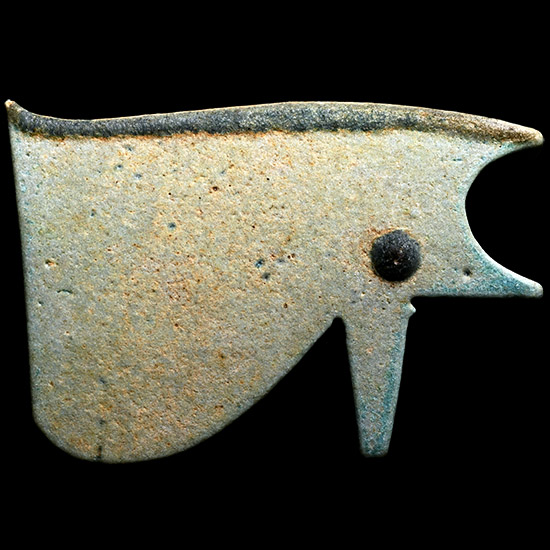
Large Egyptian Faience Eye of Horus Amulet
Third Intermediate Period, circa 1069-664 B.C.Estimate: £300 - 400 (+bp*)
Opening Bid: £150
The outline displays the characteristic wedjat-eye motif: a fusion of a human eye and eyebrow, combined with specific falcon markings: a tear-like drop extending down from the front of the lower lid and a stylised curl trailing from the base; longitudinally pierced for suspension. 7.15 grams, 41 mm
From a mid 20th century collection.
The wedjat-eye amulet depicts Horus’s healed eye, blending human and falconine features. Its ancient Egyptian name means ‘the one that is sound’. Myth holds that Seth wounded or took the eye, and Thoth later restored it. Believed to offer protection, healing, and regeneration, the popular amulet was worn by the living and the dead.
