
Loading, please wait...
Details
LOT 255467
Egyptian Blue Glazed Shabti
NEW KINGDOM, 1550-1070 B.C.
5 3/8 in. (146 grams, 13.8 cm).
Modelled with a rounded wig and sidelock; painted black detailing to the eyes, lips, collar and agricultural tools held in the crossed hands; painted vertical panel to lower body with hieroglyphic legend; repaired.
Provenance
Acquired on the UK art market, 1990s.
Private collection, New York, USA.
VETTING:
TimeLine Auctions follows a vetting process to ensure the authenticity and legality of all items, reinforcing our commitment to integrity and responsible trading. Each antiquity, antique, and coin lot undergoes thorough examination by a vetting committee of at least ten external specialists, professional trade association members, scientists, and archaeologists: Our Vetting Process
AUCTIONS:
TimeLine is a leading auction house specialising in antiquities, ancient art, collectables, natural history, coins, medals, and books. Our auctions offer museums, collectors, historians, and enthusiasts the opportunity to acquire unique and historically significant pieces.
LOT 255467
Egyptian Blue Glazed Shabti
Estimate £1,000 - 1,400€1,160 - 1,620 (for guidance only)$1,350 - 1,890 (for guidance only)
Opening Bid
£500 (EUR 580; USD 675) +BP*
RELATED LOTS
-
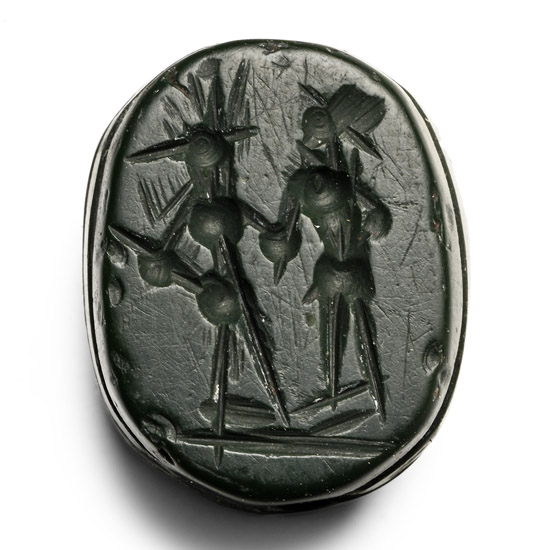
Egyptian Black Stone Scarab
Late Period Period, 664-332 B.C.Estimate: £60 - 80 (+bp*)
Opening Bid: £5
With linear detailing to the carapace, underside with drilled image of two figures holding hands on a baseline; supplied with a museum-quality impression. 2 grams, 13 mm
From the private collection of a European gentleman (1942-2024), formed since the 1970s. -
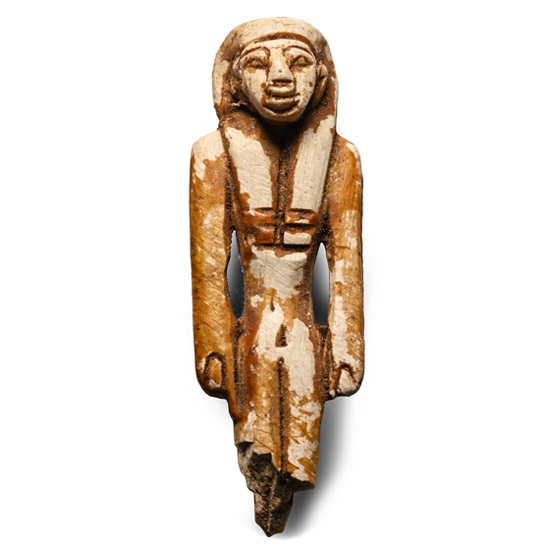
Egyptian Bone Figural Amulet of Goddess Nebhat
Late Period, 664-332 B.C.Estimate: £60 - 80 (+bp*)
Opening Bid: £5
Modelled as a standing figure wearing a lappet wig, hands resting along the body, dorsal pillar on the reverse. 4.23 grams, 42 mm
From the private collection of a European gentleman (1942-2024), formed since the 1970s. -
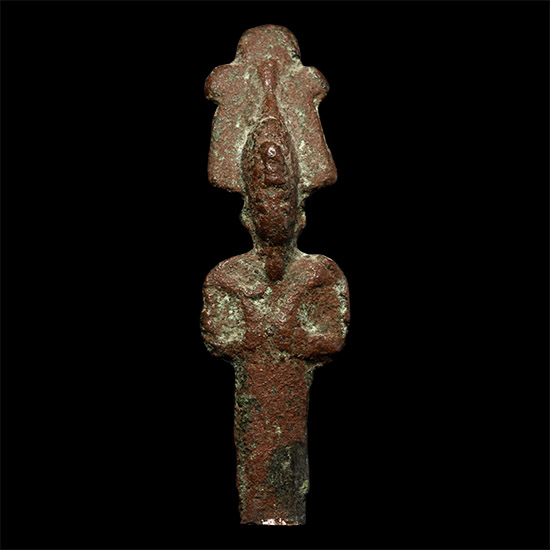
Egyptian Bronze Osiris Figure
Late-Ptolemaic Period, circa 664-30 B.C.Estimate: £40 - 60 (+bp*)
Opening Bid: £5
Modelled in the half-round in standing pose wearing the atef crown with flanking ostrich plumes and frontal uraeus; holding the crook (heka) and flail (nekhakha) regalia in his crossed hands; lower legs absent. 12.7 grams, 60 mm
From the private collection of a Canadian gentleman living in Essex, UK, formed since the 1920s-circa 1990. Property of an Essex lady until the the late 1990s; thence by descent. From the private collection of an Essex gentleman since the late 1990s.
