
Loading, please wait...


LOT 0677
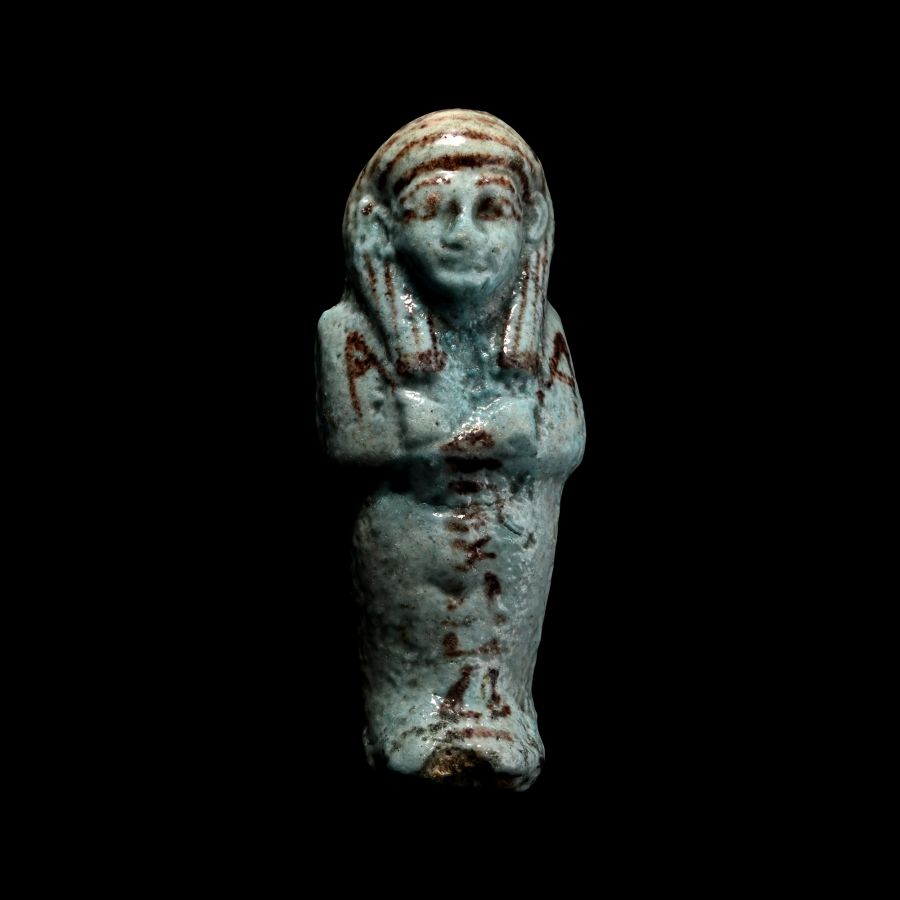
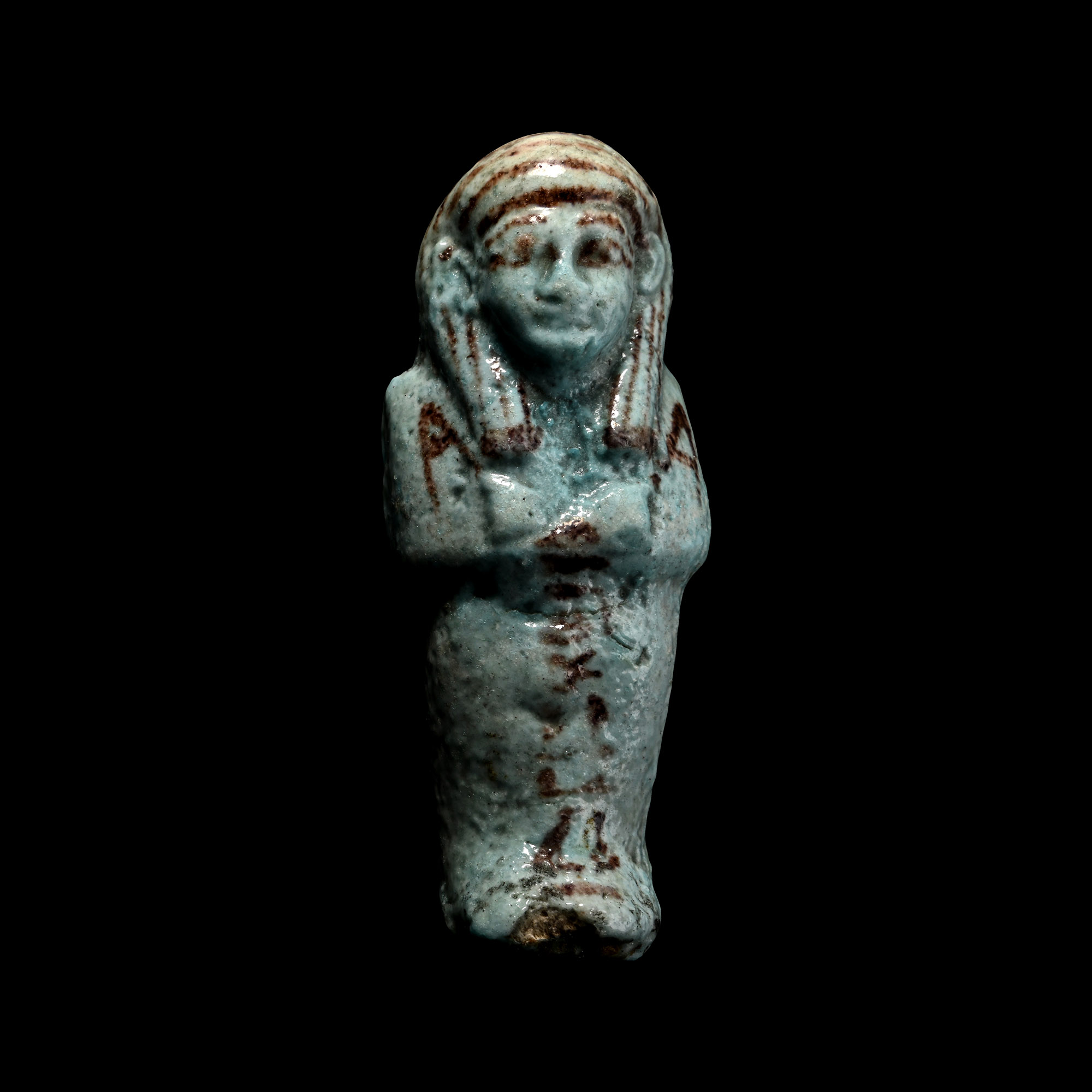
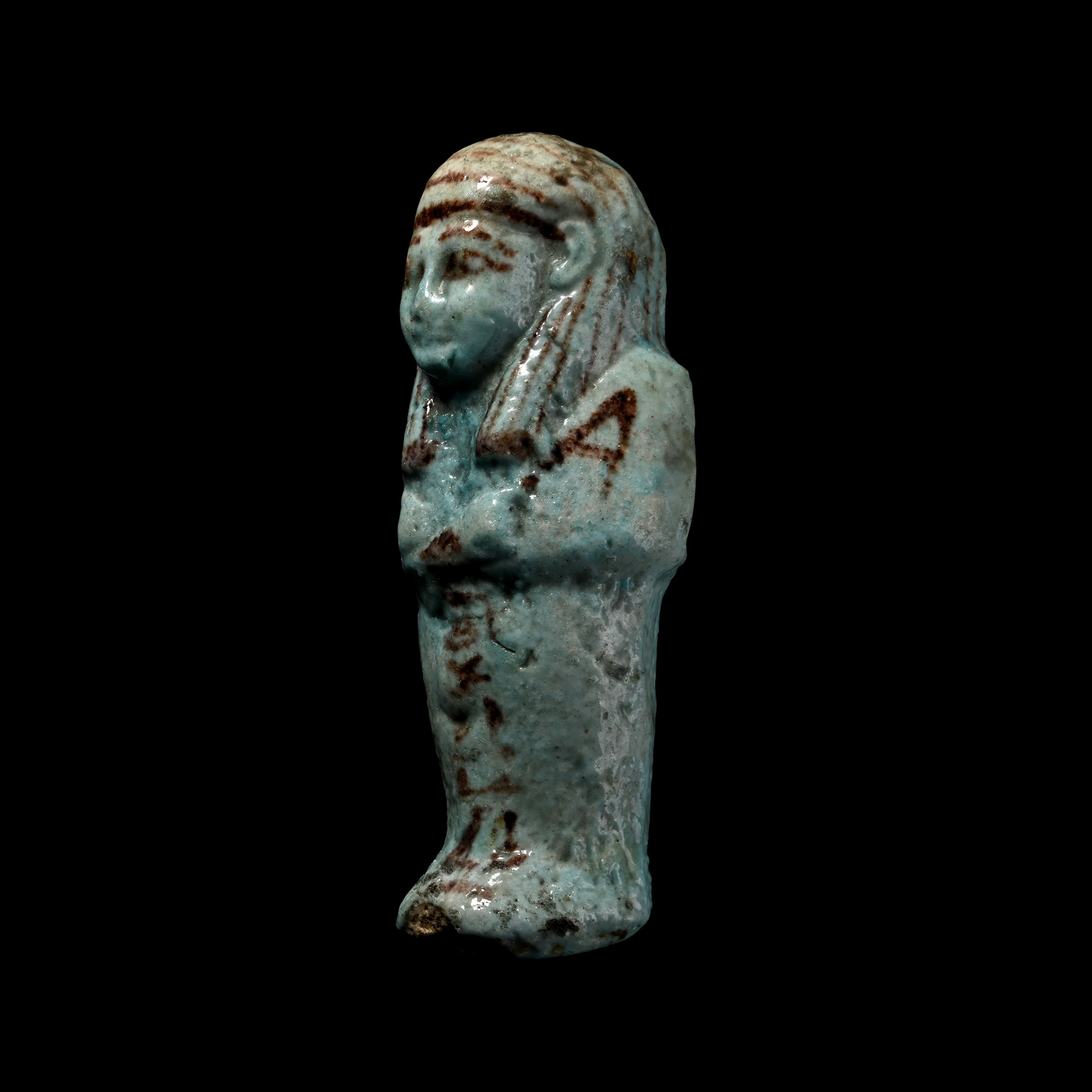
Egyptian Blue Glazed Shabti of Payefadjer
THIRD INTERMEDIATE PERIOD, 21ST DYNASTY, CIRCA 1070-945 B.C.
3 3/4 in. (93 grams, 96 mm).
Squat mummiform type with face framed by a tripartite wig, hands modelled in relief, holding agricultural tools applied in paint; seed-bag at the back; central vertical hieroglyphic inscription on the lower front reading: 'The Osiris, wab-(priest), lector-(priest), Payefadjer (pꜢy.f-Ꜥḏr), true of voice'.
ProvenanceEx Ms E.C.(1923-2014), Israel.
Inherited by her son D.L., Switzerland.
Cf. de Araújo, L.M., Estatuetas funerárias egípcias da XXI dinastia, Lisbon, 2003, pp. 622-623, nos. 28-29, are two examples of the same individual.
CONDITIONTimeLine Auctions follows a vetting process to ensure the authenticity and legality of all items, reinforcing our commitment to integrity and responsible trading. Each antiquity, antique, and coin lot undergoes thorough examination by a vetting committee of at least ten external specialists, professional trade association members, scientists, and archaeologists: Our Vetting Process
AUCTIONS:
TimeLine is a leading auction house specialising in antiquities, ancient art, collectables, natural history, coins, medals, and books. Our auctions offer museums, collectors, historians, and enthusiasts the opportunity to acquire unique and historically significant pieces.
LOT 0677
Egyptian Blue Glazed Shabti of Payefadjer
Estimate £500 - 600€580 - 700 (for guidance only)$680 - 810 (for guidance only)
Opening Bid
£275 (EUR 319; USD 371) ‡+BP*
-
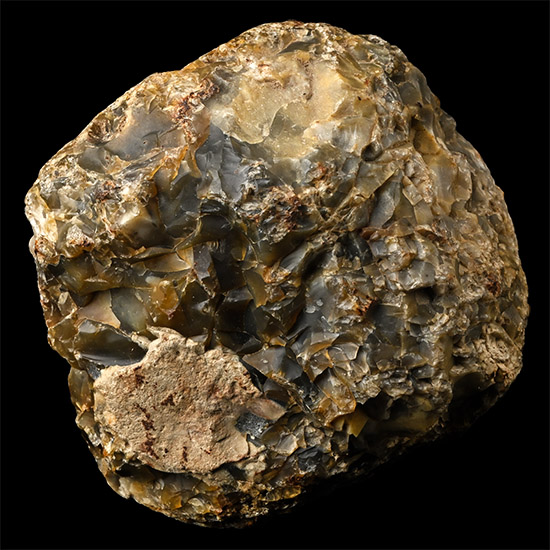
Egyptian Pecked Flint Hammerstone
Early Dynastic Period, circa 3,000 B.C.Estimate: £30 - 40 (+bp*)
Opening Bid: £5
Round in plan with some cortex. 140 grams, 48 mm
From the collection of A.D. Passmore (1879-1958), his collection of flints from the area of Stonehenge was donated to the Ashmolean Museum in the 1950s. From the private collection of Peter Clayton, FCILIP, Dip, Arch, FSA, FRNS, Hemel Hempstead, Hertfordshire, UK; formed since the late 1950s. Accompanied by a copy of an old handwritten information card by Peter Clayton. -
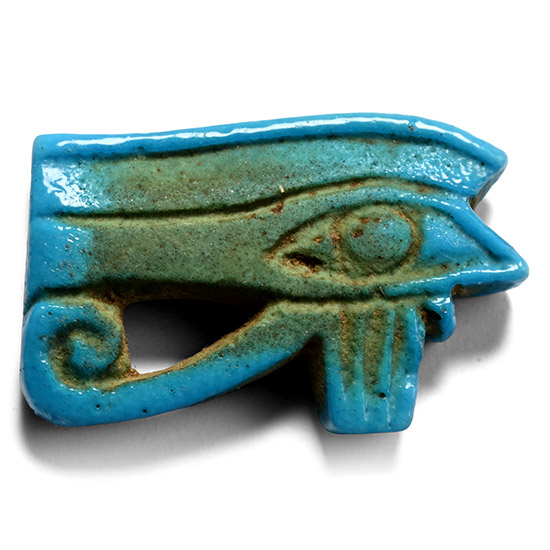
Egyptian Bright Blue Faience Eye of Horus Amulet
New Kingdom, 1504-1450 B.C.Estimate: £100 - 140 (+bp*)
Opening Bid: £5
Turquoise-glazed wedjat-eye, carved on one face; pierced longitudinally. 0.77 grams, 18 mm
Excavated from Egypt in 1914. From the private collection of Mr David Sams and his wife Elizabeth Kate Sams, gentry and amateur archaeologists who travelled to Egypt in 1914 with their daughter Ethel. Mr Sams and his wife led digging expeditions from which these items come, from the family estate of Mr and Mrs Sams, by direct descent to their granddaughter.
The wedjat-eye amulet depicts Horus’s healed eye, blending human and falcon features. Its ancient Egyptian name means ‘the one that is sound’. Myth says Seth wounded or took the eye, and Thoth later restored it. Believed to offer protection, healing, and regeneration, the popular amulet was worn by the living and the dead. -
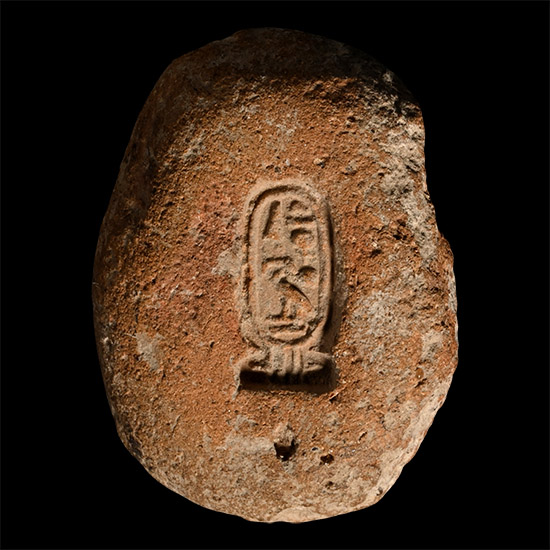
Egyptian Terracotta Mould with Impression of the Cartouche of Pharaoh Akhenaten
New Kingdom, 18th Dynasty, Amarna Period, 1379-1362 B.C.Estimate: £400 - 600 (+bp*)
Opening Bid: £5
Oblate type with incuse cartouche of Akhenaten. 4.96 grams, 27 mm
Acquired 7th February 1962, for 5 shillings. From the private collection of Peter Clayton, FCILIP, Dip, Arch, FSA, FRNS, Hemel Hempstead, Hertfordshire, UK; formed since the late 1950s. Accompanied by an old handwritten information card by Peter Clayton, collection no.87.
