
Loading, please wait...
LOT 0041
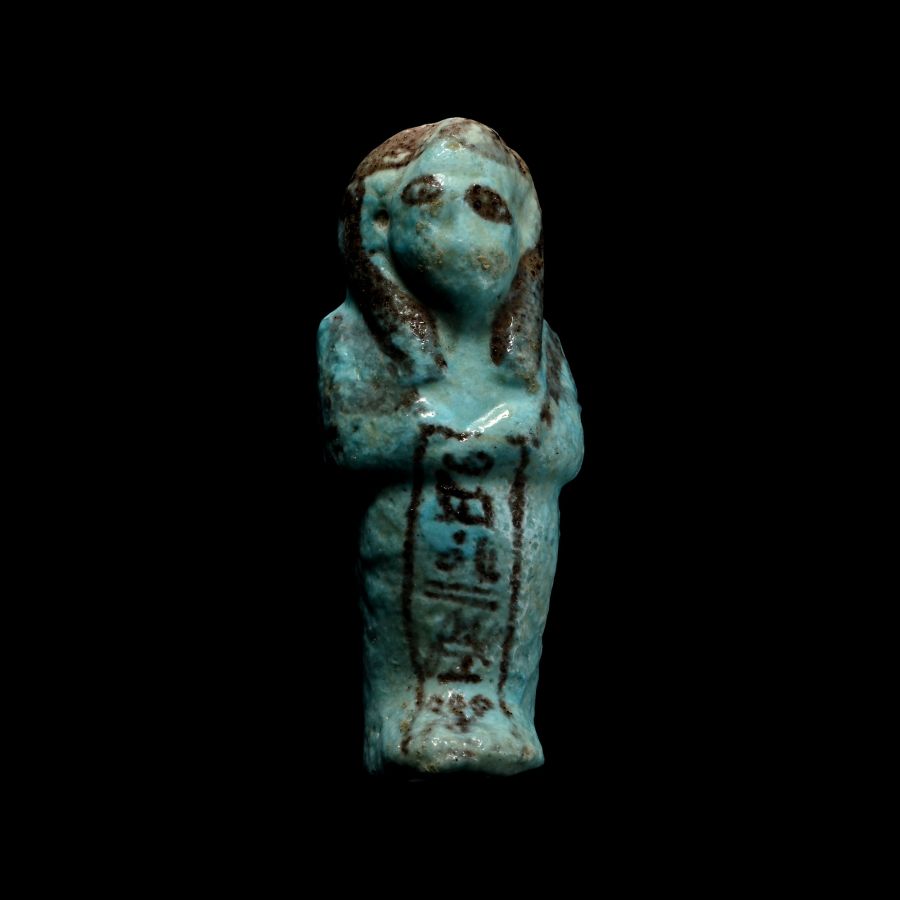
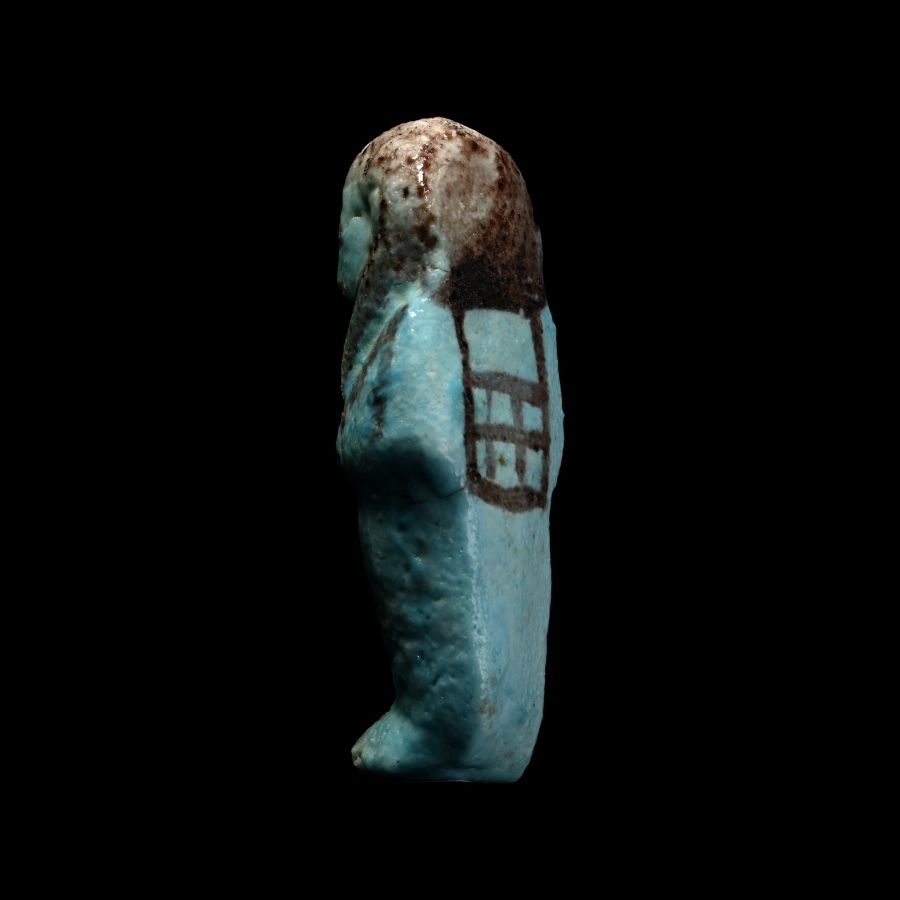
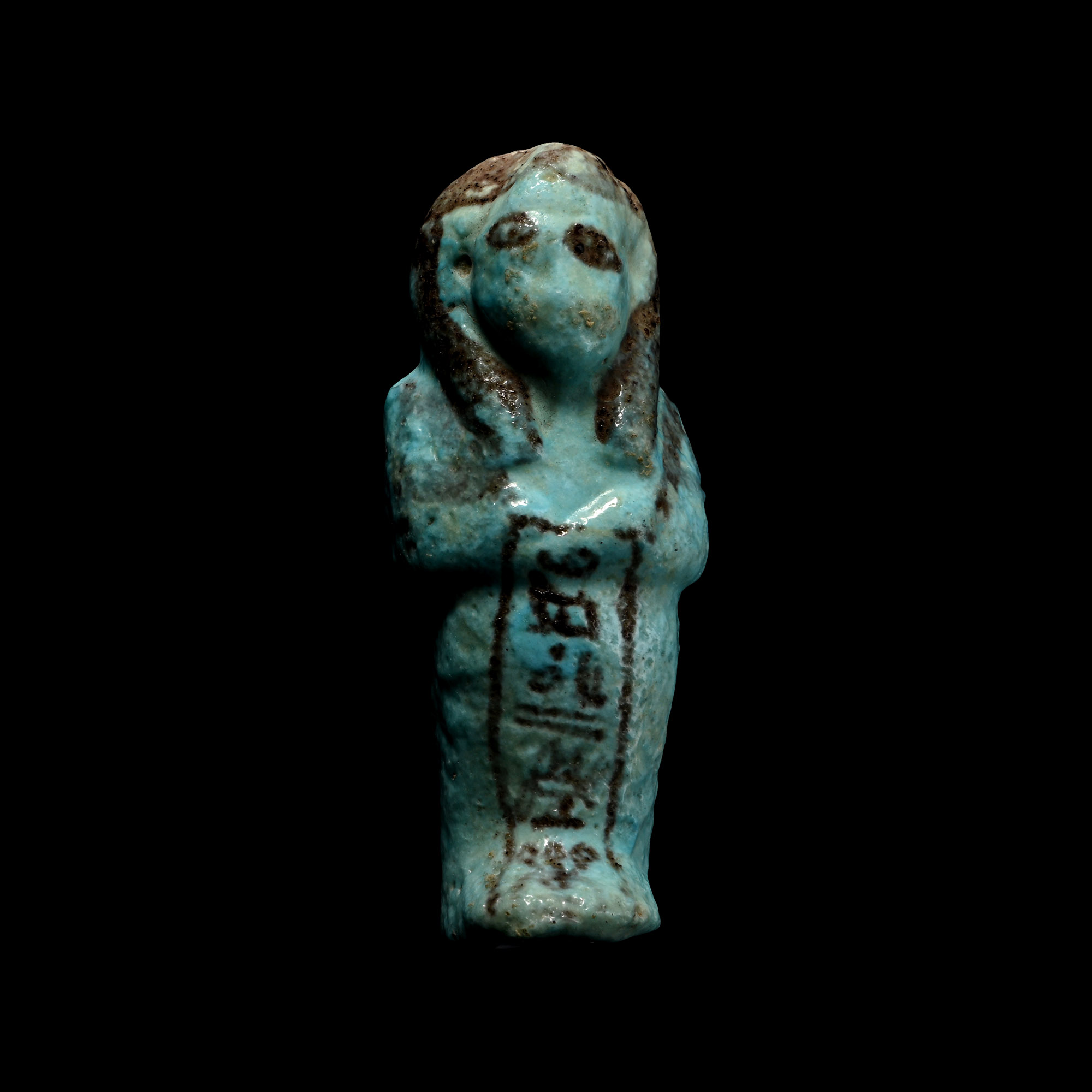
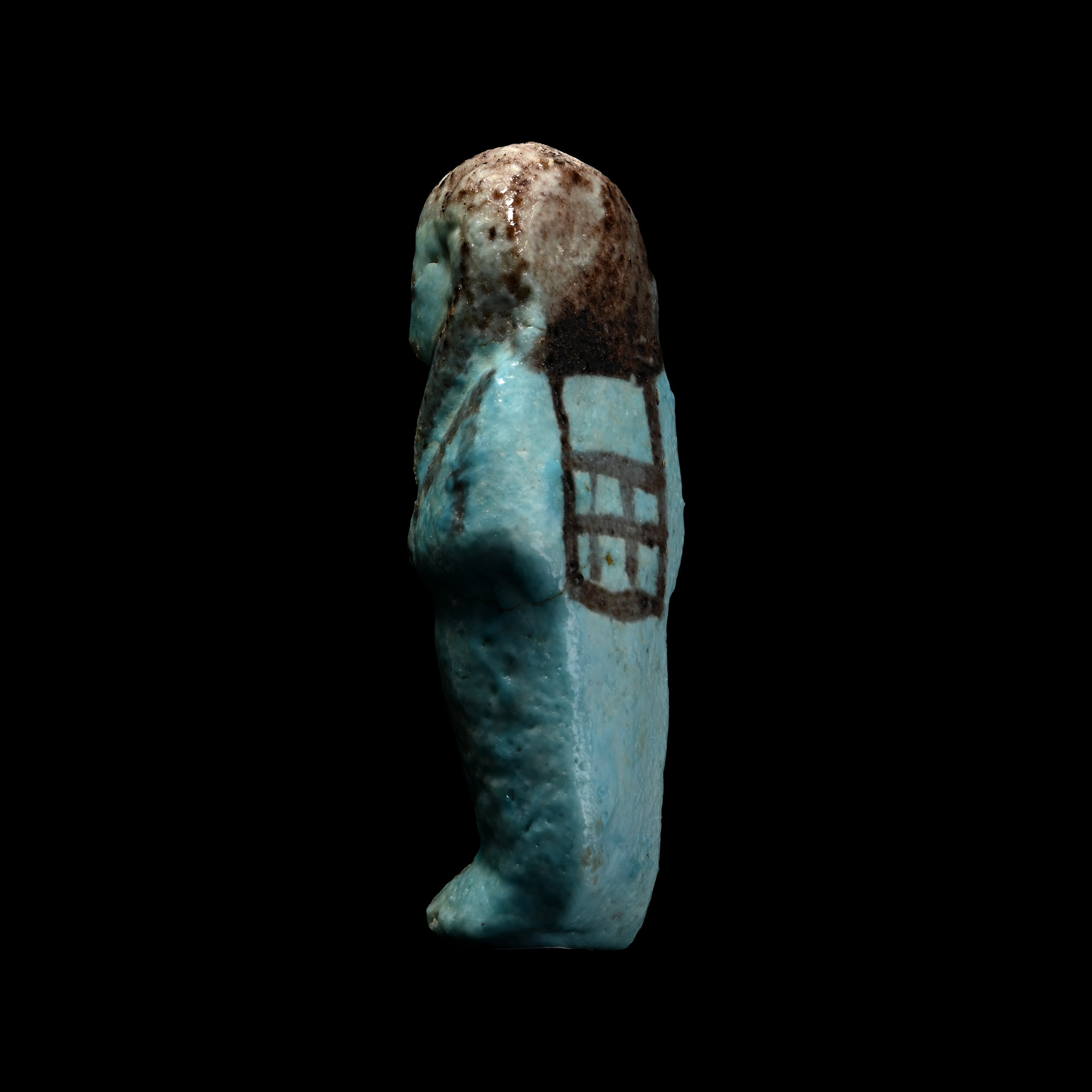
Egyptian Blue Glazed Shabti of Iset-em-khebit
THIRD INTERMEDIATE PERIOD, 21ST DYNASTY, CIRCA 1077-943 B.C.
3 5/8 in. (80 grams, 93 mm).
Squat mummiform figure wearing a black-painted tripartite wig, arms crossed, holding agricultural implements and a seed bag across the back, painted in black; a hieroglyphic panel on the lower body reading: 'The Osiris, Iset-em-khebit (Ꜣs.t-m-Ꜣḫ-bı͗.t)'.
ProvenanceEx Carl Leonhard Burckhardt-Reinhard (1902-1965), formed since 1922, Egypt.
Inherited by his son Christopher Burckhardt in 1966, Switzerland.
Since then in the possession of his wife, Switzerland.
Cf. Janes, G., The Shabti Collections 6: A Selection from the World Museum, Liverpool, Lymm, 2016, pp. 168-169, no. 77, for another comparable example.
FootnotesShabtis for Iset-em-khebit were recovered from the second 'Priest's of Amun Cache' at Deir el-Bahari.
CONDITIONTimeLine Auctions follows a vetting process to ensure the authenticity and legality of all items, reinforcing our commitment to integrity and responsible trading. Each antiquity, antique, and coin lot undergoes thorough examination by a vetting committee of at least ten external specialists, professional trade association members, scientists, and archaeologists: Our Vetting Process
AUCTIONS:
TimeLine is a leading auction house specialising in antiquities, ancient art, collectables, natural history, coins, medals, and books. Our auctions offer museums, collectors, historians, and enthusiasts the opportunity to acquire unique and historically significant pieces.
LOT 0041
Egyptian Blue Glazed Shabti of Iset-em-khebit
Estimate £600 - 800€700 - 930 (for guidance only)$810 - 1,080 (for guidance only)
Opening Bid
£320 (EUR 371; USD 432) ‡+BP*
-
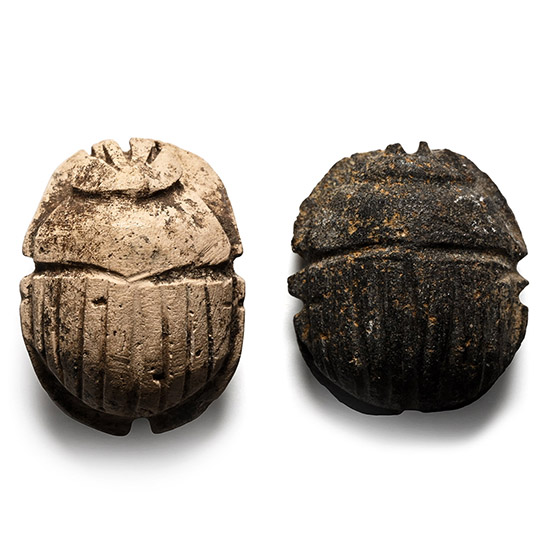
Egyptian Heart Scarab Group
Late Period, 664-332 B.C.Estimate: £120 - 170 (+bp*)
Opening Bid: £60
Comprising two naturalistically modelled scarabs with striated wing cases and ribbed undersides. 7.5 grams total, 18-20 mm
From the collection of a gentleman, acquired on the London art market in the 1990s.
The scarab amulet was a powerful symbol of rebirth, transformation, and protection in ancient Egypt. Modeled after the beetle associated with the sun god Khepri, it represented the cycle of life and regeneration. From the Middle Kingdom (c. 2050 BCE) onwards, scarabs served as funerary amulets, personal charms, and seals—often inscribed with prayers or names—reflecting both spiritual beliefs and daily life. -
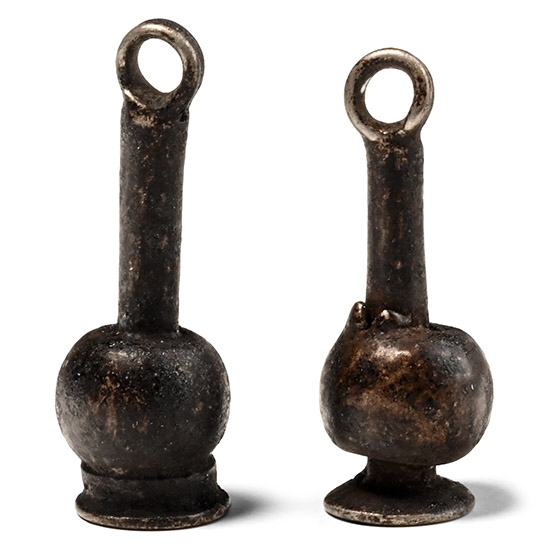
Egyptian Silver Poppy Amulet Pair
Late Period, 664-332 B.C.Estimate: £80 - 100 (+bp*)
Bids: 1 | Current Bid: £5
Each a bulbous poppy-head with a loop at the apex. 2.04 grams total, 17-18 mm
Ex mid 19th century collection. -
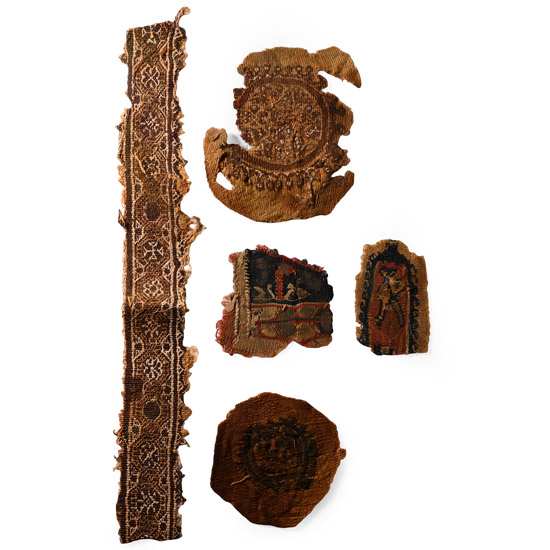
Egyptian Coptic Textile Fragments of Orbiculi, Segementa and Tablia from a Tunic with Animals, Geometric and Cross Decoration
Circa 6th-8th century A.D.Estimate: £100 - 140 (+bp*)
Bids: 1 | Current Bid: £5
Comprising a small orbiculus, with a lion, green on brown linen; fragment of a clavus, in red, yellow, green wool, s-torsion, with figures and scalloped borders; a large orbiculus, in red wool on purple linen, dentilled edges; a fragment of a tapestry with vegetal ornaments in red, yellow and green wool; a long tunic segmentum with crosses and stars inside lozenges, in yellow and dark purple. 17.94 grams total, 7.6-35.5 cm
Acquired 1970s-1996. Property of a North American collector. London collection, 2016.
The fragments are decorative parts of tunics. These are fabrics of great decorative finesse, with some elements displaying an unusual and extremely well-preserved colour palette. The large segmentum with crosses most likely belonged to an ecclesiastical garment.
