
Loading, please wait...
LOT 0021
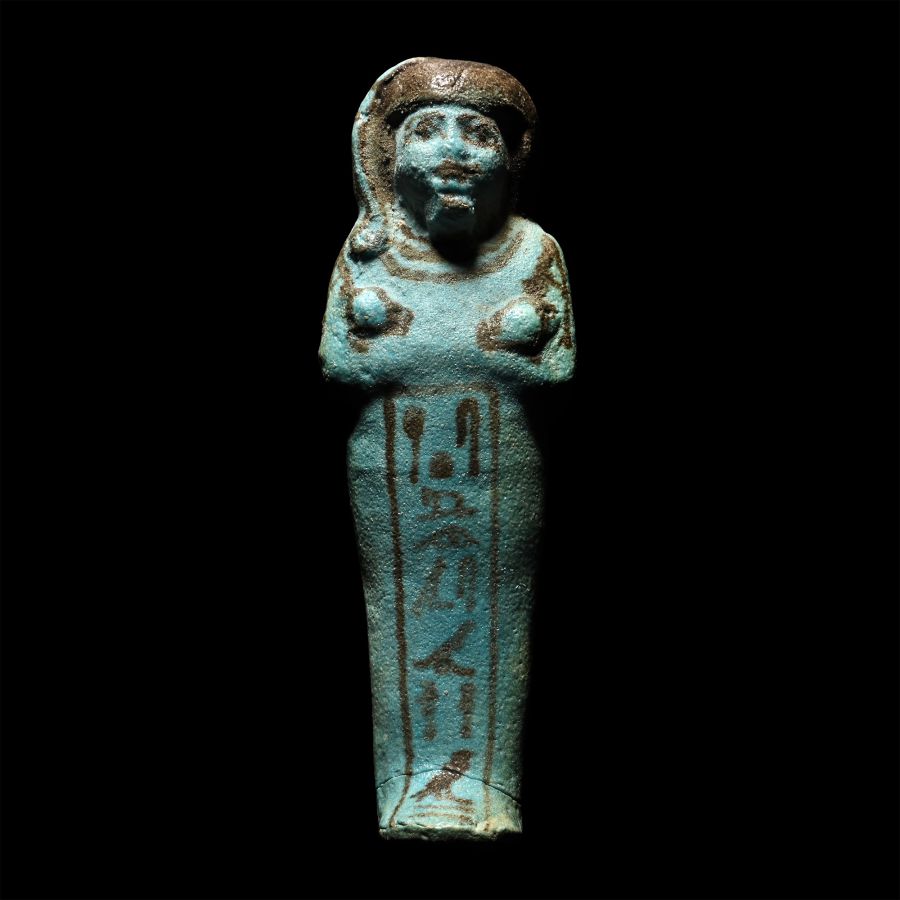
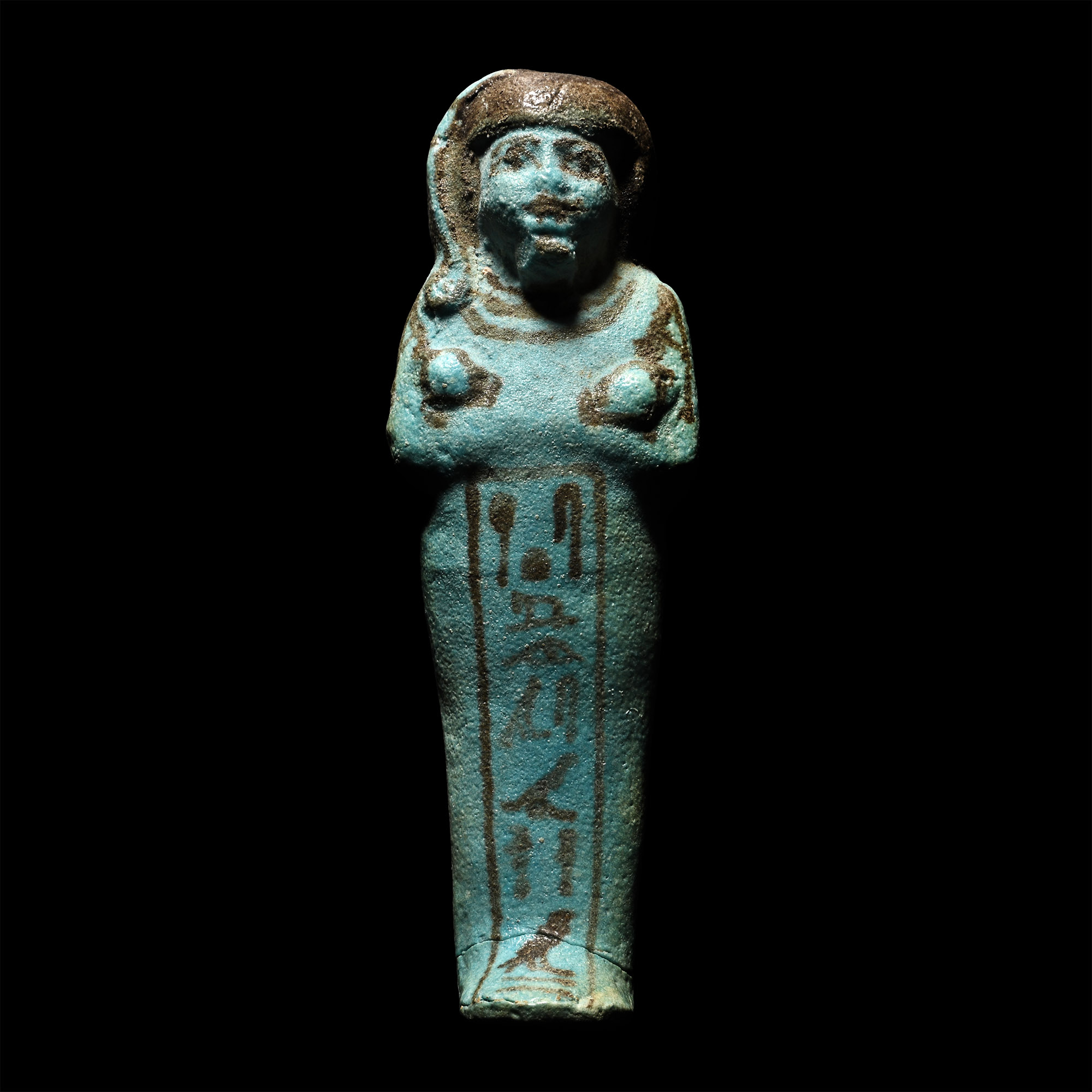
Egyptian Blue Glazed Shabti of Hor
NEW KINGDOM, 19TH DYNASTY, 13TH CENTURY B.C.
5 3/8 in. (146 grams, 13.8 cm).
Modelled with a rounded wig and sidelock; painted black detailing to the eyes, lips, collar and agricultural tools held in the crossed hands; painted vertical panel to lower body with hieroglyphic legend “The illuminated one, the Osiris, the sem priest, the great director of craftsmen, Hor, justified” (sḥḏ wsı͗r sm wr ḫrp(w) ḥmw(w)t ḥr mꜣꜥ-ḫrw); repaired.
ProvenanceAcquired on the UK art market, 1990s.
Private collection, New York, USA.
Although the inscription names the owner as Hor, it seems likely that this shabti was made for a high official named Hori. Several sem priests named Hori are known. It seems plausible that this shabti belonged to the Hori who was the son of Prince Khaemwaset, son of Ramesses II, since a similar example was found alongside those of the prince in a chamber in the Serapeum (Mariette, A., Le Sérapéum du Memphis, Paris, 1857, pl. 10).
CONDITIONTimeLine Auctions follows a vetting process to ensure the authenticity and legality of all items, reinforcing our commitment to integrity and responsible trading. Each antiquity, antique, and coin lot undergoes thorough examination by a vetting committee of at least ten external specialists, professional trade association members, scientists, and archaeologists: Our Vetting Process
AUCTIONS:
TimeLine is a leading auction house specialising in antiquities, ancient art, collectables, natural history, coins, medals, and books. Our auctions offer museums, collectors, historians, and enthusiasts the opportunity to acquire unique and historically significant pieces.
LOT 0021
Egyptian Blue Glazed Shabti of Hor
Estimate £1,500 - 2,000€1,740 - 2,320 (for guidance only)$2,030 - 2,700 (for guidance only)
Opening Bid
£750 (EUR 870; USD 1,013) +BP*
-
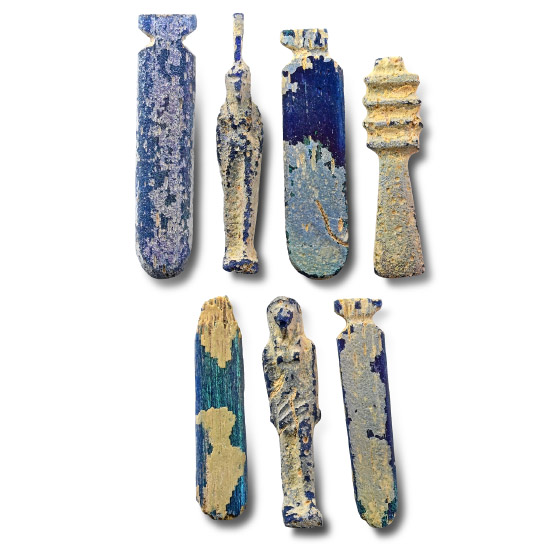
Egyptian Blue Glass Inlay Collection
Late Period-Ptolemaic Period, circa 664-30 B.C.Estimate: £300 - 400 (+bp*)
Opening Bid: £150
Comprising: four vessel- or cartouche-shaped inlays, a djed pillar, and two standing figures. 8.98 grma total, 31-37 mm
From a 20th century UK collection. -
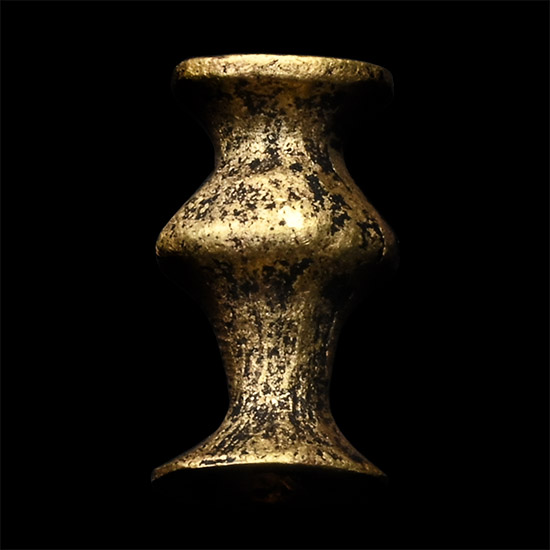
Egyptian Gold Bead Amulet
Late New Kingdom-Third Intermediate Period, circa 1069-900 B.C.Estimate: £150 - 200 (+bp*)
Opening Bid: £75
Formed as a poppy seed with flaring terminals. 0.91 grams, 9 mm
Ex French art market, 1920s. -
.jpg)
Egyptian Predynastic Stone Frog
4th millennium B.C.Estimate: £1,200 - 1,700 (‡+bp*)
Opening Bid: £600
Pyramidal in form with shallow-carved hip and facial detailing. 537 grams, 81 mm
with Artemis Gallery, Munich, Germany, 2001. Private collection, Europe. This lot has been checked against the Interpol Database of stolen works of art and is accompanied by a search certificate number no.12580-232124.
The frog had a great role in ancient Egyptian mythology and was connected with the mythology of creation. A number of gods and goddesses were connected with the frog such as Heqet, Ptah, and Heh. The connection with the god Ptah as a god of creation was probably due to the idea that Ptah was the only god who created the world in ancient Egypt through his heart and his tongue. Every work of the god came about through what his heart devised and his tongue commanded. Frogs were often associated with Hekat, deity of birth and fecundity. Amulets of frogs were frequent votive gifts at such Predynastic and Archaic sites at Abydos, Naqada, and Saqqara.
