
Loading, please wait...
LOT 0404
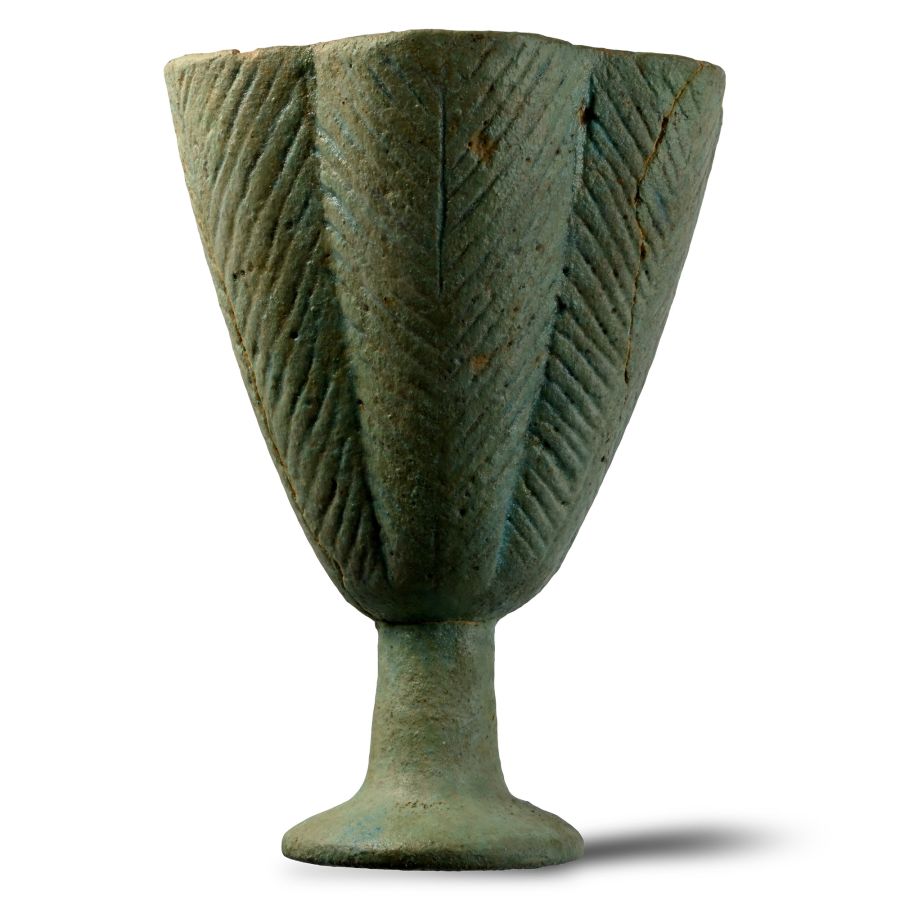
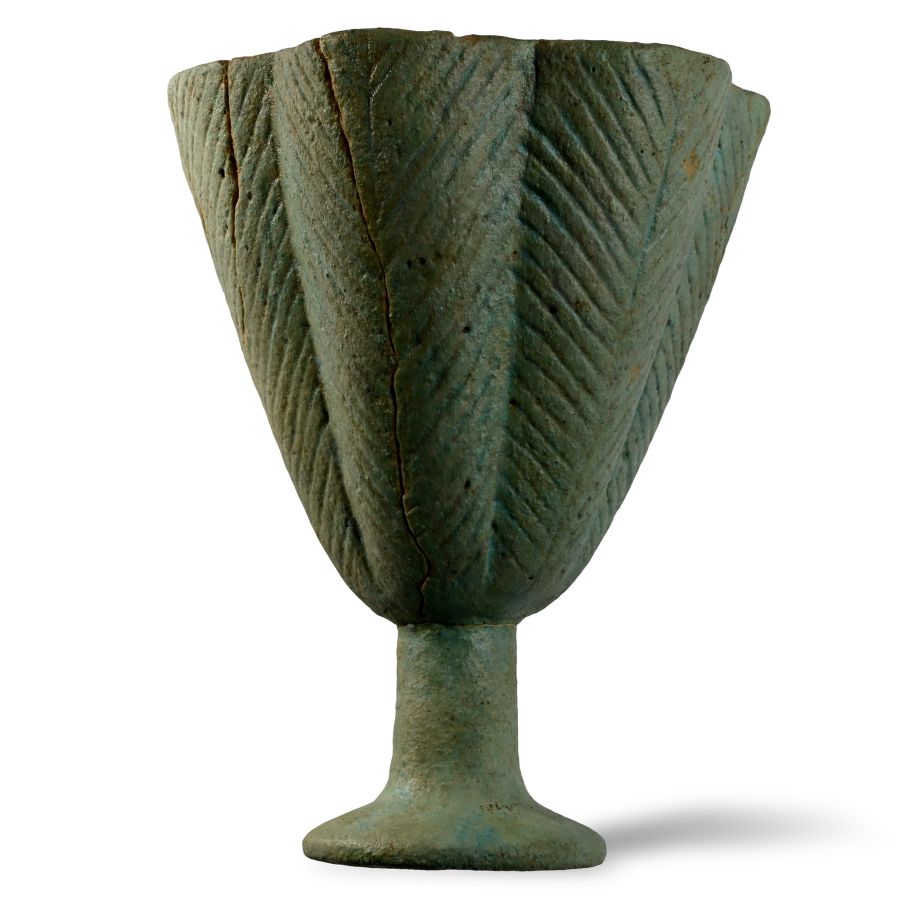
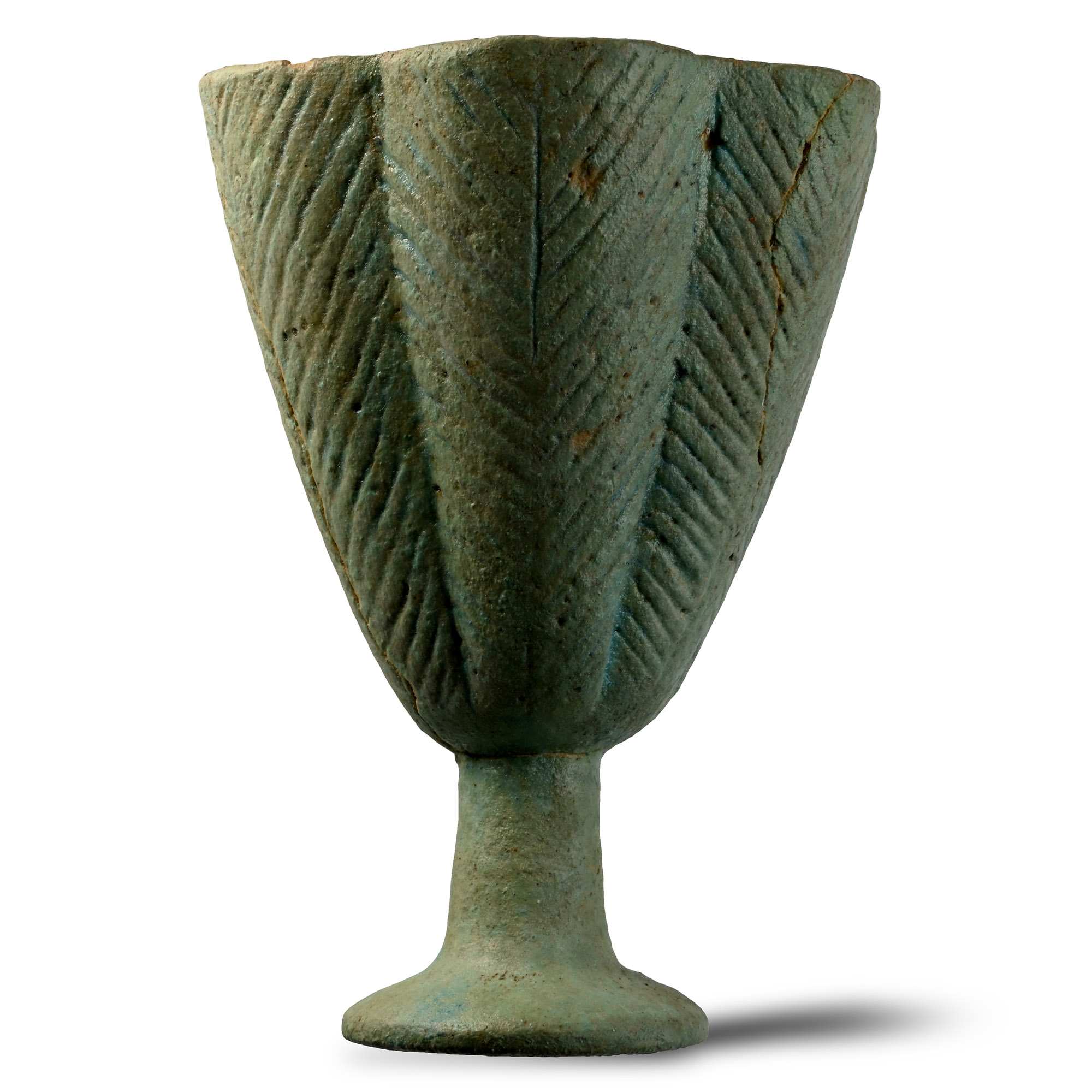
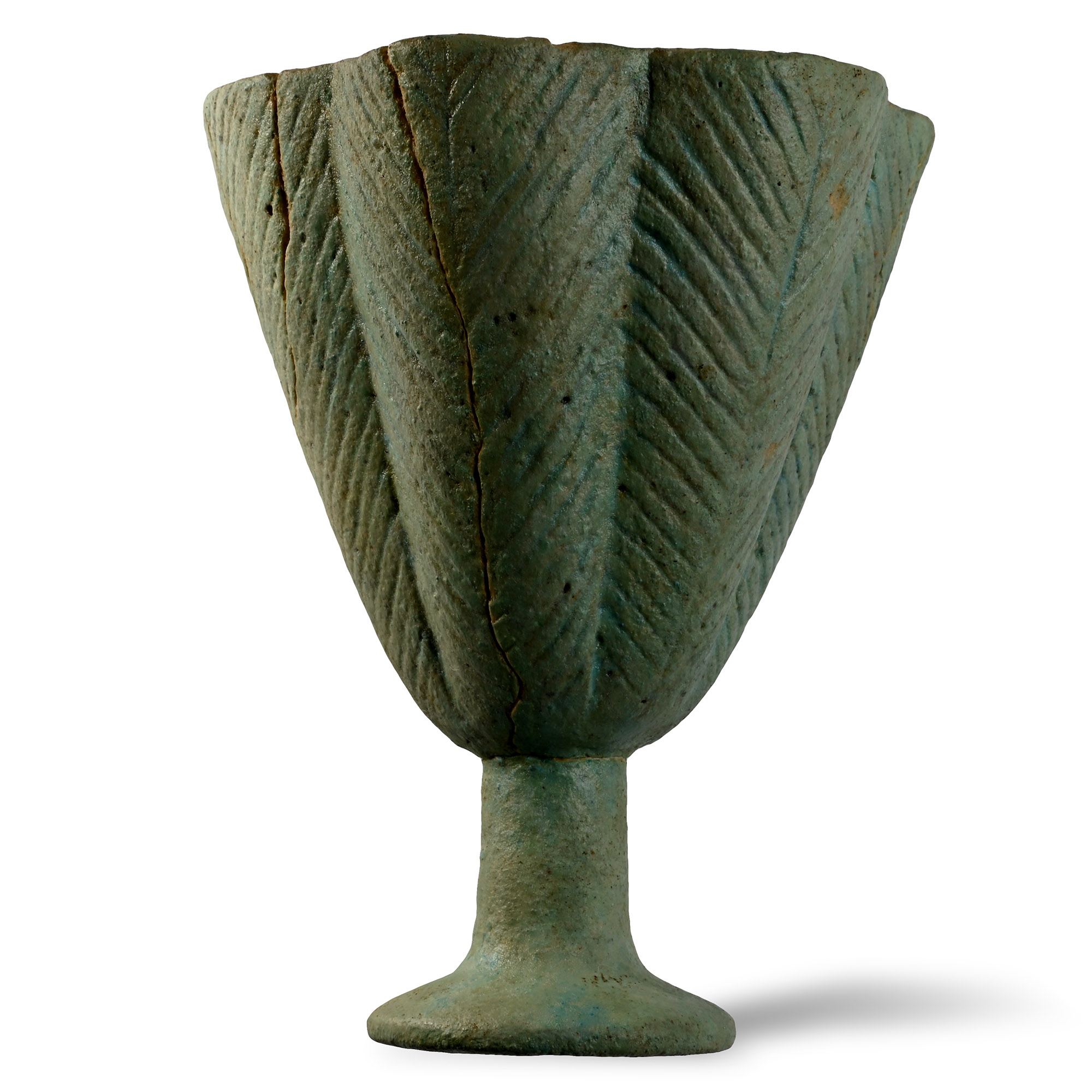
Egyptian Blue-Glazed Faience White Lotus Chalice
NEW KINGDOM-THIRD INTERMEDIATE PERIOD, 1315-945 B.C.
4 3/4 in. (205 grams, 12.1 cm).
The lotiform cup modelled as an open lotus flower with incised petal detailing to the outer face, short stem and flared foot; some restoration.
ProvenanceAcquired 1970s-1996.
Property of a North American collector.
London collection, 2016.
This lot has been checked against the Interpol Database of stolen works of art and is accompanied by search certificate number no.12937-243177.
Cf. Freed, R., et al., Egypt’s Golden Age, the Art of Living in the New Kingdom, 1558-1085 B.C, Boston, 1982, p.147, no.147, for a similar pale blue faience white lotus chalice; S., Reeves, N., and Quirke, S., Egyptian Art at Eton College: Selections from the Myers Museum, Windsor/New York, 1999, p.39, no.56, for a squatter version of this chalice style in deep blue faience.
FootnotesFaience chalices shaped like the flowers of the white lotus (Nymphaea albicans) first appeared in the 18th Dynasty and are believed to be drinking vessels.
CONDITIONTimeLine Auctions follows a vetting process to ensure the authenticity and legality of all items, reinforcing our commitment to integrity and responsible trading. Each antiquity, antique, and coin lot undergoes thorough examination by a vetting committee of at least ten external specialists, professional trade association members, scientists, and archaeologists: Our Vetting Process
AUCTIONS:
TimeLine is a leading auction house specialising in antiquities, ancient art, collectables, natural history, coins, medals, and books. Our auctions offer museums, collectors, historians, and enthusiasts the opportunity to acquire unique and historically significant pieces.
LOT 0404
Egyptian Blue-Glazed Faience White Lotus Chalice
Estimate £4,000 - 6,000€4,640 - 6,960 (for guidance only)$5,400 - 8,100 (for guidance only)
-
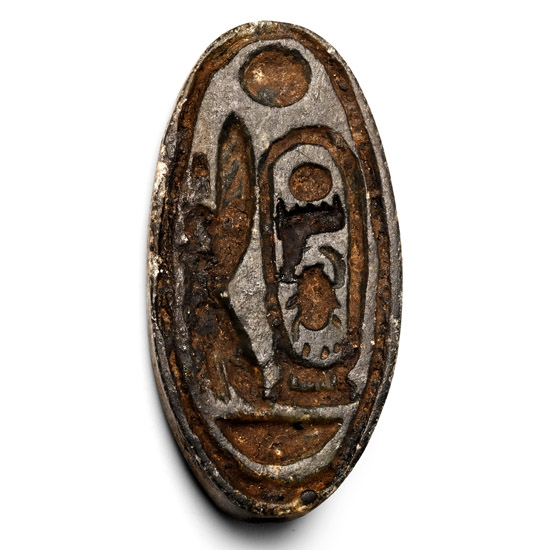
Egyptian Stone Scaraboid with Cartouche of Thutmose IV
New Kingdom, 18th Dynasty, circa 1415 B.C.Sold for (Inc. bp): £260
Keeled body pierced longitudinally, underside with cartouche for Thutmose IV (Men-kheperru-re) and other hieroglyphs. 5.79 grams, 34 mm
From the collection of a gentleman, acquired on the London art market in the 1990s. -
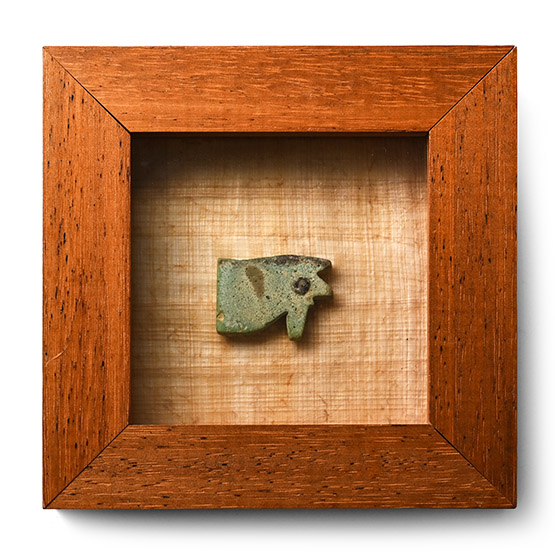
Framed Egyptian Faience Eye of Horus Amulet
Late Period-Ptolemaic Period, 664-30 B.C.Sold for (Inc. bp): £65
The amulet in blue-green faience with black detailing, set in a glazed wooden frame with modern papyrus backing. 207 grams total, 12.2 x 12.3 cm including frame
Acquired from Ancient Art, London, UK. From the collection of a Nottingham, UK, collector, established from the early 2000s. Accompanied by the original Ancient Art certificate of authenticity. -
.jpg)
Egyptian Green Stone Scarab with Eye of Horus
New Kingdom, 1550-1070 B.C.Sold for (Inc. bp): £156
With mouth and leg detailing to the edges, incised border enclosing a hatched eye and brow motif in an unusual style. 1.4 grams, 15 mm
From an old English collection. Ex Fellows Auctions, 31 January 2023, no.950. Private collection, London, UK.
