
Loading, please wait...
LOT 0403
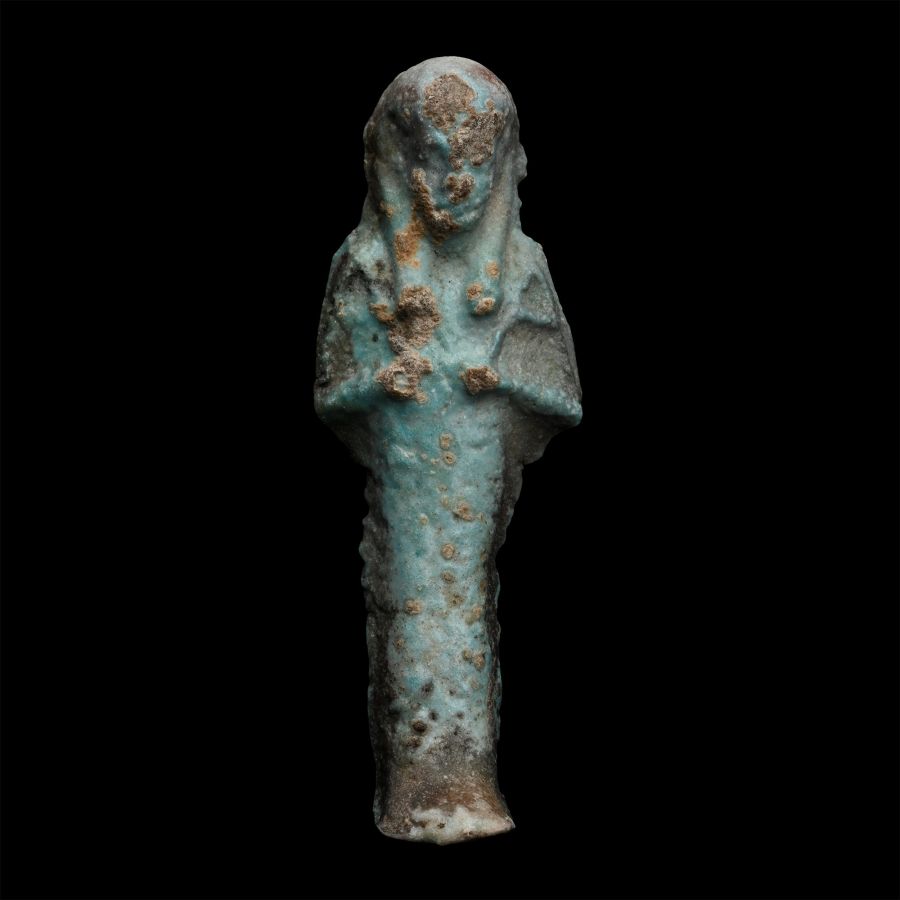
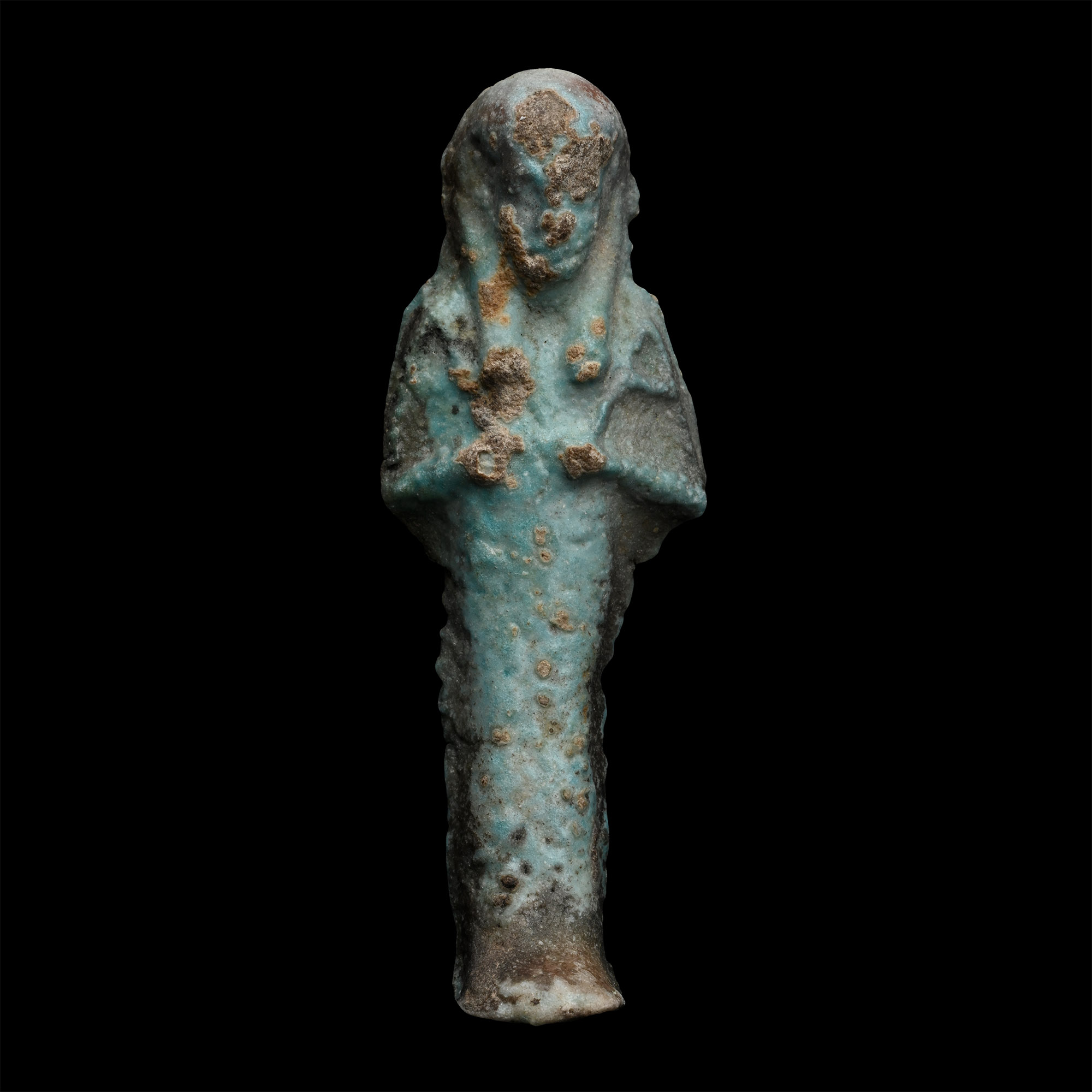
Egyptian Blue-Glazed Faience Shabti
PTOLEMAIC PERIOD, 332-30 B.C.
2 3/4 in. (9.43 grams, 70 mm).
Plano-convex in section with plain back, mummiform type with agricultural tools. [No Reserve]
ProvenanceAcquired on the UK art market before 2000.
Property of an Essex, UK, gentleman.
TimeLine Auctions follows a vetting process to ensure the authenticity and legality of all items, reinforcing our commitment to integrity and responsible trading. Each antiquity, antique, and coin lot undergoes thorough examination by a vetting committee of at least ten external specialists, professional trade association members, scientists, and archaeologists: Our Vetting Process
AUCTIONS:
TimeLine is a leading auction house specialising in antiquities, ancient art, collectables, natural history, coins, medals, and books. Our auctions offer museums, collectors, historians, and enthusiasts the opportunity to acquire unique and historically significant pieces.
-
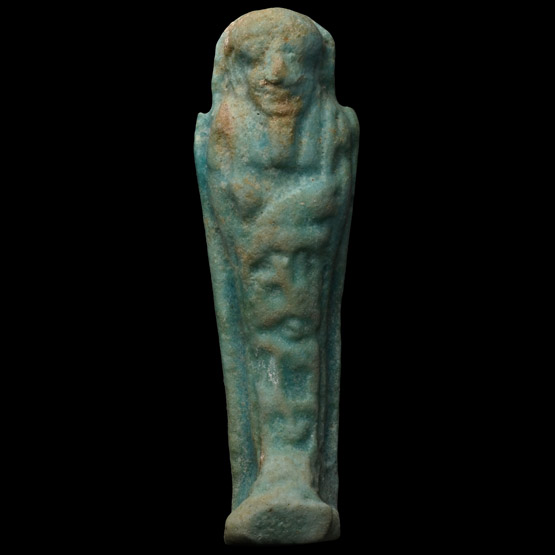
Egyptian Blue-Glazed Faience Shabti with Hieroglyphs
Late Period-Ptolemaic Period, 664-30 B.C.Sold for (Inc. bp): £144
Plano-convex in section with dorsal plaque, impressed hieroglyphs to lower body. 22.14 grams, 72 mm
Acquired on the UK art market before 2000. Property of an Essex, UK, gentleman. -
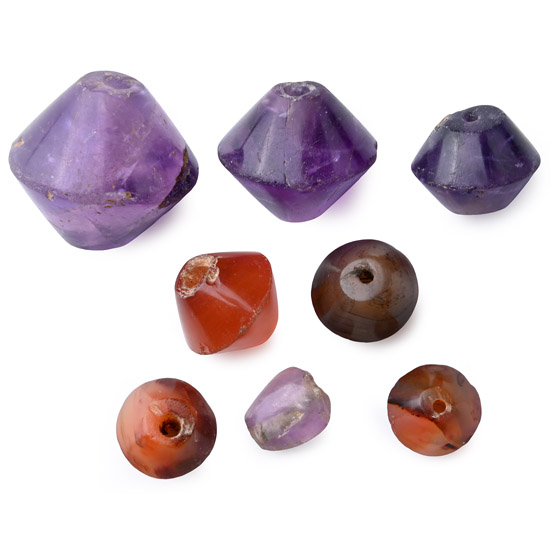
Egyptian Amethyst and Carnelian Bead Group
New Kingdom, 18th Dynasty, circa 1550-1292 B.C.Sold for (Inc. bp): £442
Comprising three biconical amethyst beads, four biconical carnelian beads and one teardrop-shaped amethyst bead. 13.57 grams total, 7.40-16.99 mm
From the private collection of a European gentleman (1942-2024), formed since the 1970s. -
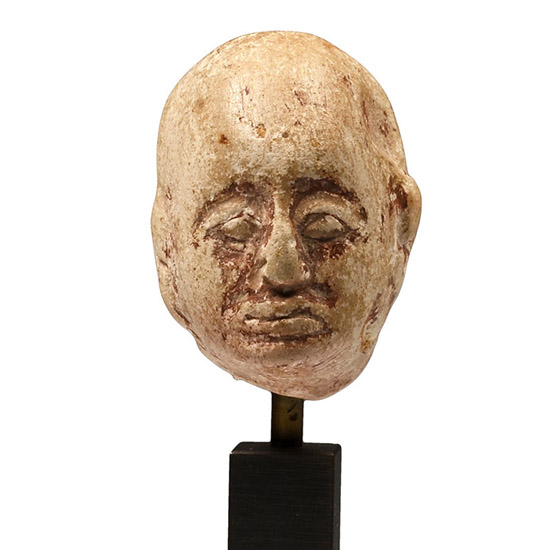
Egyptian Stone Head of a Man
Hyksos Period, circa 1648-1540 B.C.Sold for (Inc. bp): £286
A miniature male head with high eyebrows, large eyes, and protruding nose and mouth; traces of polychrome; inked collector's number '46' on the back; mounted on a custom-made display stand. 76 grams total, 92 mm including stand
Collection of Ambassador G.P., Nr.203, before 1965. with Galerie Rhéa, Zurich, Switzerland.
