
Loading, please wait...
LOT 0547
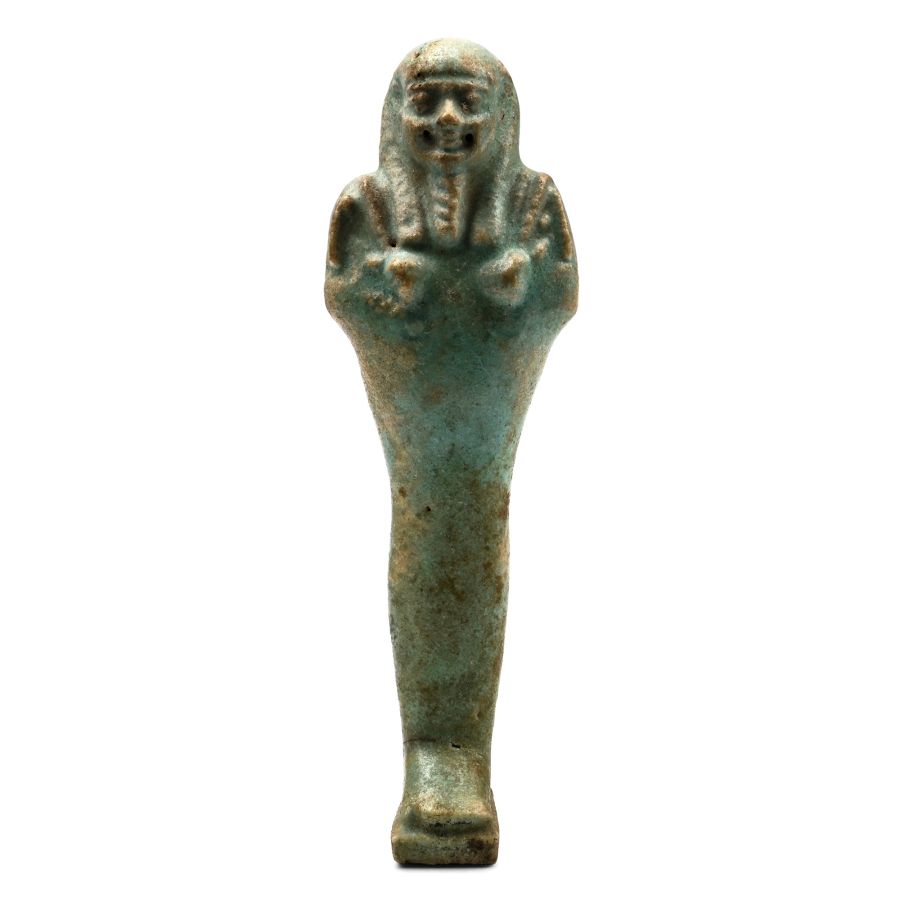
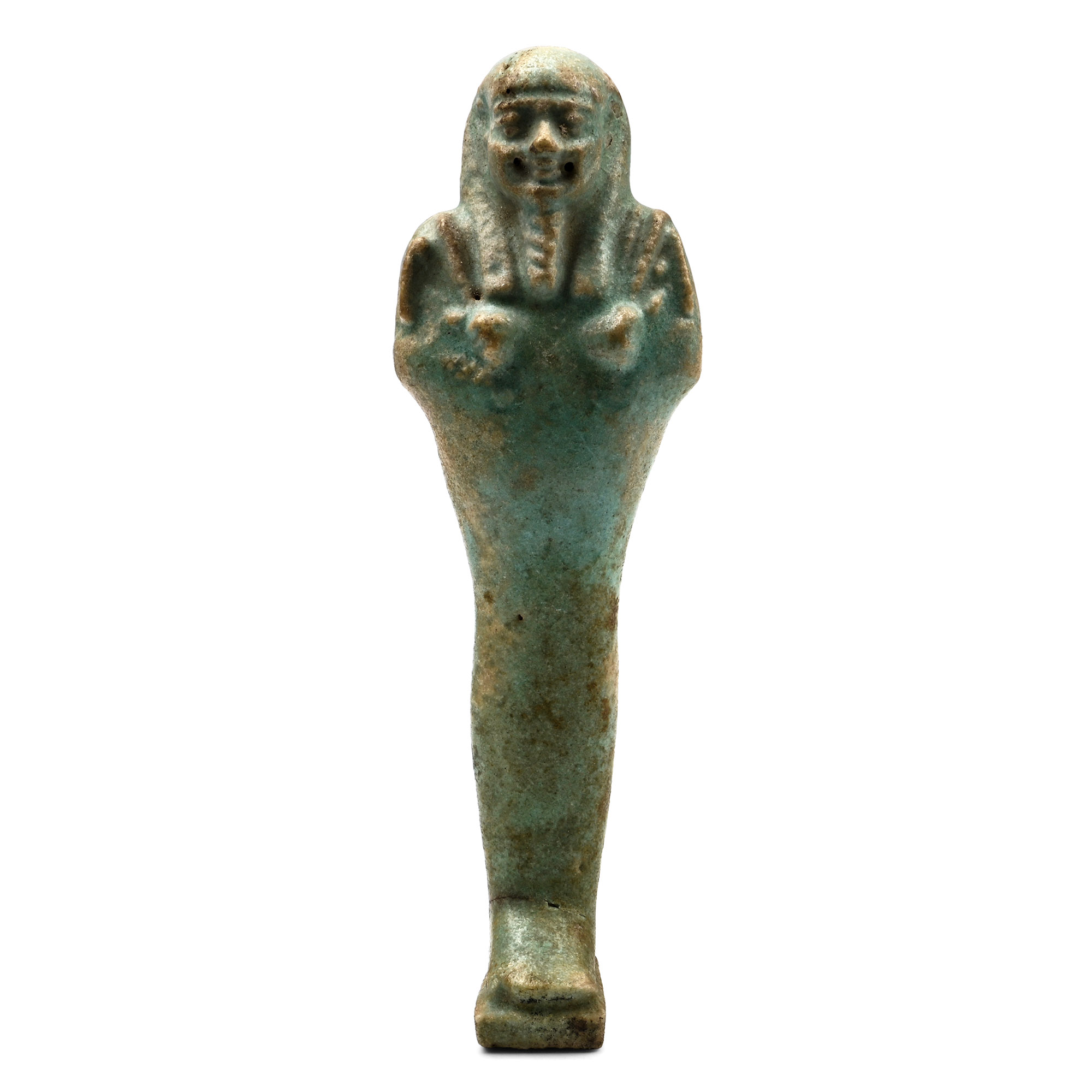
Egyptian Blue Glazed Faience Shabti
PTOLEMAIC PERIOD, CIRCA 305-30 B.C.
4 7/8 in. (72 grams, 12.5 cm).
Characteristic mummiform figure wearing a tripartite wig and a false beard, with a seed-bag suspended over the shoulder, a plain dorsal column, and with arms crossed and hands holding agricultural tools.
ProvenanceFrom the collection of a late Tavistock, Devon, UK, gentleman, formed from the 1990s.
Accompanied by an old handwritten date note on British Museum, Department of Egyptian Antiquities headed paper, where the second part relates to this item.
Cf. Lacovara, P., and Markowitz, Y.J., Jewels of the Nile: Ancient Egyptian Treasures from the Worcester Art Museum, Worcester MA, 2020, p. 183 (no. 1925.563), for a shabti of virtually identical form.
CONDITIONTimeLine Auctions follows a vetting process to ensure the authenticity and legality of all items, reinforcing our commitment to integrity and responsible trading. Each antiquity, antique, and coin lot undergoes thorough examination by a vetting committee of at least ten external specialists, professional trade association members, scientists, and archaeologists: Our Vetting Process
AUCTIONS:
TimeLine is a leading auction house specialising in antiquities, ancient art, collectables, natural history, coins, medals, and books. Our auctions offer museums, collectors, historians, and enthusiasts the opportunity to acquire unique and historically significant pieces.
-
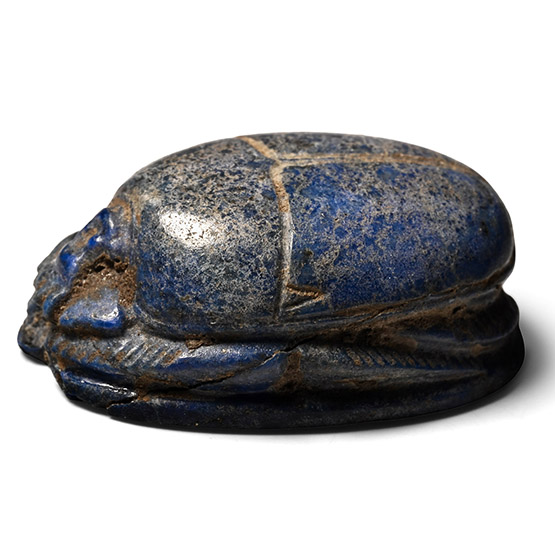
Egyptian Lapis Lazuli Scarab
Late Period, 664-332 B.C.Sold for (Inc. bp): £715
Carved in the round with longitudinal piercing, ellipsoid base. 12.8 grams, 30 mm
Ex early 20th century collection. -
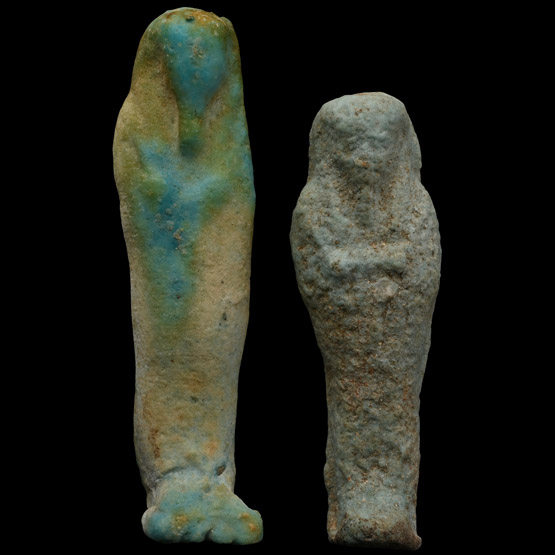
Egyptian Faience Shabti Group
Ptolemaic Period, 332-30 B.C.Sold for (Inc. bp): £117
Comprising two blue mummiform figures with their arms crossed at the chest and wearing a tripartite wig and a false beard. 20 grams total, 58-68 mm
Ex H Norri collection, Milton Keynes, Bedfordshire, UK, 1980s-1990s. -
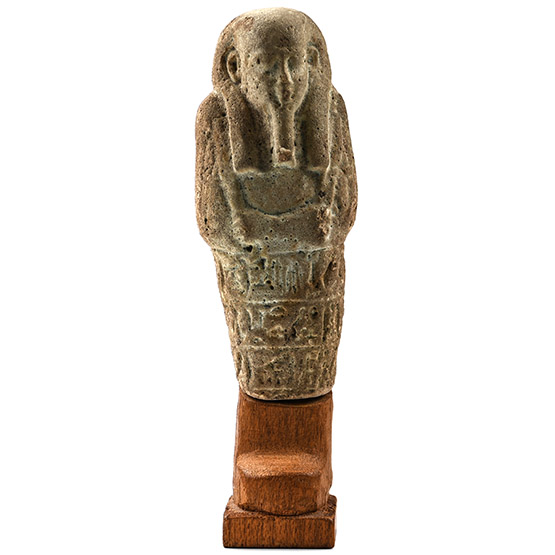
Egyptian Pale Green Glazed Faience Shabti Fragment with Hieroglyphs
Late Period, 664-332 B.C.Sold for (Inc. bp): £364
Head and torso of a mummiform figure, wearing a tripartite wig and divine beard, with arms crossed and hands holding agricultural implements and a cord for a seed bag over the left shoulder, three horizontal bands of hieroglyphic inscriptions to the lower body; mounted on a wooden display stand. 86 grams, 12.5 cm including stand
From a Scottish gentleman’s collection, Glasgow, formed from the early 2000s.
The owner's name is poorly preserved, although the filiation that follows may read: "...born (to) Djed-mut-ies-ankh" (ms ḏd mwt ı͗w s Ꜥnḫ).
