
Loading, please wait...
LOT 0020
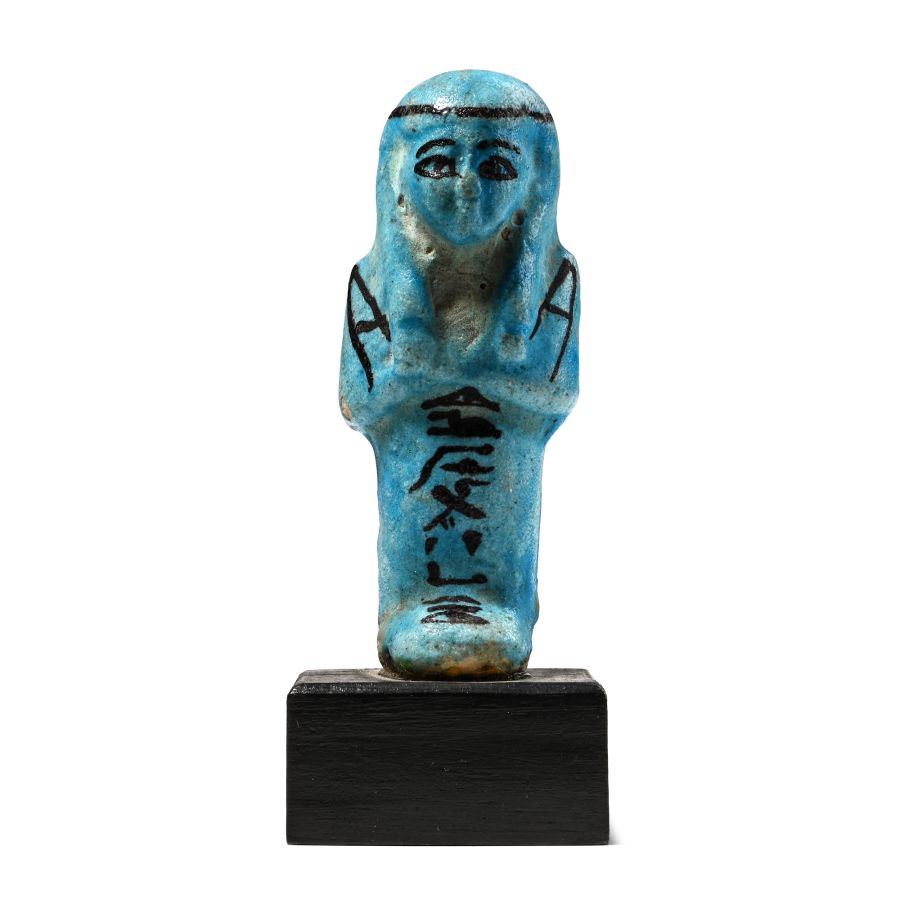
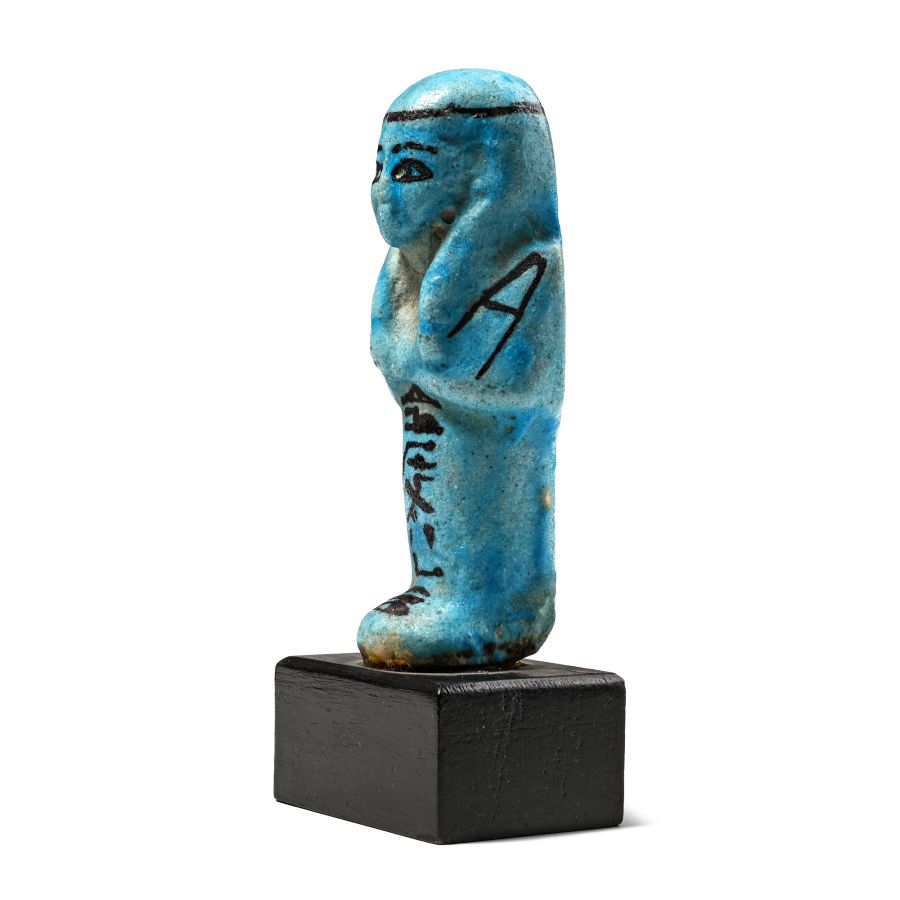
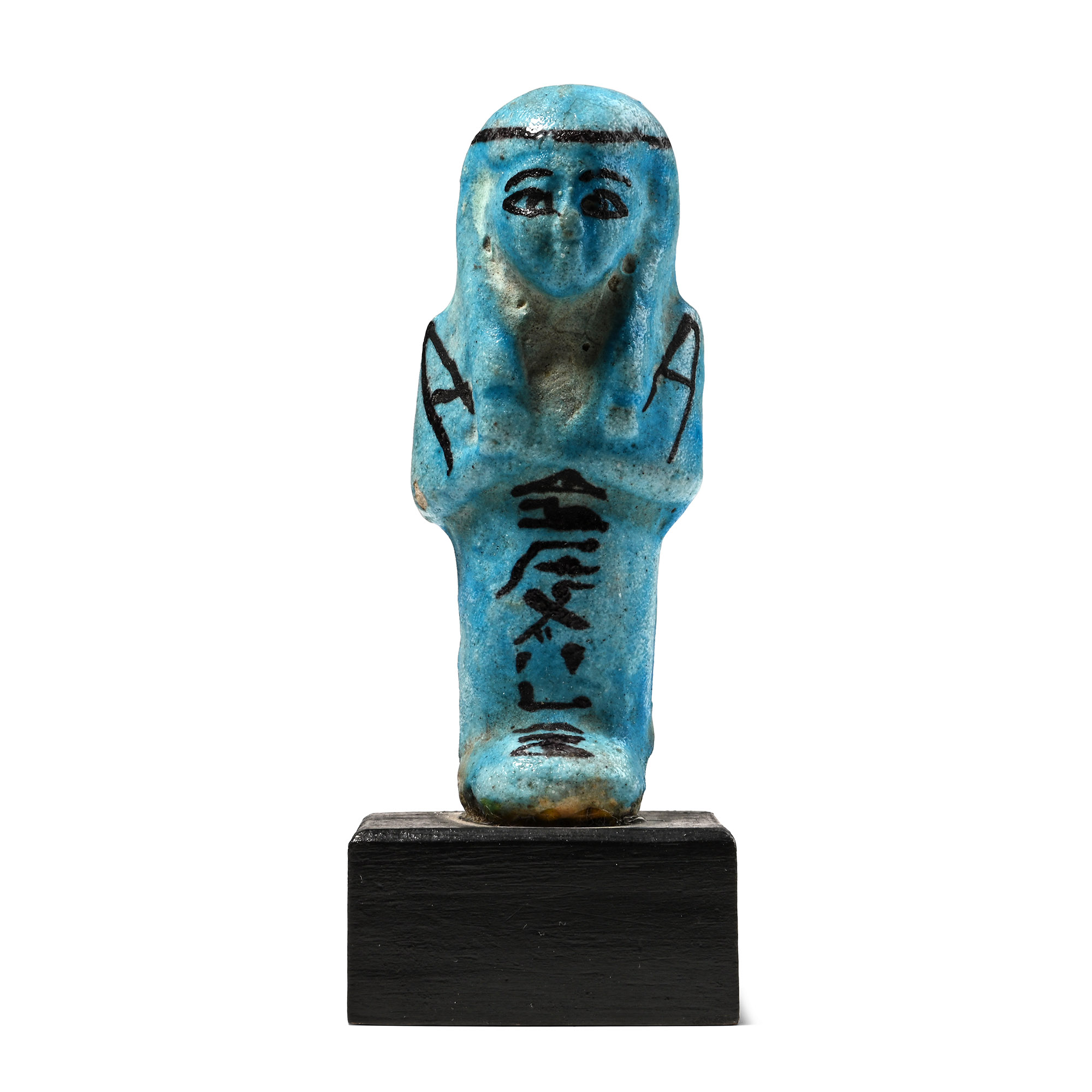
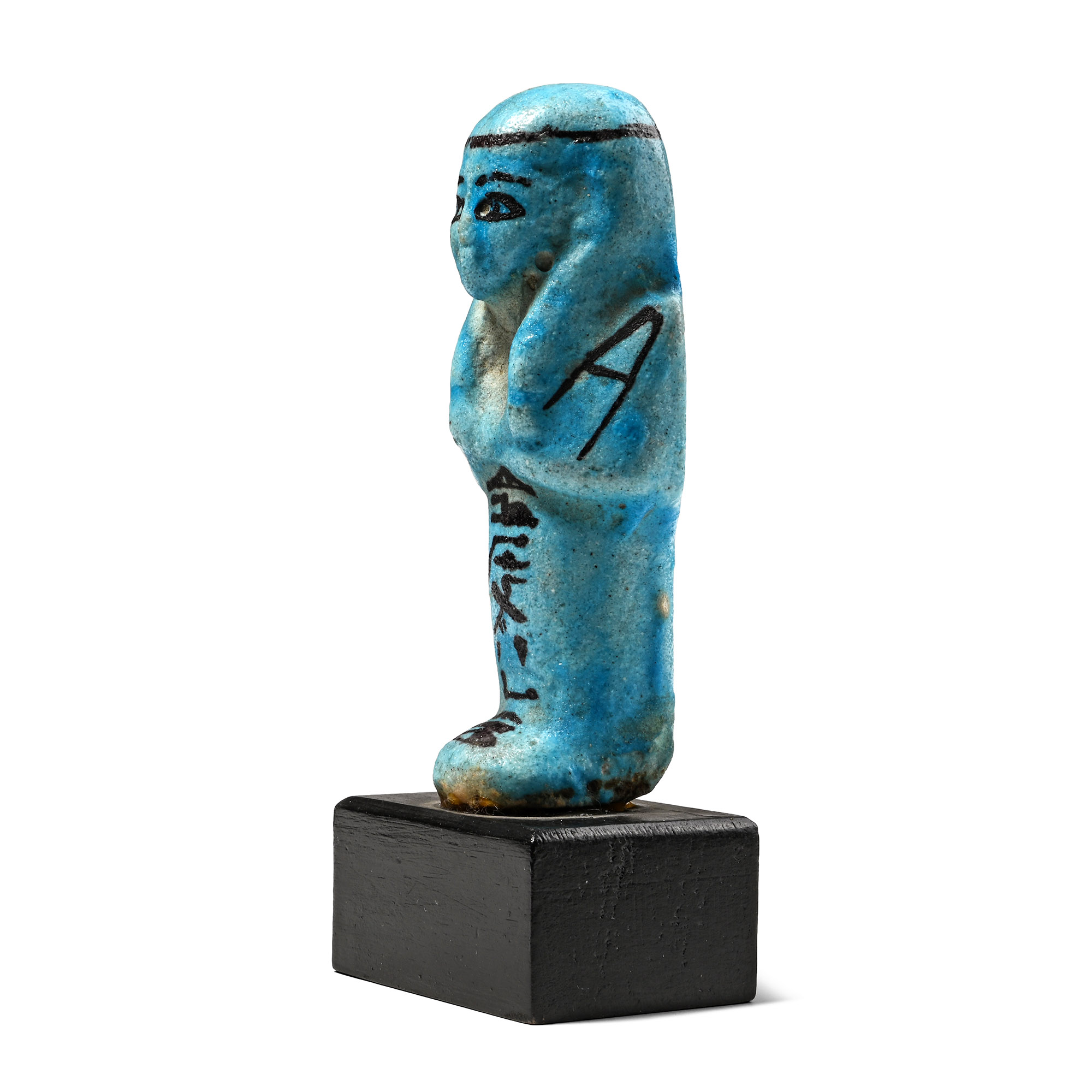
Egyptian Blue Glazed Faience Shabti of Nes-pa-her-an
THIRD INTERMEDIATE PERIOD, 21ST DYNASTY, CIRCA 980-935 B.C.
4 1/2 in. (84 grams total, 11.4 cm including stand).
Mummiform figure wearing a lappet wig encircled at the top by a black-painted sash, with arms crossed and hands holding black-painted hoes and a seed bag across the back; eyes and brows detailed in black; with a column of hieroglyphic text in black on the lower body, reading: 'The Osiris, Nes-pa-her-an'; mounted on a custom-made stand. [No Reserve]
ProvenanceFrom the private collection of Peter Clayton, FCILIP, Dip, Arch, FSA, FRNS, Hemel Hempstead, Hertfordshire, UK; formed since the late 1950s.
Accompanied by an old handwritten information card by Peter Clayton, collection no.113.
Cf. Janes, G., The Shabti Collections 6: A Selection from the World Museum, Liverpool, Lymm, 2016, pp. 291-292, nos. 137a-b, for other shabtis of Nes-pa-her-an.
FootnotesNes-pa-her-an's shabtis were recovered from the so-called 'Priests of Amun Cache' discovered in 1891 in the mortuary temple complex of Queen Hatshepsut.
CONDITIONTimeLine Auctions follows a vetting process to ensure the authenticity and legality of all items, reinforcing our commitment to integrity and responsible trading. Each antiquity, antique, and coin lot undergoes thorough examination by a vetting committee of at least ten external specialists, professional trade association members, scientists, and archaeologists: Our Vetting Process
AUCTIONS:
TimeLine is a leading auction house specialising in antiquities, ancient art, collectables, natural history, coins, medals, and books. Our auctions offer museums, collectors, historians, and enthusiasts the opportunity to acquire unique and historically significant pieces.
LOT 0020
Egyptian Blue Glazed Faience Shabti of Nes-pa-her-an
Estimate £600 - 800€700 - 930 (for guidance only)$810 - 1,080 (for guidance only)
-
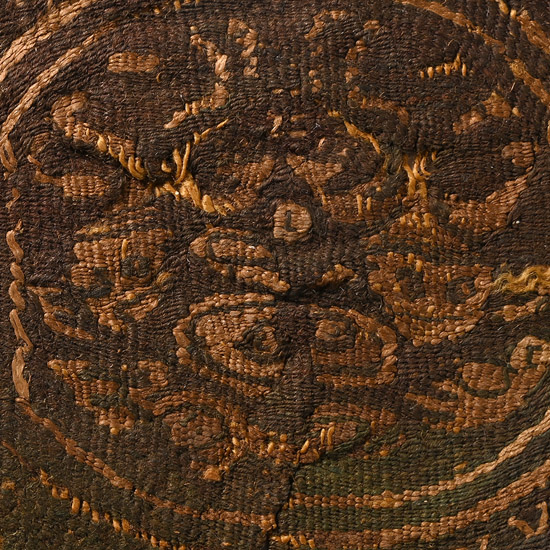
Egyptian Coptic Tunic Textile Fragment of an Orbiculus with Facing Military Horsemen
Circa 7th century A.D.Estimate: £70 - 90 (+bp*)
Bids: 1 | Current Bid: £5
Featuring a large central floral motif, divided into sections containing rhomboid patterns and bordered by meander designs, executed in a tapestry weave using raw wool in reddish-purple, yellow, and dark brown, with an S-twist. 4.15 grams, 10.7 cm
Acquired 1970s-1996. Property of a North American collector. London collection, 2016.
In the Late Roman Period, round orbiculi decorated the shoulders and the lower part of tunics and inner tunics. These fabrics were of great decorative finesse, displaying an unusual and extremely well-preserved colour palette. When the tunic came to the end of its life, these embroideries could be recycled and patched onto another garment. The motif of the opposed horsemen could be related to a military tunic. -
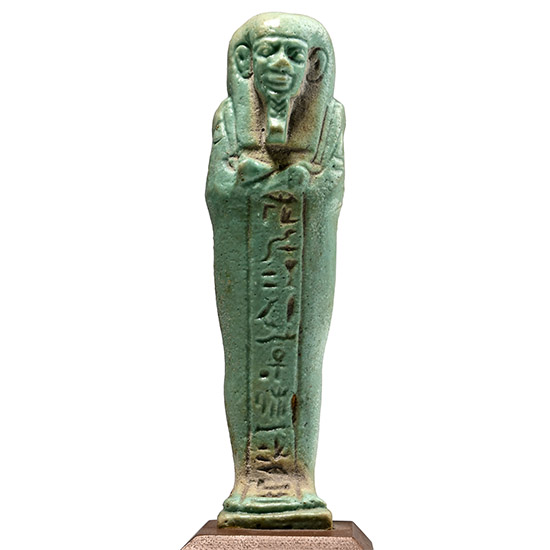
Egyptian Blue Glazed Faience Shabti of Djed-Bastet-Iuef-Ankh
Late Period, 664-332 B.C.Estimate: £400 - 600 (+bp*)
Bids: 13 | Current Bid: £130
Mummiform figure standing on a square plinth, wearing a long lappet wig, a false beard, and fine facial detailing, with crossed arms, the left hand holding a pick and the right a hoe, with the cord of a seed bag suspended from the bag; a plain dorsal pillar; the lower front bearing a vertical panel containing an impressed hieroglyphic text reading: 'The Osiris, Djed-Bastet-iuef-ankh, born to Iset-ir-dis'; mounted on a display stand. 99 grams total, 13.1 cm including stand
Acquired from Richardson, February 1965, for £2.00. From the private collection of Peter Clayton, FCILIP, Dip, Arch, FSA, FRNS, Hemel Hempstead, Hertfordshire, UK; formed since the late 1950s. Accompanied by an old handwritten information card by Peter Clayton, collection no.112. -
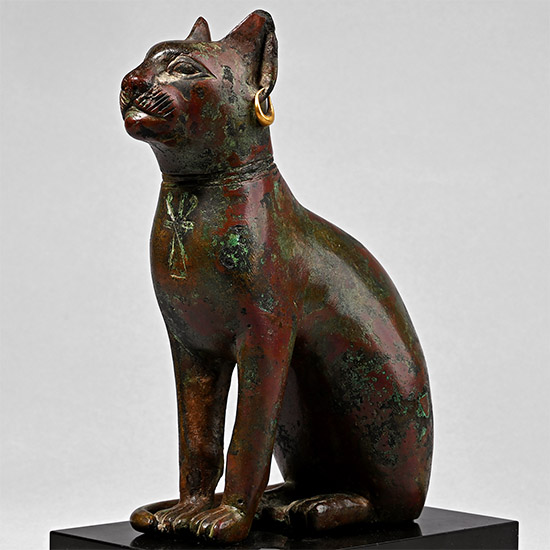
'The Clayton' Large Egyptian Bronze Seated Cat Statue of the Goddess Bastet
Late Period, 26th Dynasty, circa 664-525 B.C.Estimate: £20,000 - 30,000 (+bp*)
Opening Bid: £10,000
Naturalistically modelled in the round, hollow-formed in a seated pose with an incuse collar and Hathor-symbol pendant on its chest, both ears pierced to accept gold earrings (one absent); with a custom-made stand. 932 grams, 16 cm (1.99 kg total, 19.5 cm high including stand)
Acquired by Norman Davis from Spinks in 1956. Received as a gift from an American friend, Norman Davis of Seattle, circa 1972. From the private collection of Peter Clayton, FCILIP, Dip, Arch, FSA, FRNS, Hemel Hempstead, Hertfordshire, UK; formed since the late 1950s. This lot has been checked against the Interpol Database of stolen works of art and is accompanied by search certificate no.13471-262917.
In ancient times, the cat was revered as the sacred animal of the goddess Bastet, whose principal cult centre was at Bubastis in the Nile Delta. Her cult expanded throughout Egypt during the Late Period, when many votive bronze statuettes were produced. To the Egyptians, the cat symbolised protection, motherhood, and, later, gentleness and domesticity, qualities associated with Bastet, especially as she evolved from a fierce lioness into a more benevolent feline goddess. The symbol on the chest of the present statuette is associated with another protective goddess, Hathor. Standing figurines of Bastet are sometimes shown holding a Hathoric sistrum, a ritual musical instrument linked to joy, music, and divine protection, particularly for mothers and children. The symbol on this bronze statuette would have served the same purpose.
