
Loading, please wait...
LOT 0042
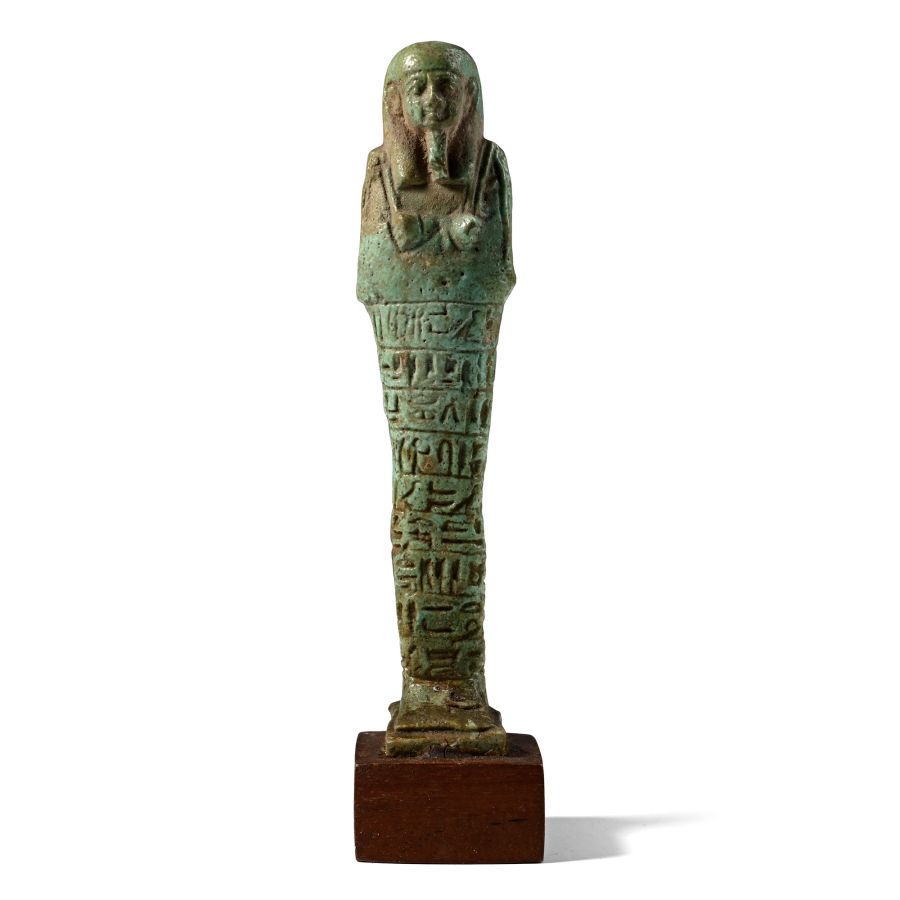
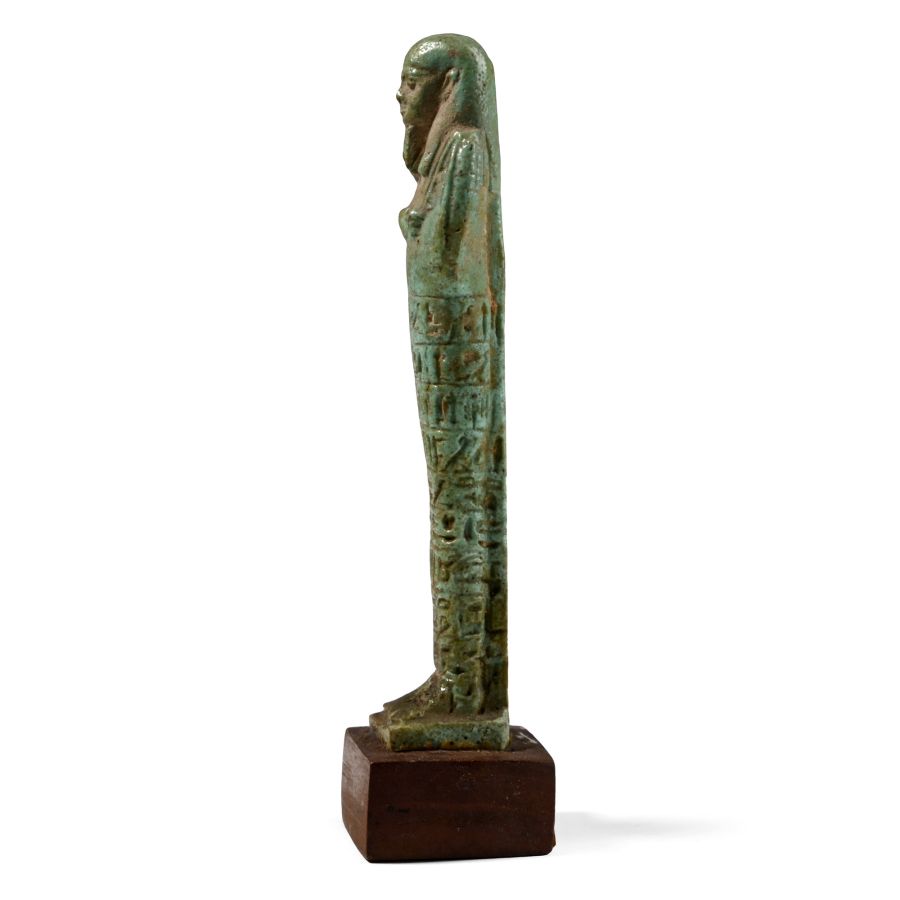
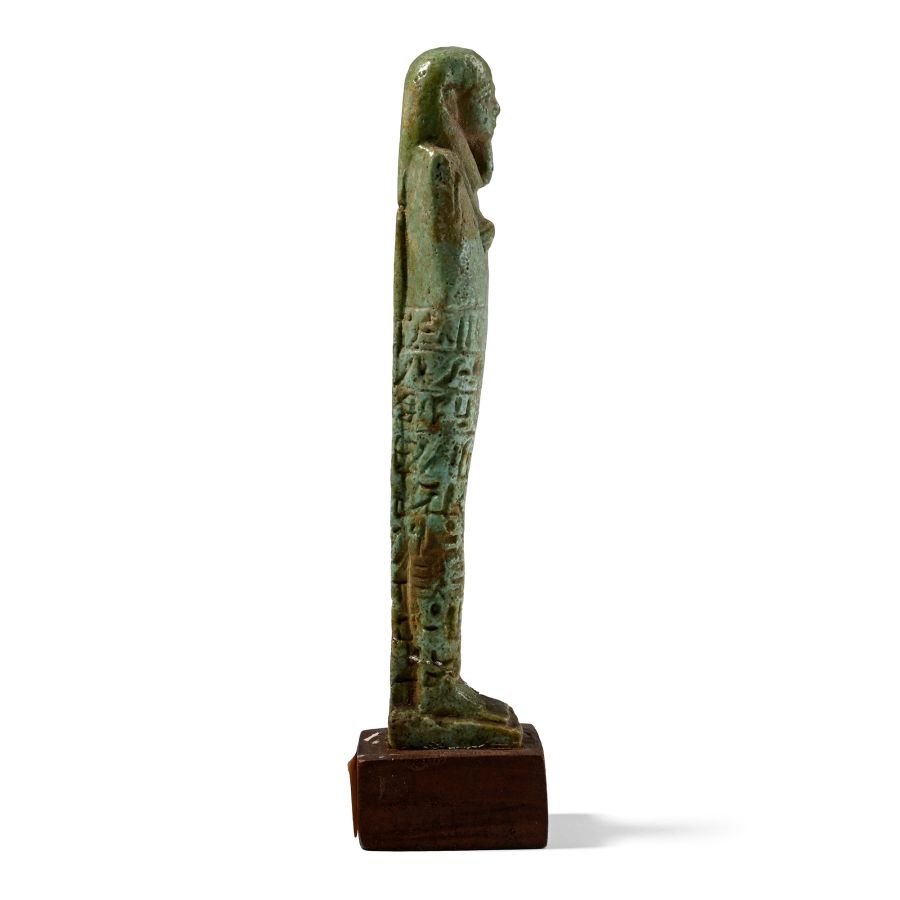
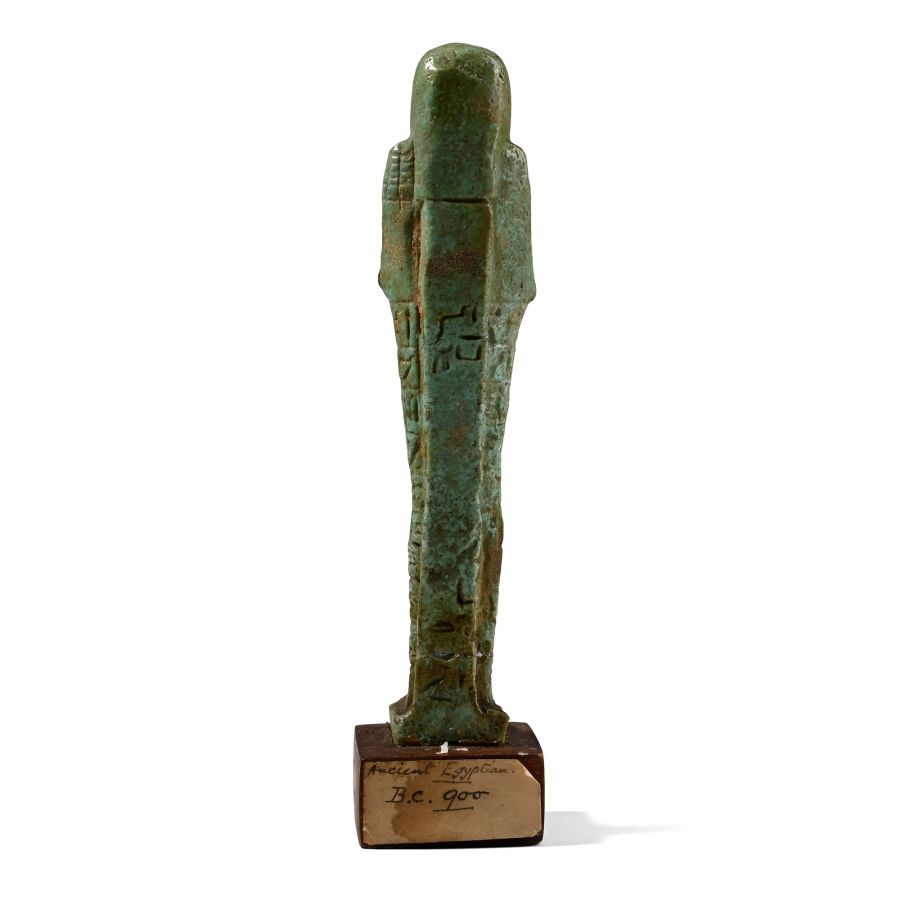
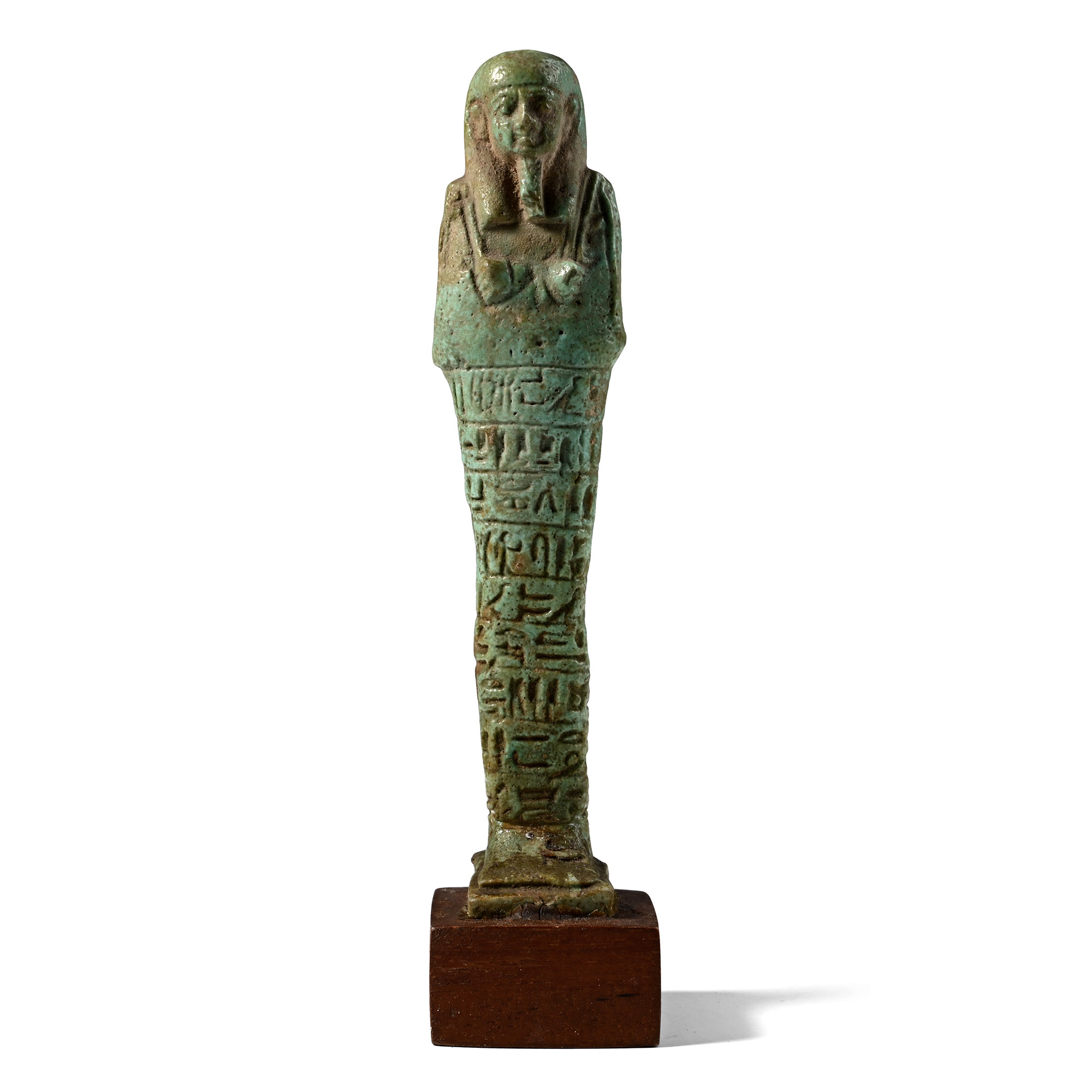
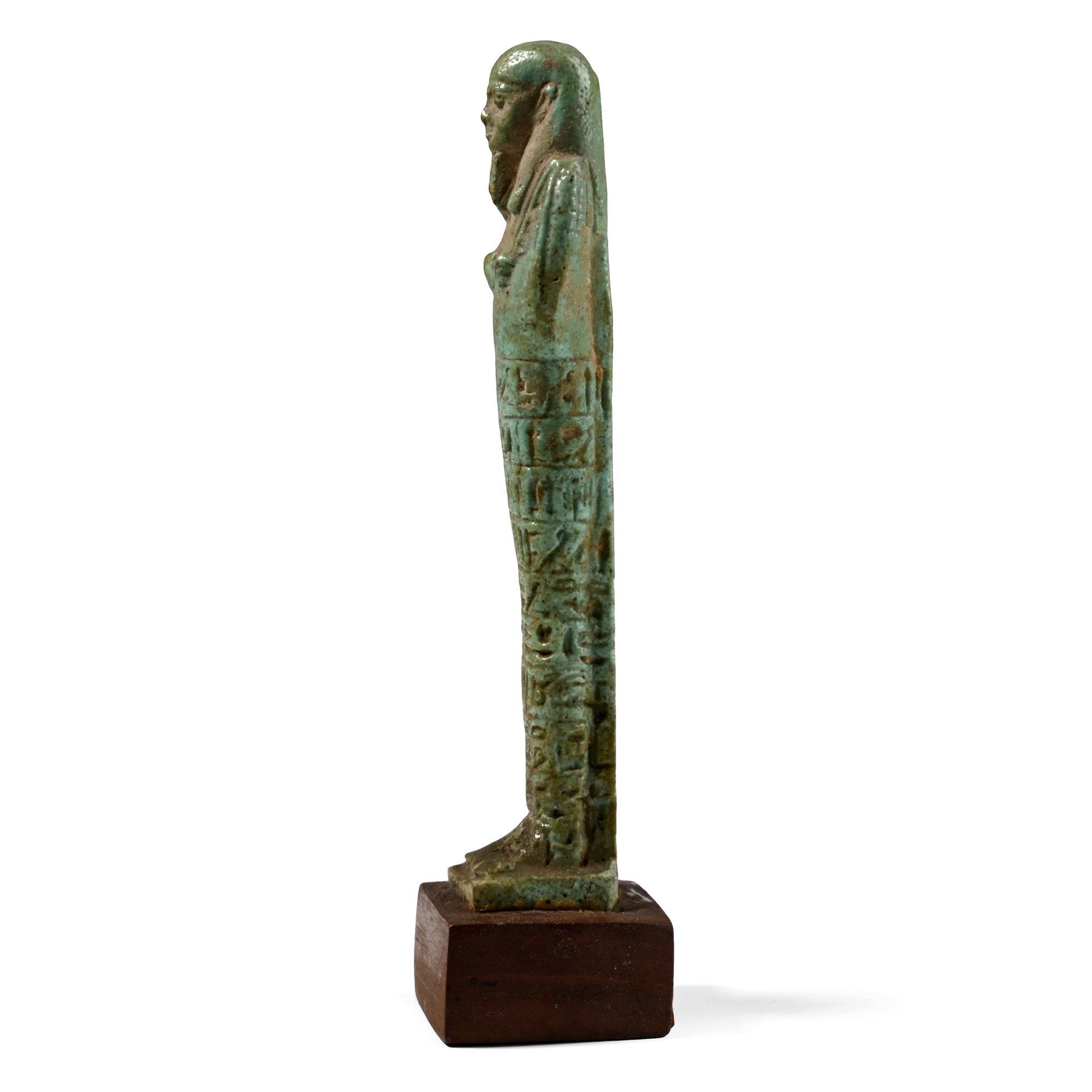
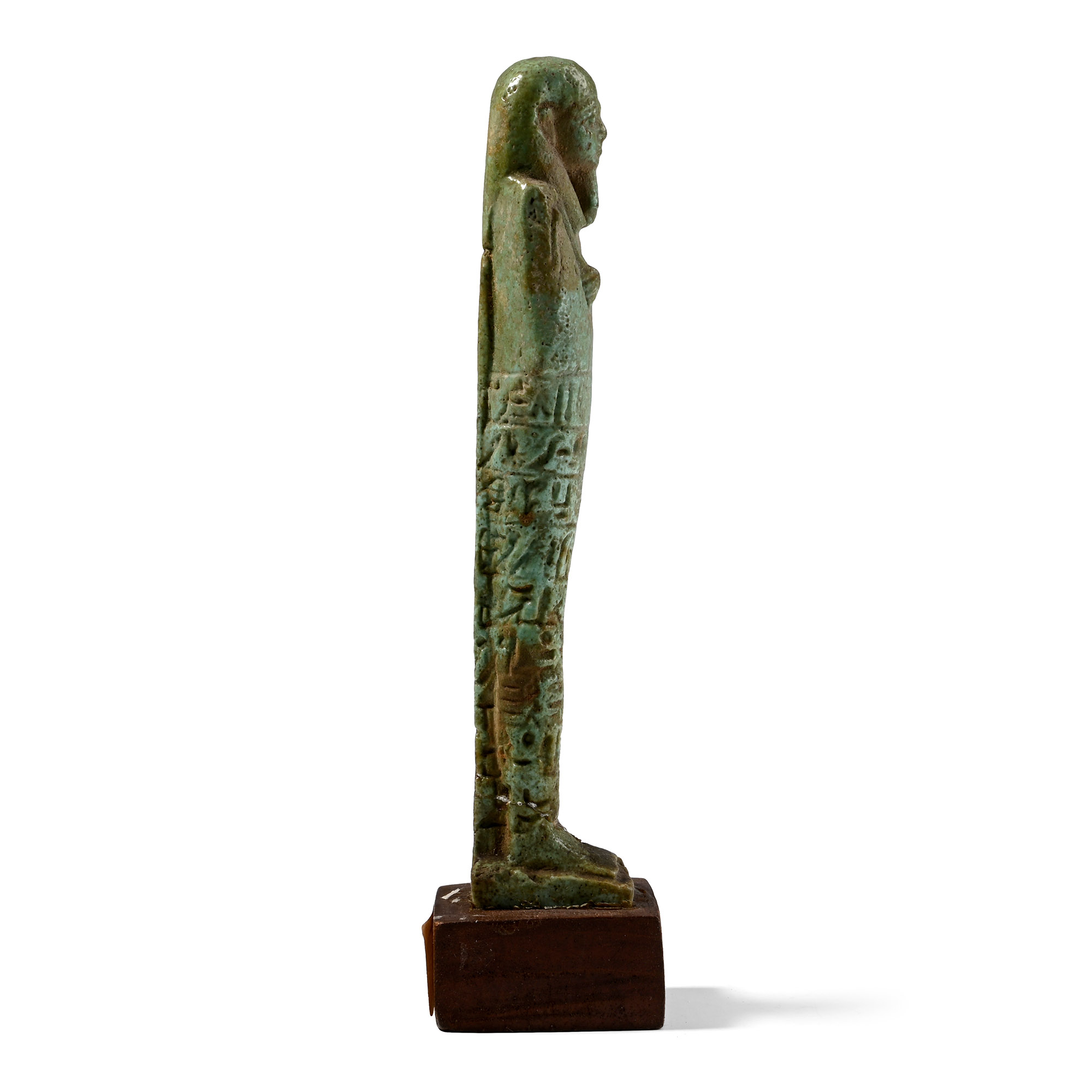
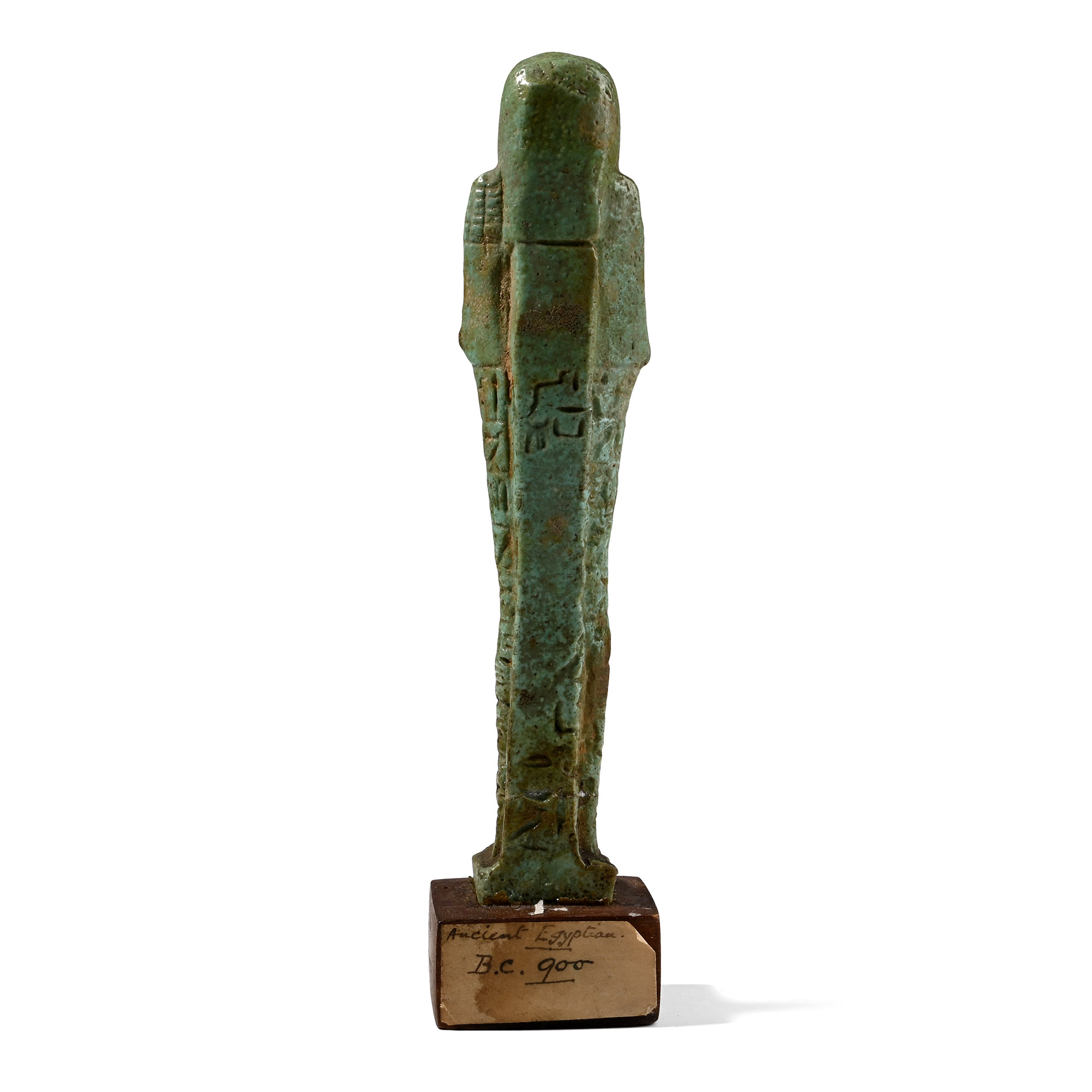
Egyptian Blue-Glazed Faience Shabti for Hornakht, Born of Nefertyti
LATE PERIOD, 664-332 B.C.
6 1/4 in. (80.9 grams total, 16 cm high including stand).
Slender olive-green mummiform shabti wearing a lappet wig and a false beard, with arms crossed, the left hand holding a pick and the right a hoe and the cord of a seed bag, which hangs from the back shoulder; with nine horizontal bands of deeply incised hieroglyphs on the lower body, giving the Book of the Dead spell and the names of the owner, Hornakht, and his mother, Nefertyti; mounted on a custom-made stand with an old 'Ancient Egyptian B.C.900' label. [No Reserve]
ProvenanceFrom the estate of a deceased Sussex private collector since the early 20th century.
Accompanied by a copy of an illustrated academic report with translation by Simone Musso.
Cf. shabti of the same owner in the British Museum under EA59749.
CONDITIONTimeLine Auctions follows a vetting process to ensure the authenticity and legality of all items, reinforcing our commitment to integrity and responsible trading. Each antiquity, antique, and coin lot undergoes thorough examination by a vetting committee of at least ten external specialists, professional trade association members, scientists, and archaeologists: Our Vetting Process
AUCTIONS:
TimeLine is a leading auction house specialising in antiquities, ancient art, collectables, natural history, coins, medals, and books. Our auctions offer museums, collectors, historians, and enthusiasts the opportunity to acquire unique and historically significant pieces.
LOT 0042
Egyptian Blue-Glazed Faience Shabti for Hornakht, Born of Nefertyti
Estimate £600 - 800€700 - 930 (for guidance only)$810 - 1,080 (for guidance only)
-
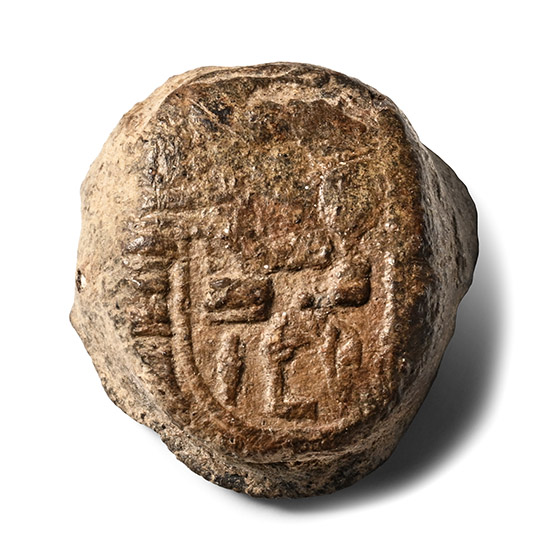
Egyptian Terracotta Bulla with Royal Cartouche
New Kingdom, circa 1400-1292 B.C.Estimate: £60 - 80 (+bp*)
Bids: 1 | Current Bid: £5
Discoid seal impression with one face preserving a partial impressed cartouche, the other side bearing the impression of a cord and linen. 1.92 grams, 17 mm
London, UK, art market, 1980s. Private collection, London, UK.
Clay seals were used to secure doors and containers holding valuable commodities and goods. The impression on the underside of this example indicates that it once sealed a linen bag or a linen lid cover. -
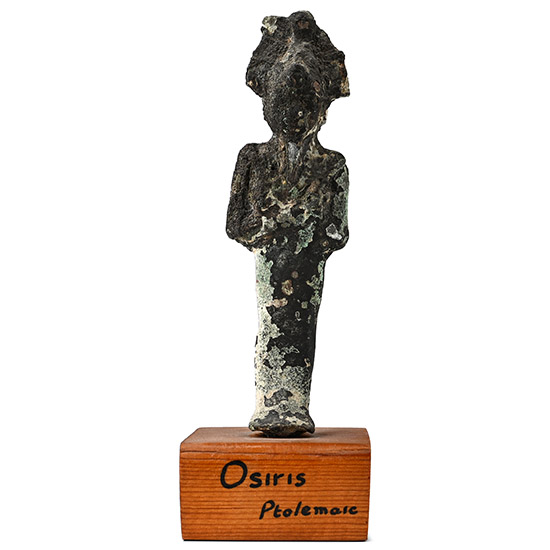
Egyptian Bronze Standing Figure of the God Osiris
Late Period-Ptolemaic Period, 664-30 B.C.Estimate: £120 - 170 (+bp*)
Bids: 1 | Current Bid: £5
Modelled in the round, with hands crossed on the chest, holding the deity's characteristic crook and flail, and wearing the atef- crown; mounted on a wooden display stand bearing the legend 'Osiris Ptolemaic'. 56.3 grams total, 11.6 cm high including stand
Acquired Herne Bay High Street, June 1957. From the private collection of Peter Clayton, FCILIP, Dip, Arch, FSA, FRNS, Hemel Hempstead, Hertfordshire, UK; formed since the late 1950s. Accompanied by an old handwritten information card by Peter Clayton, collection no.8. -
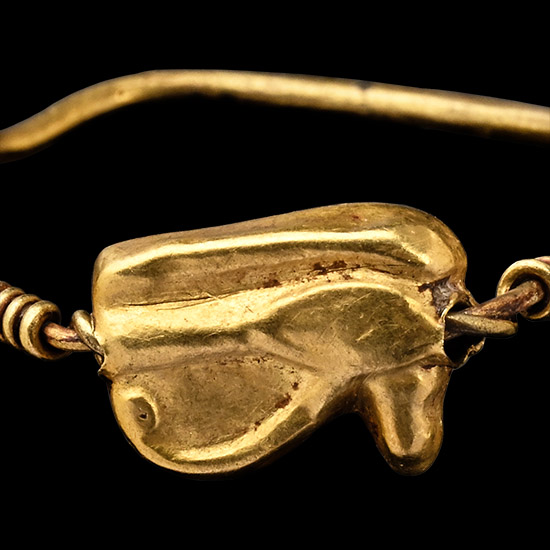
Graeco-Egyptian Gold Swivel Ring with Wedjat-eye
Circa 2nd-1st century B.C.Estimate: £1,000 - 1,400 (‡+bp*)
Opening Bid: £500
Slender wire hoop with ends coiled round the shank; swivel-mounted hollow-formed wedjat-eye forming the bezel. 1.10 grams, 22.15 mm overall, 18.22 x 18.65 mm internal diameter (approximate size British O 1/2, USA 7 1/4, Europe 15.61, Japan 15)
Acquired from Derek Content, 1 October 1983. Private collection of Kal Noselson, New York, acquired between 1976 and the late 1990s; thence by descent. Accompanied by an original invoice from Derek Content, dated 1 October 1983.
The wedjat-eye amulet represents the healed eye of the god Horus and embodies both human and falcon features. The name wedjat in ancient Egyptian means ‘the one that is sound’. According to Egyptian mythology, the god Seth wounded or took Horus' eye, and Thoth later restored it. The wedjat-eye amulet was believed to protect its wearer and bestow healing and regenerative qualities. It was a popular amuletic symbol worn by both the living and the dead and was reproduced in precious metals, stone, and faience.
