
Loading, please wait...
LOT 0491
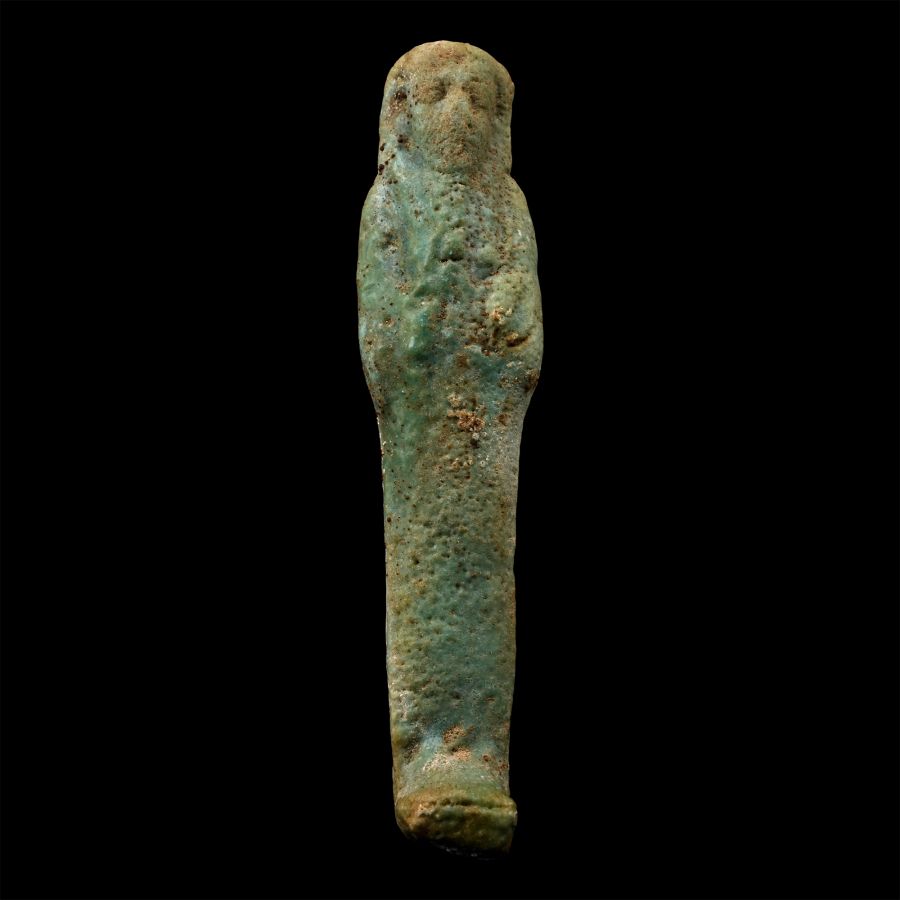
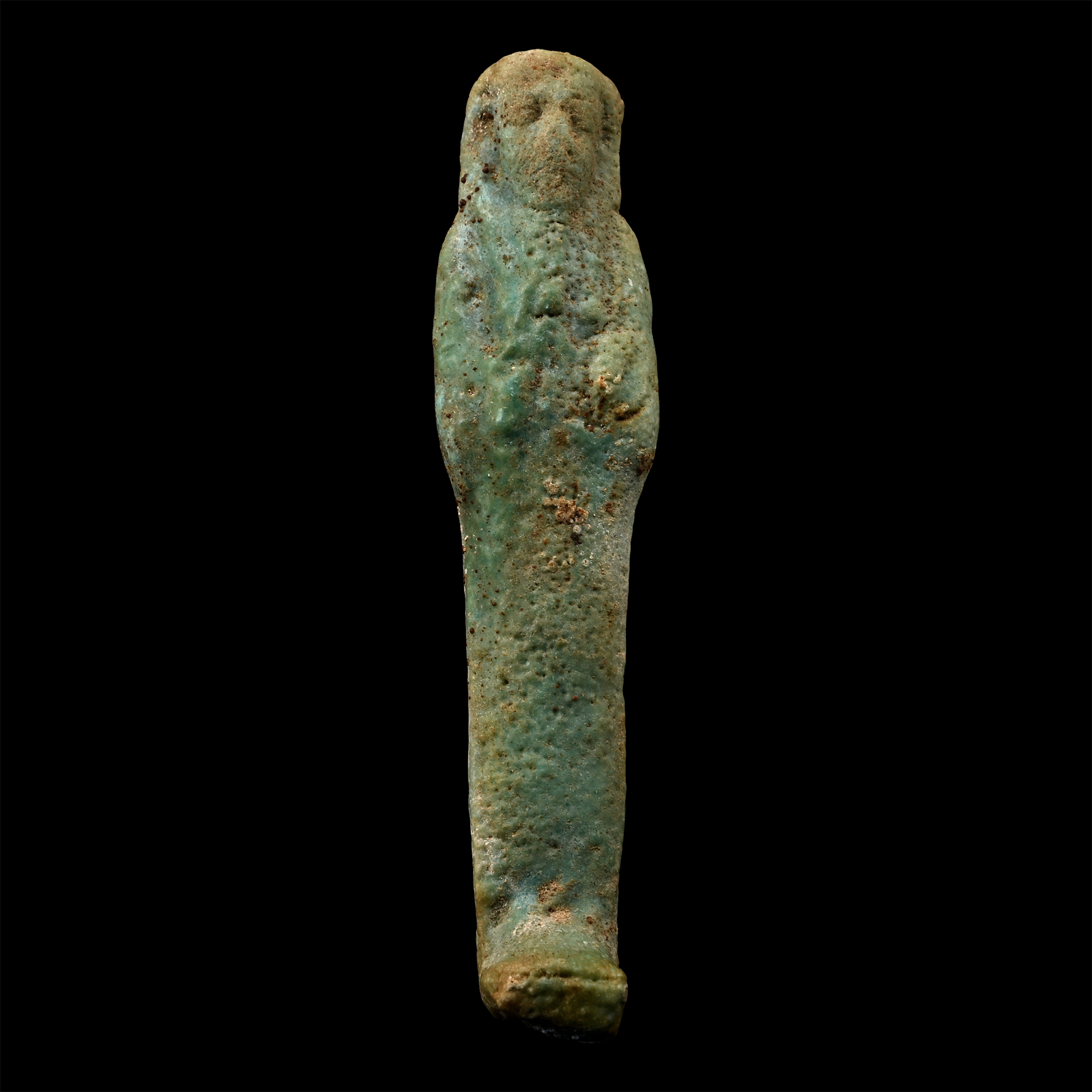
Egyptian Blue Glazed Faience Shabti Figure
LATE PERIOD-PTOLEMAIC PERIOD, 664-30 B.C.
3 3/4 in. (22.29 grams, 96 mm).
Mummiform figure with crossed arms, wearing a false beard and tripartite wig. [No Reserve]
ProvenanceAcquired from Ancient Art, London, UK.
From the collection of a Nottingham, UK, collector, established from the early 2000s.
Accompanied by the original Ancient Art certificate of authenticity.
TimeLine Auctions follows a vetting process to ensure the authenticity and legality of all items, reinforcing our commitment to integrity and responsible trading. Each antiquity, antique, and coin lot undergoes thorough examination by a vetting committee of at least ten external specialists, professional trade association members, scientists, and archaeologists: Our Vetting Process
AUCTIONS:
TimeLine is a leading auction house specialising in antiquities, ancient art, collectables, natural history, coins, medals, and books. Our auctions offer museums, collectors, historians, and enthusiasts the opportunity to acquire unique and historically significant pieces.
-
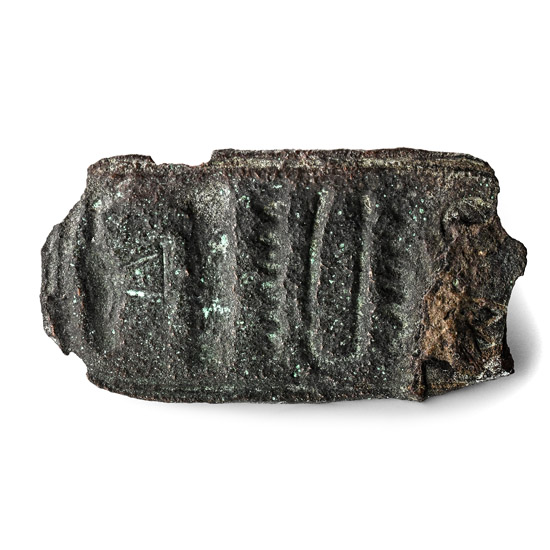
Egyptian Bronze Stamp Seal
Late Period-Ptolemaic Period, 664-30 B.C.Estimate: £100 - 140 (+bp*)
Opening Bid: £50
Cartouche-shaped in plan with a thick loop to reverse, an incised frame enclosing sunken hieroglyphs, including two water signs and a tethering rope. 11.42 grams, 46 mm
From the collection of a gentleman, acquired on the London art market in the 1990s. -
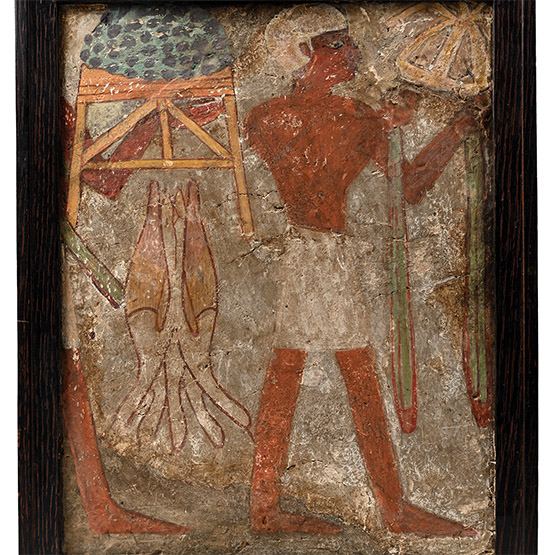
Egyptian Limestone Fresco with Servant Carrying Geese
New Kingdom, 1580-1077 B.C.Sold for (Inc. bp): £9,100
Rectangular frieze fragment with advancing figure in profile wearing a shendyt kilt holding up two poles in his raised hands; to his rear, part of a second figure with an openwork wooden frame (footstool) and other items; mounted in sturdy wooden frame with suspension rings to the reverse; surface has been extensively cleaned, restored, and repainted. 6.8 kg, 40.5 x 32.2 cm
Mounted in an early 20th-century wooden frame bearing a stamped inscription reading “Exposition Paris …” From the collection of L.V. (1950-1960), Paris, France. Collection of Monsieur X. (1931-2017), dispersed for the benefit of the Monaco Red Cross. Private collection, Europe. This lot has been checked against the Interpol Database of stolen works of art and is accompanied by a search certificate number no.13224-249307.
The servant is carrying geese, like in many other representations of the New Kingdom. Many portrayals of ducks and geese in ancient Egyptian art show the importance of the birds as food. Servants plucking geese are visible in the tomb of Nakht, in Luxor (1567-1320 B.C.), and in the famous tomb of Nebamun, at the British Museum, a fresco fragment shows workers standing in front of a gaggle of geese. -
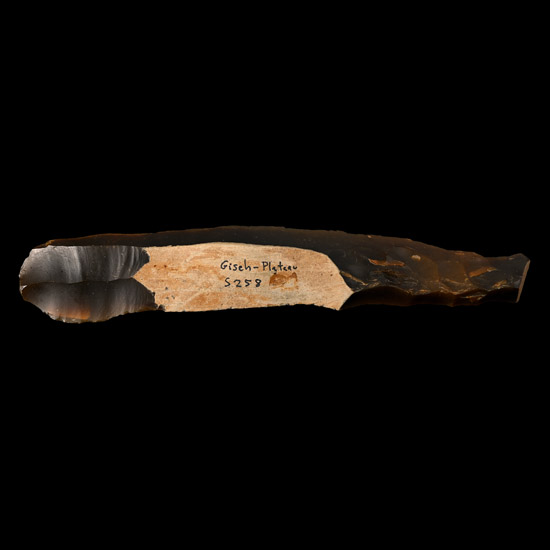
Exceptionally Long Egyptian Stone Age Knapped Flint Blade
Neolithic Period, circa 6,000 B.P.Sold for (Inc. bp): £293
Curved in profile, tongue-shaped with two cutting edges; from the Giza Plateau, Egypt. 77 grams, 19.8 cm
Ex J Dickey collection. Ex Jerry Sherman collection, acquired on the US art market.
