
Loading, please wait...

LOT 0480
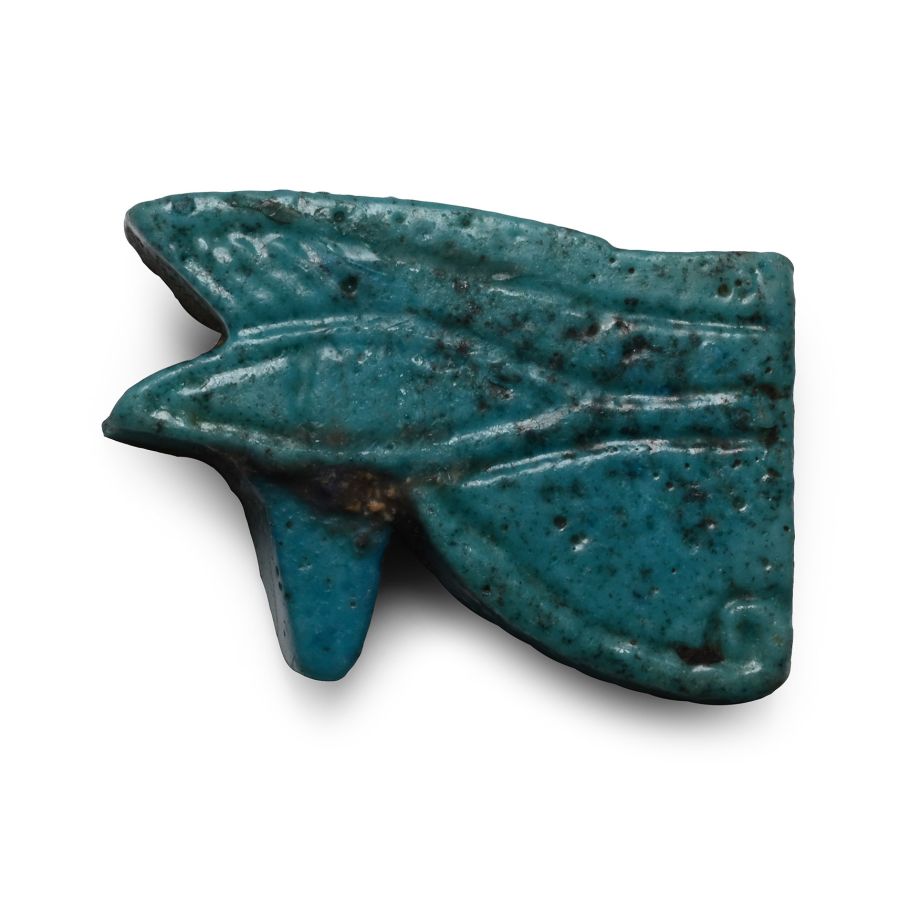
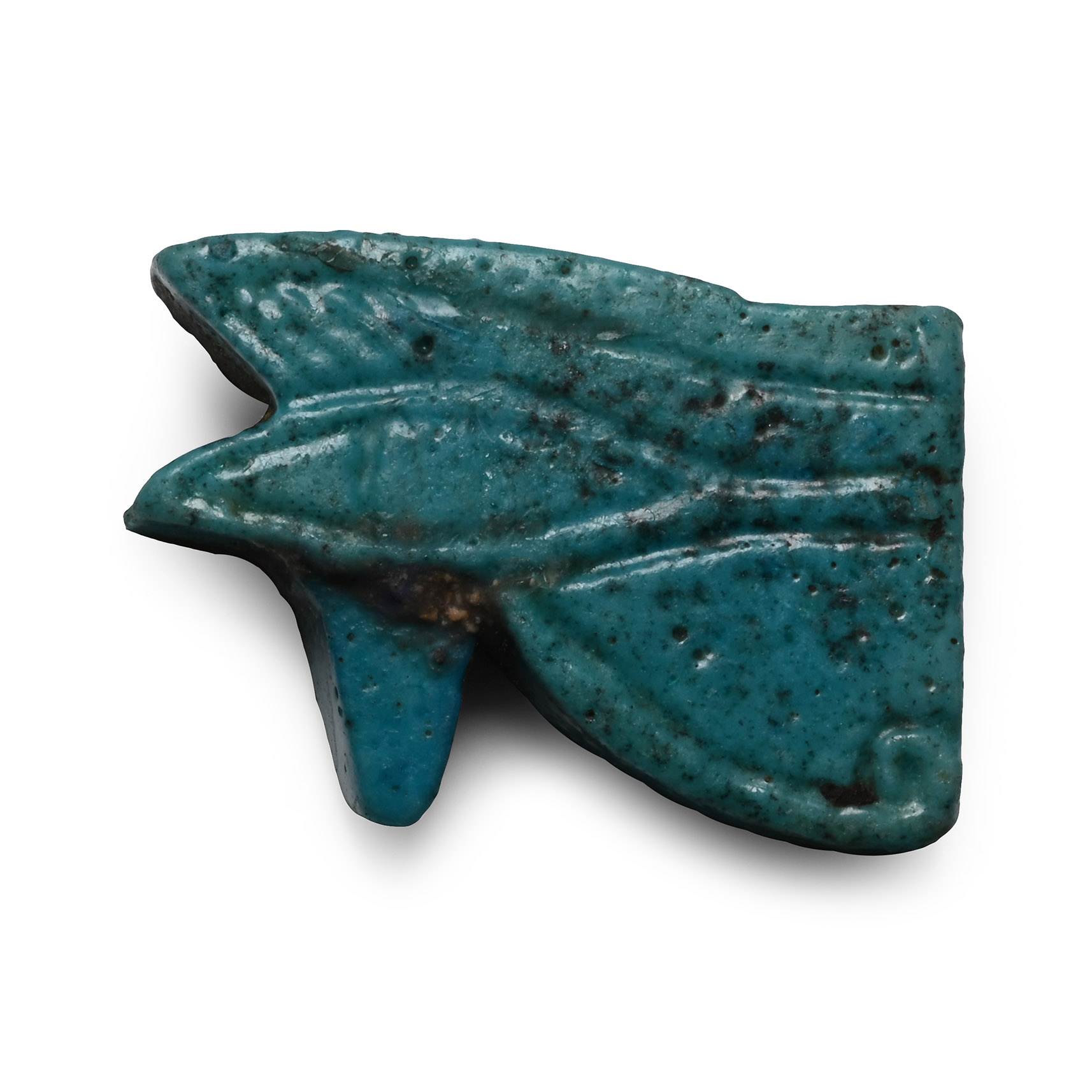
Egyptian Blue Glazed Faience Eye of Horus Amulet
LATE PERIOD, 664-332 B.C.
1 1/2 in. (11.7 grams, 38 mm).
Large wedjat-eye amulet with incised human and falcon elements.
ProvenanceFrom the private collection of the late Mrs Belinda Ellison, a long time member of the Egyptian Exploration Society, c.1940-2020.
FootnotesThe wedjat-eye amulet is a representation of the healed eye of the god Horus, featuring both human and falcon elements. The name wedjat in ancient Egyptian means ‘the one that is sound.’ According to Egyptian mythology, Horus' eye was wounded or taken by the god Seth and restored by Thoth. The wedjat-eye amulet was thought to protect its wearer and bestow the power of recovery and regeneration onto them. It was very popular and used by both the living and the dead.
CONDITIONTimeLine Auctions follows a vetting process to ensure the authenticity and legality of all items, reinforcing our commitment to integrity and responsible trading. Each antiquity, antique, and coin lot undergoes thorough examination by a vetting committee of at least ten external specialists, professional trade association members, scientists, and archaeologists: Our Vetting Process
AUCTIONS:
TimeLine is a leading auction house specialising in antiquities, ancient art, collectables, natural history, coins, medals, and books. Our auctions offer museums, collectors, historians, and enthusiasts the opportunity to acquire unique and historically significant pieces.
LOT 0480
Egyptian Blue Glazed Faience Eye of Horus Amulet
Estimate £200 - 300€230 - 350 (for guidance only)$270 - 410 (for guidance only)
-
Egyptian Hardstone Double Plume Amulet
Late Period, 664-332 B.C.Estimate: £200 - 300 (+bp*)
Opening Bid: £100
Carved with integral loop to the reverse; old inked collector's reference 'ES716'. 2.58 grams, 27 mm
with Hotel des Ventes, Drouot, Paris, France. From the collection of Mr H. Naudy, Paris, France. Acquired at between 2004-2010. Property of a French collector.
This ancient amulet represents two ostrich feathers or shuty. Interestingly, these feathers were also present on the Atef crown of Osiris, the god of the afterlife and the dead. This suggests the amulet was believed to imbue the wearer with Osiris' divine power and protection. -
Phoenicio-Egyptian Inscribed Frog Amulet
Late 1st millennium B.C.Sold for (Inc. bp): £26
Carved in the round on an ellipsoid base with incised Phoenician characters to the underside. 1.32 grams, 10 mm
Acquired 1980-2015. Ex Abelita family collection. -
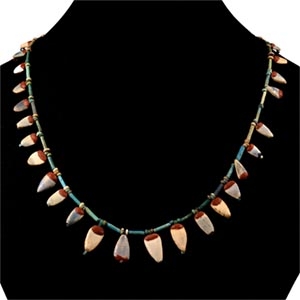
Egyptian Faience Bead Necklace with Petal Beads
New Kingdom, Amarna Period, 1550-1070 B.C.Sold for (Inc. bp): £572
Restrung using turquoise tubular beads interspersed with annular beads of various colours and graduated polychrome petal-shaped beads, some with a loop at each end. 9.19 grams, 52 cm long
From an early 20th century UK collection. Accompanied by a previous typed cataloguing card.
