
Loading, please wait...
LOT 0011
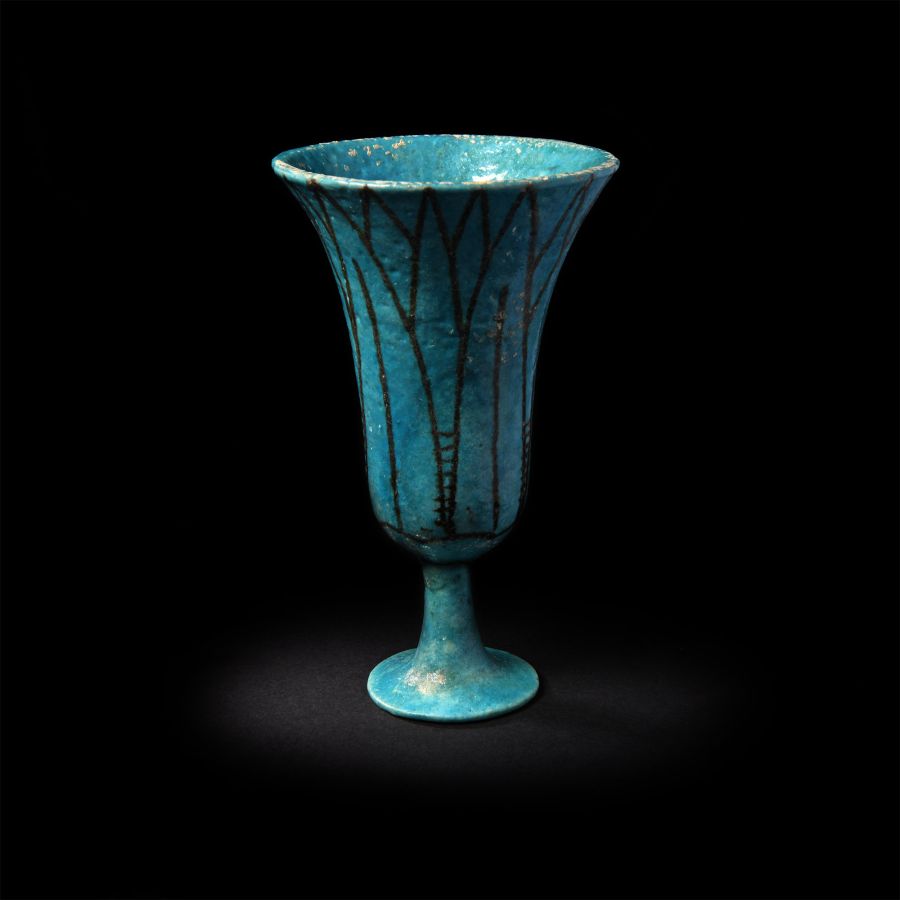
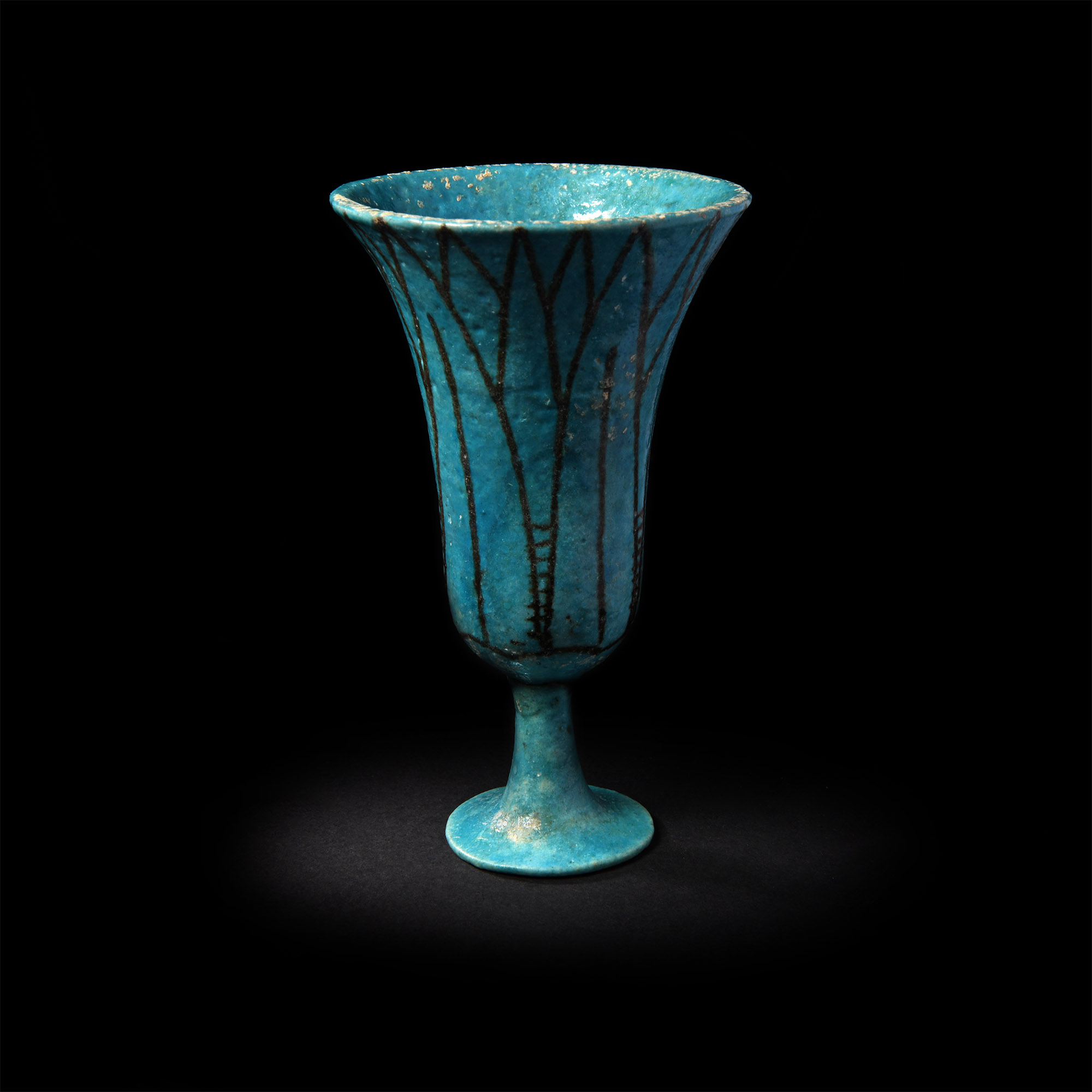
Egyptian Blue-Glazed Faience Chalice
EARLY THIRD INTERMEDIATE PERIOD, CIRCA 1050 B.C.
5 in. (104 grams, 12.5 cm high).
A blue-glazed faience chalice representing the blue lotus flower with a tall, flaring cup rounded at the base, short stem with a flared foot; held in a lockable wooden presentation box with key; restored.
ProvenanceAcquired from Dr Jan Beekmans, circa 1982.
UK private collection.
Accompanied by an academic report by Egyptologist Paul Whelan.
This lot has been checked against the Interpol Database of stolen works of art and is accompanied by search certificate no.11599-198342.
Cf. The British Museum, museum number EA4801 'Blue glazed composition (faience) drinking-cup, in the form of a stemmed lotus flower', for similar; cf. The Metropolitan Museum, accession number 26.7.972, for similar; Walters Art Gallery, inventory no.48.416, for similar.
FootnotesIt is thought that blue lotus chalices served cultic or votive roles in temples or in offering rituals to the dead, and the white lotus versions were used as drinking vessels. Called Seshen by the ancient Egyptians, the blue lotus symbolised solar concepts surrounding rebirth- possibly because its flowers open their petals in the morning and close them again at night. Given this connection, it is not surprising to find that the lotus features prominently in ancient Egyptian funerary art, in banqueting scenes honouring the dead and in bouquets adorning the coffin and its bier. It is thought that the petals were used to make perfume and that the ancient Egyptians exploited the lotus's narcotic properties and added its extracted essence to wine to enhance the pleasurable effects of the drink, as can be seen in banqueting scenes.
CONDITIONTimeLine Auctions follows a vetting process to ensure the authenticity and legality of all items, reinforcing our commitment to integrity and responsible trading. Each antiquity, antique, and coin lot undergoes thorough examination by a vetting committee of at least ten external specialists, professional trade association members, scientists, and archaeologists: Our Vetting Process
AUCTIONS:
TimeLine is a leading auction house specialising in antiquities, ancient art, collectables, natural history, coins, medals, and books. Our auctions offer museums, collectors, historians, and enthusiasts the opportunity to acquire unique and historically significant pieces.
-
Egyptian Multi-Stranded Mummy Bead Necklace Collection
Late Period, 664-525 B.C.Sold for (Inc. bp): £390
A group of three restrung faience mummy bead necklaces, each comprising multiple strands of polychrome beads including annular and tubular types. 84 grams total, 60-70 cm long
Acquired before 1979. From the private collection of Mr F. A., South Kensington, London, UK; thence by descent 2014. -
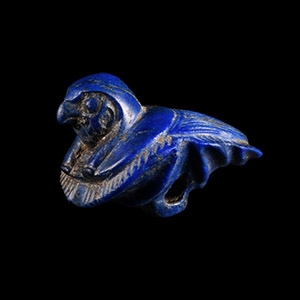
Egyptian Lapis Lazuli Falcon-Head Scarab
Late Period, 664-343 B.C.Sold for (Inc. bp): £4,680
A lapis lazuli amuletic scarab with the falcon head of Ra with lappet headdress and broad collar; ribbed loop to the underside for suspension 6.9 grams, 25 mm
UK art market, prior 2000. English private collection.
This scarab was probably attached to the mummy, and its falcon head symbolising the sun-god Ra served to emphasise the solar aspect of the amulet, and give added potency to its regenerative power. -
.jpg)
Egyptian Blue Faience Shabti Group
Late Period-Ptolemaic Period, 664-30 B.C.Sold for (Inc. bp): £208
A group of four blue-glazed faience shabtis. 18.2 grams total, 43-46 mm
Fair condition.
Acquired 1930s-1950s. Ex Ciapara collection.
