
Loading, please wait...
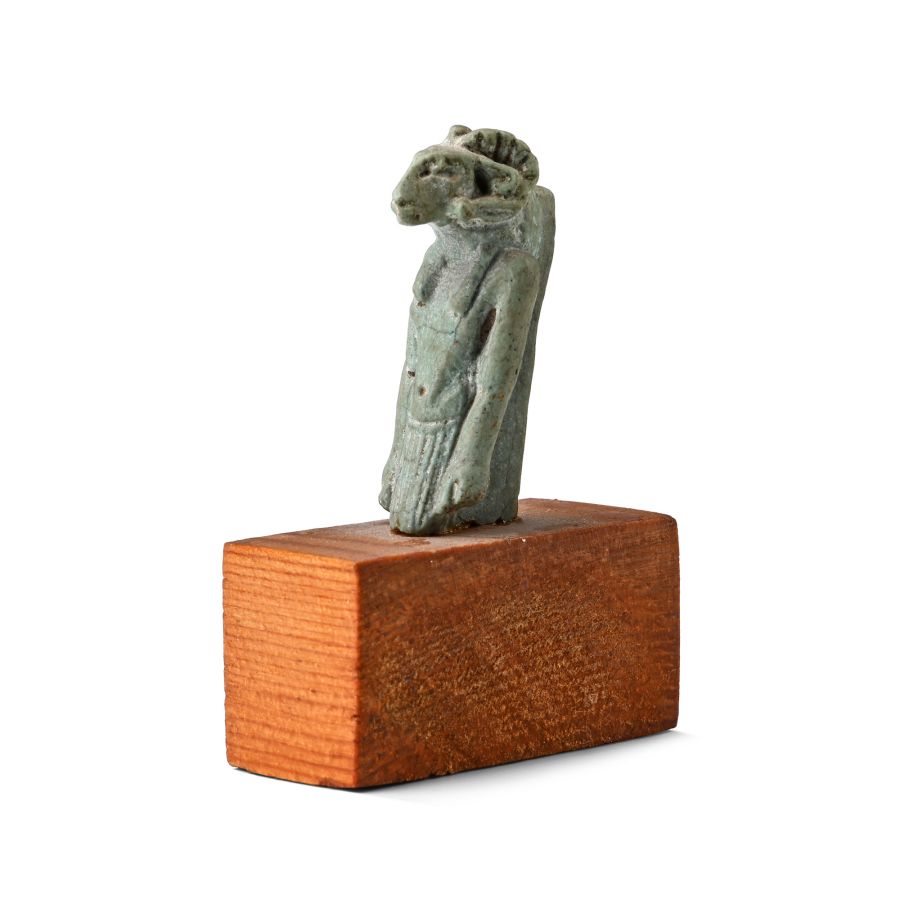

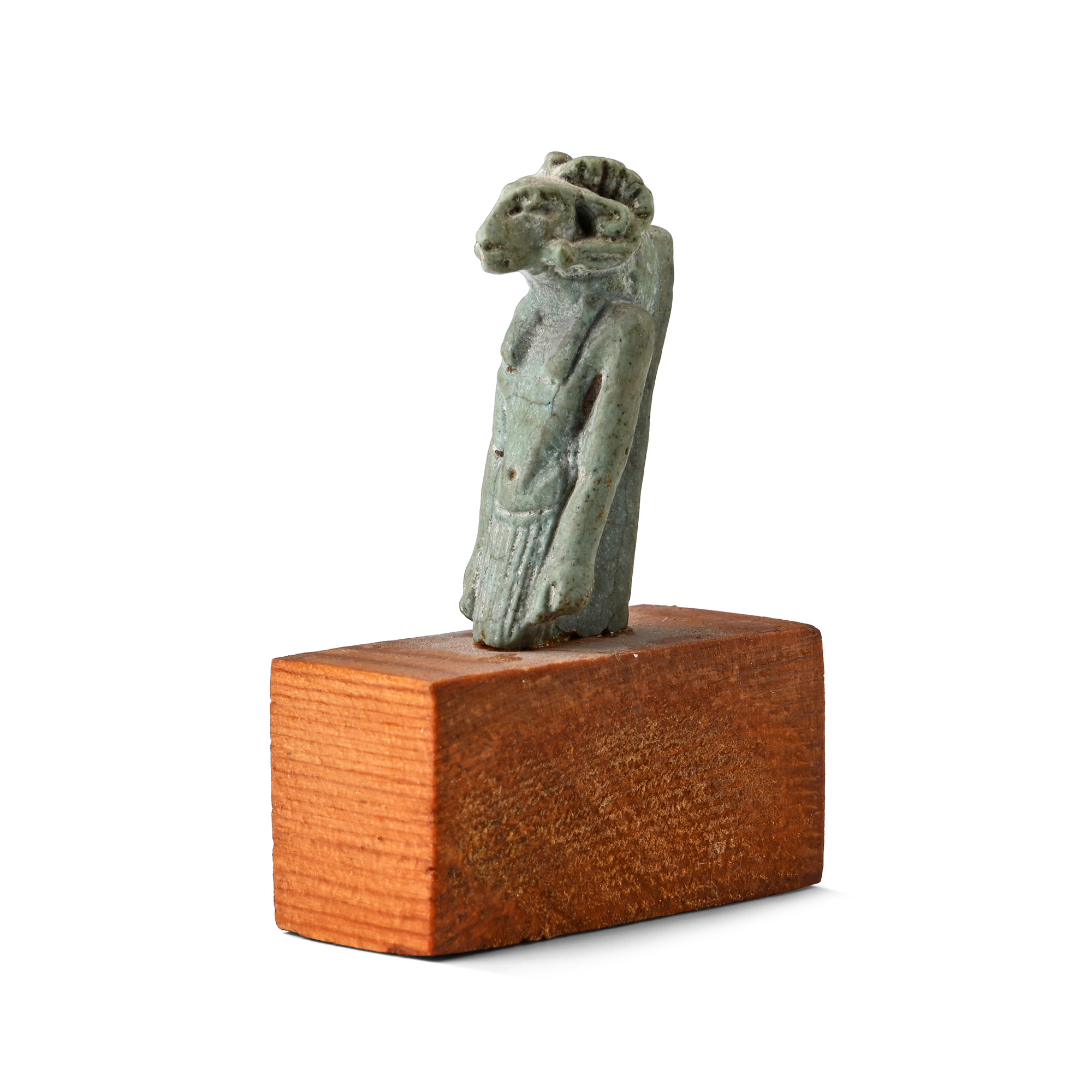
LOT 0471
Egyptian Blue Glazed Faience Amulet of the God Khnum
LATE PERIOD, 664-332 B.C.
2 1/4 in. (13.72 grams total, 57 mm including stand).
Fragment with dorsal pillar and ram-headed deity, mounted on display stand. [No Reserve]
ProvenanceAcquired from S. Michael Greenford, circa June 1961, for 7 shillings and sixpence.
From the private collection of Peter Clayton, FCILIP, Dip, Arch, FSA, FRNS, Hemel Hempstead, Hertfordshire, UK; formed since the late 1950s.
Accompanied by an old handwritten information card by Peter Clayton, collection no.91.
Cf. Andrews, C., and van Dijk, J., Objects for Eternity: Egyptian Antiquities from the W. Arnold Meijer Collection, Mainz am Rhein, 2006, p. 229, no. 3.39, for a comparable intact example.
CONDITIONTimeLine Auctions follows a vetting process to ensure the authenticity and legality of all items, reinforcing our commitment to integrity and responsible trading. Each antiquity, antique, and coin lot undergoes thorough examination by a vetting committee of at least ten external specialists, professional trade association members, scientists, and archaeologists: Our Vetting Process
AUCTIONS:
TimeLine is a leading auction house specialising in antiquities, ancient art, collectables, natural history, coins, medals, and books. Our auctions offer museums, collectors, historians, and enthusiasts the opportunity to acquire unique and historically significant pieces.
LOT 0471
Egyptian Blue Glazed Faience Amulet of the God Khnum
Estimate £100 - 140€120 - 160 (for guidance only)$140 - 190 (for guidance only)
-
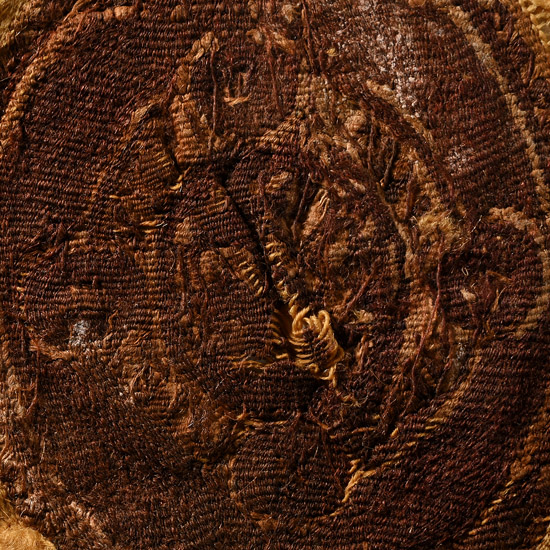
Egyptian Coptic Textile Fragment of an Orbiculus from a Tunic
Circa 4th century A.D.Estimate: £30 - 40 (+bp*)
Bids: 1 | Current Bid: £5
In purple wool and coarse linen, on a brown linen background, S-torsion, embroidered with vegetal ornaments, and the borders decorated with meanders. 6.38 grams, 10 x 9.8 cm
Acquired 1970s-1996. Property of a North American collector. London collection, 2016.
In the Late Roman Period, round orbiculi decorated the shoulders and the lower part of tunics and kamisia (inner tunics). These fabrics were of great decorative finesse, displaying an unusual and extremely well-preserved colour palette. When the tunic was removed from use, these embroideries could be recycled and patched onto another garment. -
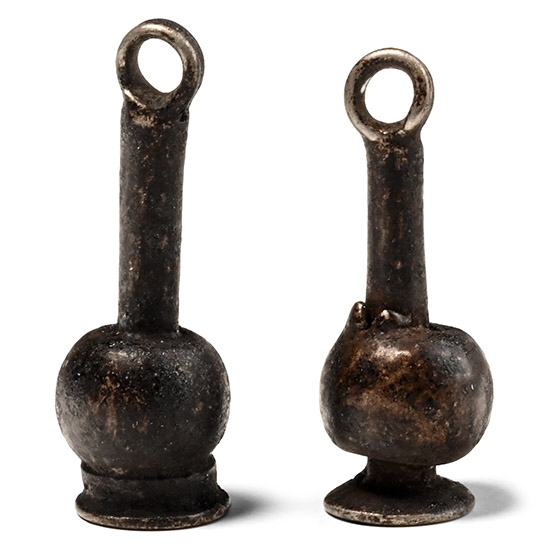
Egyptian Silver Poppy Amulet Pair
Late Period, 664-332 B.C.Estimate: £80 - 100 (+bp*)
Bids: 1 | Current Bid: £5
Each a bulbous poppy-head with a loop at the apex. 2.04 grams total, 17-18 mm
Ex mid 19th century collection. -
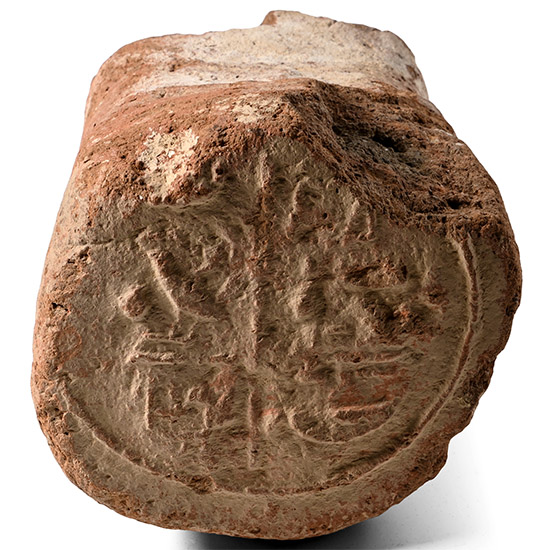
Egyptian Terracotta Funerary Cone of Amenemheb.
New Kingdom, 18th Dynasty, circa 1444-1400 B.C.Estimate: £200 - 300 (+bp*)
Bids: 4 | Current Bid: £80
Part of a tapering cone, with the circular flat end impressed with two columns of hieroglyphic text reading: 'Deputy of the great army, Amenemheb'. 333 grams, 90 mm
Acquired from Abdoul Rassoul on the West Bank at Luxor, 1974-1980 when a guest lecturer. From the private collection of Peter Clayton, FCILIP, Dip, Arch, FSA, FRNS, Hemel Hempstead, Hertfordshire, UK; formed since the late 1950s.
Amenemheb's tomb in the Theban necropolis at Sheikh Abd el-Qurna is numbered TT 85. Amenemhab (also known as Mahu), was an important military official who served under pharaohs Thutmose III and Amenhotep II.
