
Loading, please wait...
LOT 0066
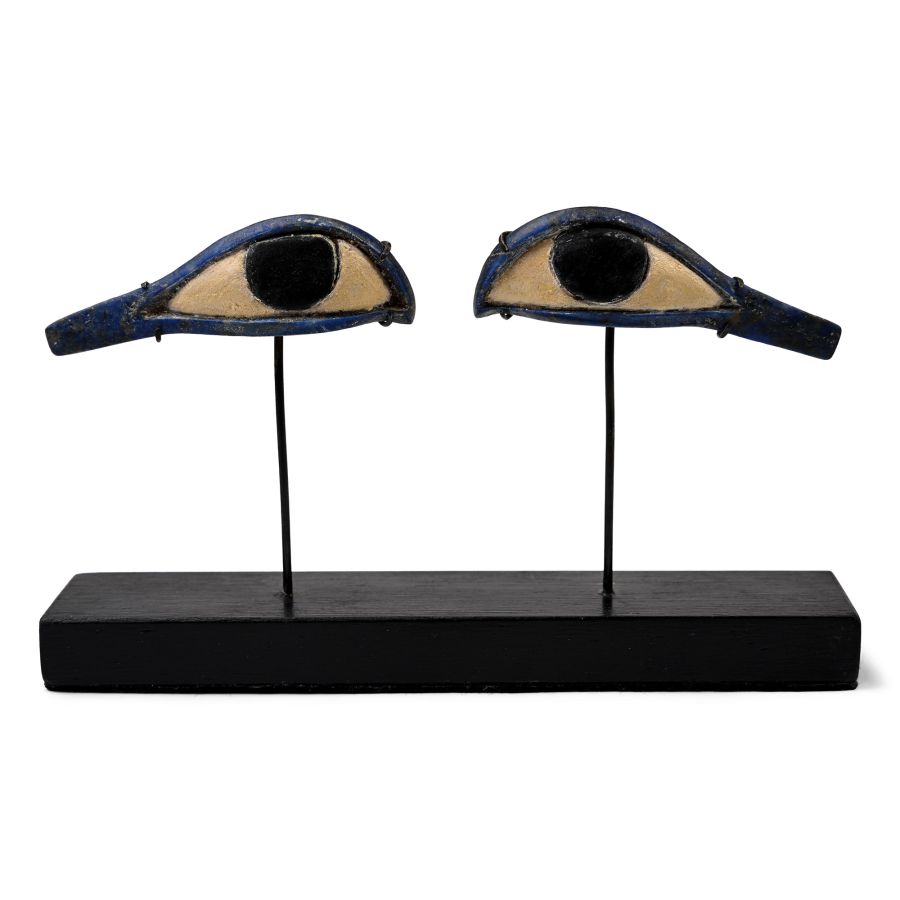
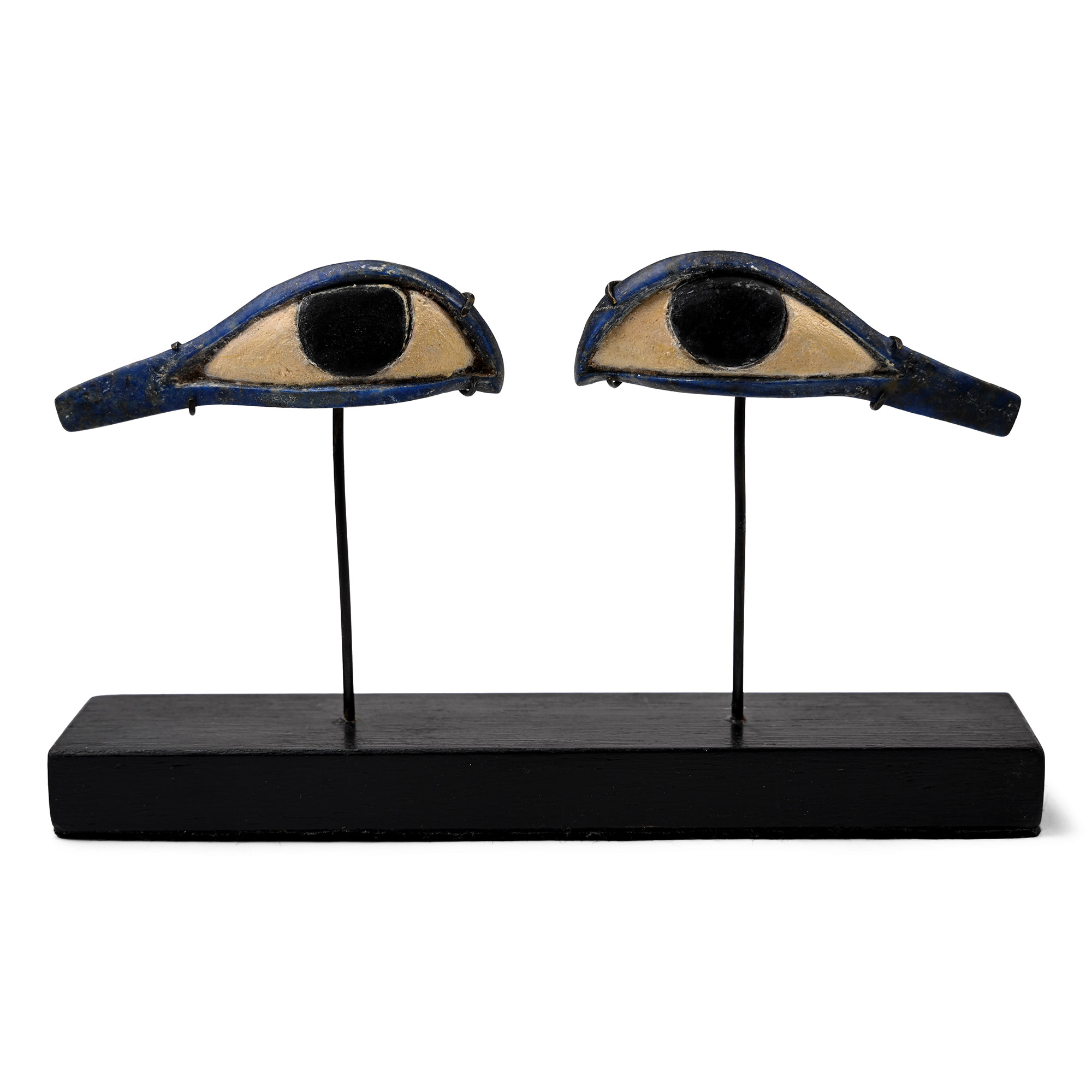
Egyptian Blue Glass Mummy Eye Pair
LATE PERIOD, 664-332 B.C.
2 1/4 in. (44.35 grams total including stand, 56 mm each).
Composed of overpainted white sclerae with obsidian irises, set into contoured blue glass lids with extending cosmetic lines; mounted on a custom-made display stand.
ProvenanceProperty of a North American gentleman, London, UK, 1990-2010.
This lot has been checked against the Interpol Database of stolen works of art and is accompanied by search certificate number no.13254-252260.
For a similar blue glass eyeliner inlay see Goldstein, S.M., Pre-Roman and Early Roman Glass in the Corning Museum of Glass, no. 456, p.172.
FootnotesThe eyes would have been applied to a mummy case. They were carefully bevelled and ground to fit the original mummy case. They could also have been used for the mummy masks.
CONDITIONTimeLine Auctions follows a vetting process to ensure the authenticity and legality of all items, reinforcing our commitment to integrity and responsible trading. Each antiquity, antique, and coin lot undergoes thorough examination by a vetting committee of at least ten external specialists, professional trade association members, scientists, and archaeologists: Our Vetting Process
AUCTIONS:
TimeLine is a leading auction house specialising in antiquities, ancient art, collectables, natural history, coins, medals, and books. Our auctions offer museums, collectors, historians, and enthusiasts the opportunity to acquire unique and historically significant pieces.
-
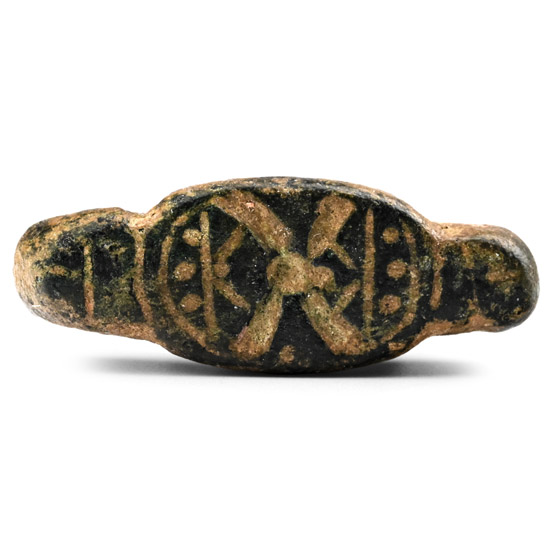
Phoenician Bronze Seal Pendant
Late 1st millennium B.C.Estimate: £250 - 350 (+bp*)
Opening Bid: £125
Formed as a ribbed lop with short neck, ellipsoid plaque with incuse saltire and pellets. 16.35 grams, 27 mm wide
From the collection of a gentleman, acquired on the London art market in the 1990s. -
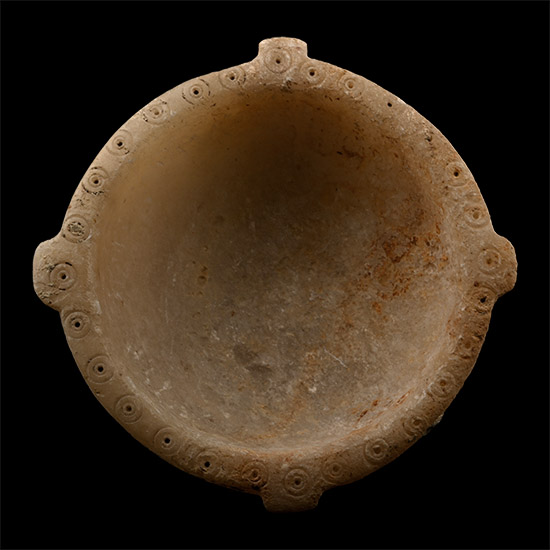
Romano-Egyptian Alabaster Bowl
4th-5th century A.D.Estimate: £1,000 - 1,400 (‡+bp*)
Opening Bid: £500
With flat rim and four projecting lugs; band of incised concentric rings to the rim and shoulder; curving sidewall to a narrow flat base. 503 grams, 13.2 cm wide
Private collection, USA and Switzerland, acquired in the late 1980s-early 1990s; by descent to the current owner.
Vessels of this typology were used mainly as mortars for crushing legumes, cereals, fruit, spices, the bare minimum needed for preparing daily food, but also for pharmaceutical products and for painting, for mixing colours and ointments. -
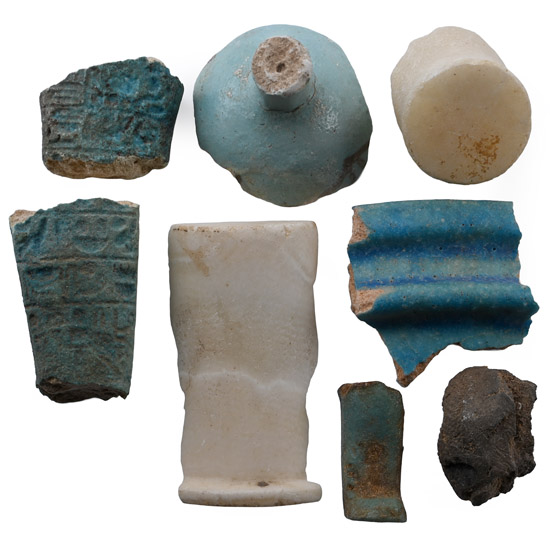
Egyptian Faience Fragment Group
Mostly Late Period, 664-332 B.C.Sold for (Inc. bp): £72
Mixed group of fragments, including two from a shabti figure. 75 grams total, 26-53 mm
From the late collection of a Cornish couple, formed from the early 1990s.
