
Loading, please wait...
LOT 0500
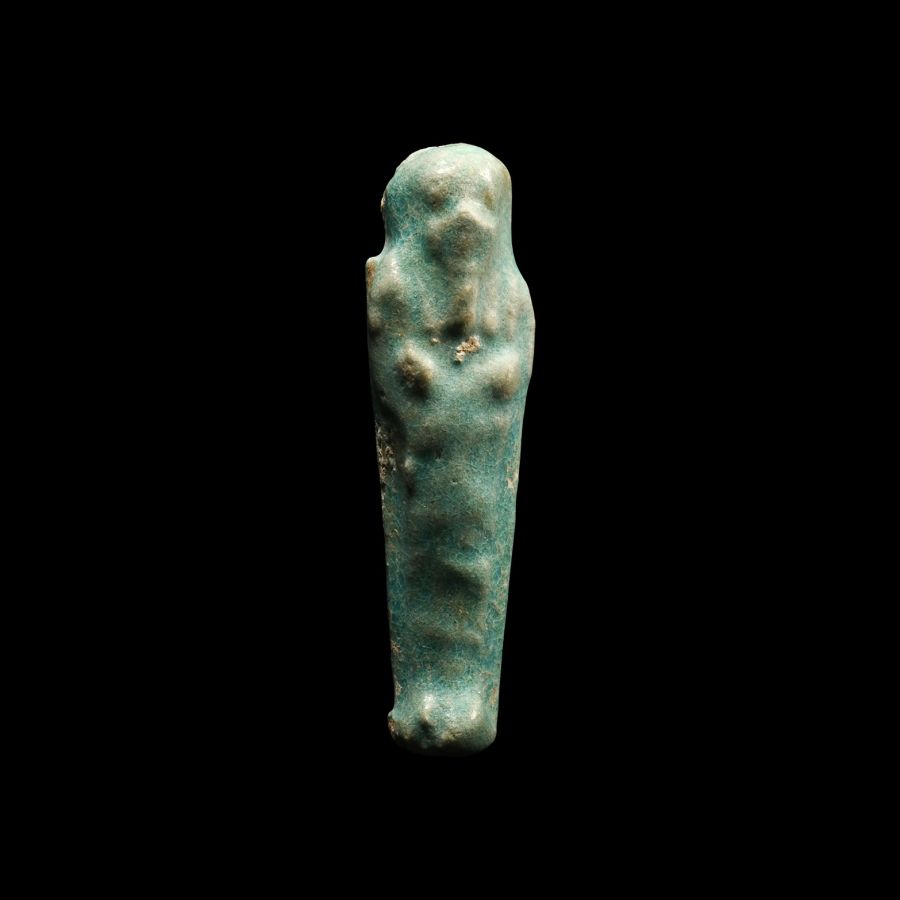
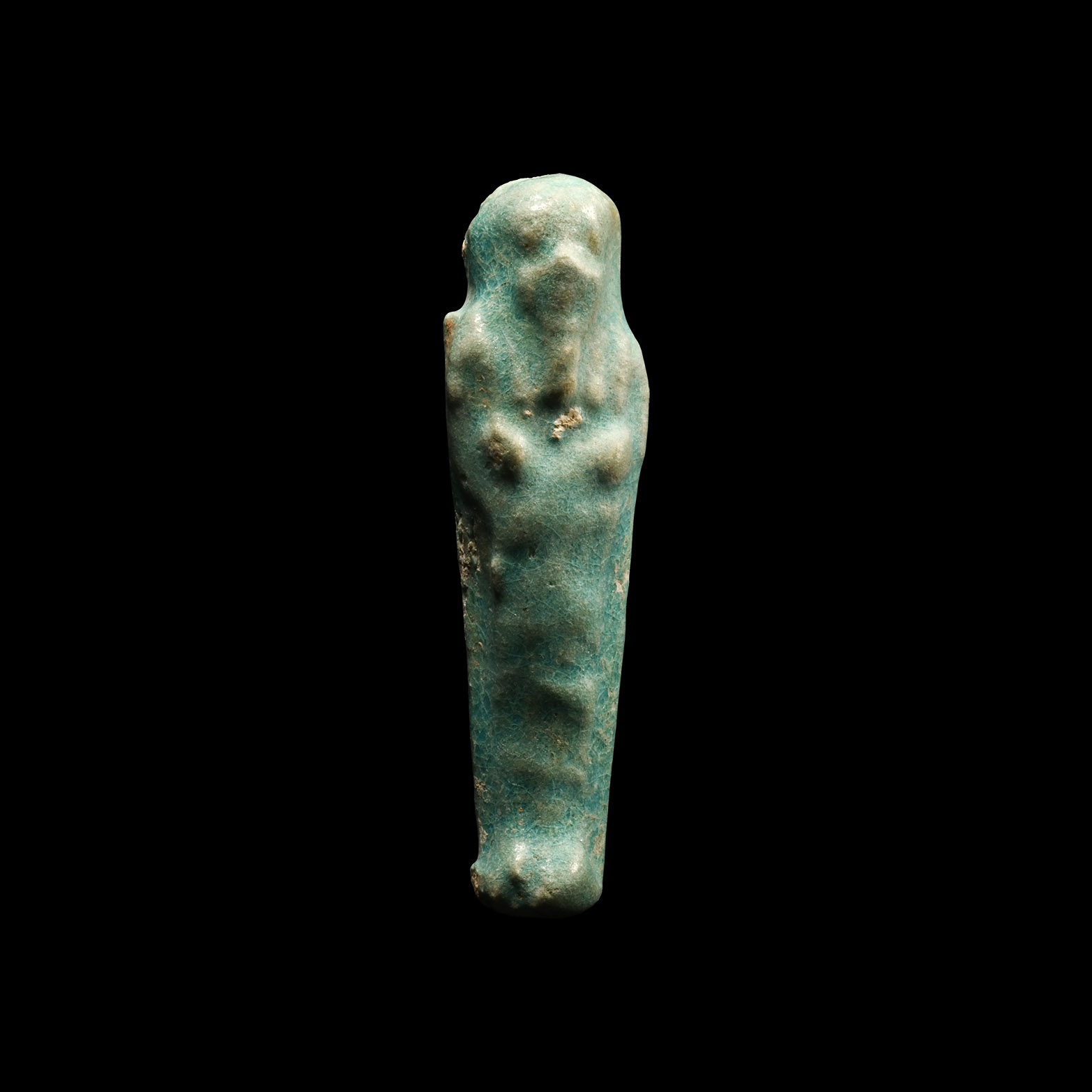
Egyptian Blue Faience Ushabti
PTOLEMAIC PERIOD, 332-30 B.C.
2 3/4 in. (17.9 grams, 70 mm).
Decorated with a blue glaze and displaying remains of facial, wig, beard and crossed arm detailing to the mummiform figure.
ProvenanceAcquired in Europe before 1990.
CONDITIONTimeLine Auctions follows a vetting process to ensure the authenticity and legality of all items, reinforcing our commitment to integrity and responsible trading. Each antiquity, antique, and coin lot undergoes thorough examination by a vetting committee of at least ten external specialists, professional trade association members, scientists, and archaeologists: Our Vetting Process
AUCTIONS:
TimeLine is a leading auction house specialising in antiquities, ancient art, collectables, natural history, coins, medals, and books. Our auctions offer museums, collectors, historians, and enthusiasts the opportunity to acquire unique and historically significant pieces.
LOT 0500
Egyptian Blue Faience Ushabti
Estimate £100 - 140€120 - 160 (for guidance only)$140 - 190 (for guidance only)
-
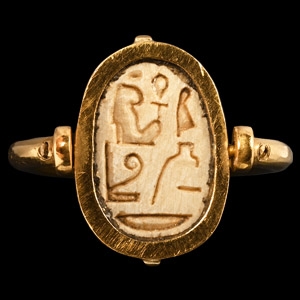
Egyptian Steatite Scarab in Gold Swivel Ring
Late Period, 664-332 B.C.Sold for (Inc. bp): £845
Carved with simple anatomical detailing with hieroglyphs to base with the goddess Maat (of truth) and the Red Crown of Lower Egypt; set in a later gold swivel bezel supported by a tapering, round-section gold hoop bearing a maker's mark stamped in triangular cartouche. 6.99 grams, 27.44 mm overall, 16.97 mm internal diameter (approximate size British L, USA 5 3/4, Europe 11.24, Japan 10)
Collected since the 1970s. Ex Everitt collection, acquired by descent 2017. -
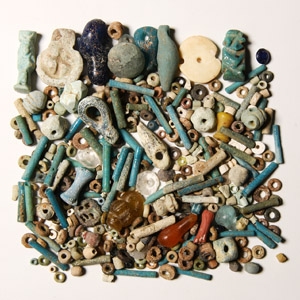
Egyptian and Other Faience Amulet and Bead Group
New Kingdom, 1315-1069 B.C. and laterSold for (Inc. bp): £286
Most covered in a coloured glaze; amulets including fruits and deities; beads of a range of types. 34 grams total, 2-20 mm
UK gallery, early 2000s. -
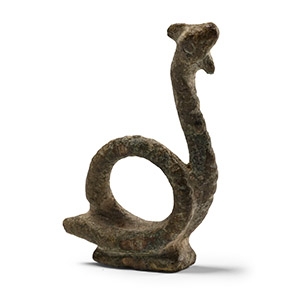
Romano-Egyptian Bronze Rearing Serpent
Roman Period, 30 B.C.-323 A.D.Sold for (Inc. bp): £169
Modelled in the round with naturalistic detailing, coiled with head facing upwards, on a rectangular base. 12.5 grams, 39 mm
‘The Ancient Menagerie Collection’ formerly the property of a Cambridgeshire lady, collected since the 1990s and acquired from auctions and dealers throughout Europe and the USA, now ex London collection.
